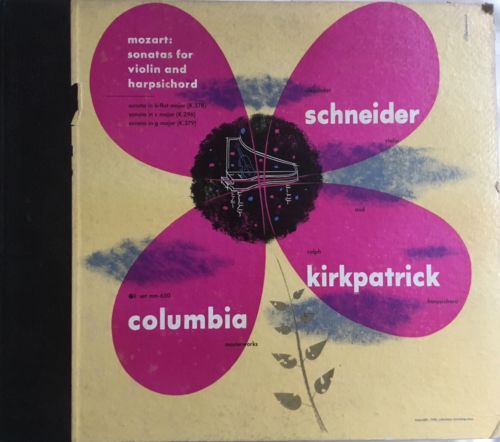
MOZART: Sonatas Violin /Harpsichord SCHNEIDER, KIRKPATRICK 78 rpm SET Columbia
$
35


$ 35
Sold For
Sep 27, 2018
Sold Date
Sep 20, 2018
Start Date
1
Number Of Bids
USA
Country Of Seller
eBay
Sold at
Favourite Auctions
To save auctions to your favourites, please login
If you don't have an account, please register
Description
MOZART:
Sonatas for Violin and Harpsichord
SCHNEIDER, violin
KIRKPATRICK, harpsichord
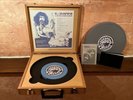
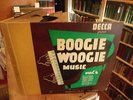
6 x 78 rpm SET mm-650
1945
Columbia masterworks
ALL 6 discs are NEAR MINT
ALBUM and SLEEVES are VERY GOOD PLUS
see pics
BID WITH CONFIDENCE
I saw this article on the internet
Mozart: Violin Sonatas, K. 296, 378 and 379
Alexander Schneider, violin; Ralph Kirkpatrick, harpsichord
Recorded November 26-28, 1945
Columbia Masterworks set MM-650, six 78-rpm records
At the time, the substitution of a harpsichord for the piano in these works was somewhat controversial, and still might raise some eyebrows; but it must be understood that the pianos of Mozart's time were actually closer in sonority to the harpsichord than to the modern grand piano, and in 1945 replicas of fortepianos (the term that has come to be used for early pianos) were still a good twenty or thirty years in the future. So the use of the harpsichord here represents a compromise, although in truth it works better in the earliest Mozart violin sonatas than in the later ones. Ralph Kirkpatrick, with all his artistry, was probably the only harpsichordist at the time who was able to pull it off convincingly.
price rating


![BOTCH - We Are The Romans [2xLP White/Orange/Blue Haze & Black/Orange/Blue Haze]](https://www.popsike.mobi/php/thumbnail.php?url=https://www.popsike.pics/pix/20111114/260893878389.jpg)