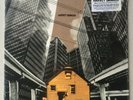
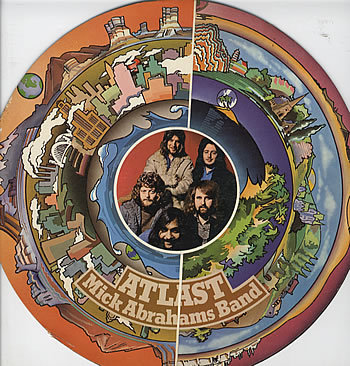
Mick Abrahams Band AT LAST LP Original Circular sleeve
£
42
$
56


Favourite Auctions
To save auctions to your favourites, please login
If you don't have an account, please register
Description
crucialmusic Store
Mick Abrahams Band AT LAST LP Original Circular sleeve
On Chrysalis Records Original GREEN label Catalogue Number chr1005 from 1972
superb circular fold-out picture sleeve
Vinyl = VG
Sleeve = VG Slight wear to edges but all the intricate flaps seem to be working well
Tracks
- When I get back
- Absent Friends
- Time now to decide
- Whole Wide World
- Maybe Because
- The Good Old days
- Up and Down
- You'll never get it from me
Credits
Mick Abrahams (Guitar), Mick Abrahams (Pedal Steel), Mick Abrahams (Vocals), Mick Abrahams (Main Performer), Mick Abrahams (?), Mick Abrahams (7-String Slide), Jack Lancaster (Clarinet), Jack Lancaster (Flute), Jack Lancaster (Sax (Tenor)), Jack Lancaster (Wind), Jack Lancaster (Soprano (Vocal)), Jack Lancaster (Brass Arrangement), Bob Sargeant (Guitar), Bob Sargeant (Mandolin), Bob Sargeant (Keyboards), Bob Sargeant (Vocals), Pete Clemmins (?), Ritchie Dharma (Drums), Ritchie Dharma (Vibraphone), Ritchie Dharma (?), Walt Monaghan (Bass), John Punter (Engineer), David Richardson (Cover Design), Chris Thomas (Producer), Chris Thomas (String Arrangements), Kieron "Spud" Murphy (Photography)
Michael Timothy 'Mick' Abrahams (born 7 April 1943, in Luton, Bedfordshire, England) was the original guitarist for Jethro Tull. He recorded the album This Was with the band in 1968, but conflicts between Abrahams and Ian Anderson over the musical direction of the band led Abrahams to leave once the album was finished. Abrahams wanted to pursue a more blues/rock direction, while Anderson wanted to incorporate more overt folk and jazz influences. He was replaced first by Tony Iommi who would leave Tull after only a few weeks and would later go on to form Black Sabbath, and then by Martin Barre who remains with Jethro Tull to this day.
Abrahams went on to found Blodwyn Pig and the group recorded two albums, Ahead Rings Out and Getting to This before breaking up in 1970. Abrahams soldiered on with the short-lived Wommet, then the Mick Abrahams Band and has continued to release albums by himself and with reunited versions of Blodwyn Pig.
Abrahams caused some controversy in Tull fan circles for his formation of a band called This Was in the late 1990s, which reunited the members of the first incarnation of Jethro Tull (with the exception of Ian Anderson) to perform songs from that era of Jethro Tull's music. Tull fans disapproved but Ian Anderson apparently was not too offended, as in recent years Abrahams and Anderson have guested on each other's records. Abrahams has also participated in Jethro Tull reunions as well as one-off projects and gigs over the years.
The late 1960s yielded a remarkable crop of British blues-based rock guitarists, including Eric Clapton, Jimmy Page, Jeff Beck, Rory Gallagher, Peter Green ..... and Mick Abrahams. Back then, Mick Abrahams' guitar playing profile was on a par with that of his contemporaries. And now, nearly thirty years later, he is playing better than ever.
Further notes
The roots of Mick Abrahams' musical career were typical of aspiring guitarists in the mid-sixties, taking in stints with R&B groups like The Hustlers, The Toggery Five, Screaming Lord Sutch, Neil Christian's Crusaders (replacing Jimmy Page) and his own McGregor's Engine. By late 1967 Mick had become a founder member of Jethro Tull, and throughout 1968 the band built up a reputation based on the already distinctive blues guitar of Abrahams and the flute playing and wild stage persona of Ian Anderson. The band's unique blend of blues, jazz and rock was reflected in their first album This Was, an immediate UK chart hit. However, having two such strong personalities as a twin focus was always going to be a recipe for musical incompatibility, and at the end of 1968 Abrahams jumped ship.
While Tull sailed a new course away from the blues under Captain Anderson, Mick formed his own band, dubbed Blodwyn Pig by a stoned hippy friend just back from the Bhuddist trail. Their two albums, 1969's Ahead Rings Out and 1970's Getting To This, were a delightful amalgam of the 'progressive blues' of This Was and the jazzier influences of saxophonist Jack Lancaster, and both albums spent several weeks in the UK Top Ten charts. America too embraced the band in the course of two tours there. At that stage Blodwyn Pig looked destined for great things - but the old ogre of musical differences reared its ugly head, and Abrahams left his own band. Blodwyn Pig soldiered on for a while, but Mick's presence had been too vital a factor in their success, and the Pig died.
Mick Abraham's was one of the more unfortunate hard-luck stories in rock music. Best known for his work on Jethro Tull's debut album, This Was, where he played blues licks that had critics comparing him favorably to Eric Clapton, he left the group, and since then has never managed to achieve lasting success as a recording artist, or the world-class fame of his former bandmates. Leading various incarnations of his best-known band, Blodwyn Pig, he has persevered over the last quarter century, and achieved some major cult recognition, especially in England.
Abraham's joined his first band, the Crusaders, in 1964, alongside pianist Graham Waller, drummer (and Screaming Lord Sutch/Cyril Davies veteran) Carlo Little, and bassist Alex Dmochowski, all backing singer Neil Christian. Abraham's' musical hero was Alexis Korner, the man who -- with Cyril Davies -- brought blues to England. He was one of that legion of young guitarists, which included Brian Jones and Keith Richards, who found their way into music through Korner's groundbreaking work with Blues Incorporated. In 1965, Abraham's and Waller joined the Toggery Five, a septet whose members included drummer Clive Bunker. That group had a momentary brush with the record books when they cut a Mick Jagger-Keith Richards song as a failed single, but otherwise were unable to make any lasting impression.
In the summer of 1967, while playing in his next group, McGregory's Engine with Bunker, Abraham's met Ian Anderson and bassist Glenn Cornick, who were playing in a group called John Evans' Smash. After comparing notes on their shared enthusiasm for blues, they decided to form Jethro Tull. Abraham's remained with the group until November of 1968, and his guitar was very prominent in the group's sound during this period, revealing him to be one of the best among England's legions of bluesmen. Evidence of his skill, passion, and persuasiveness are all over their second single, "A Song for Jeffrey," and the album This Was. Anderson's voice and flute, however, quickly challenged Abraham's for primacy, and by the fall of 1968 Anderson had won that battle; in November, Abraham's was gone.
Early in 1969, Abraham's formed his own group, Blodwyn Pig, with Jack Lancaster on saxophone, ex-McGregory's Engine member Andy Pyle on bass, and Ron Berg on drums. This was a blues band through-and-through, and even arriving on the scene in a time when London was filled with white blues players, Blodwyn Pig quickly became a critical favorite with its performances and its first album, Ahead Rings Out. Considered a classic progressive blues album, the record found a small audience in the United States, while in England it was a Top Ten album. The group's second long-player, Getting to This, released a year later, was received with enthusiasm as well, and also made the British Top Ten.
The group was riven by internal conflicts, however, as Lancaster and the other members expressed a desire to go in a somewhat different direction in their music, and for Lancaster's sax to become more prominent. Abraham's left the band in 1970, to be replaced by ex-Yes guitarist Peter Banks and guitarist/singer Larry Wallis. The group continued on under the leadership of Lancaster, although it was eventually renamed Lancaster's Bomber. Initially Abraham's formed a new group called Wommet; it was very short-lived, however, so he reorganized his career around the Mick Abraham's Band, with Walt Monaghan on bass, Bob Sargeant on guitar, keyboards and vocals, and Ritchie Dharma on drums. He released two albums on Chrysalis, Mick Abraham's and At Last, with his former Blodwyn Pig bandmate Lancaster expanding the lineup to a quintet. Neither sold very well, although Abraham's was never at a loss for paying gigs.
In 1974, Abraham's reformed Blodwyn Pig with his ex-Tull bandmate Bunker, Pyle, and Lancaster, but the group only lasted a few gigs before breaking up. Meanwhile, Abraham's virtually left the music business, but not before he recorded what proved to be his biggest selling solo album of all, an instructional record entitled Learning to Play Guitar With Mick Abraham's. He continued to play occasional shows, but made his living outside of music, working as a driver, lifeguard, and financial consultant. He seemed content to play the odd impromptu show at the local pub, or for causes that mattered to him in his home town of Dunstable.
Finally, in 1988, however, he re-formed Blodwyn Pig with Andy Pyle back in the lineup on bass, ex-Bonzo Dog Band member Dick Heckstall-Smith and Bernie Hetherington on saxes, Bruce Boardman on keyboards, and Clive Bunker on drums. The re-formed group was a success, releasing a well-received album called All Said and Done. Their 1993 lineup, including new keyboardist Dave Lennox, Mike Summerland on bass, and Graham Walker on drums, released the album Lies, Blodwyn Pig's most accomplished album ever. The group later issued a live recording from their 1993 tour (where Abraham's was reunited with Ian Anderson at one gig), entitled All Tore Down. Abraham's continues to play and record regularly, with a following in England and America with Blodwyn Pig. As of the mid-'90s, the group consisted of a quartet of Abrahams, Walker, Lennox, and Summerland, with vocalist Jackie Challenor and sax-player Nick Payne augmenting their membership in the studio. ~ Bruce Edger, All Music Guide
Use Vendio (formerly Andale) Gallery to increase your eBay Sales.
price rating