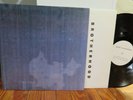
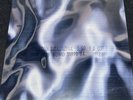
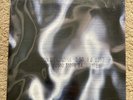
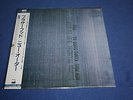
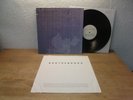
NEW ORDER. First US Pressing. BROTHERHOOD - Qwest Records. Near Mint vinyl.
$
27


Favourite Auctions
To save auctions to your favourites, please login
If you don't have an account, please register
Description
Runout information from the deadwax --
Matrix / Runout (Runout side A, variant 5): 1-2̶25511-A-SR4 1-1 Precision [SRC logo] Matrix / Runout (Runout side B, variant 5): 1-25511-B-SR2 1-1 Precision [SRC logo]
Track List --
A1 Paradise A2 Weirdo A3 As It Is When It Was A4 Broken Promise A5 Way Of Life B1 Bizarre Love Triangle B2 All Day Long B3 Angel Dust B4 Every Little Counts
From a review by Ian Wade on Classic Pop --
New Order’s fourth studio album would see the band split their rock and electro-pop influences over the LP’s two sides. the resulting record, while not being exactly a fan favourite, would birth one of their most enduring songs – Bizarre Love Triangle…Released at the end of September 1986, Brotherhood was something of a transitional album for New Order. Conceptually divided into two halves of ‘rock’ and ‘electronic’ sides, with one set of songs veering towards synths and the other offering a guitar-based scenario.While the idea wasn’t bad, in retrospect it made Brotherhood sound schizophrenic and a little uneven, something that Stephen Morris himself considered “didn’t quite work”.Peter Hook believed that “It was here that the rock/electronic split started to surface,” he recalled. “Ever the punk at heart, I loved the guitar-based material and loved it when we played together.But the others preferred the more sequencer-led tracks. In the end, the divide was so pronounced that we ended up having the guitar-based tracks on Side One and the more electronic songs on Side Two.”The beauty of New Order was the combination of these things and their ability to cohesively marry each – possibly opposing – force and both sides of their personality, and the division of the tracks in such a way split fans.No one was forced to take sides, but the old school Joy Division-heads enjoyed the indie-r rock tracks and the newer set preferred the synths. Perhaps a reswizzle of the running order would’ve helped to make it a solid venture. New Order - State Of The Nation [OFFICIAL MUSIC VIDEO] As it was, Brotherhood on the whole isn’t terrible by any means, but it’s rarely any fan’s favourite New Order album, if far from the worst.If anything, it was the album that consolidated their position in the US, nestled between Low-Life and Technique, newer fans would eventually see the artistic development across the three.There were also constraints on the band, now signed to Warners in America, on Quincy Jones’ Qwest imprint, who were breathing down the band’s neck to knock out a follow-up to Low-Life as soon as possible.“Warners were keen for a speedy follow-up,” claimed Morris in his memoir, Fast Forward, “and we were writing, rehearsing and recording at a rate which today seems impossible.”Read more: Album By Album – New OrderHowever, as it turned out, this was a fortuitous demand on behalf of Warners, as Brotherhood arrived just at the time New Order’s stock began to rise across the Atlantic, after the inclusion of Shellshock on the Pretty In Pink soundtrack, as well as a vast US tour that took the band across the country right up until Christmas.“The idea was to capitalise on our growing US popularity, which we did,” Hook reflected in his book. “We wanted to behave like a regular band by doing a regular long tour, and indeed it turned out to be the zenith of our touring career… Brotherhood set that up for us.”Nevertheless, the quartet spent spring in London’s Jam Studio, before heading off to Windmill Lane in Dublin, which had had a hand in most of U2’s output up until 2000, when they were based there. “The sessions went well… we had a huge flat near Hyde Park,” recalled Hook.
price rating