NICOLE RECORD 78 BILL BAILEY WON'T YOU PLEASE COME HOME PETE HAMPTON BLUES INT.
£
166
$
220

Favourite Auctions
To save auctions to your favourites, please login
If you don't have an account, please register
Description
-
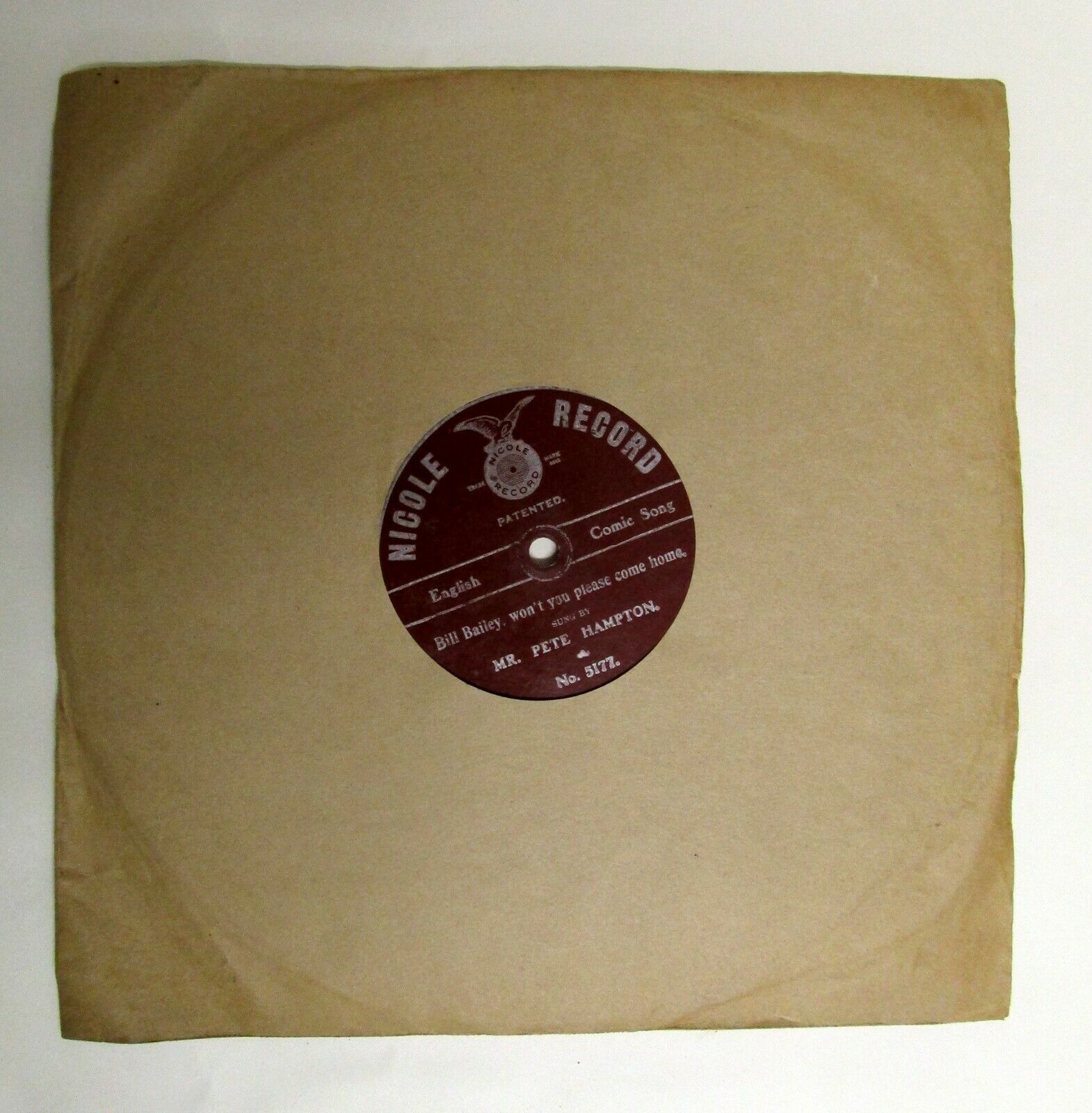
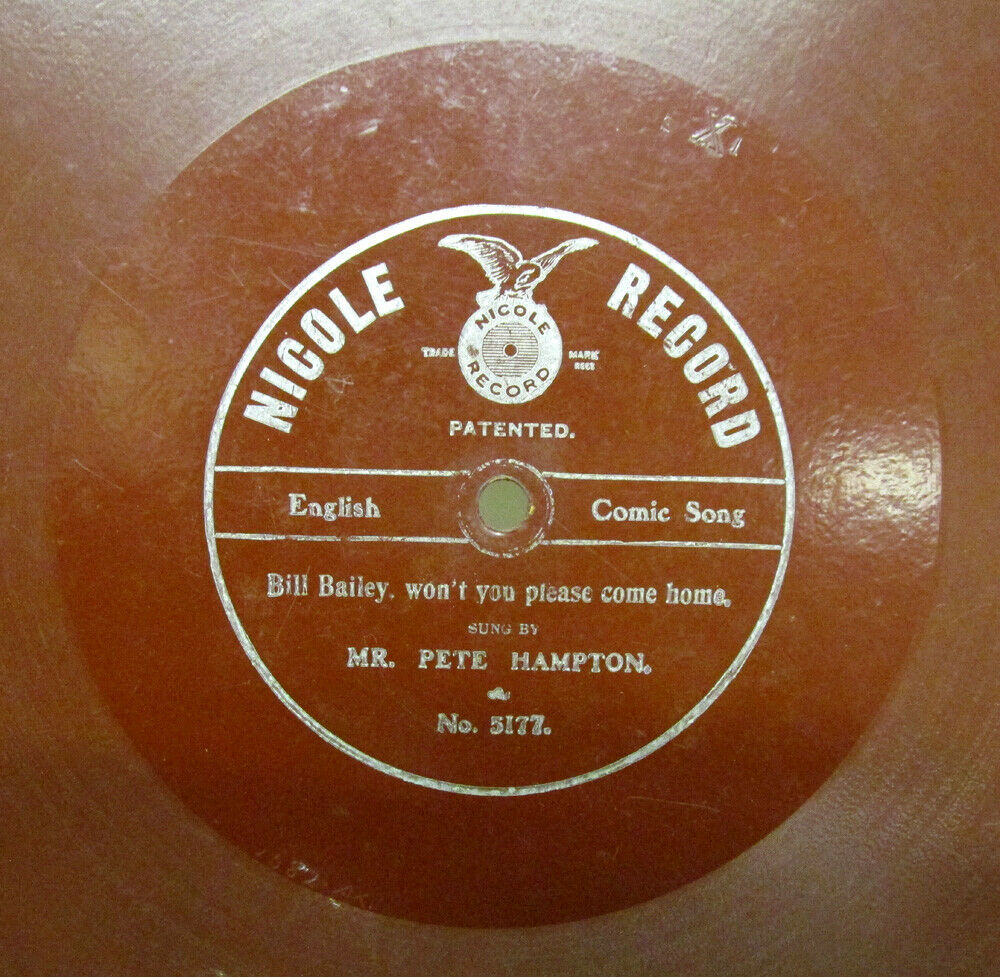
Nicole Record No. 5177
-
c.1903
-
-
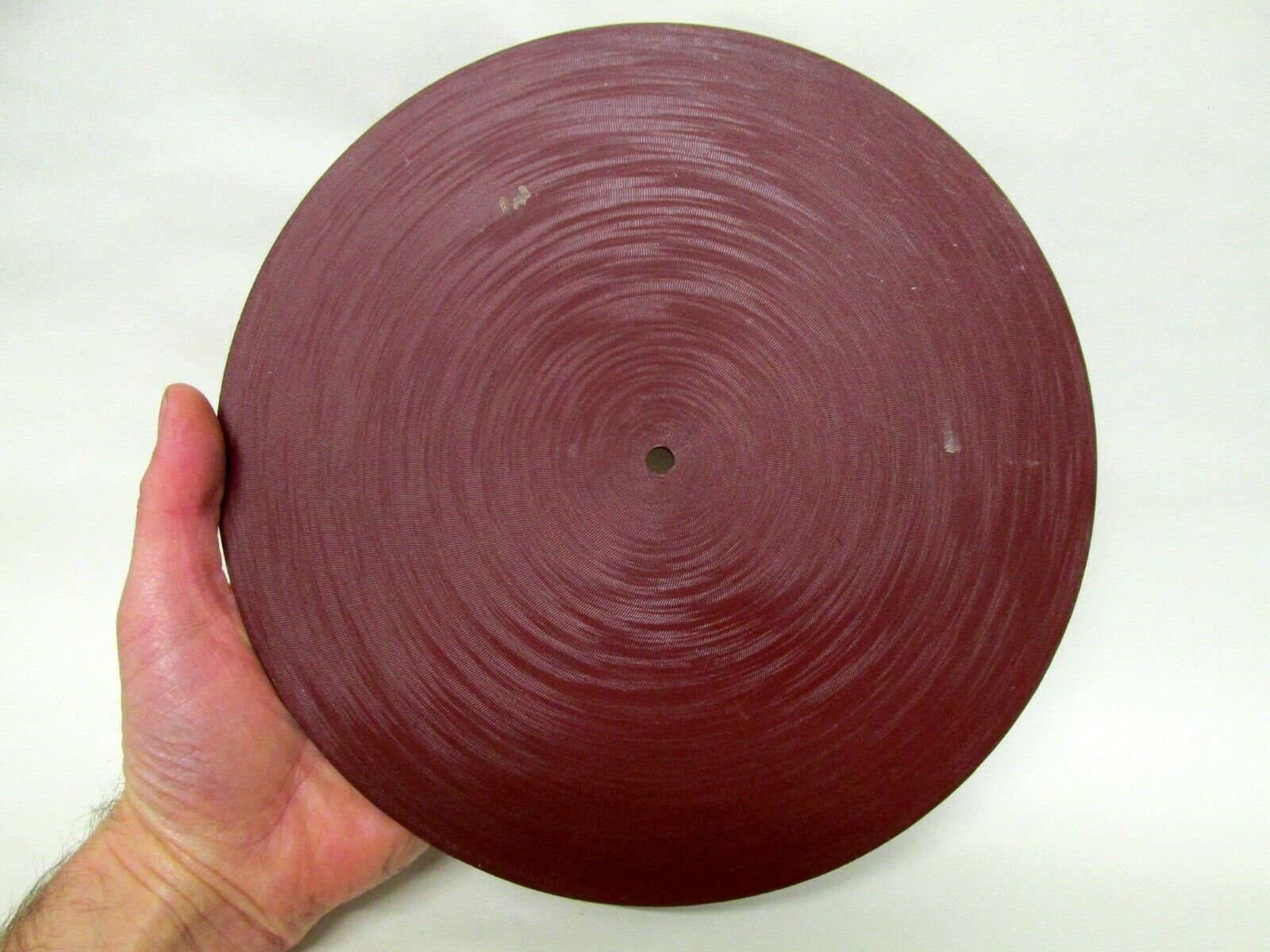
Silver lettering on single sided burgundy coloured disc.
-
Label:
NICOLE RECORD
NICOLE RECORD
TRADE MARK REGD
PATENTED.
English Comic Song
Bill Bailey, won't you please come home.
SUNG BY
MR. PETE HAMPTON
~
No. 5177
Run off markings:
'2' [flipped horizontally], 'X 1'
'1682 xx'
Size:
10 inches (roughly 25cm).
Condition:
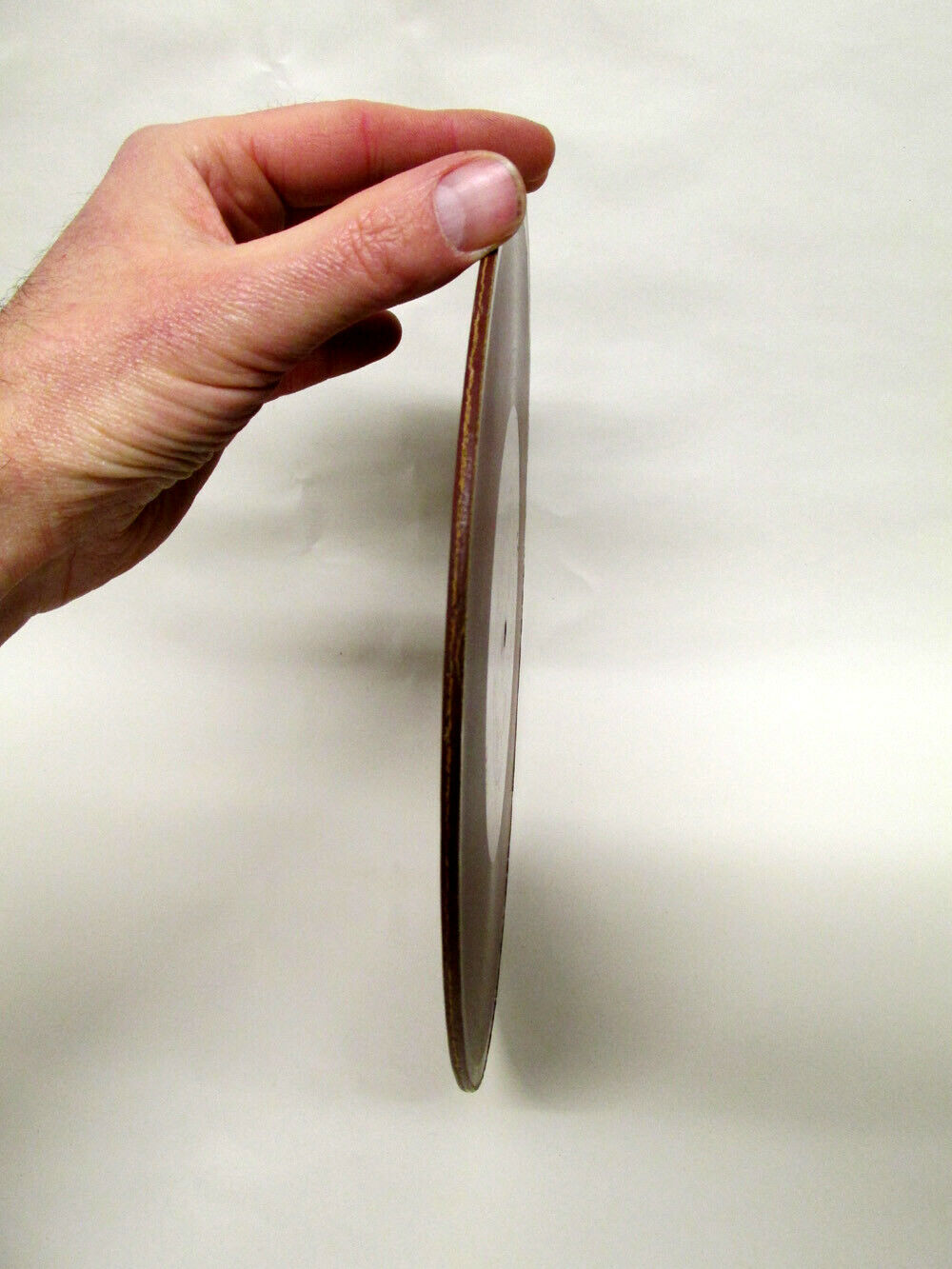
Looks ok, no cracks, chips or deep scratches, though unplayed, as I don't want to risk damaging it.
-
Pete George Hampton (August 7, 1871 – March 16, 1916) was an American vocalist, harmonicist, banjo player, and vaudevillian from Bowling Green, Kentucky. He was part of various Vaudeville groups of which the most important were In Dahomey and his own Darktown Entertainers.
He made more than 150 recordings during his career in the United Kingdom and Germany between 1903 and 1911. In 1904, he made the first harmonica recording by an African American, regarded as a pioneering example in the development of the blues harmonica style.
Pete G. Hampton was born in 1871 in Bowling Green, Kentucky.During his teenage years he was part of a banjo quartet that appeared in medicine shows in Ohio.In the 1890s, Hampton toured with minstrel troupes and became associated with Bert Williams and George Walker, and by 1902 became part of the musical comedy group In Dahomey.In 1903, the group went on touring the United Kingdom, where Hampton fell in love with Laura Bowman, a fellow troupe member, with whom he engaged in a common-law marriage.In the same year Hampton was accepted in the Grand Lodge of Scotland.After the original company broke up, Hampton and Bowman, instead of joining the new one, decided to form the Darktown Entertainers quartet with singers Will Garland and Fred Douglas.
Hampton's musical performances are of various musical genres. Although he was not a blues musician in the general sense, he is regarded as an important blues harmonica pioneer. In his performances he played the five-string banjo and the harmonica.Besides being an instrumentalist he was also a composer and singer. Hampton mostly relied on the so-called "coon songs" written by other composers to be performed in a stereotypical representation of African Americans. But he also performed and recorded his own compositions such as "Dat Mouth Organ Coon"
from 1904, which is regarded as the first harmonica composition recorded by an African American artist. Two versions of the composition were recorded for different companies in 1904. In Hampton's distinctive harmonica playing can be traced early rudimentary examples of the harmonica technique known as bending, used widely in the later style of blues music. Many of his recordings are in the minstrel tradition of the African Americans in which he was raised, such as "When You Die You Are a Long Time Dead" a "jumpy and swinging tune" among others of Hampton's compositions inspired by gospel and camp songs. Among his most successful work as a composer is "Lindy, Lindy, Sweet As Sugar Cane" which he sold to the husband-and-wife duet Charles Johnson and Dora Dean. In his career he made over 150 phonograph cylinders and 78rpm records, mostly recorded in the United Kingdom and Germany. (Wikipedia)
---
"(Won't You Come Home) Bill Bailey", originally titled "Bill Bailey, Won't You Please.... Come Home?" is a popular song published in 1902. It is commonly referred to as simply "Bill Bailey".
Its words and music were written by Hughie Cannon, an American songwriter and pianist, and published by Howley, Haviland and Dresser. It is still a standard with Dixieland and traditional jazz bands. The simple 32-bar chord sequence of its chorus also underpins many other tunes played mainly by jazz bands, such as "Over the Waves", "Washington and Lee Swing", "Bourbon Street Parade", "My Little Girl", and the final themes of "Tiger Rag" and "The Beer Barrel Polka".
Cannon wrote the song in 1902 when he was working as a bar pianist at Conrad Deidrich’s Saloon in Jackson, Michigan. Willard "Bill" Bailey was a regular customer and friend, and one night told Cannon about his marriage to Sarah (née Siegrist). Cannon "was inspired to rattle off a ditty about Bailey’s irregular hours. Bailey thought the song was a scream [i.e. very good], and he brought home a dashed-off copy of the song to show Sarah. Sarah couldn’t see the humor.... [but] accepted without comment the picture it drew of her as a wife." Cannon sold all rights to the song to a New York publisher, and died from cirrhosis aged 35. Willard and Sarah Bailey later divorced; he died in 1954, and she died in 1976 aged about 102. (See New York Times archives 1976, unknown date)
Parodies
Parodist Allan Sherman recorded a parody of this song on his 1963 album My Son, the Celebrity, entitled "Won't You Come Home Disraeli?"
In the "Miss Solar System" episode of The Jetsons, first aired February 3, 1963, Jane belts out "Won't You Fly Home Bill Spacely" in Hanna-Barbera's own parody of the song. Hanna-Barbera (with Cartoon Network Studios) makes more frequent use of the song throughout its Johnny Bravo cartoon series.
In The Simpsons episode "Whacking Day", Grampa Simpson is seen posing as a female cabaret singer in Nazi Germany, singing a version of this song - with "Franz Brauder" replacing "Bill Bailey" - to Adolf Hitler.
The 1980 Smurfs album, Smurfing Sing Song, includes a version of this song entitled "Smurf Baby", in which the chorus is repeated with the name "Bill Bailey" replaced with "Smurf Baby".
Sandler & Young recorded a 20-minute medley where Bill Bailey is adapted to England, France, Switzerland, Nashville, Italian opera, Bach, Israel (with Jewish jokes), and climaxing with the United States.
The Capitol Steps performed a version referring to the 2000 Democratic Presidential Primary titled "Won't You Go Home Bill Bradley".
In P.G. Wodehouse's 1906 novel Love Among the Chickens, the narrator feeling sorry for himself blames his problems on his historical version of womanhood: "Oh woman, woman! At the bottom of everything! History is full of tragedies caused by the lethal sex. Who lost Mark Antony the world? A woman. Who let Samson in so atrociously? Woman again. Why did Bill Bailey leave home? Once more, because of a woman."
(Wikipedia)
---
History Nicole Records
One of the very earliest disc records, Nicole records were the first to be manufactured in Britain and were made from a semi-unbreakable material which looks a bit like linoleum. This material was a product of the fledgling Crystalate Manufacturing Company, whose business was manufacturing in synthetic materials. The sound is rather rumbly because of the material, though this wouldn't have been so much of an issue when played on acoustic gramophones of the period. Nicole Freres of Ely Place, Holborn Circus, London had been musical box manufacturers since 1815, so it was natural that they should branch out into records.
Nicole records were available in 7" (1/- each) or 10" (2/6) size and were initially single-sided. In 1906, the company went into liquidation due to the failure of their main musical-box business, and the masters and record manufacturing equipment was bought by John Watson Hawd, one of the Nicole directors, who took it up to Stockport where he formed The Disc Record Company, manufacturing Nicole records for a while but consequently pressing up other record labels, still using the old Nicole masters. Hawd and his Disc Record Company subsequently moved back to London and continued in business until Spring 1915, still occasionally using old Nicole masters on his various labels.
-
He toured with the company in many European countries including Germany, Hungary, Austria, France, Switzerland, and Russia, playing a variety of musical styles.The increasing political unrest in Russia forced the group to leave the state and return to England, where they finally were disbanded.After returning for a short period in the United States, Hampton with Bowman got back in London where they joined the second company of In Dahomey, this time with Hampton as one of the principal actors.Hampton purchased a house in England in 1910 and settled in, but with the outbreak of the First World War the British government forced all immigrants to leave the country and Hampton returned to America.Never fully recovering from the illness he gained while on the boat returning to the United States, he died three years after arriving in America, in 1916.
-
A rare survivor!
-
As it is sometimes difficult to properly judge the look and condition of an item from the description and photos alone, please feel free to bid knowing that you can return the item post free if you are not entirely pleased with your purchase.
-
- Please do not hesitate to contact me should you have any questions.
-
Combined shipping available at cost.
-
Welsh Bridge Books & Collectables is a bricks and mortar shop located alongside the River Severn at Shrewsbury, in a beautiful 16th Century building housing three floors of interesting and eclectic books and collectables for sale. If you're in Shropshire please pop by and say hello! Thank you.
price rating

![Catch A Fire [VINYL] Bob Marley & The Wailers Vinyl](https://www.popsike.mobi/php/thumbnail.php?url=https://www.popsike.pics/pix/20151128/391331134890.jpg)