Neil Young After the Gold Rush Two Tone W7 Label STOCK copy NOT record club RARE
$
140


Favourite Auctions
To save auctions to your favourites, please login
If you don't have an account, please register
Description
Neil Young
W7 Two Tone After the Gold Rush
One of the Rarest Neil Young Pressing variants and one of the best.
Stock Copy –Pressed by Columbia Terra Haute with Artisan Stampers
Re-2 Copy. Perhaps the latest documented use of the w7/Two Tone label by any WB/ Reprise artist.
100% playgraded and guaranteed.
Ultra rare, many serious collectors , present company included, was skeptical that non-RCA record club copies even existed. Unlike the RCA record club copy which also exists, the thing that makes this copy so unique is the fact it uses genuine Reprise Metal stampers. Meaning you don’t just get a label variation, you get the real recording. Not a copy tape, throw away cutting done for kids trying to score their LPs on the cheap back in 1970.
The Vinyl:
The LP was cleaned extensively on my VPI record cleaning machine, using Disc Doctor and MFSL products, followed by distilled water rinse cycles. The LP was then placed in a new poly lined inner sleeve.
Visually VG+: The LP lies flat with no warping issues. There are a few light scuffs and marks. No deep marks.
Overall this LP plays Strong VG+. This isn’t some Ebay BS VG+ which means VG-. I have taken the time to cover each track, as I enjoyed them real time. I played the entire LP through twice to ensure the grading was as detailed and accurate as possible.
Side One:
In between tracks play solid VG+ with very faint to no surface noise.
Tell Me Why: One tick, this was cut hot, but never to the point of sibilance. The song tracks at a VG++ level: there is one light piece of surface noise audible during the entire song.
After the Gold Rush: Quiet song , has a faint level of surface noise, VG+ to VG++ in that respect. If you have never heard the original Artisan mastering, you are in for a treat: Neil’s voice is amazingly present, it will knock you on the ass the first time you hear it.
Only Love Can Break Your Heart: Strong VG+: Just a light tic / tiny bit of surface noise on a handful of occasions. The amazing Vocal blend of his famous cronies on the chorus is worth the price of admission.
Southern Man: Tremendous recording of the voice, the drums smack with authority. Strongest VG+, barely just a hint of surface noise.. Of course you’re talking about Neil’s electric guitar playing on this track. Recorded hot and raw.
Till the Morning Comes: Faint, barely audible tic. Bass, piano and vocals still beautiful and robust. Play grades at solid VG+. The tic is a bit more audible after the track ends, musically still very clean.
Side Two:
Has a little more surface noise between tracks than side one.
Oh Lonesome Me: Solid VG+ play grade. This track is a full recording, and surface noise is fainter and occasional, Neil’s guitar, harp, Piano and the drums dominate the audible. Musically beautiful, his harp is the defining instrument on this track.
Don’t Let it Bring You Down: Drums, Neil’s vocals/Martin and Greg Reeve’s Bass are the key elements on this track. Solid to strong VG+ play grade: just a few moments of audible surface noise, towards the end of the track.
Birds:Strongest VG to entry level VG+ once the track gets going. What does this mean? There is surface noise present on the track, that exists SEPARATE from the recording. Unlike some awful damaged VG record there is no smear/hashing/ sibilance caused by post factory physical wear to this disc. Even my ultra-archival NM copies of the US Reprise originals expose VG+ level surface noise on this track. There isn’t a copy worthy owning sonically that doesn’t. Domestic US copies, due to the spare nature of this track: Just Neil, his piano, and voice. I have demoed UK, German, Canadian, and later US cuts, none play any quieter, and only these Artisan originals play with the presence that comes from being cut from the master tapes. I like what Chris Bellman did a few years back and even that quite Pallas pressings has some surface noise. Regardless this LP, and this track is still incredibly moving and beautiful.
Not an issue at all on………
When You Dance: This rocker is up tempo, with funky piano, and full band which covers any low level noise.. This cut which runs just over 4 minutes, was the reason, Neil was possessed to recut the LP. Just some faint and occasional marks.
I Believe in You: So Stark and amazing, for me maybe the finest track on the LP. Neil’s voice, Martin and spare Drum accompaniment are beautiful. The harmony vocals still give me the chills on these early pressings. Despite the spare nature of the track it plays beautiful strongest VG+/ mostly VG++ playback with just a moment or two of surface noise that keep it from earning the complete VG++ This could be a demo disc to show off what a Martin guitar should sound like on an analog pressing.
Cripple Creek Fairy: What a great melody for such a short song. Strong VG+ with just a bit of surface noise present as the song fades out.
The sound of the original Artisan stampers is a beautiful combination of a career defining performance , an excellent recording, and a vinyl pressing to match. It’s not always the case, when you find all 3 on the same LP.
The Jacket:
is Solid VG+. The dark artwork typically picks up a little ring wear in the typical spots. This copy is no different, but overall wear is pretty mild. All Seams are intact. No tears , stains, bends, writing or other detractors. This is the correct earliest jacket variation in that it only credits Nils Lofgren. This was later revised.
Original lyrics poster is in NM untouched looking condition.
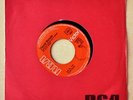
The Labels: have some area were the glue didn’t completely settle causing some minor rippling. This isn’t caused by any type of water damage. See Pics.
A little bit more background on the Warner Seven Arts label (The “W7” aka “Two Tone” label) Columbia Pressing Plants, The RCA record club, Neil Young the Tinkerer, White Label Promos being the “true” first pressings, and Artisan mastering.
Warner Brothers (Reprise’s parent company) was sold to Seven Arts in 1967. This must have occurred later in 1967, as the first press of Jimi Hendrix’s Axis Bold As Love appear on the “Tri-Color” label. It was not long after (still in many 1A stamper examples) that they switched to the two tone label. Most collector and experts peg this date as early/winter 1968.
The Warner Seven Arts era was short lived and according to an esteemed expert on these matters, by very early 1970 the label had switched to the all orange “Steamboat” label. The red band across the top of the label was dropped along with the W7 art and verbiage. You will however see a lot of jacket art that was originally issued by Warner/Reprise in 68/69 still retain the W7 logo. The jacket of Astral Weeks being a good example. And unfortunately also a great example of novice EBay sellers who claim their 2nd press Astral Weeks as a W7 Original because “it says so on the jacket”
At this point is probably appropriate to clarify key information about the use of Columbia’s pressing plants. Warner Brothers and Reprise did not press their own LPs. For this work they contracted Columbia Records 3 US plants to press their LPs. These plants were located in:
-Santa Maria, California
-Terre Haute, Indiana
-Pittman, New Jersey
Each of these 3 plants has very discernible, telltale marks to determine which plant was used. In the case of this LP, The Terre Haute, Indiana facility used a large machine stamped capitol T. This was used for many years prior and started and as a hand etched T in the deadwax. As a reference Santa Maria copies typically feature hand etched numbering and substamper data, while Pittman copies feature small machine stamped substamper letters and number detailing.
The knowledge of this title on the Two Tone Label is quite limited as documented example of the stock Two Tone are extremely rare, even among scholars, and published experts on these matters, and serious Neil Young collectors.
It was long assumed that the Columbia Pittman plant was the only plant to have produced Stock W7 label editions of After the Gold Rush. The Pittman example had been documented along with an RCA Record club pressing.
Contracted with Warner’s/Reprise to produce Record club versions of their releases. Many of these record club pressings of 1970 and 1971 releases of Warner Bros/Reprise titles by the RCA record club feature a “non-stock”, record club label specific W7 /Two Tone Label.
Notable examples of these pressings include:
-Jimi Hendrix “Cry of Love”
- Jimi Hendrix/ Otis Redding “Historic Performances Record Live at the Monterey Pop Festival”
-Joni Mitchell “Blue”
-Van Morrison “Moondance”
-The Grateful Dead “American Beauty”
And many, many others. While very collectable for their unique labels, they are not “true” or stock copies of the Warner/Reprise titles. This distinction is important both as a collector and as an audiophile.
The key distinctions between Columbia pressed stock copies and RCA pressed Record club copies:
1. First and foremost: Record Club versions produced by RCA, did not use the same metal parts as the stock versions pressed at Columbia’s plants. There is not a single documented example of an RCA Record club pressing using the Columbia metal parts. In the case of After the Gold Rush, for the Stock Columbia pressed/ Reprise issued After the Gold Rush using Artisan mastering in California. Artisan created the metal stampers from the master reels, with Neil Young’s approval in the summer of 1970 (RE-1) and again a few months later following the remix of “When You Dance” (RE-2) . The Artisan mastering house undisputedly produced some of the finest sounding rock LPs of the era, and are known among audiophiles as standard bearers in a golden age of LP Mastering/pressing. After the Gold Rush is no exception, and is an amazing beautiful, deep and dynamic mastering done by Artisan.
The RCA record club issues used copy tapes provided by Warners/Reprise to make their own pressings at the RCA plant in Indianapolis. These pressings were budget/ no name affairs done quickly from dub/copy tapes NOT the original master tapes and without the input of the label/artist. As such they are in all examples I have heard significantly inferior from a sound perspective. These are easily identifiable as the deadwax has a small machine pressed font style, which is very different from the style used by Columbia plants of the era.
2. The Labels themselves used different, paper, fonts, colors and type settings. While they look the “same” to the non collector, they are indeed a completely different pressing.
In the early summer of 1969 Warner Brothers was sold to the Kinney Corporation. The order came shortly after the completion of this transaction for the rebranding to Warner Communications for all WB/Reprise label releases and to eliminate all references to Seven Arts and to stop using the W7 Logo. This necessitated a label change. The exact date of which is narrowed down to December 69-February 70.
The Grateful Dead’s Live/Dead (11/10/69) was still issued with the W7 label.
At this point it is worth calling out that the best rule of thumb to determine the “true first pressing label” is to look to the White Label Promo (WLP) as the guide to the original label art. As mentioned Live/Dead has the W7 label design. Whereas James Taylor’s “Sweet Baby James” issued in February of 1970 has the W7 Scripting removed, and a solid Green label, with no W7 logo.
According to Wikipedia After the Gold Rush was released on August 31st, 1970. A former collector page sites September 19th, 1970. This was well after the change over from the W7 label to the solid orange Steamboat label. More than likely at least half a year since the change of the label was instituted.
When discussing 41 to 42 year old LPs you are dealing with a limited sample. Despite the lasting popularity of this LP, and the mega stardom of CSNY and all related “products” Many, perhaps a majority of the pressings have been destroyed, thrown away, and lost along the way. No need to panic any decent, larger used record store should have a stock, solid Steamboat re-2 copy for the asking. The CD error (tip of the hat to Fremer for that phrase) rendered a lot of these pressings back to the earth or more accurately buried under a bunch of trash in landfills. As such the documented examples that we as collectors can reference is very small. When it comes to Two Tone/W7 Copies of After the Gold Rush, there are but a handful of copies out there in collector’s circles. The majority of these are RCA Record Club pressings, in fact for many years it was assumed based on scarcity and the later 1970 date of release that there were no legitimate Stock W7 copies of Gold Rush. I would estimate the ratio of record club to stock to be 20:1 based on historical evidence and research of the W7 After the Gold Rush. Even the great resource that Popsike is, there are less than 10 archival examples of this title total on that t site including record club pressings, which speaks to the extreme scarcity of this title. On the prominent and arguably dominant audiophile/ collectors discussion forum Steve Hoffman site, there are but a handful of examples of this stock title, for years it was assumed the stock W7 didn’t exist.
An overview of Neil Young the tinkerer:
Neil Young is very passionate about his releases and every detail of his release. Perhaps this level of detail, some may some possessiveness, was triggered by the fact his debut album was 1st released was significantly marred by the implementation of Haeco-CSG processing. Long story somewhat shorter, he was unhappy with the sound of his self titled debut and recut the LP. While initially tasked with improving the fidelity, Neil Young’s opinion of the mixes evolved, and he decided to completely remix a few of the tracks on this LP. Thus started a long tradition of musical revisionism and tinkering by Neil.
As a matter of interest or his sophomore release, Everybody Knows This is Nowhere needed no further revision as no known post release tweaks/recuts are known to exist on vinyl.
Before one assumes that all releases by Neil Young have been recut and released commercially numerous times based on a “re” notation in the deadwax of their lp, it is important to point out that many of the revisions and recuts came prior to even the very first release of his albums commercially. What this means is that in many cases LP sides with and RE notation indicate that Neil recut the LP several times prior to official release. He wanted to get it just right before the world heard it. Tonight’s The Night is just one example of a “re” cut prior to even the White Label promo stage.
For After the Gold Rush his 3rd LP, Neil would again decide to make changes to the mix after the release. It is important to point out that this decision was not based on fidelity /sound quality. As mentioned above, Artisan mastering knocked it out of the park with the sound of this LP. Neil did however decide to remix “When You Dance I Can Really Love” very soon after the original fall 1970 commercial release of Gold Rush. Copies with Re-1 in the dead wax on side 2 of the LP have a mix that runs 3:44; the Re-2 remix runs 4:04. Among experts this is the only immediately discernible difference between the RE-1 and the RE-2 copies of the LP. Neil may have made some other minor tweak here or there, but so far his equally obsessive fans have yet to pinpoint or discover exactly what that change is.
Baring Joel Bernstein (NY’s personal archivist) turning over any potentially existing documents or a scan of the tape box/master reels of ATGR in Neil’s personal archive with the exact date of the RE-2 recutting, fans and collectors have to use the available existing breadcrumbs to try and pinpoint when the recut happened. Based on the Reprise inner sleeves issued with re-1 and re-2 copies, it is safe to say that recut of this LP occurred within less than a year. It may have been a few weeks, but most likely a few months. There was no doubt a period of time when both RE-1 and RE-2 copies were being sold at the same time in stores. Reprise would have pressed copies of re-1 copies for the initial launch of the LP, and then replaced and filled future orders with re-2 copies. It is worth noting that the RE-1 copy is considerably rarer than later copies, as it only existed for a very short window of time. Additionally while Neil Young’s popularity was definitely ascending with the record buying masses due to his new role in CSNY, he hadn’t gone mega as he would with the release of Harvest in 1972.
Bringing it back to the item up for auction
I was stunned initially to find this true stock W7 After the Gold Rush, I was doubly shocked to see that it was the re-2 cutting. As collectors without the access to internal company documentation, we have to make logical deductions based on existing facts. The existence of stock label rarities is typically explained along these lines: they had a few extra of the old labels lying around the factory when the initial work order arrived, and a few were used on the earliest/initial order. What makes this After the Gold Rush W7 copy even more inexplicable is the fact that is bears the RE-2 metal parts and corresponding re-2 label. What it means is this LP was NOT produced in that initial pressing run, and that it was produced some time after the initial release. In my estimation it makes this example the rarest documented stock W7 in existence.
About the seller:
I am first and foremost a collector. I treat this entire experience as such, and enjoy sharing these pieces. My goals is to provide the absolute best pressings with all the detail, knowledge, skill and love they deserve. I have been a serious collector, and have traveled the world to accumulate some amazing LPs. I sell regularly on private sites online, and have built a steady group of repeat, highly satisfied customers. I will occasionally sell on EBay when I have some really nice items to share. I take this very seriously, and have impeccable 100% feedback for the items I have sold. I take pride in my work, and my past auctions will show up in place like Popsike etc.
The majority of what I sell is high quality, 1st pressings. My personal love for vinyl comes from my goal to acquire the best sounding copies of my favorite musicians. I have extensive knowledge of which LPs are indeed the “best Pressings”, true 1st pressings, and have in most cases heard many copies of these LPs which have enabled me to know which ones sound best. I am happy to past this all on to you.
I have never had a dissatisfied customer with over a 1000 positive transactions. I can count the number of returns and exchanges over the years on one hand. I credit this to my level of detail, attention to quality, and making sure the entire transaction is positive. With that in mind here is a tone of detail about the process
On VINYL Grading:
Let’s talk about grading. I know you’re thinking, jeeze, another EBay record seller with his own special take on record grading, let’s just go to the Goldmine standard, cut the crap and be done with it. Sounds great but if you don’t understand how I grade based on the Goldmine standard, and considering how people use these terms on this site, I think a more in depth discussion will help you understand what your record will sound like when it arrives.
I think it is also helpful to understand how your copy compares to other LPs pressed during the same production run. I have a strong working knowledge and familiarity with the vast majority of titles I sell. Why? Because I love the music and want what you want the best sound. Some titles no matter how clean of condition play with more surface noise than others based on who pressed the LPs, and what company they used to produce the copies. As a collector, I have typically heard a bunch of the same pressings, and can comment on sound and how it relates to condition. This can be helpful so you don’t spend the rest of your life trying to track down a copy that plays cleaner, when such a pressing doesn’t exist.
First and foremost, let’s just say 99.9% of all records sold on EBay are over graded at a ridiculous level. As a passionate collector of LPs, this really sucks, you typically have to build this inflation into your purchasing decisions, “If it’s sold as a VG++ record, it’s probably really VG+” even if they are good seller with 100% feedback. I strive to avoid this; my customers are unanimous in their praise for my grading. I grade conservatively, honestly and in detail. I want to give you as much information as possible about the condition of the vinyl, so you will ultimately know how it sounds.
It is also helpful and informative to understand visual grading as well as play grading. When time permits I try to provide both. Obviously with sealed LPs, or records sold as unplayed, I don’t want to diminish their value by opening/and or playing them. As such I can’t comment or know how they will sound.
If my listing states that it is play graded, what that means is that I have cleaned it thoroughly on my VPI record cleaning machine, prior, cleaned my stylus, and removed all debris from the LP, sat down and listened to the LP. I don’t sell music that I don’t love/ want to listen to myself and enjoy prior to selling.
Let’s run through visual grades first. Like any of the other Real sellers on this sight, I grade under a bright light, so I can see any imperfections accurately.
NM: This Record will show no post factory blemishes what so ever. Not even a sleeve scuff. It was probably stored in some type of poly lined inner sleeve, and rarely if ever played, or owned by a total collector or someone with really good preservation instincts but limited musical taste. A lot of these records were purchased with a discount or out of curiosity but rarely if ever played.
VG++: This LP is often the best you will find of many pressings in my experience. This LP may have some light sleeve scuffing and or inaudible light marks. Will still often have a very high gloss, and will look like new. This grade is often assumed by other sellers to be NM, because the defects may be inaudible.
VG+: Some lighter marks: this LP has been played and enjoyed but has been well kept, and was probably at least put back in its original inner sleeve. This seems to be my average grade for someone who for the era did a pretty good job of taking care of their records. Lighter scratches/ marks etc.
VG: This record has marks, scratches etc. this is probably the average condition LP from the 60s/70s. Not completely ruined, but definitely loved and enjoyed and played to death. May not have been stored in a sleeve, removed from the LP a bunch. Often times you can find a lot of value at this grading point. I’d rather have a VG original than some BS made form a cd reissue, and with rare collectible records often the only way to find a reasonably priced copy without spending a few hundred bucks.
I may on occasion sell a record in lesser shape than VG if it’s extremely rare, valuable, and or collectible.
Play grades:
As I have mentioned prior it’s important to understand that the way an LP is cut, how it was cut, and on what vinyl it was cut, as it will have a huge impact on how it will sound. Often as much as how it has been taken care of once it was opened and how it was played and stored by its owner(s). One of the biggest lessons you can learn as a serious collector is that even a record that left factory in pristine shape, and was well taken care of, is that it may only play at a VG+ level and is some rare cases at a VG level. When I have a knowledge built from listening to multiple original pressings of the same copy I will provide my insight.
Not all grading is absolute either. After all this vinyl business is an art much more than a science. Every LP will have its own unique playback. I try to provide as much detail as I can. Because of the analog nature and the way that the physical condition affects the auditory playback, some tracks on an album may play differently, just as you can have variation within a track itself. Some LPs with play with properties of a few different grades, and some will exhibit a grade to a stronger or lesser amount.
Lastly some LPs were recorded, mastered or mixed poorly. In some cases all 3. There are plenty of engineers who cut things really hot in a way that causes distortion, sibilance and or other sound issues. There are a myriad of things that affect the way the LP sounds.
NM: a pretty rare to impossible grade, I know enough from buying vintage 60s’ and 70s pressing s from the US and Western Europe that have been perfectly stored , kept and in some cases left unplayed, that this doesn’t really happen. I have bought, owned and sold thousands of LPs; I have only used this play grade less than 10 times. Some German, Japanese and audiophile pressings can get close.
VG++: This LP will play with only very faint, occasional surface noise, the odd tick. The music is the primary focus, and is all but a fraction of what you will hear on such a pressing. Generally the best you can do with a particular pressing.
VG+: This record has a little bit more surface noise, and may have some ticks or marks that show up, some fairly regularly. Nothing nasty or so loud it that kills the musical flow. This is the way an average record should sound that has been taken care of and seen normal play.
VG: Louder surface, noise, intermittent ticks pops, no skips, or sibilance caused by the condition of the LP (if the producer cut the vocals/horns or guitar too hot, we don’t have options other than a different cutting) These LPs will still have a lot of love. This grading shows up with well taken care of but very quiet LPs, if you are talking jazz, classical, ambient, or just very quiet music in the dynamic range this grade may show up, even when the LP is physically in great shape.
This LP should not have hashiness (this is the sound of an LP that has been stored so poorly often rubbed abrasively) no inner sleeve, stacked on other LPs or literally played to death) what it sounds like is the way I remember hearing the Byrds Turn! Turn! Turn! On the jukebox as a kid: grainy fuzzy distortion were vocal passages, cymbals, drums etc turn to mush.
VG records can kick plenty of ass, and as a collector are your best value. Many have moments so sweet that you can get to the core of the music you are enjoying, despite some of the audible blemishes.
Jackets, Art, inserts etc
Jackets are a lot more straight forward. I try to take good high res pics to capture it, but will mention any issues; here are my thoughts on grading:
NM: Often times in shrink, the shrink it pretty much fully intact, I’ll try and mention and price, hype stickers etc. This jacket should have pristine art, as you would have found it in the store: No bends, ring wear, tears, stains, mold damage, writing, seam splits, delamination etc.
VG++: really clean, maybe some slight imperfections like tiny initials in ball point, very slight ring wear etc
VG+: Might have a name written but not typically huge, , fairly standard ring wear (not obscuring the majority of the art) might have some very minor seam splitting scuffs and marks etc.
VG: Tears , split seams, writing, ring wear that starts to dominate the art etc. stains etc
Inner sleeves tend to always separate at least an inch or so at the 6 o’clock point, they also tend to fold, and often left the factory this way. I don’t send a whole lot of time on inner sleeves, or grade them, but I will mention them and their condition. If they have mold starting I will not include them to contaminate the record. If there was custom art/inner sleeve that came with the title I will typically point this out, and mention if it is included or not.
If the record was issued in a generic sleeve, I may include it, but not always, I try to provide recycled Poly lined protective sleeves when possible in order to protect your record when possible.
As far as cool inserts, posters etc, I will include one when possible, I will make mention of this. If the listing doesn’t include mention of this don’t assume that it does include the original inserts.
SHIPPING:
I ship records properly. I will always ship 12” LPs in LP specific mailers. These are new, or in perfect shape on the rare chance I use a recycled mailer.
I take the LP and place it an inner sleeve, OUTSIDE of the LP to prevent seam splits. I have the jacket, Record in sleeve, and any inserts all inside a protective outer sleeve.
I also ship the vast majority of the time with 2 12x12 cardboard inserts to protect your LP. On the odd chance I don’t have cardboard inserts I will use bubble wrap material to ensure the Lp(s) is safe in transit, and won’t incur any damage.
That said I do not incur any responsibility for damage caused by the shipping agent. If you want to insure your package, please let me know and we can discuss costs.
With shipping materials combined with USPS Media Mail, this runs a total of $4.
There are additional costs to ship outside the US. I typically ship 1st class airmail.
I can ship any expedited / insured method you may prefer, at an additional cost.
I will ship to most anywhere in the civilized world, my preference is the US. If I get a sketchy vibe from you I reserve the right to sell the LP to the next highest bidder.
Payment:
PayPal Only. You must pay me within 48 hours of the auction close.
In Closing:
I try to keep all the “rules” to a minimum; I treat people with respect the way they like to be treated. I have put these rules in place based on my experiences as a seller to prevent any drama. Life is way to short to deal with BS. I have a regular job for that J. I am not selling garbage or some faceless commodity. These are historical artifacts, art of the highest order. I spend my valuable time to ensure I do things right with a collector’s perspective in mind. I am reasonable and friendly guy. Please communicate and together I will realize the market value for my LPs and you will get the best possible experience in buying used vinyl via the internet.
If you made it this far you should probably be listening to a record instead. Thanks for viewing my auction.
WCE
price rating