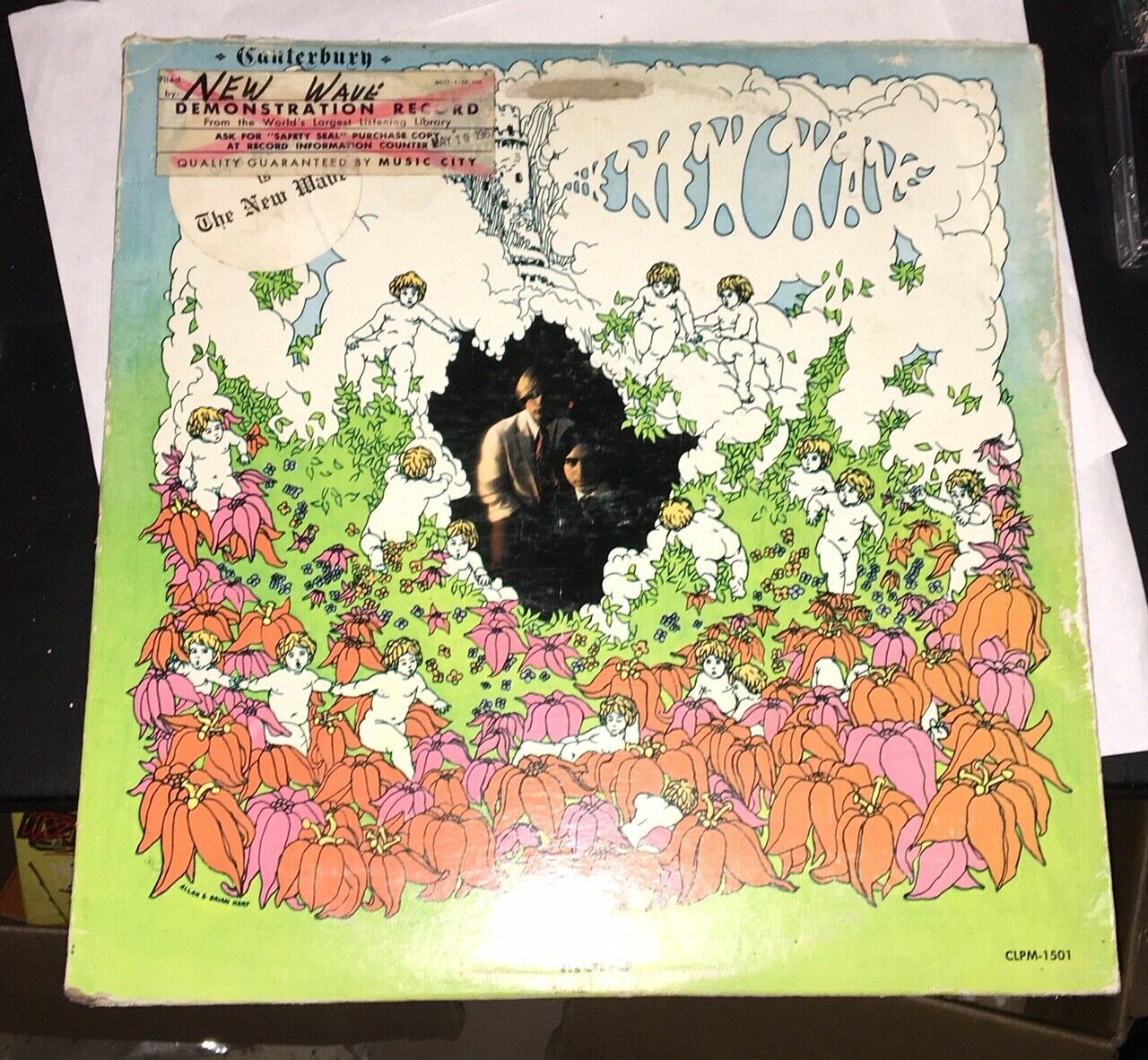
New Wave Canterbury ?CLPM-1501 1967 Mono Promo Folk Psych Baroque Pop Gene Page
$
30


Favourite Auctions
To save auctions to your favourites, please login
If you don't have an account, please register
Description
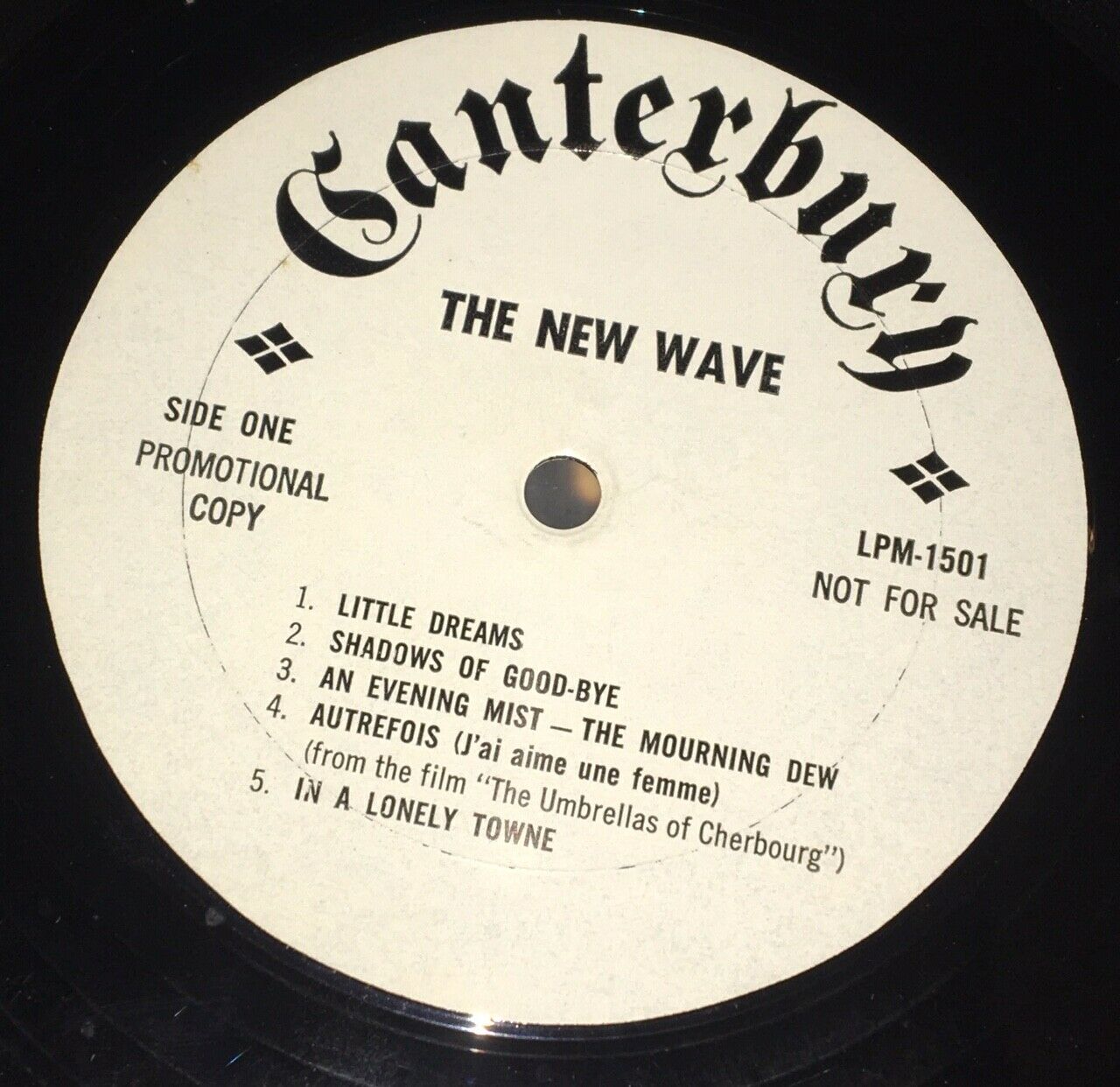
The New Wave Canterbury ?– CLPM-1501, Canterbury ?– LPM-1501 Format: Vinyl, LP, Promo, Mono Country: US Released: 1967 Genre: Rock Style: Soft Rock, Psychedelic Rock, Folk Rock
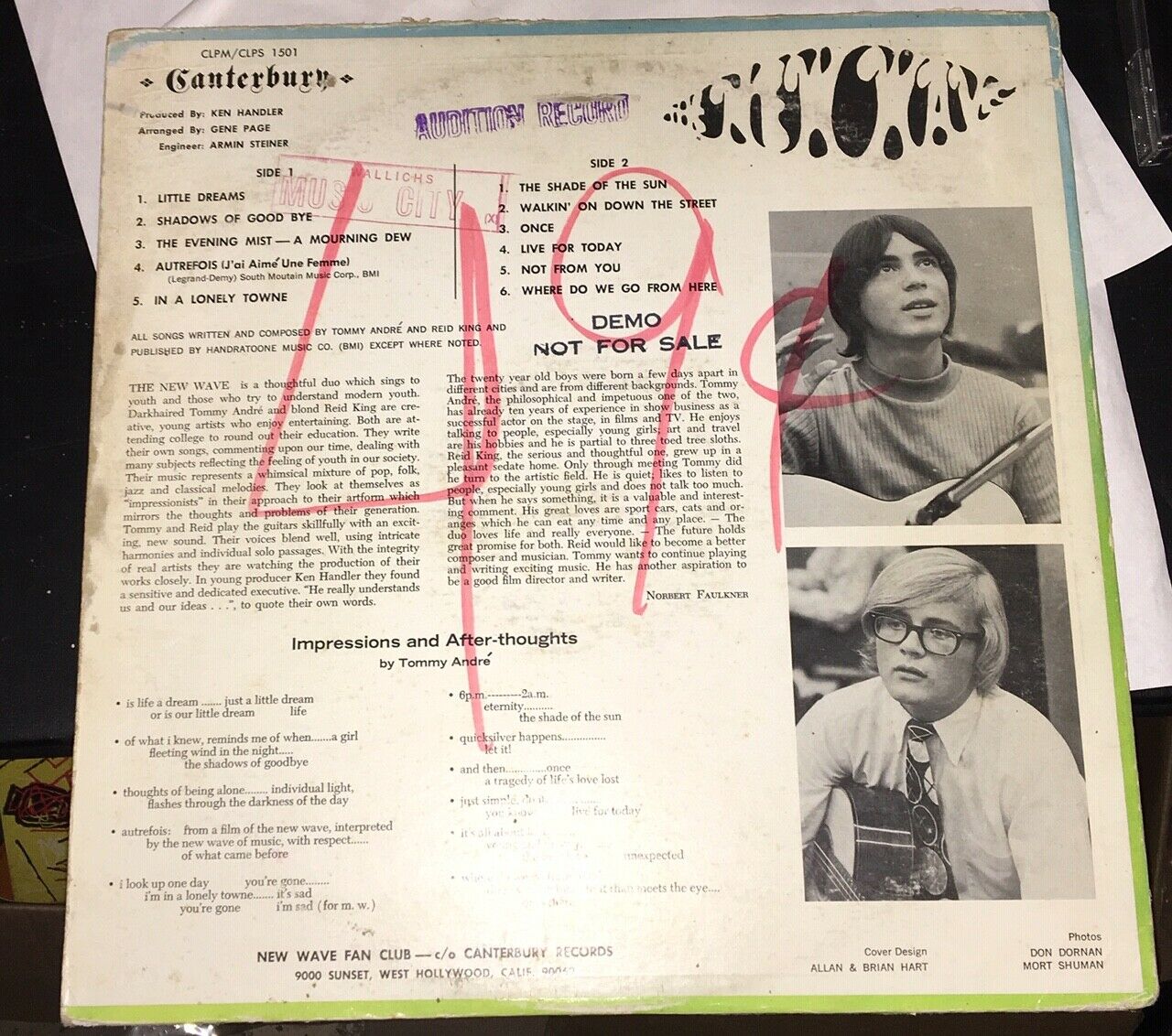
A1 Little Dreams A2 Shadows Of Good Bye A3 The Evening Mist - A Mourning Dew A4 Autrefois (J'ai Aimé Une Femme) Written-By – Demy*, Legrand* A5 In A Lonely Towne B1 The Shade Of The Sun B2 Walkin' On Down The Street B3 Once B4 Live For Today B5 Not From You B6 Where Do We Go From Here
Credits Arranged By – Gene Page Design, Cover – Allan Hart, Brian Hart (3) Engineer – Armin Steiner Photography By – Don Dornan, Mort Shuman (2) Producer – Ken Handler Written-By – Reid King, Tommy André* Notes Track A3 is listed on label as 'An Evening Mist - The Mourning Dew'.
Despite their name, the New Wave were not some trend-hopping band of the late '70s or early '80s, but a soft rock sunshine pop duo of the late '60s.
Comprised of singer/songwriters Tommy Andre and Reid King, they put out an obscure, self-titled album on the Canterbury label, also the home of fellow sunshine poppers the Yellow Balloon.
Very little is known about the New Wave, though from the album sleeve pictures they look extremely young, most likely still in their teens.
The album is in fact so soft and pop-ish that its relationship to rock music is slight and it sometimes sounds geared as much or more to the adult pop market as the pop/rock one.
Their material emphasizes breezy, samba-influenced close-harmony romantic tunes, acoustic guitars, and light percussion embroidered by vibes and some orchestration.
The music is pleasant but fluffy, somewhat like the most pop-oriented material by Chad & Jeremy, though the resemblance isn't extremely strong.
On the other hand who are we to judge whether this is bad music or an overlooked gem?
It all depends on one's musical taste and memories brought back on long summer evenings or cloudy and rainy days in autumn.
Wallichs Music City was a record store[1] in Hollywood, California, USA, founded by Glenn E. Wallichs,[2] that also had stores in West Covina,[3][4] Lakewood,[5] Canoga Park, Costa Mesa, Torrance, and Hawthorne[6] from 1940–1978 and was one of the first to display cellophane sealed albums in racks.[7] Wallichs stayed open until 2 am.[8]
Glenn Everett Wallichs was born August 9, 1910 in Grand Island, Nebraska,[9] to Union Pacific accountant Oscar Wallichs. In 1926, the family moved to North Hollywood. In 1932, Wallichs opened a radio shop in Los Angeles, later opening five other shops in the area. In the mid?1930s, he started two recording studios.[10] In 1940, Wallichs opened Music City, at Sunset & Vine. In 1946, Wallichs left the business to his brother Clyde.[11] Glenn Wallichs died in 1971,[9] and Wallichs Music City closed in 1978.[12]
Wallichs Music City was located on the northwest corner of Sunset & Vine and operated from 1940 to 1978. Owner Glenn E. Wallichs, along with Tin Pan Alley songsmith Johnny Mercer and ex-Paramount movie producer Buddy De Sylva, had founded Capitol Records[14], starting in a small office on Vine Street in 1942[15] and then moving to larger offices above the store in 1946. After Capitol Records moved to the Capitol Tower in 1956, the offices became the home of Dot Records.
In an era when most recorded music was sold through mom and pop stores, Wallichs Music City became the premier record store in Southern California and the world's largest specialty record store.[16][17][18]
As the market for recorded music evolved during the 1950s and 1960s, it was a source of tickets, sheet music, vinyl (initially 78s, then LP's & 45's) and tapes (8 track and cassette). They also sold TV sets and musical instruments.[19][20]
It was one of the first music stores to seal record albums in cellophane and put them in display racks for customers to browse.[7] The racks were tabletop height trapezoid-shaped browser boxes (designed by Capitol Records' Frederick Rice) that allowed the covers to be viewed like a card index. The store was also the first to have demonstration booths for listening to records.[21]
The store became a hub of the L.A. music scene.[22] Music fans flocked there to meet artists like Bing Crosby, Judy Garland, Johnny Mercer and Nat King Cole to have them sign sheet music of their latest hits. Frank Zappa worked part-time there in 1965 as a salesman in the singles department.[23][24] Radio ads featured Wallichs, who would sing the jingle "It's Music City" (to the first notes of "Rock-a-bye Baby," with the following four bars covered by a jazz ensemble), followed by news of specials, upcoming events, etc.[18]
In 1963, the vocal group The Pleasures recorded the song "Music City" as a tribute to the store.
price rating