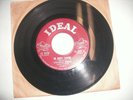
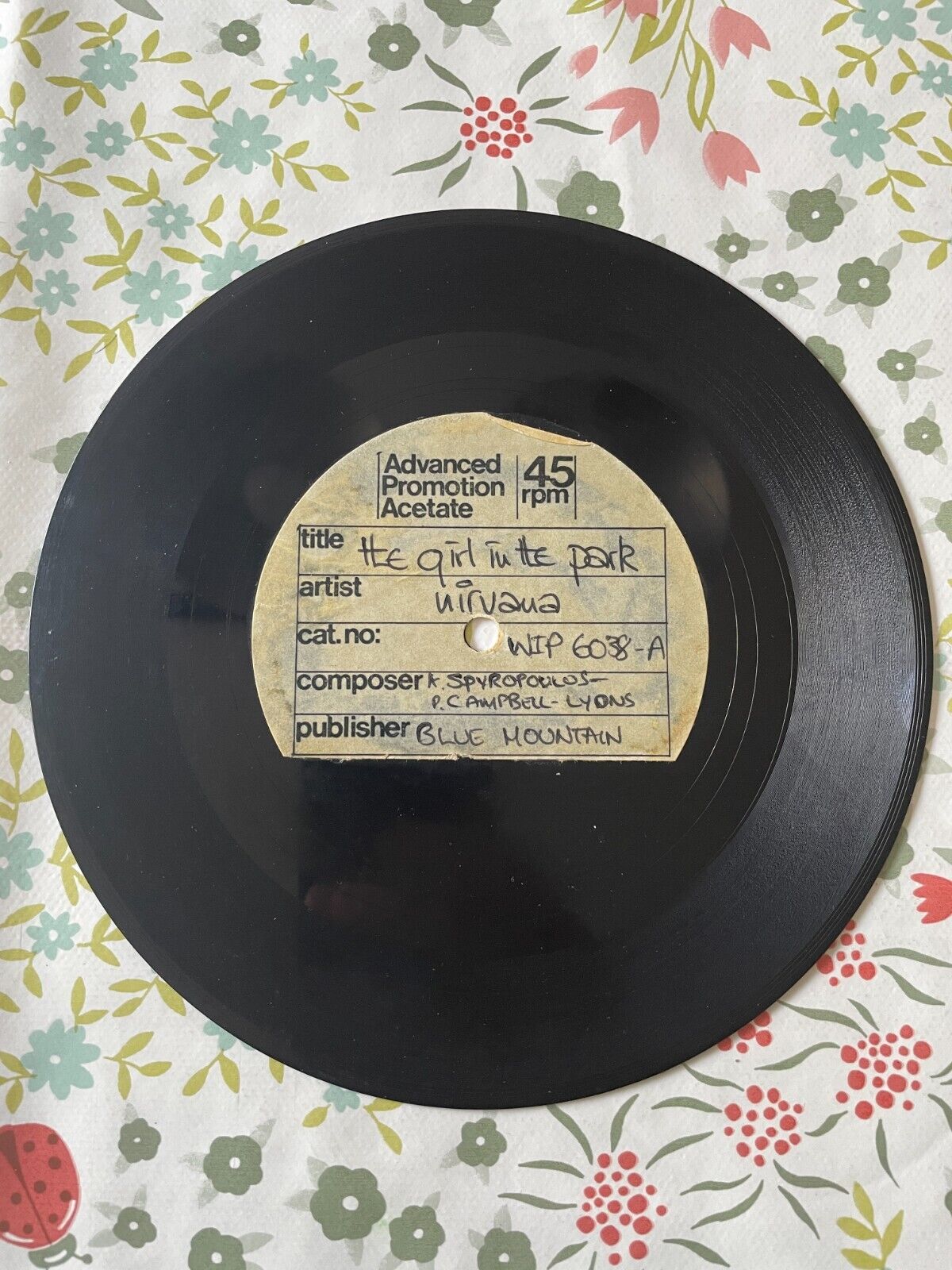
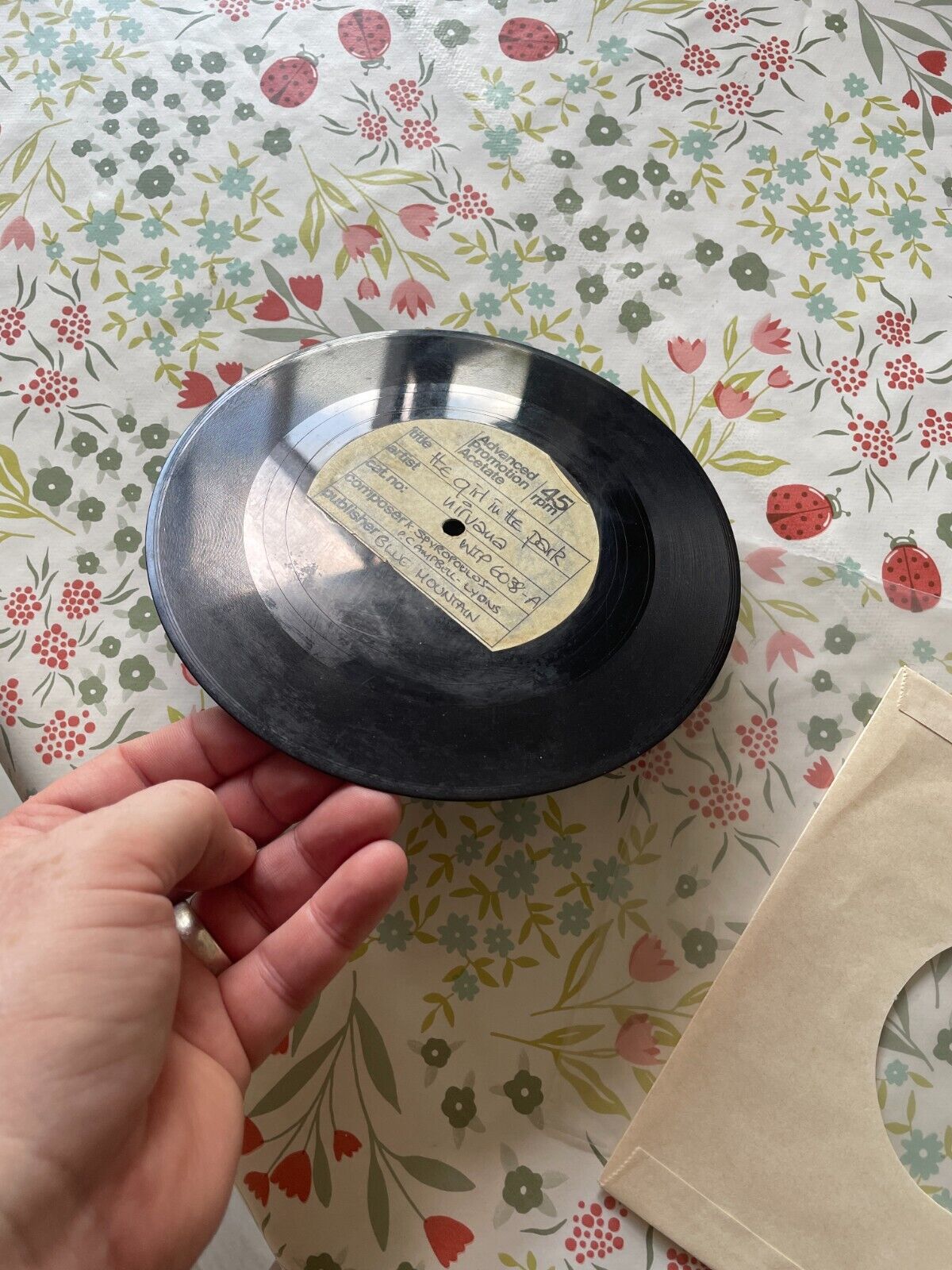
Nirvana 7" Acetate The Girl in the park WIP 6038 1968 Psychedelic pop rock
£
99
$
131


Favourite Auctions
To save auctions to your favourites, please login
If you don't have an account, please register
Description
Nirvana (UK band not the USA Grunge band feat Kurt Cobain Dave Grohl)
The Girl in the Park
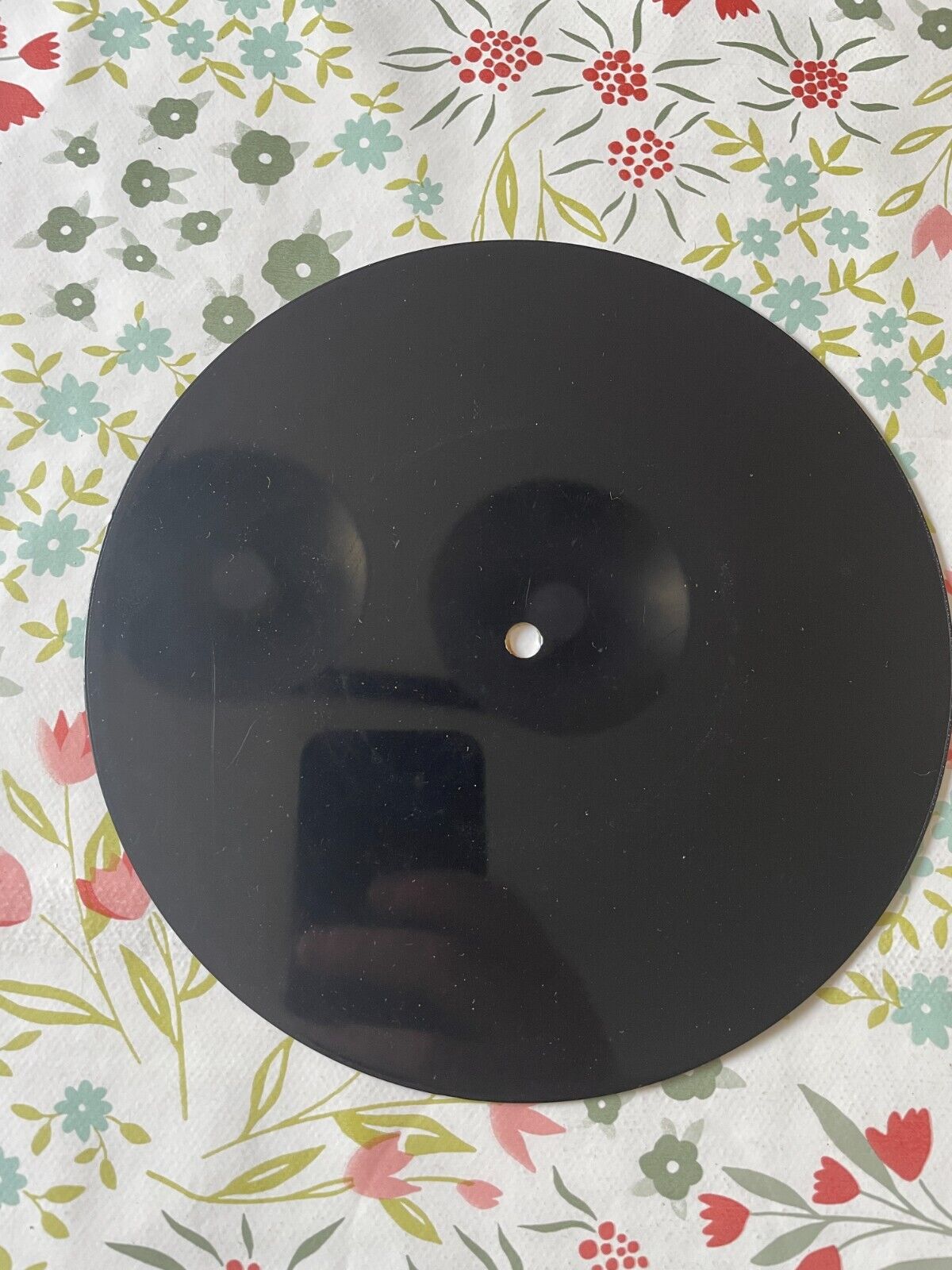
Very rare UK acetate for the 7" single
Never seen on sale before - possibly the only one left
Don't miss out you will not see another
some info on the band
1966–1971: Early years[edit]
Nirvana was created as the performing arm of the London-based songwriting partnership of Irish musician Patrick Campbell-Lyons and Greek composer Alex Spyropoulos (born George Alex Spyropoulos, 1941, Athens) and English producer Ray Singer (born 1946). On their recordings Campbell-Lyons, Ray Singer and Spyropoulos supplied all the vocals. The instrumental work was primarily undertaken by top session musicians and orchestral musicians – with Campbell-Lyons providing a little guitar and Spyropoulos contributing some keyboards.
Musically, Campbell-Lyons and Spyropoulos blended myriad musical styles including rock, pop, folk, jazz, Latin rhythms and classical music, primarily augmented by baroque chamber-style arrangements to create a unique sound.
In October 1967, they released their first album: a concept album produced by Chris Blackwell titled The Story of Simon Simopath.[5] The album was one of the first narrative concept albums ever released, predating story-driven concept albums such as the Pretty Things' S.F. Sorrow (December 1968), the Who's Tommy (April 1969) and the Kinks' Arthur (September 1969), and the Moody Blues album Days of Future Passed (November 1967) by a month.
Island Records launched Nirvana's first album "with a live show at the Saville Theatre, sharing a bill with fellow label acts Traffic, Spooky Tooth, and Jackie Edwards."[3]
Unable to perform their songs live as a duo and with the impending release of their first album, Campbell-Lyons and Spyropoulos decided to create a live performing ensemble, the Nirvana Ensemble, and recruited four musicians to enable them to undertake concerts and TV appearances.[6] Though hired to be part of the live performance group rather than as band members, these four musicians were also included in the photograph alongside the core duo on the album cover of their first album to assist in projecting an image of a group rather than a duo. However, they were not core founding members of the group, and within a few months Nirvana had reverted to its original two-person lineup. The four musicians who augmented Campbell-Lyons and Spyropoulos on their live appearances and television shows for those few months were Ray Singer (guitar), Brian Henderson (bass), Sylvia A. Schuster (cello) and Michael Coe (French horn, viola). Sue & Sunny also participated in the Nirvana Ensemble, providing vocals.[7]
The band appeared on French television with Salvador Dalí, who splashed black paint on them during a performance of their third single "Rainbow Chaser". Campbell-Lyons kept the jacket, but regrets that Dalí did not sign any of their paint-splashed clothes. Island Records allegedly sent the artist an invoice for the cleaning of Schuster's cello.[8]
Following the minor chart success of "Rainbow Chaser", "live appearances became increasingly rare" and the songwriting duo at the core of Nirvana "decided to disband the sextet" and to rely on session musicians for future recordings.[3] Spyropoulos cited Schuster's departure due to pregnancy as the instigator for the band returning to its core membership. Campbell-Lyons also cited the high cost of having the additional members as a reason for their departure.[9] Schuster later became principal cellist of the BBC Symphony Orchestra.[10]
In 1968, Nirvana recorded their second album, All of Us, which featured a similar broad range of musical styles as their first album. After the release of the album, Ray Singer left the group to produce Peter Sarstedt.
Their third album, Black Flower, was rejected by Blackwell, who compared it disparagingly to Francis Lai's A Man and a Woman. Under the title, To Markos III (supposedly named for a "rich uncle" of Spyropoulos who helped finance the album), it was released in the UK on the Pye label in May 1970, though reportedly only 250 copies were pressed it was deleted shortly after. One track, "Christopher Lucifer", was a jibe at Blackwell.[11]
In 1971 the duo amicably separated, with Campbell-Lyons the primary contributor to the next two Nirvana albums, Local Anaesthetic 1971, and Songs of Love And Praise 1972, the latter featuring the return of Sylvia Schuster. Campbell-Lyons subsequently worked as a solo artist and issued further albums: Me and My Friend, 1973, The Electric Plough, 1981, and The Hero I Might Have Been, 1983, though these did not have commercial success.
price rating