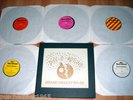
OLYMPIC ZELVA RARE CZECH 68 GARAGE PYSCH BEAT FREAK NM-
$
55


Favourite Auctions
To save auctions to your favourites, please login
If you don't have an account, please register
Description
Giant Vinyl
Your Giant Source for Vinyl LPs, 45's, EPs, 78's, and CDs. Giving Vinyl another spin.
Release
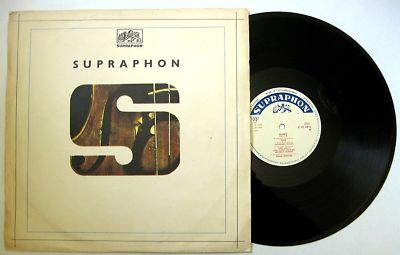
Title: Zelva
Artist: Olympic
Label: Suprahon Records
Release Number: 0 13 0412
Release Year: 1969 (3rd pressing see notes)
Prior Release Number: 0 13 0412
Prior Release Year: 1968 (2 pressings see notes)
Number of Records: 1
Pressing: Czechoslovakia
Size: 12 inch
Speed: 33 1/3 RPM
Album Cover: Standard
Front: VG+, light ring wear
Back VG+, light ring wear, plain
Vinyl: VG+, hairline scratches, scuff marks
Graded (Visually/Played): NM- / NM- to NM
Sleeve: Plastic sleeve
Sleeve Condition: VG++
Insert(s): None
Insert(s) Condition: N/A
Mono/Stereo: MONO
Electronically Reprocessed/Digital: N/A Side 1 Želva
1. Nebezpečná Postava
2. Snad Jsem To Zavinil Já
3. Dědečkův Duch
4. Jen Bůh Ví
5. Telefon
6. Psychiatrický Prášek
Vinyl: NM-
Label: NM-
Matrix Numbers: A 4391/C D
Stampers:
1. Želva
2. Vzpomínka Plíživá
3. Línej Skaut
4. Dám Zejtra Zas Flám
5. Modravé Mámení
6. Nikdo Neotvírá
Vinyl: NM-
Label: NM-
Matrix Numbers: A 4392/D A
Stampers:
It’s the summer of love. 1967. San Francisco is abuzz with the sounds of the Dead, Jefferson Airplane and the Doors – over in the UK, Swingin’ London is in full swing, the Pink Floyd have just released their first album and the Beatles unleash Sergeant Pepper. So what’s going on over in Czechoslovakia? Well, a Soviet occupation, for one, which may tend to tarnish the “love” portion of their summer. But surprisingly, even in Prague, there’s some incredible music being made. The Olympic were undoubtedly Czechoslovakia’s finest rock band – the Slovakian Beatles, if you will – and in 1967 they dropped their very first album, “Zelva”, which means “turtle” in Czech. But don’t expect the light harmony pop sounds of the Turtles anywhere here – it sounds to my ears like the Olympic kids were listening to the punk thrash of American garage bands and the primal R&B freakbeat of the UK mods more than anything else. In that respect, anyone into the sounds of early Them, Pretty Things, Standells and the Count Five will instantly relate to these boys’ band of raucous thrash n’ burn, even if they don’t speak a lick of English (the band, that is). Such is the power of the universal language of fuzz. I’ve seen this album described by most reviewers as “Beatlish beat pop”, and that’s true for Side 1 and some of Side 2. That also proves that said reviewers didn’t finish listening to “Zelva” all the way through, because, like a good solid Czech hockey team, this album seems to coast steadily for the first 2/3, then finish strong down the stretch. Much of Side 1 and part of Side 2 is solid beat pop, influenced by the “Rubber Soul” Beatles but kind enough to add in some wicked fuzz licks and some dancefloor-aimed swinging go-go strobe beats. Nice stuff, but not exactly Communist revolutionary. It’s the final tracks where Olympic really rip things apart, unleashing years of Soviet repression into four blasts of primal fuzzed-up garage punk, like some hellish hybrid of Van Morrison’s Them and the Dutch Outsiders on speed. “Dedeckuv Duch” kicks off the madness with a killer fuzz riff, and takes a fairly standard Radio Free Europe-friendly garage pop melody reminiscent of the Raiders or even the Monkees, and then unleashes some inexplicable Trashmen-style vocal grunts and noises at the end of each chorus. It wouldn’t be out of the realm of possibility to think that “Dedeckuv Duch” means “Surfin’ Bird” in Czech. This one’s followed closely by “Jen Buh Vi”, slower and moodier but possibly even more intense thanks to the kind of buzzin’ bass fuzz solo that you’d expect John Entwistle to unleash. If any song on here proves that Prague had good weed back in ’67, this one’s it. As “Jen Buh Vi” fades, a phone rings and an operator picks up. Whatever she says must translate into something like “Hello, you’ve reached 1-900-MONSTER-RIFF” because immediately afterward, the Olympic boys bring down a great Balrog of a fuzz riff, a thousand static-filled phone lines buzzing at once. The pace is frenetic, a galloping thoroughbred of garage punk mayhem, thrashing and snorting and kicking up dust clouds as it races forward with reckless abandon, an even more fitting a comparison once the bizarre Ennio Morricone spaghetti Western backing vocals kick in. And even THEN the boys don’t have it cranked quite ALL the way up – because a few minutes later, once their masterpiece of twisted garage psychedelia “Psychiatricky Prasek” begins, they show you what it sounds like when they do. This is the band at their most acid-fried, one of the greatest European mind-blowers, on par with the Deejays awesome “Striped Dreams, Checked Fear.” It begins innocuously, riding a standard “Gloria” bassline but otherwise much more freeform in style. But like the Koobas “Barricades”, it’s the break that gets you. And “Psychiatricky Prasek” has one of the most demented breaks you’ll ever hear. It’s a long one, which allows for the fuzz guitarist to go absolutely bats&*$t on the fretboard, carving inch-thick ruts into the master tape with each crackling kerrang of distortion. Meanwhile, someone at the mixing board is grabbing random sound effects albums off the production room shelf, so we hear random voices murmuring indistinctly in the background, someone moaning, and even a snippet from some forgotten opera! It’s like what “Dark Side of the Moon” might’ve sounded like if Syd had stayed sane. Sensing their master tape might be running out, the band picks up to a furious gallop near the end, as the guitarist wrings out a few last-minute scratch and claw sounds out of the remaining shards of his axe. Then someone throws in a backwards recording of some old song recorded off the radio, and every single Czechoslovakian hippie’s head explodes. And if you liked that, it serves as a little taste of what the band’s next album would sound like, their full-blown psychedelic monster “Ptak Rosomak.” “Zelva”, on the other hand, is a louder, brasher, younger and angrier beast – their “Get the Picture” versus “Ptak Rosomak”’s “S.F. Sorrow.” There’s nothing slow about this turtle. Slightly later pressing with different cover on the Czech Supraphon label, probably from 1968. In STEREO! Cover in VG shape with 2-inch spine split and light wear.
Technical note:
Due to insufficient supply of the original album cover, a significant part of the edition was distributed in various flavors of neutral preprinted Supraphon sleeves, some with overprinted credits in black letterpress, some even blank. The original vinyl has been repressed a few times, but probably not after 1969. The time window of the pressing is identifiable by three digits printed on the side A center label: 68 1 (1st half of 1968), 68 2 (2nd half of 1968), 69 1 (1st half of 1969), etc.
The album has been reissued on vinyl in 1991 with a completely different cover artwork as a part of the “Trezor” edition series, Supraphon 10 0412-1 311 (CD: 10 0412-2 311). The last known CD reissue appeared in 2004, Supraphon SU 5534-2 (remastered, incl. bonus tracks).
NOTE:
Photographs of the auction item were taken by the Giant.
S&H charges include the actual cost of packing materials, actual shipping cost, AND actual fees (eBay & PayPal) on shipping costs
Canada Post uses weight (gms) size (cms) and destination for pricing QUESTIONS EMAIL THE GIANT
DEFAULT SHIPPING
* Shipping Times are quotes from Canada Post and are average times (not guaranteed times).
See www.canadapost.ca for more detailed information or click delivery icon below.
The Giant packs records professionally, using bubble wrap and an industry standard cardboard mailers designed to ship LPs. The "record sandwich" has the LP placed between two layers of bubble wrap each side and then inserted into an industry standard LP mailer.
EXPEDITED TO CANADA $$
AIR TO UNITED STATES $$
Note Surface shipping is approximately $1.50 less than air but takes a lot longer.
AIR TO INTERNATIONAL DESTINATIONS $$
CONTACT THE GIANT FOR ALL OTHER SHIPPING OPTIONS
INCLUDING SPECIAL PACKAGING REQUESTS
PRIOR TO BIDDING
Canada Delivery Times
Expedited $$ - Tracking Number
USA Delivery Times
Surface $ - " in as little as 6 days*"
Air $$ - " in as little as 4 days*"
Expedited (1 kg +) $$$ -
Tracking Number
International Delivery Times
Surface $ - "4 to 6 weeks*"
Air $$ - "in as little as 6 days*"
XPresspost $$$$$ -
Tracking Number
(if available) separately, under a bright light. Records that are play graded on a PE 3060 using a Shure Type III cartridge are so specified in the listing.
These are the grades the Giant uses:
Still Sealed (SS) = a new record, sealed in its original shrinkwrap.
Near Mint (NM) Vinyl is near perfect. Very likely unplayed. At most, a light scuff appears on the record, but it should play without any noise or skips. The record sleeve should also be near perfect with only minor signs of wear. There should be no "ring wear" on the cover. (Ring wear is when the outline of the record inside shows through the sleeve.)
Excellent (EX) Vinyl should still play with no skips of any kind. There can be some very minor surface scuffs, but they should not affect the sound quality. The record cover can have some minor ring wear but it should be mostly in good shape. Also, there can be some minor creases in the corners but no splits in the seams.
Very Good+ (VG+) This is the grading category where the quality of the sound is affected -- there will be some surface noise -- and the vinyl will show wear, including surface scuffs and some light scratches. However, the record is still very listenable as there are no deep scratches that cause skips. On the cover, the corners may be slightly bent, but not broken. There may be wear to the seams but not tears or holes.
Very Good (VG) Vinyl doesn't necessarily look good, but still plays well enough. Surface noise will probably be present, including pops and clicks. At higher volume levels, the music should overpower any pops and clicks present. There may be seam splitting, but not complete separation of the sleeve panels from each other. There will be noticeable ring wear on the cover, but the cover should for the most part still be in good condition.
Good (VG-) Vinyl is well played and looks it. However, the record should still play without skipping. It will have substantial surface noise, pops and clicks. Loss of various parts of the dynamic range will occur due to worn grooves. This grade depends a lot on the owner and the type of records he or she collects. A rock record may still sound ok at a high volume, but quieter styles of music will be practically unlistenable. The record cover may have many problems including seam splits, tears, and writing on it.
© Giant Vinyl 2011
price rating