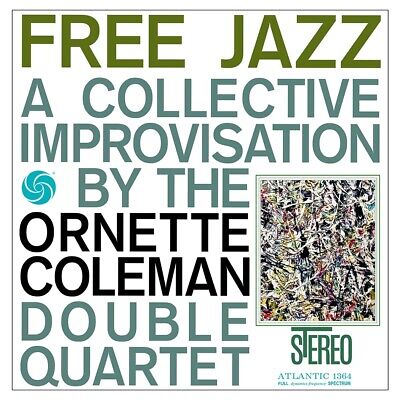
Ornette Coleman Double Quartet: Free Jazz - LP 180g Vinyl, Remastered
€
50
$
58


Favourite Auctions
To save auctions to your favourites, please login
If you don't have an account, please register
Description
Ornette Coleman Double Quartet: Free Jazz - LP 180g Vinyl, Remastered
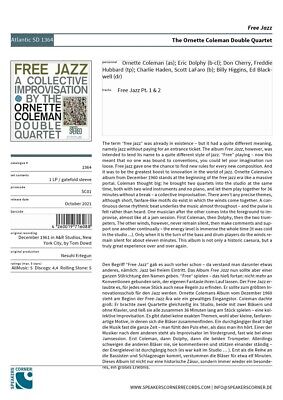
"Free Jazz " - Ornette Coleman (as); Eric Dolphy (b-cl); Don Cherry, Freddie Hubbard (tp); Charlie Haden, Scott LaFaro (b); Billy Higgins, Ed Blackwell (dr) The term 'free jazz' was already in existence – but it had a quite different meaning, namely jazz without paying for an entrance ticket. The album "Free Jazz", however, was intended to lend its name to a quite different style of jazz. 'Free' playing – now this meant that no one was bound to conventions, you could let your imagination run loose. Free jazz gave one the chance to find new rules for every new composition. And it was to be the greatest boost to innovation in the world of jazz. Ornette Coleman’s album from December 1960 stands at the beginning of the free jazz era like a massive portal. Coleman thought big: he brought two quartets into the studio at the same time, both with two wind instruments and no piano, and let them play together for 36 minutes without a break – a collective improvisation. There aren’t any precise themes, although short, fanfare-like motifs do exist in which the winds come together. A continuous dense rhythmic beat underlies the music almost throughout – and the pulse is felt rather than heard. One musician after the other comes into the foreground to improvise, almost like at a jam session. First Coleman, then Dolphy, then the two trumpeters. The other winds, however, never remain silent, then make comments and support one another continually – the energy level is immense the whole time (it was cold in the studio ...). Only when it is the turn of the bass and drum players do the winds remain silent for about eleven minutes. This album is not only a historic caesura, but a truly great experience over and over again. This Speakers Corner LP was remastered using pure analogue components only, from the master tapes through to the cutting head. All royalties and mechanical rights have been paid. Recording: December 1961 in A&R Studios, New York City, by Tom Dowd Production: Nesuhi Ertegun Den Begriff “Free Jazz“ gab es auch vorher schon – da verstand man darunter etwas anderes, nämlich: Jazz bei freiem Eintritt. Das Album Free Jazz nun sollte aber einer ganzen Stilrichtung den Namen geben. “Free“ spielen – das hieß fortan: nicht mehr an Konventionen gebunden sein, der eigenen Fantasie ihren Lauf lassen. Der Free Jazz erlaubte es, für jedes neue Stück auch neue Regeln zu erfinden. Er sollte zum größten Innovationsschub für den Jazz werden. Ornette Colemans Album vom Dezember 1960 steht am Beginn der Free-Jazz-Ära wie ein gewaltiges Eingangstor. Coleman dachte groß: Er brachte zwei Quartette gleichzeitig ins Studio, beide mit zwei Bläsern und ohne Klavier, und ließ sie alle zusammen 36 Minuten lang am Stück spielen – eine kollektive Improvisation. Es gibt dabei keine exakten Themen, wohl aber kleine, fanfarenartige Motive, in denen sich die Bläser zusammenfinden. Ein durchgängiger Beat trägt die Musik fast die ganze Zeit – man fühlt den Puls eher, als dass man ihn hört. Einer der Musiker nach dem anderen steht als Improvisator im Vordergrund, fast wie bei einer Jamsession. Erst Coleman, dann Dolphy, dann die beiden Trompeter. Allerdings schweigen die anderen Bläser nie, sie kommentieren und stützen einander ständig – der Energielevel ist durchgängig hoch (es war kalt im Studio … ). Erst als die Reihe an die Bassisten und Schlagzeuger kommt, verstummen die Bläser für etwa elf Minuten. Dieses Album ist nicht nur eine historische Zäsur, sondern immer wieder ein besonderes, ein großes Erlebnis.Ornette Coleman Double Quartet: Free Jazz - LP 180g Vinyl, Remastered
"Free Jazz " - Ornette Coleman (as); Eric Dolphy (b-cl); Don Cherry, Freddie Hubbard (tp); Charlie Haden, Scott LaFaro (b); Billy Higgins, Ed Blackwell (dr) The term 'free jazz' was already in existence – but it had a quite different meaning, namely jazz without paying for an entrance ticket. The album "Free Jazz", however, was intended to lend its name to a quite different style of jazz. 'Free' playing – now this meant that no one was bound to conventions, you could let your imagination run loose. Free jazz gave one the chance to find new rules for every new composition. And it was to be the greatest boost to innovation in the world of jazz. Ornette Coleman’s album from December 1960 stands at the beginning of the free jazz era like a massive portal. Coleman thought big: he brought two quartets into the studio at the same time, both with two wind instruments and no piano, and let them play together for 36 minutes without a break – a collective improvisation. There aren’t any precise themes, although short, fanfare-like motifs do exist in which the winds come together. A continuous dense rhythmic beat underlies the music almost throughout – and the pulse is felt rather than heard. One musician after the other comes into the foreground to improvise, almost like at a jam session. First Coleman, then Dolphy, then the two trumpeters. The other winds, however, never remain silent, then make comments and support one another continually – the energy level is immense the whole time (it was cold in the studio ...). Only when it is the turn of the bass and drum players do the winds remain silent for about eleven minutes. This album is not only a historic caesura, but a truly great experience over and over again. This Speakers Corner LP was remastered using pure analogue components only, from the master tapes through to the cutting head. All royalties and mechanical rights have been paid. Recording: December 1961 in A&R Studios, New York City, by Tom Dowd Production: Nesuhi Ertegun
Den Begriff “Free Jazz“ gab es auch vorher schon – da verstand man darunter etwas anderes, nämlich: Jazz bei freiem Eintritt. Das Album Free Jazz nun sollte aber einer ganzen Stilrichtung den Namen geben. “Free“ spielen – das hieß fortan: nicht mehr an Konventionen gebunden sein, der eigenen Fantasie ihren Lauf lassen. Der Free Jazz erlaubte es, für jedes neue Stück auch neue Regeln zu erfinden. Er sollte zum größten Innovationsschub für den Jazz werden. Ornette Colemans Album vom Dezember 1960 steht am Beginn der Free-Jazz-Ära wie ein gewaltiges Eingangstor. Coleman dachte groß: Er brachte zwei Quartette gleichzeitig ins Studio, beide mit zwei Bläsern und ohne Klavier, und ließ sie alle zusammen 36 Minuten lang am Stück spielen – eine kollektive Improvisation. Es gibt dabei keine exakten Themen, wohl aber kleine, fanfarenartige Motive, in denen sich die Bläser zusammenfinden. Ein durchgängiger Beat trägt die Musik fast die ganze Zeit – man fühlt den Puls eher, als dass man ihn hört. Einer der Musiker nach dem anderen steht als Improvisator im Vordergrund, fast wie bei einer Jamsession. Erst Coleman, dann Dolphy, dann die beiden Trompeter. Allerdings schweigen die anderen Bläser nie, sie kommentieren und stützen einander ständig – der Energielevel ist durchgängig hoch (es war kalt im Studio … ). Erst als die Reihe an die Bassisten und Schlagzeuger kommt, verstummen die Bläser für etwa elf Minuten. Dieses Album ist nicht nur eine historische Zäsur, sondern immer wieder ein besonderes, ein großes Erlebnis.
×Buy now and save!
Shipping info
Click the Shipping & Payments tab above the listing description for more info
Click the Shipping & Payments tab above the listing description for more info!
Additional delivery notes
PICK UP OPTION
Sorry, our items are NOT available for pick-up.
PAYMENT
Immediate payment is required upon selecting "Buy It Now" or upon checking out through the cart.
We accept payment via All Major Credit Cards (Visa, Mastercard, AMEX, Discover), Google Pay, PayPal, & Apple Pay (on mobile & eBay App).
Thank you for shopping with us on eBay!
Paying via Direct Deposit
Simply add the freight cost to the item cost and forward the total amount to the address to be provided following your purchase.
Additional Information
No additional information at this time
Ask seller a question
You might also like
Darklab Trident to AEG Hub Adapter Grey Salvatore Accardo & Laura Manzini, Il Cremonese - Stradivari, 1715 (1x Hybrid SA Gustav Mahler: Symphony No.9 in D major, Gianandrea Noseda/Orchestra Teatro Regi Fausto Mesolella: Madama Terra - Hybrid SACD ContactTo contact our Customer Service Team, simply click the button here and our Customer Service team will be happy to assist.
Ask seller a question
© Sepea Audio
Shipping & PaymentsClick the Shipping & Payments tab above the listing description for more info
PaymentAccepted Payment Methods
Immediate payment is required upon selecting "Buy It Now" or upon checking out through the cart.
We accept payment via All Major Credit Cards (Visa, Mastercard, AMEX, Discover), Google Pay, PayPal, & Apple Pay (on mobile & eBay App).
Thank you for shopping with us on eBay!
ReturnsReturns are not accepted
Buyer will pay for return shipping.
eBay integration byprice rating