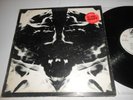
PIXIES -Surfer Rosa 1988 debut VINYL LP Near Mint
$
36


Favourite Auctions
To save auctions to your favourites, please login
If you don't have an account, please register
Description
PLEASE TAKE A LOOK AT MY OTHER eBAY AUCTIONS - ALWAYS EXPECT THE UNEXPECTED
CHECK OUT THE ALTERNATIVE AND INDIE ALBUMS NEWLY LISTED THIS WEEK
Pixies - "Surfer Rose" in stereo on Rough Trade US 38. Complete with insert. This album comes from a great collection of alternative, indie and post-punk vinyl.
Record Grade:Near Mint
Cover Grade: Mint-, no wear to speak of, very slightly "dogeared" top left corner, gold promo stamp embossed on back cover
Labels: Tan and black custom
About the Artist: by Stephen Thomas Erlewine
Combining jagged, roaring guitars and stop-start dynamics with melodic pop hooks, intertwining male-female harmonies and evocative, cryptic lyrics, the Pixies were one of the most influential American alternative rock bands of the late '80s. The Pixies weren't accomplished musicians -- Black Francis wailed and bashed out chords while Joey Santiago's lead guitar squealed out spirals of noise. But the bandmembers were inventive, rabid rock fans who turned conventions inside out, melding punk and indie guitar rock, classic pop, surf rock, and stadium-sized riffs with singer/guitarist Black Francis' bizarre, fragmented lyrics about space, religion, sex, mutilation, and pop culture; while the meaning of his lyrics may have been impenetrable, the music was direct and forceful. The Pixies' busy, brief songs, extreme dynamics, and subversion of pop song structures proved one of the touchstones of '90s alternative rock. From grunge to Brit-pop, the Pixies' shadow loomed large -- it's hard to imagine Nirvana without the Pixies' signature stop-start dynamics and lurching, noisy guitar solos. While the Pixies were touted as the band to bring indie rock into the mainstream, they simply laid the groundwork for the alternative explosion of the early '90s. MTV was reluctant to play their videos, while even modern rock radio didn't put their singles into regular rotation. Furthermore, tensions between leader Black Francis and bassist/vocalist Kim Deal, who wanted to incorporate her songs into the band's repertoire, crippled the band's progress. By the time Nirvana broke the doors down for alternative rock in 1992, the Pixies were effectively broken up. The Pixies were formed in Boston, MA, in 1986 by Charles Thompson and his roommate, Joey Santiago. Born in Massachusetts and constantly shuttling between there and California, Thompson began playing music as a teenager, before he moved to the East Coast for good during high school. Following graduation, he became an anthropology major at the University of Massachusetts. Half way through his studies at the college, he went to Puerto Rico to study Spanish, and after six months he decided to move back to the U.S. to form a band. Thompson dropped out of school and moved to Boston, managing to persuade Santiago to join him. Advertising in a music paper for a bassist who liked "Hüsker Dü and Peter, Paul & Mary," the duo recruited Kim Deal (who was billed as Mrs. John Murphey on the group's first two records), who had previously played with her twin sister Kelly in the folk-rock garage band the Breeders in her hometown of Dayton, OH. On the advice of Deal, the group recruited drummer David Lovering. Inspired by Iggy Pop, Thompson picked the stage name Black Francis and the group named itself the Pixies after Santiago randomly flipped through the dictionary. By the fall, the Pixies had played enough gigs to land a supporting slot for fellow Boston band Throwing Muses. At the Muses concert, Gary Smith, an artist manager and producer at Boston's Fort Apache studios, heard the group and offered to record them. In March 1987, the Pixies recorded 18 songs over the course of three days. The demo, dubbed The Purple Tape, was given to key players within the Boston musical community and the international alternative scene, including Ivo Watts, the head of England's 4AD Records. Impressed with the cassette, Watts signed the band and released eight of the demo's songs as the EP Come On Pilgrim in 1987. The Pixies convened to record their first full-length album, Surfer Rosa, with producer Steve Albini, who had pioneered the thin, abrasive indie-guitar grind with Big Black. Albini gave the band a harder-edged, abrasive guitar sound, yet the group retained its melodic hooks. Released in the spring of 1988, Surfer Rosa earned enthusiastic reviews from the British weekly music press and became a college radio hit in America; in the U.K., the album made inroads on the pop charts. By the end of the year, the buzz on the Pixies had become substantial, and the group signed to Elektra Records. At the end of 1988, the group reentered the studio, this time with British producer Gil Norton. Released in the spring of 1989, Doolittle boasted a cleaner sound and received excellent reviews, which led to greater exposure in America. "Monkey Gone to Heaven" and "Here Comes Your Man" became Top Ten modern rock hits, clearing the way for Doolittle to peak at number 98 on the U.S. charts; in the U.K., it entered the charts at number eight. Throughout their career, the Pixies were more popular in Britain and Europe than America, as evidenced by the success of the Sex and Death tour. The band became notorious for Black Francis' motionless performances, which were offset by Deal's charmingly earthy sense of humor. The tour itself became infamous for the band's in-jokes, such as playing their entire set list in alphabetical order. By the completion of their second American tour for Doolittle at the end of 1989, the group had begun to tire of each other and decided to take a hiatus during the beginning of 1990. During the hiatus, Black Francis went on a brief solo tour and Kim Deal formed a group with Tanya Donnely from the Throwing Muses and bassist Josephine Wiggs of Perfect Disaster, naming it after her teenage band, the Breeders. The Breeders recorded the Albini-produced Pod, which appeared on 4AD in early summer 1990, shortly after the Pixies reconvened to record their third album with Gil Norton. More atmospheric than its predecessors, and relying heavily on Francis' surf rock obsession, Bossanova was released in the fall of 1990; unlike Surfer Rosa or Doolittle, it contained no songs by Deal. Bossanova was greeted with decidedly mixed reviews, but the record became a college hit, generating the modern rock hits "Velouria" and "Dig for Fire" in the U.S. In Europe, the record expanded the group's popularity, hitting number three on the U.K. album charts and paving the way for their headlining appearance at the Reading Festival. Though the supporting tours for Bossanova were successful, tension continued to grow between Kim Deal and Black Francis -- at the conclusion of their English tour, Deal announced from the stage of the Brixton Academy that the concert was "our last show." While the Pixies did cancel their planned American tour, due to "exhaustion," the band reconvened in the spring of 1991 to record its fourth album, again with Gil Norton. Hiring former Captain Beefheart and Pere Ubu keyboardist Eric Drew Feldman as an auxiliary member, the band moved back toward loud rock, claiming to be inspired by the presence of Ozzy Osbourne in a neighboring studio. Upon its fall release, Trompe le Monde was hailed by some as a welcome return to the sound of Surfer Rosa and Doolittle, but closer inspection revealed that it relied heavily on sonic detail and featured very few vocals by Deal and none of her songs. The band embarked on another international tour, playing stadiums in Europe but theaters in America. During the spring of 1992, the Pixies opened for U2 on the opening leg of the Zoo TV tour; it would be their last trek through the United States. Upon the conclusion of the Zoo TV tour the Pixies went on hiatus, with Deal returning to the Breeders, who releasing the EP Safari later that spring. Francis began working on a solo album. As he was preparing to release his solo debut, Francis gave an interview on BBC's Radio 5, announcing that the Pixies were disbanding. He hadn't yet informed the other members; later that day, he faxed them his statement. Inverting his stage name to Frank Black, Francis released his eponymous debut that spring to mixed reviews; over the next few years, Frank Black's audience gradually shrank to a small cult following. The Breeders released their second album, Last Splash, in the fall of 1993. The album became a surprise hit, going gold in the U.S. and spawning the hit single "Cannonball." Soon after, Deal also formed the Amps, who released their one (and only) album, Pacer, in 1995. Santiago and Lovering formed the Martinis in 1995 and appeared on the soundtrack to Empire Records. Although 4AD began issuing archival Pixies releases, including Death to the Pixies 1987-1991, Pixies at the BBC, and Complete B-Sides in the late '90s and early 2000s, those were relatively quiet years for the band's members. After releasing the disappointing The Cult of Ray for American in 1996, Black shuffled between different labels before ending up at spinART for 1999's Pistolero, where he also released his subsequent solo albums, most of which were met with a fair-to-middling response. Deal and the rest of the Breeders, meanwhile, suffered from problems ranging from substance abuse to writer's block, and only surfaced intermittently, spending time in the studio but only having a cover of the Three Degrees' "Collage" on the soundtrack to 1999's The Mod Squad to show for their efforts until they released Title TK in 2002. David Lovering left the Martinis and became the touring drummer for Cracker, and also appeared on Tanya Donelly's Sliding and Diving, but found himself unemployed in the late '90s. Combining his studies in electronic engineering at Wentworth Institute of Technology and his years of performing experience, Lovering dubbed himself a "scientific phenomenalist," a cross between a scientist, performance artist, and magician, and warmed up the crowds at Frank Black, Breeders, Camper Van Beethoven, and Grant Lee Buffalo concerts. Santiago and his wife Linda Mallari continued the Martinis through the '90s, recording several demos and self-released albums. Santiago also began a career composing soundtracks and incidental music, beginning with the score for 2000's Crime & Punishment in Suburbia, to which Black also contributed a track. At the time, rumors circulated that Santiago would join Black on-stage during one of his London dates on the Dog in the Sand tour; though this didn't happen, it at least sparked hopes that the Pixies would eventually reunite. These hopes seemed unfounded until 2003, when Black revealed in an interview that he had considered reuniting the band and that he, Deal, Santiago, and Lovering occasionally got together to jam. Soon after, it was confirmed that the Pixies would reunite in 2004 for U.S. tours in the spring and fall; an appearance at that year's Coachella festival; and gigs in Europe and the U.K. that summer, including performances at the T in the Park, Roskilde, Pinkpop, and V festivals. All 15 of the band's North American warm-up tour dates were recorded and released in limited editions of 1,000 copies, which were sold online and at the shows. The week after the Pixies' Coachella appearance, the long-awaited DVD retrospective Pixies and revamped best-of Wave of Mutilation: The Best of Pixies were released by 4AD.
All of my records are shipped in sturdy cardboard LP or 45 rpm mailers with appropriate padding (heavy cardboard fillers or bubble wrap or "peanuts" or some combination thereof". With the exception of sealed LP's, all LP's are removed from their outer sleeves to prevent seam splitting. Upon request, I will give your sealed LP's the same treatment. (once an LP is shipped sealed, it cannot be returned once opened).
All records are carefully graded. In an attempt to give customers an accurate impression of condition rather than adhere to somewhat arbitrary criteria, I give an "overall presentation" grade, supplemented when necessary with additional remarks. Please refer to my grading system below for a more detailed explanation.
MY GRADING SYSTEMS: I’ve been told that I grade conservatively. My NM (near mint) is my highest grade for opened records (which would also include unplayed records). It’s a 9 or 10 on a 1-10 scale. M- would be equivalent to an 8; VG++ to a 7; VG+ to a 6; VG to a 5; VG- to a 4; G to a 3; F to a 2 and P to a 1. The same scale applies when I grade covers (jackets). Significant defects are specifically noted and taken into consideration in the grade.
GRADING DESCRIPTIONS
RECORDS:
- GRADING is based on the following criteria
- Sealed = store stock new
- Near Mint = like new or near new with only one or two small insignificant defects, a 9 or better on a 1-10 scale
- Mint- = very nice. Would be Near Mint, except for a couple of light hairlines or scuffs, which do not affect play
- VG++ = still a very nice record with all or nearly all of its original gloss but may have a few more light, surface marks, hairlines, needle tracks or the like which should not materially effect play
- VG+ = a nice, but used record that may have a series of light scuffs or scratches. It probably plays with a few pops, but has no serious problems.
- VG = a well-used record that still should sound OK when played, but may have moderate surface noise, pops, etc.
- VG- = a well-worn record that plays through without skipping, but will do until a better copy comes along.
- Good = not actually good at all but probably will play through but with much in the way of surface noise, pops, crackles, etc. Still, will have no cracks, chips or the like
- Fair = you’re getting this record just to own but not to play
- Poor = the sky’s the limit, generally I will discard a record this bad (and sell the cover, jacket or sleeve alone) unless the label holds some particular interest
VISUAL GRADING: All records are visually graded only unless I state that they are play-graded. Some major labels were pressed on better quality vinyl and will sound better than a record which visually appears the same on "budget" labels which were pressed on lower quality vinyl. Recording techniques also varied. The sound on live albums may be far inferior to studio recordings. There may also be defects in the pressing which are invisible. The point is that an album on a high quality label that was visually graded VG+ may sound better than an album on a budget label that was visually graded Mint- or even Near Mint. Please refer to my return policy, below. But please don’t be shocked if a record visually graded Near Mint doesn’t sound state of the art. If I base my grade on a PLAY GRADE, I will state this specifically in my grading section.
COVERS: There are really too many possible defects regarding covers to be as specific in my definitions as I had been with my record grades. But please keep in mind these general grading guidelines:
- I will give greater weight to the condition of the front cover than back cover when assigning an overall grade
- No cover with a cut out hole or saw mark will be graded Near Mint even if it is still in factory shrink and there is no other wear
- I will not reduce the grade of a cover for stickers which are glued to the jacket by the record company (eg. Contains the hit song Expressway to Your Heart); but will reduce the grade for stickers glued on the cover by stores, previous owners, etc.
- If I write that a cover has a bb hole, I’m talking about a small cut out hole
- A saw mark is a narrow cut in the perimeter of the cover, could be anywhere and vary in length from 1/2” to 2” at the most.
- The overall grade takes into consideration any stated defects. For example, if I grade a cover VG+ and then state it has 6” top and bottom seam splits - I’ve already reduced the grade because of the seam splits. If the seams weren’t split, the cover would be graded higher such as VG++ or Mint-.
Shipping Costs: CURRENT SHIPPING RATES AND POLICIES.
The winning bidder pays for shipping.
DOMESTIC SHIPPING WITHIN THE UNITED STATES: Due to increase in postage rates, I have sometimes been losing money on shipping as I send all records in sturdy professional mailers with one or more fillers. Therefore, I now will be using the eBay postage calculator method. This will also result in a more equitable charge for priority mail shipments. Instead of charging $9 across the board, those who live in the southeast and mid-east will reap the benefit of reduced priority mail rates.
DOMESTIC AND INTERNATIONAL SHIPMENTS: COMBINED SHIPPING - Save money when I mail 2 or more records in the same package.
INTERNATIONAL SHIPMENTS: Overseas customers are invited to bid. As with U.S. shipments, I will use eBay's postage calculator for all overseas shipments. Postage to Canada is substantially less than to other countries - if you live in Canada and don't see a separate rate for Canada , please e-mail me and I'll modify the invoice to reflect the lower shipping charges. Surface mail is no longer available for overseas. Express Mail International and Priority Mail International are available - rates are substantially higher than first class international and will be quoted for each purchase if buyer requests this service. Express Mail International or Registered mail is now required for purchases over $100. Generally, Express International costs $35 for 1 album and additional albums are about $5-6 more. Registered costs about $26 for 1 album, about $5 more for each additional album. Registered mail may not be available to certain countries. I am sorry but the increased risks and costs must be passed on to the international buyer. On the bright side of things, Express Mail International will get you the package faster and it is safer. Registered mail is the safest form of shipment (but not as fast as express mail international). So there are benefits to the buyer as well as the seller.
Please check out my other eBay auctions and stores listings.
I’ve been listing all types of records - mostly LP’s - including 50’s and 60’s rock ‘n’ roll, country, folk jazz, blues, personalities, new wave and punk, surf, psych, spoken word, comedy, etc., etc....... I try to list unusual, unique or obscure records, not the ones that you see all the time. While a majority of my listings are albums, you’ll often find a nice selection of 45’s, EP’s or picture sleeves...and an occasional 78 or two.
My return policy: . You may return an item if it's not in the conditon described. You may not return items if you decide you don't like the music. I will return the base price of the item unless I make an error in shipment such as sending you the wrong record or cd. In that case, you will be reimbursed for the cost of the item and shipping both ways. In addition, the item must be returned in its original condition , i.e. the way it was shipped when it left my hands. While a very high percentage of my records arrive safe and sound (I use professional mailers and a filler or two, more for 78’s), they occasionally are damaged in transit. If that happens, I won’t accept the return of the record or other item.
Sealed Records: After a sealed record is paid for, I will gladly open it before mailing to make sure that the record is new & unplayed. If the record is not, I will give a full refund. Even though it is easy to spot most resealed records from the 50's and 60's [I will mention that in the desription if it looks like a possibility], not all records from the 70's & 80's are quite as obvious. Please ask for any details about the seal of a particular record & I will be happy to answer.
Any other questions? About anything? Please e-mail me at redbank66@gmail.com .
price rating