PROCOL HARUM 200 gram CLASSIC Records w/7" & 12" BONUS
$
210


Favourite Auctions
To save auctions to your favourites, please login
If you don't have an account, please register
Description
PLEASE READ COMPLETE ITEM DESCRIPTION BEFORE BIDDING
ALL VINYL IS RATED VISUALLY
UNDER DIRECT SUNLIGHT & BRIGHT INCANDESCENT LIGHT
SORRY, No RETURNS
all sales final
All Sales Final
ALL SALES FINAL
PAYMENT MUST BE RECEIVED WITHIN:
7 DAYS
AFTER AUCTION CLOSE!!
Shipping is
GUARANTEED
within
5 BUSINESS
days of payment!!!
SEE
GOLDMINE RECORD GRADING
INFORMATION at VERY BOTTOM
____________________
UP FOR AUCTION IS
A Regal Zonophone
200 Gram SUPER VINYL Pressing
USING THE
QUIEX SV-P
PRESSING PROCESS
http://www.classicrecords.com/blog/
of
PROCOL HARUM
"PROCOL HARUM"
CLASSIC RECORDS
MONO
RELEASED in 1967
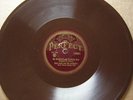
7" Bonus disc is WHITE coloured heavy vinyl
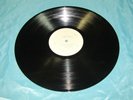
12" Bonus Disc is light TEAL marbled color 200 gram vinyl
12" LP is BLACK 200 gram vinyl
Procol Harum’s self-titled debut album in its original mono UK version as released by Regal Zonophone, a sub-label of EMI. ---
There have been several electronically processed or “fake” stereo versions though the session was only mixed to mono. ---
Furthermore, Classic Records adhered to Regal Zonophone’s decision to keep the hit single track, “Whiter Shade of Pale,” off of the full-length LP. ---
Where as Regal Zonophone released that song separately as a 7” single, Classic has included it as a 12” disc with the song cut at 33 1/3 on one side and 45 on the other. Good stuff! ---
And if that’s not enough, Classic also unearthed the only two four-track tapes that came out of the Procol Harum session. Those tapes hold alternate takes of “Whiter Shade of Pale” and “Lime Street Blues” (which originally backed “Whiter Shade” on the 7” single). ---
Classic took those four-track tapes to David Gilmore’s house boat-turned recording studio on the River Thames and, using mixing engineer John Leckie, created the first-ever true stereo version of “Whiter Shade of Pale.” ---
Granted, it is an alternate take of the song, but only a diehard fan can hear the subtle instrumental differences. ---
______
A monaural, audiophile vinyl LP edition released in 2003 by Classic Records, with yet a different track order, including "Homburg" as the opening track, and without "A Whiter Shade of Pale" or "Good Captain Clack." The set includes bonus singles of the original monaural and alternate stereo versions of "A Whiter Shade of Pale."
______
From: http://www.audiophilelps.com/
The Mastering Process:
Audiophile LPs are produced with much greater care and consideration at every stage of the mastering process. Some labels clearly state a special feature of their mastering process. For example, Classic Records use tube amplification in every stage of their mastering process, following the logic that tubes sound warmer and less clinical than transistors and as such, the resulting LPs should follow suit. In many cases, mastering engineers may have to work with master tapes that are damaged or which need level adjustments to compensate for deterioration.. It is an art to do this and to still achieve a sound as close as possible to that of the original recording. In some cases, there will be master recording notes to work with, but damage to a recording tape over time can mean that some albums take considerable time to master properly. In any case, there are some clear cases of significant improvements in sound from some audiophile LPs when compared to original pressings, for example with Carole King's Tapestry from Classic Records, which sounds much more realistic and less 'EQ'd' than standard original pressings. There are some mastering engineers who have achieved small celebrity status for the quality of their mastered albums, for example Steve Hoffman and Bernie Grundman.
BLACK LP VINYL is:
MINT MINUS (NEVER PLAYED)
TEAL 12" 45/33 rpm single VINYL is:
MINT MINUS (NEVER PLAYED)
WHITE 7" VINYL is:
MINT MINUS (PLAYED ONE TIME)
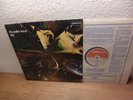
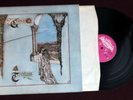
GATEFOLD COVER is:
MINT MINUS
PLEASE REVIEW PHOTOS
________________________________________________________________
SOME HISTORY BEHIND THE ALBUM:
PROCOL HARUM
Procol Harum Studio album by Procol Harum Released September 1967 Recorded June 1967Olympic Studios, London Genre Psychedelic rock, Progressive rock, Blues rock Label Regal Zonophone
Deram (original release)
A&M (reissue)
Polydor (original release)
Repertoire (reissue)
RCA Italiana Producer Denny Cordell Professional reviews
- Allmusic link
- Georgiy Starostin (13/15) link
Procol Harum
(1967) Shine on Brightly
(1968)
Procol Harum is the self-titled first album by British rock band Procol Harum, released in September 1967. The original Deram release of the LP included a large poster of the album cover artwork by Dickinson.
Though the album was recorded on multi-track, it was issued in mono-only in the UK, and in mono and rechanneled stereo in the US. Despite extensive searching, the original multi-track tapes have not been located and thus a stereo mix of the original 10 tracks may never be possible. Several alternate takes (marked + in the list, below), however, have been mixed into stereo and are available on CD.
Track listing
Original UK release
All songs written by Gary Brooker and Keith Reid, except when noted.
Side one- "Conquistador" †
- "She Wandered Through the Garden Fence" † (two versions of this song were released--one with a 'firm' ending, not a 'fade-out')
- "Something Following Me" †
- "Mabel"
- "Cerdes (Outside the Gates Of)" †
- "A Christmas Camel"
- "Kaleidoscope" †
- "Salad Days (Are Here Again)" *
- "Good Captain Clack"
- "Repent Walpurgis" † (Matthew Fisher)
All songs written by Gary Brooker (music) and Keith Reid (lyrics), except "Repent Walpurgis" written by Matthew Fisher, after works by French organist Charles-Marie Widor and German composer Johann Sebastian Bach. In 2005, Matthew Fisher filed suit in the Royal Courts of Justice against Gary Brooker and his publisher, claiming that Fisher co-wrote the music for "A Whiter Shade of Pale". According to cnn.com, on July 30, 2009 the House of Lords issued a final verdict on the case. A lower court had ruled in Fisher's favor in 2006, granting him co-writing credits and a share of the royalties. A higher court partly overturned the ruling in 2008, giving Fisher co-writing credit but no money. The Court of Appeal had previously held that Fisher had waited too long to bring his claim to court. The House of Lords disagreed, stating there was no time limitation for such claims. Lord David Neuberger of Abbotsbury's opinion stated: "Fisher's subsequent contribution was significant, and, especially the introductory eight bars, an important factor in the work's success...".
The track "Salad Days (Are Here Again)" is credited as being from the film Separation[3].
The album has been repackaged and reissued many times. Two of the significant reissues are:
- Procol Harum...Plus!, a 1998 CD compilation on the Westside label including all the songs from both the Deram and Regal Zonophone releases, plus "Homburg" (The group's second single) and nine additional tracks from the period.
- A monaural, audiophile vinyl LP edition released in 2003 by Classic Records, with yet a different track order, including "Homburg" as the opening track, and without "A Whiter Shade of Pale" or "Good Captain Clack." The set includes bonus singles of the original monaural and alternate stereo versions of "A Whiter Shade of Pale."
- Procol Harum's lyricist Keith Reid told Songfacts that the music for "Conquistador" was written before the lyrics. He added that this was unusual as "99 out of 100" of the Procol Harum songs back then, "were written the words first, and then were set to music." [4] The live version from the album Procol Harum Live with the Edmonton Symphony Orchestra charted as a US single in 1972.
Legacy
The album was named as one of Classic Rock magazine's "50 Albums That Built Prog Rock".[5]
Personnel
- Matthew Fisher – organ
- Dave Knights – bass guitar
- B.J. Wilson – drums
- Robin Trower – guitar
- Gary Brooker – piano and vocals
- Keith Reid – lyrics
On "A Whiter Shade of Pale" only:
- Ray Royer (in place of Trower) – guitar
- Bill Eyden [6] (in place of Wilson) – drums
______________________________
The GOLDMINE STANDARD
for
RECORD GRADING
THE TRUTH BEHIND THE GRADES
Most of the time, LPs are sold with two grades — one for the record and one for the cover. We list only one grade, however, because with some exceptions, albums without covers are worthless, and covers without the accompanying record are worthless. If an album is graded VG for the cover and VG+ for the record, add the two values together and divide by 2 to get a rough estimate of the value of a “mixed-grade” LP.
Most records are graded visually. This is because most record dealers have lot of records — hundreds of thousands in some cases — and they don’t have the time to play their entire stock. That said, some defects are easy to see, such as scratches and warps. Others are subtle, such as groove wear from using a cheap or poorly aligned tone arm. It has been our experience that older LPs (1950s to about 1971) tend to play better than they look, and newer LPs (at least until 1989) tend to play worse than they look.
When grading your records, do so under a strong light. Look at everything carefully, and then assign a grade based on your overall observations.
______________________________________________________
Here are the standard grades for record albums, from best to worst.
SEALED ALBUMS
Still-sealed albums can — and do — bring even higher prices than those in our listings. However, you must be careful when paying a premium for sealed LPs of any kind for several reasons:
1. They may have been re-sealed.
2. The records may not be in Near Mint condition.
3. The record inside may not be the original or most-desirable pressing.
4. Most bizarre of all, the wrong record my be inside. (I’ve had this happen to me; I opened a sealed album by on MCA artist only to find a record by a different MCA artist inside! Fortunately, I didn’t pay a lot of or that sealed LP. I would have been quite upset if I had!)
MINT (M)
These are absolutely perfect in every way. Often rumored but rarely seen, Mint should never be used as a grade unless more than one person agrees that the record or sleeve truly is in this condition.
There is no set percentage of the Near Mint value these can bring; it is best negotiated between buyer and seller.
NEAR MINT (NM OR M-)
A good description of a NM record is “it looks like it just came from a retail store and it was opened for the first time.” In other words, it’s nearly perfect.
Many dealers won’t use a grade higher than this, implying (perhaps correctly) that no record or sleeve is ever truly perfect.
Near mint records are shiny and free of visible defects. No writing, stickers, other markings or spindle marks appear on the label. No major factory defects are present; a record and label obviously pressed off center is not Near Mint.
If played, an NM record will do so without surface noise. Near Mint records don’t have to be “never played”; a record used on an excellent turntable can remain NM after many plays if the disc is properly cared for.
NM covers have no creases, ring wear or seam splits of any kind.
These are high standards, and they are not on a sliding scale. A record or sleeve from the 1950s must meet the same standards as one from the 1990s or 2000s to be Near Mint!
It is estimated that no more than 2 to 4 percent of all records remaining from the 1950s and 1960s are truly Near Mint. This is why they fetch such high prices, even for more common items. They must meet these standards to qualify.
VERY GOOD PLUS (VG+) OR EXCELLENT (E)
A good description of a VG+ Record is “except for a couple of minor things, this would be Near Mint.”
Most collectors, especially those who want to play their records, will be happy with a VG+ record, especially if it is toward the high end of the grade, (sometimes called VG++ or E+).
VG+ records may show some slight signs of wear, including light scuffs or very light scratches that do not affect the listening experience. Slight warps that don’t affect the sound are OK. Minor signs of handling are OK, too, such as telltale marks around the center hole, so long as repeated playing has not misshapen the hole. There may be some very light ring wear or discoloration, but it should be barely noticeable.
VG+ Covers should have only minor wear. A VG+ cover might have some very minor seam wear or a split (less than one inch long) at the bottom, the most vulnerable locataion. Also, a VG+ cover may have some defacing, such as a cut-out marking. Covers with cut-out markings can never be considered Near Mint.
VERY GOOD (VG)
Many of the imperfections found on a VG+ Record are more obvious on a VG record. That said, VG records — which usually sell for no more than 25 percent of a an NM record — are among the biggest bargains in record collecting, because moost of the “big money” goes for more perfect copies. For many listeners, a VG record or sleeve will be worth the money.
VG records have more obvious flaws than their counterparts in better shape. They lack most of the original gloss found on factory-fresh records. Groove wear is evident on sight, as are light scratches deep enough to feel with a fingernail.
When played, a VG record has surface noise, and some scratches may be audible, especially in soft passages and during a song’s intro and ending. But the noise won’t overpower the music otherwise. Minor writing, tape or a sticker can detract from the label. Many collectors who have jukeboxes will use VG records in them and not think twice. They remain a fine listening experience, just not the same as if it were in better shape.
VG covers will have many signs on human handling. Ring wear in the middle or along the edges of the cover, where the edge of a record would reside, is obvious; it may appear on all three sides, thought it won’t be obvious upon looking. Someone might have written on it or stamped a price tag on it, too.
GOOD (G), GOOD PLUS (G+) OR VERY GOOD MINUS (VG-)
Lower-grade records go for 10 to 15 percent of the Near Mint value, if you are lucky.
Good does not mean bad! The record still plays through without skipping, so it can serve as filler until something better comes along. But it has significant surface noicse and groove wear. The label is worn and exhibits significant ring wear, heavy writing or obvious damage caused by tring to remove tape or stickers and failing miserably.
A Good to VG- cover has ring wear to the point of distraction, has seam splits obvious on sight and may have even heavier writing, such as huge radio station letters written across the front to deter theft.
If the item is common, it’s probably better to pass it up. But if you’ve been seeking it for a long time, get it cheap and look to upgrade.
POOR (P) AND FAIR (F)
Poor and Fair records go for 0 to 5 percent of the Near Mint value, if they go at all.
More likely, they end up going in the trash. Records are cracked, impossibly warped or skip and/or repeat when an attempt is made to play them. Covers are so heavily damaged that you almost want to cry.
Only the most outrageously rare items ever sell for more than a few cents in this condition — again, if they sell at all
7" - standard 45 RPM co - cut-out pc - picture sleeve sl - slight UK- United Kingdom (British Pressing) 10" - 10-inch vinyl LP dj - Disc Jockey (promo) pi - picture Insert (CD Single) sm spl - Seam Split US - United States (domestic pressing) 12" - 12-inch single ep - Extended Play promo - promotional copy soc - sticker on cover va - various artists bb - bb hole in cover imp - import ps - picture sleeve (45) sol - slicker on label wlp - white label promo boot - bootleg lp - 12" vinyl album quad - quadraphonic ss - still sealed woc - writing on cover cc - cut corner m - mono Lp re - reissue s/t - self titled wol - writing on label cd - compact disc nap - not affecting play ri - reissue tc - title cover (12" and CD's) xol - "x" on label cd3 - 3" compact disc single non-lp- not on full-length LP or CD rpm - revolutions per minute ti - title insert (CD single) * check the context, as "m" can also mean "mint" cd5 - 5" compact disc single oc - original cast recording rw - ring wear toc - tape on cover coh - cut-out-hole ost - original soundtrack s - stereo Lp tol - tape on label
price rating




![ORCHID/SONS OF JESUS - JIMMY RILEY [ROOTS REGGAE] 7](https://www.popsike.mobi/php/thumbnail.php?url=https://www.popsike.pics/pix/20110710/300576057938.jpg)