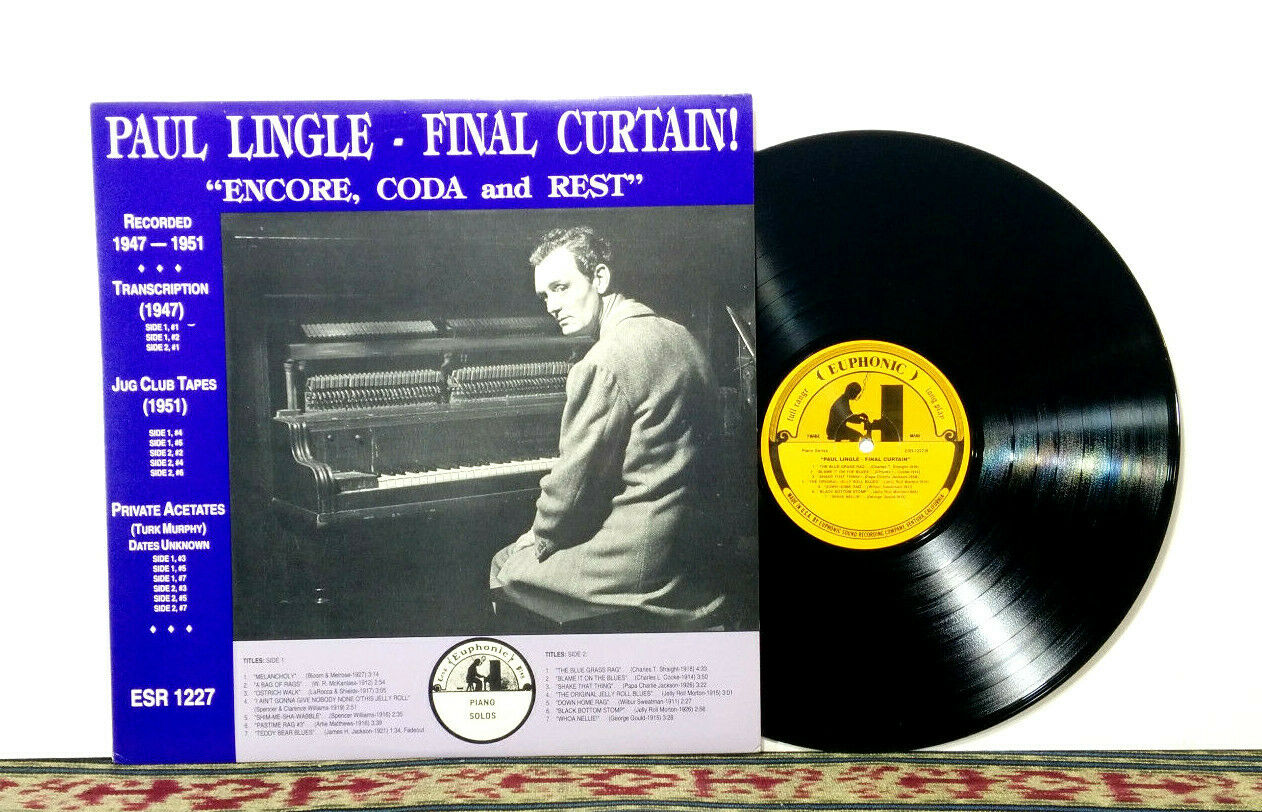
Paul Lingle, Final Curtain, LP 1982, Stride Piano, Ragtime Traditional Jazz - NM
$
22


Favourite Auctions
To save auctions to your favourites, please login
If you don't have an account, please register
Description
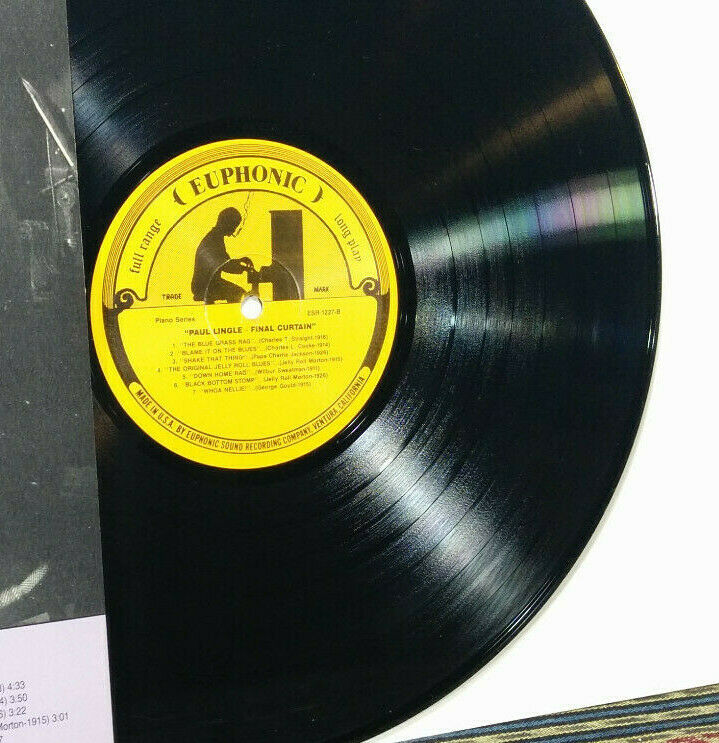
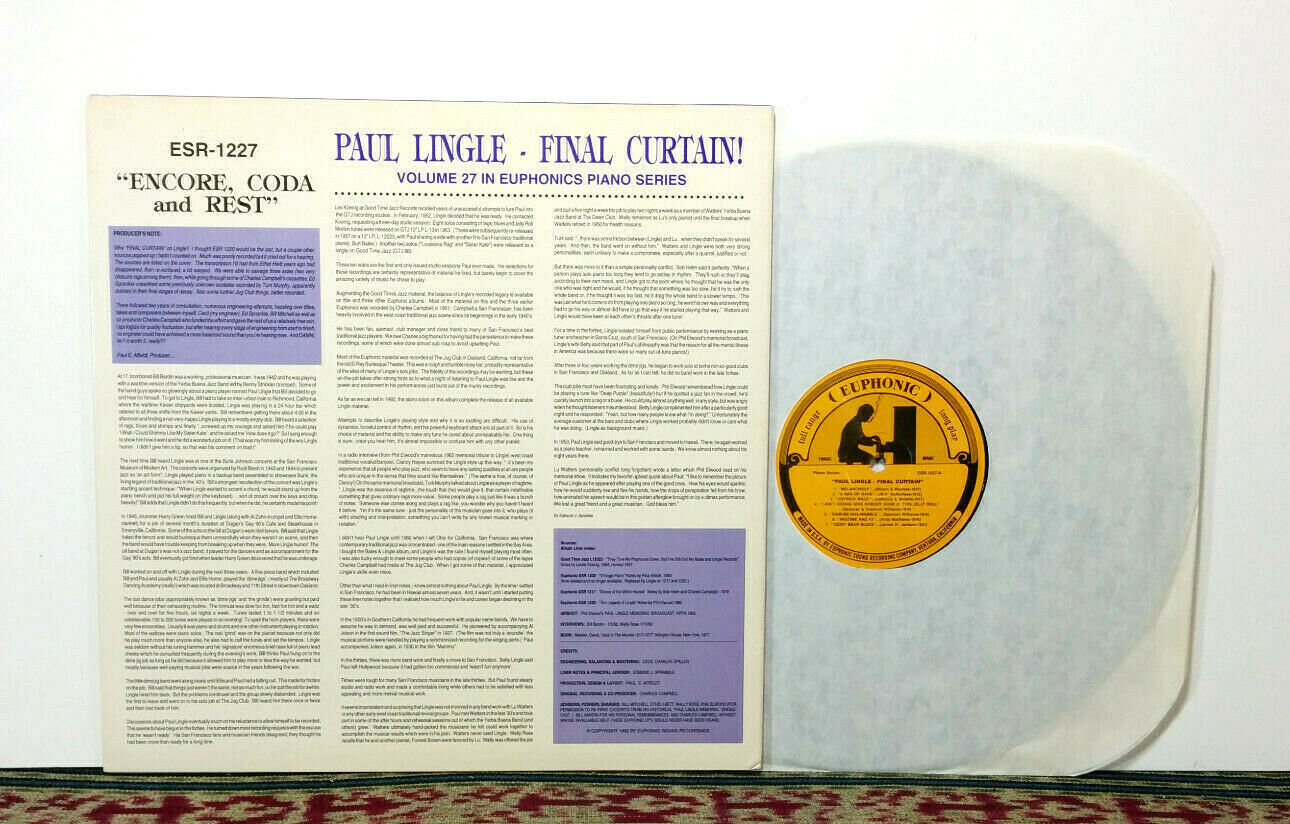
(Visually Graded) Vinyl looks Near Mint and sleeve looks EX. See pics and info for details.
Paul Lingle – Final Curtain
Label:
Euphonic Sound Recordings – ESR-1227
Series:
Euphonic's Piano Series – Volume 27
Format:
Vinyl, LP, Album, 12", 33 RPM
Country:
US
Released:
1982
Genre:
Jazz
Style:
Traditional Jazz, Ragtime, Stride
Tracklist
A1 Melancholy
A2 A Bag Of Rags
A3 Ostrich Walk
A4 I Ain't Gonna Give Nobody None O' This Jelly Roll
A5 Shim-Me-Sha-Wabble
A6 Pastime Rag #3
A7 Teddy Bear Blues
B1 The Blue Grass Rag
B2 Blame It On The Blues
B3 Shake That Thing
B4 The Original Jelly Roll Blues
B5 Down Home Rag
B6 Black Bottom Stomp
B7 Whoa Nellie!
Notes
Includes Euphonic Catalog Order Form
- Paul Lingle
Profile:
American jazz and ragtime pianist, born December 3, 1902 in Denver, Colorado, died October 30, 1962 in Honolulu, Hawaii.
Settled on the West Coast in the 1920s, accompanied Al Jolson in many films, including "The Jazz Singer". During the 1930s studio work, during the 1940s mainly as ragtime soloist in West Coast night clubs. Moved to Hawaii in 1952. -discogs
- Ragtime Music Description
Ragtime (sometimes spelled rag-time or rag time) is a traditional, early jazz musical style that enjoyed its peak popularity between 1895 and 1919. Its cardinal trait is its syncopated or "ragged" rhythm. Wikipedia
Originally developed in the U.S. in the late 19th century by various composers of whom one of he best known is Scott Joplin (whose most famous work is "Maple Leaf Rag"). In it's earliest period ragtime was also associated with the cakewalk (a dance). After 1900 the ragtime style became very popular worldwide and there are many recordings of ragtime from the UK, Europe and elsewhere in the period before 1920 (but mostly before WWI).
Ragtime, while an obvious precursor of jazz, is a written [ie. composed] music rather than an improvised form of music. Despite sharing the syncopated base that was an essential element in later jazz, ragtime was performed as written and had a strict form (usually with an "A" section followed by a "B" section and then a return to the "A" section - or some variation of this) and was often played by military or brass bands. During it's peak period (before 1920) most ragtime recordings are by orchestras or bands or are vocal recordings of ragtime songs. Ragtime recordings can frequently (but not always) be identified by the use of the word rag or ragtime in the title.
- We really want you to be happy with your purchase. If the vinyl does not live up to our grading upon receipt, please email us through EBAY before leaving a Feedback or Rating so that we may correct it for you. We have a 30 day return policy.
---------------------------------
- General Standards For Record Grading -
M
(MINT) New, May be sealed. Perfection, no flaws, defects, marks, scuffs or otherwise indications of being handled or played. Any scuffs, hairline scratches or other marks disqualify discs from this category. New looking sleeve, usually in original shrink wrap.
NM-
(NEAR MINT) The vinyl is almost flawless, bright and shiny. A very light minor, barely visible mark or two may be permitted. The disc should play with no audible noise. The label is bright, clean and unmarked. Sleeve looks almost Mint.
VG++/EX
(VERY GOOD ++/ Excellent) Disc plays near perfectly, but may have minor, light scuffs that do not interfere with the sound quality. There can possibly be a light hairline scratch or two but nothing that is obvious or affects play. Vinyl is bright and shiny; label is clean and unmarked. Sleeve is Excellent.
price rating