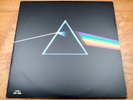
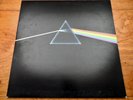
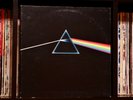
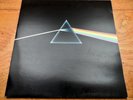
Pink Floyd The Dark Side of The Moon Rare Harvest Records Wally Master Vinyl
$
100


Favourite Auctions
To save auctions to your favourites, please login
If you don't have an account, please register
Description
Welcome to Classic Cadillac Records! I visually grade all my records as accurately as possible and will never grade anything above Near Mint unless it's still sealed. Please note that a visual grade can differ from a play grade, and am happy to spot check a record upon request. All orders are shipped within 1 business day (usually sooner) and packed with extra care to ensure fast, safe arrival. Please look closely at all pictures, read all relevant details and ask any questions you may have before buying. I offer a full 30-day return policy on everything I sell, so buy with confidence! And most importantly, thanks for looking!
The Dark Side of the Moon Studio album by Pink Floyd Released 1 March 1973 Recorded 31 May 1972 – 9 February 1973 Studio EMI, London Genre
- Progressive rock
- psychedelic rock
- Harvest
- Capitol
(1972) The Dark Side of the Moon
(1973) Wish You Were Here
(1975) Singles from The Dark Side of the Moon
- "Money"
Released: 7 May 1973 - "Us and Them"
Released: 4 February 1974
The Dark Side of the Moon is the eighth studio album by the English progressive rock band Pink Floyd, released on 1 March 1973 by Capitol Records in the US and on 16 March 1973 by Harvest Records in the UK. Developed during live performances before recording began, it was conceived as a concept album that would focus on the pressures faced by the band during their arduous lifestyle, and also deal with the mental health problems of the former band member Syd Barrett, who had departed the group in 1968. New material was recorded in two sessions in 1972 and 1973 at EMI Studios (now Abbey Road Studios) in London.
The record builds on ideas explored in Pink Floyd's earlier recordings and performances, while omitting the extended instrumentals that characterised the band's earlier work. The group employed multitrack recording, tape loops, and analogue synthesisers, including experimentation with the EMS VCS 3 and a Synthi A. The engineer Alan Parsons was responsible for many aspects of the recording, and for the recruitment of the session singer Clare Torry, who appears on "The Great Gig in the Sky".
The Dark Side of the Moon explores themes such as conflict, greed, time, death, and mental illness. Snippets from interviews with the band's road crew and others are featured alongside philosophical quotations. The sleeve, which depicts a prismatic spectrum, was designed by Storm Thorgerson in response to the keyboardist Richard Wright's request for a "simple and bold" design which would represent the band's lighting and the album's themes. The album was promoted with two singles: "Money" and "Us and Them".
The Dark Side of the Moon has received widespread critical acclaim and is often featured in publication listings of the greatest albums of all time. It brought international fame and wealth to all four band members. A blockbuster release of the album era, it also propelled record sales throughout the music industry during the 1970s. The Dark Side of the Moon is certified 14× platinum in the United Kingdom, and topped the US Billboard Top LPs & Tape chart, where it has charted for 996 weeks. By 2013, The Dark Side of the Moon had sold over 45 million copies worldwide, making it the band's best-selling release, the best-selling album of the 1970s, and the fourth-best-selling album in history. In 2012, the album was selected for preservation in the United States National Recording Registry by the Library of Congress for being "culturally, historically, or aesthetically significant". It was inducted into the Grammy Hall of Fame in 1999.
Background
Following Meddle in 1971, Pink Floyd assembled for a tour of Britain, Japan and the United States in December of that year. In a band meeting at drummer Nick Mason's home in Camden, bassist Roger Waters proposed that a new album could form part of the tour. Waters' idea was for an album that dealt with things that "make people mad", focusing on the pressures faced by the band during their arduous lifestyle, and dealing with the apparent mental problems suffered by former band member Syd Barrett. The band had explored a similar idea with 1969's The Man and The Journey. In an interview for Rolling Stone, guitarist David Gilmour said: "I think we all thought – and Roger definitely thought – that a lot of the lyrics that we had been using were a little too indirect. There was definitely a feeling that the words were going to be very clear and specific."
Generally, all four members agreed that Waters' album concept unified by a single theme was a good idea. Waters, Gilmour, Mason and keyboardist Richard Wright participated in the writing and production of the new material, and Waters created the early demo tracks at his Islington home in a small studio built in his garden shed. Parts of the new album were taken from previously unused material; the opening line of "Breathe" came from an earlier work by Waters and Ron Geesin, written for the soundtrack of The Body, and the basic structure of "Us and Them" borrowed from an original composition by Wright for Zabriskie Point. The band rehearsed at a warehouse in London owned by The Rolling Stones, and then at the Rainbow Theatre in Finsbury Park, London. They also purchased extra equipment, which included new speakers, a PA system, a 28-track mixing desk with a four channel quadraphonic output, and a custom-built lighting rig. Nine tonnes of kit was transported in three lorries; this would be the first time the band had taken an entire album on tour. The album had been given the provisional title of Dark Side of the Moon (an allusion to lunacy, rather than astronomy). However, after discovering that that title had already been used by another band, Medicine Head, it was temporarily changed to Eclipse. The new material premièred at The Dome in Brighton, on 20 January 1972, and after the commercial failure of Medicine Head's album the title was changed back to the band's original preference.
Dark Side of the Moon: A Piece for Assorted Lunatics, as it was then known, was performed in the presence of an assembled press on 17 February 1972 – more than a year before its release – at the Rainbow Theatre, and was critically acclaimed. Michael Wale of The Times described the piece as "bringing tears to the eyes. It was so completely understanding and musically questioning." Derek Jewell of The Sunday Times wrote "The ambition of the Floyd's artistic intention is now vast." Melody Maker was less enthusiastic: "Musically, there were some great ideas, but the sound effects often left me wondering if I was in a bird-cage at London zoo." The following tour was praised by the public. The new material was performed in the same order in which it was eventually recorded; differences included the lack of synthesizers in tracks such as "On the Run", and Bible readings replaced by Clare Torry's vocals on "The Great Gig in the Sky".
Pink Floyd's lengthy tour through Europe and North America gave them the opportunity to make continual improvements to the scale and quality of their performances. Work on the album was interrupted in late February when the band travelled to France and recorded music for French director Barbet Schroeder's film La Vallée. They then performed in Japan and returned to France in March to complete work on the film. After a series of dates in North America, the band flew to London to begin recording, from 24 May to 25 June. More concerts in Europe and North America followed before the band returned on 9 January 1973 to complete the album.
Legacy
It's changed me in many ways, because it's brought in a lot of money, and one feels very secure when you can sell an album for two years. But it hasn't changed my attitude to music. Even though it was so successful, it was made in the same way as all our other albums, and the only criterion we have about releasing music is whether we like it or not. It was not a deliberate attempt to make a commercial album. It just happened that way. We knew it had a lot more melody than previous Floyd albums, and there was a concept that ran all through it. The music was easier to absorb and having girls singing away added a commercial touch that none of our records had.– Richard Wright
The success of the album brought wealth to all four members of the band; Richard Wright and Roger Waters bought large country houses, and Nick Mason became a collector of upmarket cars. Some of the profits were invested in the production of Monty Python and the Holy Grail. Engineer Alan Parsons received a Grammy Award nomination for Best Engineered Recording, Non-Classical for The Dark Side of the Moon, and he went on to have a successful career as a recording artist with the Alan Parsons Project. Although Waters and Gilmour have on occasion downplayed his contribution to the success of the album, Mason has praised his role. In 2003, Parsons reflected: "I think they all felt that I managed to hang the rest of my career on Dark Side of the Moon, which has an element of truth to it. But I still wake up occasionally, frustrated about the fact that they made untold millions and a lot of the people involved in the record didn't."
Part of the legacy of The Dark Side of the Moon is in its influence on modern music, the musicians who have performed cover versions of its songs, and even in modern urban myths. Its release is often seen as a pivotal point in the history of rock music, and comparisons are sometimes drawn between Pink Floyd and Radiohead – specifically their 1997 album OK Computer – which has been called The Dark Side of the Moon of the 1990s, owing to the fact that both albums share themes relating to the loss of a creative individual's ability to function in the modern world.
Rankings
The Dark Side of the Moon has frequently appeared on rankings of the greatest albums of all-time. In 1987, Rolling Stone listed the record 35th on its "Top 100 Albums of the Last 20 Years", and sixteen years later, in 2003 the album polled in 43rd position on the magazine's list of the "500 Greatest Albums of All Time". and was voted 43rd again on the magazine's 2012 list. In 2006, it was voted "My Favourite Album" by the Australian Broadcasting Corporation's audience. NME readers voted the album eighth in their 2006 "Best Album of All Time" online poll, and in 2009, Planet Rock listeners voted the album the "greatest of all time". The album is also number two on the "Definitive 200" list of albums, made by the National Association of Recording Merchandisers "in celebration of the art form of the record album". It came 29th in The Observer's 2006 list of "The 50 Albums That Changed Music", and 37th in The Guardian's 1997 list of the "100 Best Albums Ever", as voted for by a panel of artists and music critics. The album's cover has been lauded by critics and listeners alike, VH1 proclaiming it the fourth greatest in history, and Planet Rock listeners the greatest of all time. In 2013, The Dark Side of the Moon was selected for preservation in the United States National Recording Registry by the Library of Congress for being deemed "culturally, historically, or aesthetically significant". In 2014, readers of Rhythm voted it the seventh most influential progressive drumming album.
Covers, tributes and samples
One of the more notable covers of The Dark Side of the Moon is Return to the Dark Side of the Moon: A Tribute to Pink Floyd. Released in 2006, the album is a progressive rock tribute featuring artists such as Adrian Belew, Tommy Shaw, Dweezil Zappa, and Rick Wakeman. In 2000, The Squirrels released The Not So Bright Side of the Moon, which features a cover of the entire album. The New York dub collective Easy Star All-Stars released Dub Side of the Moon in 2003 and Dubber Side of the Moon in 2010. The group Voices on the Dark Side released the album Dark Side of the Moon a Cappella, a complete a cappella version of the album. The bluegrass band Poor Man's Whiskey frequently play the album in bluegrass style, calling the suite Dark Side of the Moonshine. A string quartet version of the album was released in 2004. In 2009, The Flaming Lips released a track-by-track remake of the album in collaboration with Stardeath and White Dwarfs, and featuring Henry Rollins and Peaches as guest musicians.
Several notable acts have covered the album live in its entirety, and a range of performers have used samples from The Dark Side of the Moon in their own material. Jam-rock band Phish performed a semi-improvised version of the entire album as part their show on 2 November 1998 in West Valley City, Utah. Progressive metal band Dream Theater have twice covered the album in their live shows, and in May 2011 Mary Fahl released From the Dark Side of the Moon, a song-by-song "re-imagining" of the album. Milli Vanilliused the tape loops from Pink Floyd's "Money" to open their track "Money", followed by Marky Mark and the Funky Bunch on Music for the People.
Dark Side of the Rainbow
Dark Side of the Rainbow and Dark Side of Oz are two names commonly used in reference to rumours (circulated on the Internet since at least 1994) that The Dark Side of the Moon was written as a soundtrack for the 1939 film The Wizard of Oz. Observers playing the film and the album simultaneously have reported apparent synchronicities, such as Dorothy beginning to jog at the lyric "no one told you when to run" during "Time", and Dorothy balancing on a tightrope fence during the line "balanced on the biggest wave" in "Breathe". David Gilmour and Nick Mason have both denied a connection between the two works, and Roger Waters has described the rumours as "amusing". Alan Parsons has stated that the film was not mentioned during production of the album.
Track listing
All lyrics written by Roger Waters.
Side one No. Title Music Lead vocals Length 1. "Speak to Me" Nick Mason instrumental 1:30 2. "Breathe" (listed as "Breathe in the Air" on the original LP label)- Roger Waters
- David Gilmour
- Richard Wright
- Waters
- Gilmour
- Waters
- Gilmour
- Wright
- Mason
- Wright
- Clare Torry
- Waters
- Wright
- Gilmour
- Mason
- Wright
price rating
![EAGLES, The Long Run PROMO USA EXC- LP [I Can't Tell You Why/Heartache Tonight]](https://www.popsike.mobi/php/thumbnail.php?url=https://www.popsike.pics/pix/20190703/383033584117.jpg)