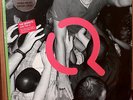
Public Enemy It Takes A Nation Of Millions DEF 462415 1 1988 1st Press Vinyl VG+
£
19
$
25



Favourite Auctions
To save auctions to your favourites, please login
If you don't have an account, please register
Description
Public Enemy It Takes A Nation Of Millions DEF 462415 1 1988 1st Press Vinyl VG+. Condition is "New".
FREE FOR UK - Will Post Worldwide, but only International Tracked & Signed - I’ve put 25 Pounds as a benchmark price Worldwide - But contact me first before paying to let me know where you are in the world and I will work out a price for you and change the price accordingly.
(Posted using Record Mailers)
VINYL = VG+ Record surfaces may show some signs of slight wear, but they don't affect the listening experience and are of a cosmetic nature only. I have cleaned and play-tested both sides of the record and it plays really well and still sounds great!
SLEEVE = VG+
PLEASE SEE PHOTOS AS PART OF DESCRIPTION
I'm selling a lot of my vinyl and CD collection, because the kids are getting bigger and the house is getting smaller! Basically, it was either the kids or the records, sadly the coin came down tails...Thanks for looking!
ONLINE REVIEW
Nation found a way to expound on the explosive soundscapes of the debut without exhausting listeners or cluttering the mix. Chuck, Sadler, and the Shocklee brothers’ production as the Bomb Squad was as thick as its source material was diverse; it was rap, soul, rock, funk and musique concrète all at once. “Most people were saying that rap music was noise,” Hank Shocklee told Rolling Stone in 1989, “and we decided, ‘If they think it’s noise, let’s show them noise.’” "She Watch Channel Zero?!" pulls its central riff from Slayer’s thrash classic “Angel of Death”. “Night of the Living Baseheads” outfits a stable of trusty James Brown samples with over a dozen assorted soul and rap tidbits and bridges, folding in elements of ESG’s “UFO” and David Bowie’s “Fame”. Snippets of legendary speeches from Jesse Jackson and Malcolm X and stage banter from Public Enemy’s successful European tour formed connective tissue between songs for a unified listening experience that only let up briefly in the middle and finally, at the end. The Bomb Squad built beats like ships in a bottle, delicately stitching tiny pieces of black history into layered blasts of sound. Public Enemy looked and sounded a fright to the uninitiated, but careful attention showed every piece of this black radical machine moving in perfect concert.
Nation of Millions netted Public Enemy the elusive American audience and platinum sales their debut couldn’t, and it changed the face of rap music. The hip-hop landscape of ‘89-’90 was dotted with sample-heavy sons of Nation. Chuck sent early copies of the album out west to Dre and Ice Cube, and N.W.A.’s landmark Straight Outta Compton cropped up like a gangsta rap rejoinder to the Bomb Squad ethos. (Cube would later tap the team for production on his post-N.W.A. solo debut AmeriKKKa’s Most Wanted.) De La Soul’s 3 Feet High and Rising and the Beastie Boys’ Paul’s Boutique added a playful, psychedelic charm to the proceedings. Nation’s message of black self-sufficiency resonated through the proudly Afrocentric art of A Tribe Called Quest, X Clan, Brand Nubian and more. Beyond the ’80s, the music of Nation of Millions would continue to find new life in unexpected places: Weezer’s 1996 comeback single “El Scorcho” nicked its “I’m the epitome of public enemy” barb from “Don’t Believe the Hype,” and Jay-Z’s 2006 post-retirement salvo “Show Me What You Got” is a nod to Nation’s “Show ‘Em Whatcha Got.” (Without Public Enemy we don’t get Kanye West; in addition to sampling the Long Island legends liberally, Kanye inherited a bit of his fearless politics and kitchen sink beat construction from here.)
Critics warmed to Public Enemy in the wake of It Takes a Nation of Millions but remained suspicious of their political affiliations. “If Farrakhan’s a prophet my dick’s bigger than Don Howland’s,” Village Voice scribe Robert Christgau quipped in a year-end roundup, “but that doesn’t make Nation of Millions anything less than the bravest and most righteous experimental pop of the decade.” Others would be less warm as Professor Griff’s incendiary ethics began to strike sour notes. He publicly accused white America of bestiality during a press-filled gig at Rikers Island in 1988 and voiced a shocking disdain for Jews and gays in various interviews overseas. In the spring of 1989, Washington Times scribe David Mills sat Griff down and coaxed out a rant charged with cold, ugly hate speech that would quickly torch the group’s reputation on both sides of the Atlantic.
Privately, Chuck struggled with how to respond to the controversy. At first, he stood by Griff, then he announced Griff’s expulsion from the group, then, amid a growing media firestorm, he disbanded Public Enemy entirely. The hiatus was short-lived. Spike Lee’s blistering racial relations passion play Do the Right Thing debuted a week after the firestorm with a new Public Enemy song as its theme. “Fight the Power” summarized the mood of both the film and the climate it was released into. It telegraphed the tense discomfort of a New York summer where innocent youth from Central Park to Bensonhurst would pay the ultimate price for being black in the wrong place at the wrong time. By July, the seemingly inactive group had a #1 Billboard rap single, and work was quietly underway on a Nation of Millions follow-up.
Fear of a Black Planet from 1990 made kindling of the previous summer’s anti-Public Enemy sentiment, quoting the group’s biggest critics in interludes and ribbing them in the songs. “Contract on the World Love Jam” weaves negative news reports into a scene-setting intro; later “Incident at 66.6 FM” sets outraged calls from a Chuck D squareoff with New York political radio host Alan Colmes over sedate keys and drums, playing the grumps for squares without even responding to their charges. A late album Terminator X showcase snarkily titled “Leave This Off Your Fuckin Charts” is a tenacious dare. Elsewhere, Fear pulls the camera off P.E. to speak to community issues. “Anti-Nigger Machine” and “Who Stole the Soul?” levied heavy accusations of censorship while “911 Is a Joke” explored black community police mistrust and “Fear of a Black Planet” tackled apprehension about interracial dating. Sourcing Public Enemy’s media struggles back to age-old racial strife was a brash, heavy-handed play, but Fear’s genius trick was coating its righteous rage in music that aimed to groove where earlier songs seemed to want to maim.
The strife that birthed Nation of Millions and Black Planet is mirrored in some of the upheaval of 2014. The business of hip-hop has changed, as free mixtapes have supplanted retail albums as the chief method of kicking off a rap career. Artistic freedom can evaporate at the drop of a gavel. (see: Lord Finesse’s pursuit of Mac Miller for borrowing a beat on a free release.) Hip-hop has again had its political mettle tested by social injustices too systemic to deny. Returning to It Takes a Nation of Millions to Hold Us Back and Fear of a Black Planet for these just-released reissues is an encouraging reminder of what a hip-hop album can be to the world, a peek back at that one time a rap act pissed square into the mouth of adversity and came away unscathed. Hear the drummer get wicked.price rating


![Passion and Warfare [25th Anniversary] by Steve Vai (180g Clear Vinyl 2LP), Frid](https://www.popsike.mobi/php/thumbnail.php?url=https://www.popsike.pics/pix/20190312/223444880397.jpg)



![Don Leisure - Shaboo Strikes Back [New Vinyl LP]](https://www.popsike.mobi/php/thumbnail.php?url=https://www.popsike.pics/pix/20220616/363875319333.jpg)