Queen A Night at the Opera Vinyl LP EMTC 103 1st UK Press Blairs Hype L K HEAR
$
39


Favourite Auctions
To save auctions to your favourites, please login
If you don't have an account, please register
Description
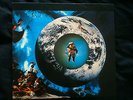
Above are actual photos and not stock photos of the record
Summary
This is the 1975 original UK 1st pressing of “A Night At The Opera” by Queen released on EMI (EMTC 103). The cover is an embossed gatefold. This comes with the 3 die-cut corner picture inner sleeve and printed EMTC 103(1) in the lower right hand corner in near mint condition.
The record condition is a solid very good plus (VG+). The cover grade is very good plus (VG+) due to some light discoloration due to age and dirt over the years with a nice clean spine and no split edges.
A unique feature of this record record is 2 hype stickers on the back. Since this original UK 1st was imported into Belgium it has a yellow French language hype sticker and a Queen photo sticker on the back cover. I have never seen this before so I am not sure if this was included for all the UK imports at that time.
A UK 1st press copy with hype stickers for the true collector!
Please note my 100% feedback and bid with confidence.
Please listen to the unfiltered samples below. If you're reading this you know the tunes. Works on most browsers except Firefox. Just hit the play button wait a few seconds and enjoy!
Artist: Queen
Album: A Night At The Opera
Label: EMI records –EMTC 103 Original 1st Press
Released: 1975
Country: United Kingdom
Genre: Rock
RECORD CONDITION: VG+
VISUAL GRADE
Side A: VG++
Side B: VG+ 2 light scuffs
Grading Notes:
Glossy. 2 scuffs on side B. Graded under Goldmine standards. I am conservative with my grading.
Mint>Near Mint> Exc>Very Good+>Very Good>Good+>Good>Fair>Poor
Other Notes:
Embossed gatefold cover. 1st pressing. Blairs in deadwax. Includes 3 die-cut corner picture inner sleeve and printed EMTC 101 (1) in bottom right hand corner in near mint condition.
As an experienced record collector for 50 years it’s time for me to sell down my collection since I have way too many records. Overall this record is an enjoyable listen with super clean production.
PLAY GRADE
Side A: VG++
Side B: VG+
I play grade all records and take pride is being very honest and critical in my grading. I have bought over graded records before which are only visually graded from resellers. This record plays very well! Just listen to the samples. 1st press which sounds significantly better on vinyl compared with cds or mp3s.
Format: Vinyl, LP, Album, Gatefold
COVER CONDITION
Very Good Plus Front/Back: Embossed cover. Cover has some discoloring due to age. Back has discoloring, light ring wear and 2 hype stickers -1 yellow sticker in French or Flemish and another sticker of Queen in the bottom left hand corner. This record came from Belgium has these stickers are unique to that country since this is the imported UK copy to Belgium. Crisp spine and edges with no splits. Pictures tell the story.
ADDRESS: Made in Great Britain
Tracklist
A1
Death On Two Legs (Dedicated To ...)
A2
Lazing On A Sunday Afternoon
A3
I'm In Love With My Car
A4
You're My Best Friend
A5
'39
A6
Sweet Lady
A7
Seaside Rendezvous
B1
The Prophet's Song
B2
Love Of My Life
B3
Good Company
B4
Bohemian Rhapsody
B5
God Save The Queen
Companies etc
• Phonographic Copyright (p) – Queen (4)
• Recorded At – Sarm East Studios
• Recorded At – Roundhouse Studios
• Recorded At – Olympic Studios
• Recorded At – Rockfield Studios
• Recorded At – Scorpio Studios
• Recorded At – Lansdowne Studios
• Mixed At – Sarm East Studios
• Published By – B. Feldman
• Published By – Trident Music (2)
• Printed By – Garrod & Lofthouse
• Mastered At – EMI Studios
Credits
Art Direction – David Costa
Bass – John Deacon
Engineer [Invaluable Additional Engineering] – Gary Lyons
Engineer [Executive] – Mike Stone
Guitar – Brian May
Management – John Reid (8)
Mastered By – Blairs*
Percussion – Roger Taylor
Producer – Roy Thomas Baker
Producer, Composed By, Arranged By, Performer – Queen
Technician [Equipment Supervision] – John Harris (20)
Vocals, Piano [Bechstein Debauchery] – Freddie Mercury
Deadwax:
Matrix Side A YAX 5063-2 BLAIRS
Matrix Side B YAX 5064-3 BLAIRS
Need to know more about “A Night At The Opera” See below
SHIPPING
U.S. Domestic shipping via USPS Media Mail: $4. Shipping in cardboard LP record mailer. LPs are shipped outside of cover jacket. Bubble wrap used. Shipping is within 1 business day of receiving payment. International buyers welcome as long as you are part of the Ebay Global Shipping program.
PAYMENT By Paypal only
RETURNS
All records are guaranteed to be in the condition stated. All returns accepted within 14 days after receiving the item. Refund will be given as Money Back after receiving the item.
About “A Night At The Opera”
AllMusic ***** User Rating ***** Review by Stephen Thomas Erlewine
Queen were straining at the boundaries of hard rock and heavy metal on Sheer Heart Attack, but they broke down all the barricades on A Night at the Opera, a self-consciously ridiculous and overblown hard rock masterpiece. Using the multi-layered guitars of its predecessor as a foundation, A Night at the Opera encompasses metal ("Death on Two Legs," "Sweet Lady"), pop (the lovely, shimmering "You're My Best Friend"), campy British music hall ("Lazing on a Sunday Afternoon," "Seaside Rendezvous"), and mystical prog rock ("'39," "The Prophet's Song"), eventually bringing it all together on the pseudo-operatic "Bohemian Rhapsody." In short, it's a lot like Queen's own version of Led Zeppelin IV, but where Zep find dark menace in bombast, Queen celebrate their own pomposity. No one in the band takes anything too seriously, otherwise the arrangements wouldn't be as ludicrously exaggerated as they are. But the appeal -- and the influence -- of A Night at the Opera is in its detailed, meticulous productions. It's prog rock with a sense of humor as well as dynamics, and Queen never bettered their approach anywhere else.
From Wikipedia
A Night at the Opera is the fourth studio album by the British rock band Queen, released in November 1975. Co-produced by Roy Thomas Baker and Queen, it was the most expensive album ever recorded at the time of its release. A commercial success, A Night at the Opera has been voted by the public and cited by music publications as one of Queen's finest works.
The album takes its name from the Marx Brothers film A Night at the Opera, which the band watched one night at the studio complex when recording.[The album was originally released by EMI in the United Kingdom, where it topped the UK Albums Chart for four non-consecutive weeks, and Elektra Records in the United States, where it peaked at No. 4 on the Billboard 200 and became the band's first platinum selling album in the US.
Song information
"Death On Two Legs (Dedicated to....)"
"Death on Two Legs (Dedicated to...)" could only be referred to as Freddie Mercury's hate letter towards Queen's ex-manager, Norman Sheffield, who for some years was reputed to have mistreated the band and abused his role as their manager from 1972 to 1975; however this was later denied in an autobiography by Sheffield published in 2013 titled "Life on Two Legs: Set The Record Straight" where Sheffield denies such rumours and refers to copies of the original 1972 Queen management contracts between Sheffield and Queen included in the book as proof to back up his defence. Though the song never made a direct reference to him, upon listening to a playback of the song at Trident Studios during the time of album release, Sheffield was appalled and sued the band and the record label for defamation which resulted in an out of court settlement, and this later revealed to the public his connection to the song.
During live performances, Mercury would usually rededicate the song to "a real motherfucker of a gentleman", although this line was censored on the version that appeared on their Live Killers album in 1979. Other than on the version of said live album, he'd said it was dedicated to a "motherfucker I used to know".
In the Classic Albums documentary about the making of A Night at the Opera, Brian May stated that the band at first was somewhat taken aback by the incisiveness of Mercury's lyrics and described by Mercury as being, "so vindictive that Brian felt bad singing it." After the song came together, it was agreed that the "author should have his way", and the song went on as penned.
As with "Bohemian Rhapsody", most of the guitar parts on this song were initially played on piano by Mercury, to demonstrate to May how they needed to be played on guitar. "Death on Two Legs" remained on the setlist until, and well into, The Game Tour in 1980, then was dropped. The piano introduction though was played through the Hot Space and Works tours.
"Lazing on a Sunday Afternoon"
"Lazing on a Sunday Afternoon" is another song by Mercury. He played piano and did all of the vocals. The lead vocal was sung in the studio and reproduced through headphones in a tin bucket elsewhere in the studio. A microphone picked up the sound from the bucket, which gives it a hollow "megaphone" sound. The guitar solo is also reported to have been recorded on the vocal track, as there were no more tracks to record on, as explained by producer Roy Thomas Baker during the 'Classic Albums' documentary. The key change going into the guitar solo (Eb to A) is a tritone relationship, making it a jarring, but very effective, transition into the key of E minor for the next track, "I'm in Love with My Car".
"I'm in Love with My Car"
"I'm in Love with My Car" is amongst Roger Taylor's most famous songs in the Queen catalogue. The song was initially taken as a joke by May, who thought that Taylor was not serious when he heard a demo recording.
Taylor played the guitars in the original demo, but they were later re-recorded by May on his Red Special. The lead vocals were performed by Taylor on the studio version, and all released live versions.The revving sounds at the conclusion of the song were recorded by Taylor's then current car, an Alfa Romeo. The lyrics were inspired by one of the band's roadies, Johnathan Harris, whose Triumph TR4 was evidently the "love of his life". The song is dedicated to him, the album says: "Dedicated to Johnathan Harris, boy racer to the end".
When it came down to releasing the album's first single, Taylor was so fond of his song that he urged Mercury (author of the first single, "Bohemian Rhapsody") to allow it to be the B-side and reportedly locked himself in a cupboard until Mercury agreed. This decision would later become the cause of much internal friction in the band, in that while it was only the B-side, it generated an equal amount of publishing royalties for Taylor as the main single did for Mercury.
The song was often played live during the 1977–81 period. Taylor sang it from the drums while Mercury played piano and provided backing vocals. It was played in the Queen + Paul Rodgers Tour in 2005 and the Rock the Cosmos Tour in 2008. Taylor would again play the song for his concerts with The Cross and solo tours, where instead of drums he played rhythm guitar.
"You're My Best Friend"
"You're My Best Friend" was Queen's first single written by John Deacon. He composed while he was learning to play piano. He played the Wurlitzer Electric Piano (which Mercury called a "horrible" instrument in an interview) on the recording and overdubbed the bass later on. The song was written for his wife, Veronica Tetzlaff. The song was a top 10 hit.
"'39"
"'39" was May's attempt to do "sci-fi skiffle". "'39" relates the tale of a group of space explorers who embark on what is, from their perspective, a year-long voyage. Upon their return, however, they realise that a hundred years have passed, because of the time dilation effect in Einstein's special theory of relativity, and the loved ones they left behind are now all dead or aged.
May sings the song on the album, with backing vocals by Mercury and Taylor. During live performances, Mercury sang the lead vocal. May had asked bassist John Deacon to play double bass as a joke but a couple of days later he found Deacon in the studio with the instrument, and he had already learned to play it.
Since Queen had named their albums A Night at the Opera and A Day at the Races after two of the Marx Brothers' most popular films, surviving brother Groucho Marx invited Queen to visit him at his Los Angeles home in March 1977 (five months before he died). The band thanked him, and performed "'39" a cappella.
George Michael performed "'39" at the Freddie Mercury Tribute Concert in April 1992.Michael cited this song as his favourite Queen song, claiming he used to busk it on the London Underground.
Recently, Queen have included the song on the setlists of their tours with Adam Lambert; as on the album, it is sung by May.
"Sweet Lady"
"Sweet Lady" is a distortion-driven fast rocker written by May. The song is an unusual rock style in 3/4 meter (which gives way to 4/4 at the bridge). Taylor remembers it as the most difficult drumming part he ever recorded.
The backing track was probably recorded live as you can hear the snare wires on the snare drum of Taylor's kit vibrating along with Deacon's bass guitar riff.
"Seaside Rendezvous"
"Seaside Rendezvous", written by Mercury, is notable for the mock-instrumental bridge section which begins at around 0:51 into the song. The section is performed entirely by Mercury and Taylor using their voices alone. Mercury imitates woodwind instruments including a clarinet and Taylor mostly brass instruments, including tubas and trumpets, and even a kazoo; during this section Taylor hits the highest note on the album, C6. The "tap dance" segment is performed by Mercury and Taylor on the mixing desk with thimbles on their fingers. Mercury plays both grand piano and jangle honky-tonk.
"The Prophet's Song"
The Prophet's Song was composed by May (working title "People of the Earth"). On the show In the Studio with Redbeard, which spotlighted A Night at the Opera, May explained that he wrote the song after a dream he'd had about a great flood while he was recovering from being ill while recording the Sheer Heart Attack album, and is the source of some of the lyrics. He spent several days putting it together, and it includes a vocal canon sung by Mercury. The vocal, and later instrumental canon was produced by early tape delay devices. It is a heavy and dark number with a strong progressive rock influence and challenging lead vocals. At over eight minutes in length, it's also Queen's longest song (not counting the untitled instrumental track on "Made in Heaven").
As detailed by May in a documentary about the album, the speed-up effect that happens in the middle of the guitar solo was achieved by starting a reel-to-reel player with the tape on it, as the original tape player was stopped.
The dream May had was about The Great Flood, and lyrics have references from the Bible and the Noah's Ark account.
"Love of My Life"
"Love of My Life" was written for Mercury's girlfriend at the time, Mary Austin, and is one of his most covered songs (there have been versions by many acts like Extreme featuring May, Scorpions and Elaine Paige). Mercury played piano (including a classical solo) and did all of the vocals with startling multi-tracking precision. May played harp (doing it chord by chord and pasting the takes to form the entire part), Gibson Hummingbird acoustic guitar (which he'd bought in Japan) and his Red Special.
Brian May eventually arranged the song so it could be played on an acoustic 12 string for live performances.
"Love of My Life" was such a concert favourite that Mercury frequently stopped singing and allowed the audience to take over. It was especially well received during concerts in South America, and the band released the song as a single there. When Queen and Paul Rodgers performed the song (specifically Brian solo) he sang almost none of the words and let the audience sing it all, continuing the tradition.
"Good Company"
"Good Company" was written and sung by May, who provides all vocals and plays a "Genuine Aloha" ukulele.
The recording is remarkable for featuring an elaborate recreation of a Dixieland-style jazz band, produced by way of May's Red Special guitar and Deacy Amp. Brian May composed the song on a Banjo ukelele, but recorded the song with a regular ukulele instead.
The song is a narrative tale, told by a man who in young age was advised by his father to "take care of those you call your own, and keep good company". In his younger years, the singer follows his father's advice, keeping his friends and marrying a girl named Sally. However, after their marriage, he begins to lose interest in his friends, who gradually disappear. As he grows older, he becomes increasingly skilled at and dedicated to his occupation, working long nights and neglecting his family.
Eventually, the man's efforts are rewarded, he begins his own Limited company (which is also a pun, since throughout the rest of the song "company" is used in the sense of companions). Ever more dedicated to his business, he hardly notices as his wife leaves him.
The song finishes with the speaker as an elderly man, puffing on his pipe and pondering the lessons of his life, which he has no one left to share with.
"Bohemian Rhapsody"
"Bohemian Rhapsody" was written by Mercury with the first guitar solo composed by May. All piano, bass and drum parts, as well as the vocal arrangements, were thought up by Mercury on a daily basis and written down "in blocks" (using note names instead of sheets) on a phonebook. The other members recorded their respective instruments with no concept of how their tracks would be utilised in the final mix. The now famous operatic section was originally intended to be only a short interlude of "Galileos" that connected the ballad and hard rock portions of the song.
During the recording, the song became affectionately known as "Fred's Thing" to the band, and the title only emerged during the final sessions.
Despite being twice as long as the average single in 1975 and garnering mixed critical reviews initially, the song became immensely popular, topping charts worldwide (where it remained for an unprecedented nine weeks in the UK) and is now widely regarded as one of the most significant rock songs in history.
After Freddie Mercury's death, the song was rereleased as a double A-side to "These Are The Days Of Our Lives" on 9 December 1991 in the UK and September 5, 1991 in US.
"God Save the Queen"
May recorded a cover version of God Save the Queen, the British national anthem, in 1974 before their Sheer Heart Attack tour. He played a guide piano which was edited out later and added several layers of guitars.After the song was completed it was played as an outro at virtually every concert while the band were taking their bows. When recording the track May played a rough version on piano for Roy Thomas Baker. He called his own skills on the piano sub-par at the time. He performed the song live on the roof of Buckingham Palace for the Queen's golden jubilee in 2002.
May has stated that he performed the song on the roof of Buckingham Palace as a homage to Jimi Hendrix's version of "The Star-Spangled Banner".
Guitar layering is one of May's distinctive techniques as a rock guitarist. He has said that the technique was developed whilst looking for a violin sound. For tracks like this, he stated he can use "up to 30" layers, using a small amplifier named the 'Deacy Amp' built by Deacon, and later released commercially like the "Brian May" amplifier by Vox.
"God Save the Queen" is the only-ever song recorded by Queen that was not written by any of the band members, but May is credited as its arranger.
You have many choices on Ebay. No one will do more to earn your business. Thank you for reading my listing!
price rating