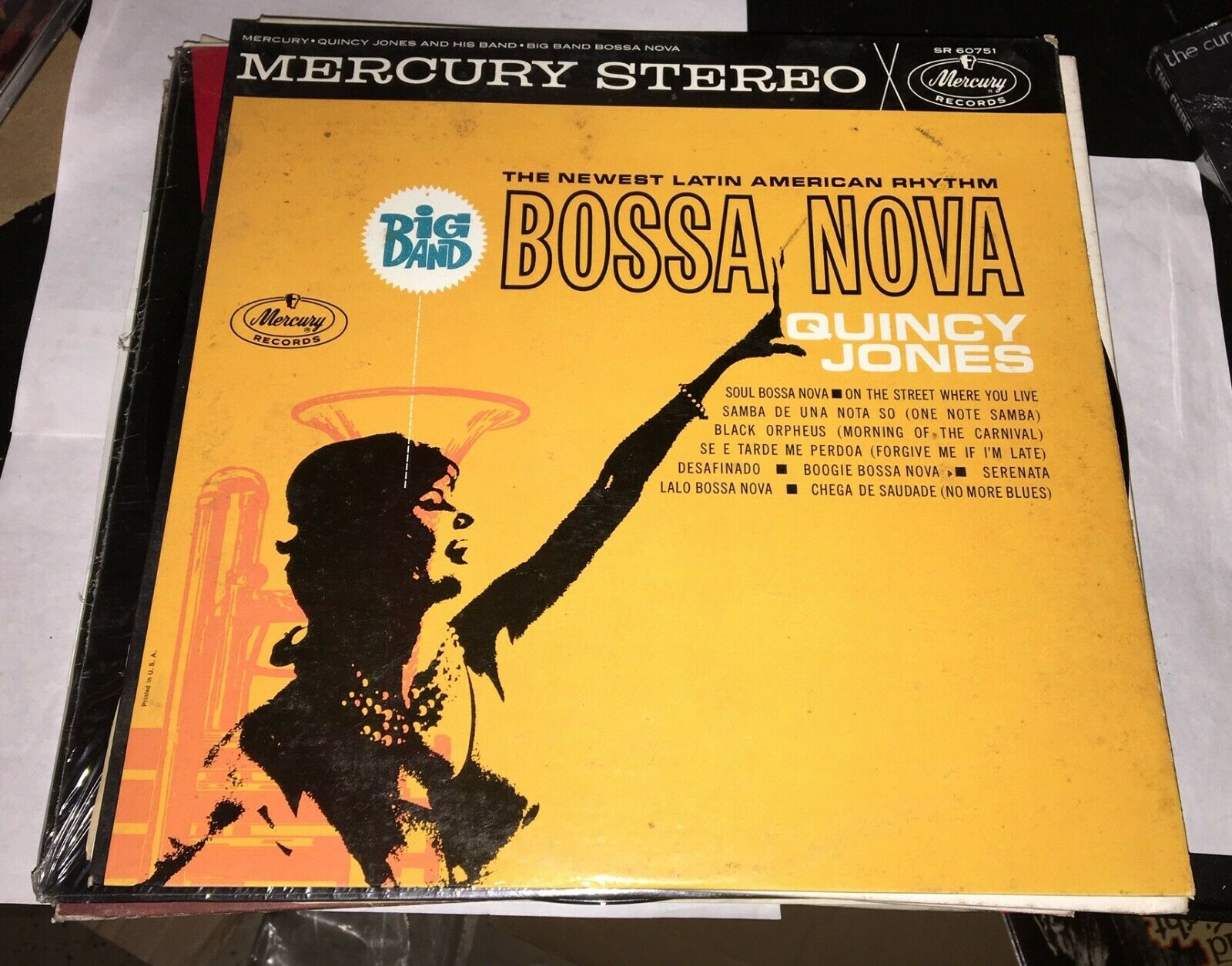
Quincy Jones & His Orch. Big Band Bossa Nova Mercury ?SR 60751 1962 VG+/VG+
$
15


Favourite Auctions
To save auctions to your favourites, please login
If you don't have an account, please register
Description
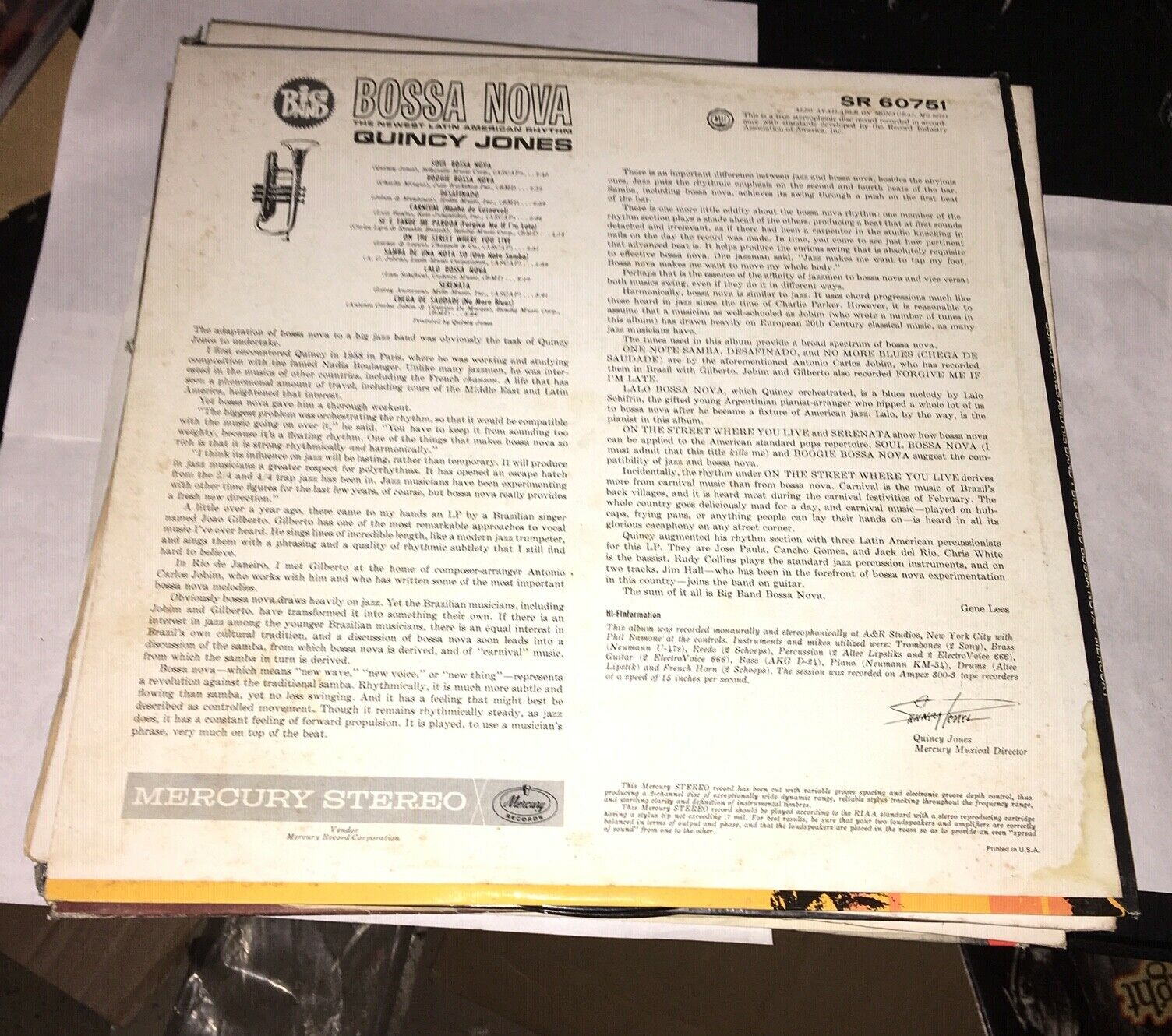
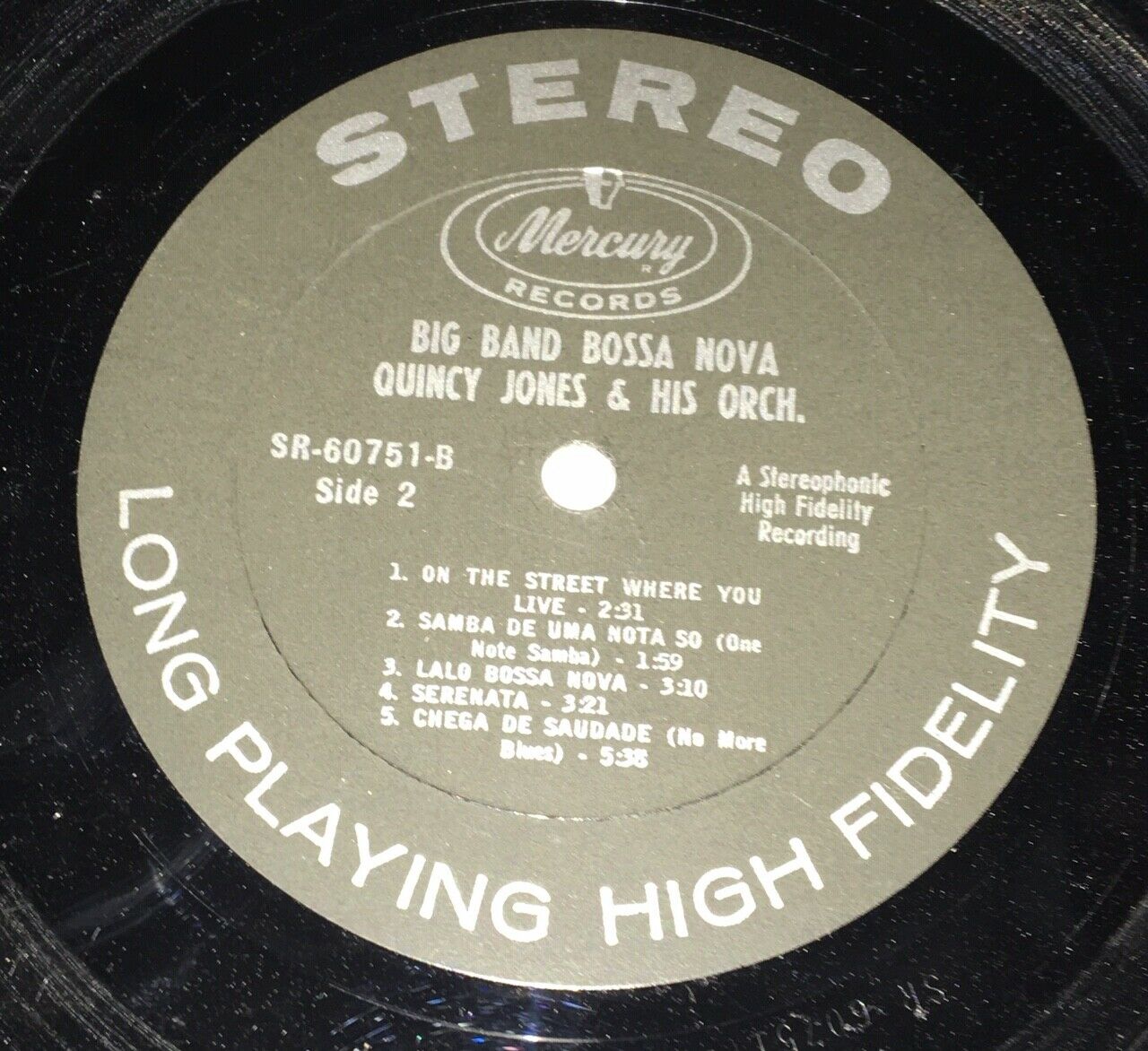
Quincy Jones & His Orch. Big Band Bossa Nova Label: Mercury ?– SR 60751 Format: Vinyl, LP, Album, Stereo Country: US Released: 1962 Genre: Jazz, Latin Style: Bossa Nova, Big Band Tracklist Hide Credits A1 Soul Bossa Nova Written-By – Quincy Jones 2:40 A2 Boogie Bossa Nova Written-By – Charlie Mingus* 2:39 A3 Desafinado Written-By – Jobim*, Mendonca* 2:52 A4 Black Orpheus (Manha De Carnaval) Written-By – Luiz Bonfa* 2:56 A5 Se E Tarde Me Pardoa (Forgive Me If I'm Late) Written-By – Carlos Lyra, Ronaldo Boscoli 4:18 B1 On The Street Where You Live Written-By – Lerner & Loewe 2:31 B2 Samba De Una Nota So (One Note Samba) Written-By – A. C. Jobim* 1:59 B3 Lalo Bossa Nova Written-By – Lalo Schifrin 3:10 B4 Serenata Written-By – Leroy Anderson 3:21 B5 Chega De Saudade (No More Blues) Written By – Antonio Carlos Jobim & Vinicius De Moraes Written-By – Antonio Carlos Jobim, Vinicius De Moraes 5:38 Credits Bass – Chris White (3) Drums – Rudy Collins Guitar – Jim Hall Percussion – Cancho Gomez*, Jack Del Rio, José Paula Piano – Lalo Schifrin Producer – Quincy Jones Recorded By – Phil Ramone
"Soul Bossa Nova" is a popular instrumental, composed and first performed by the musician, impresario and record producer Quincy Jones. It appeared on his 1962 Big Band Bossa Nova album on Mercury Records.[2]
Jones said that it took him twenty minutes to compose the piece,[3] which features prominently a cuíca (responsible for the distinctive "laughing" in the first bars). Roland Kirk was the flute soloist, Lalo Schifrin was the pianist, Chris White was the bassist, Rudy Collins was the drummer, and Jerome Richardson was the alto flutist.[4] The album liner notes do not specify the brass players.
Media use The piece appears in the soundtrack to Sidney Lumet's 1964 dramatic film The Pawnbroker, which was scored by Jones. Woody Allen's 1969 comedy Take the Money and Run features a similar-sounding instrumental composed by Marvin Hamlisch.[5] In 1969, the French composer Nino Ferrer used the orchestration of the theme for the chorus of his song Les cornichons, based on the title "Big Nick" by James Booker. It was used by BBC Radio 1 disc jockey Alan 'Fluff' Freeman as a theme for his afternoon programme that was broadcast in the UK during the 1970s. The theme was used in a long-running Canadian television game show, Definition.[6] Canadian hip hop group Dream Warriors sampled the title heavily for their popular track "My Definition of a Boombastic Jazz Style", in their debut album And Now the Legacy Begins in 1991.[7] Like Dream Warriors, Canadian Mike Myers grew up watching Definition, and as a homage to his childhood used the title as the theme for the Austin Powers film series, starting with Austin Powers: International Man of Mystery in 1997.[2] It was used as a theme for the 1998 FIFA World Cup.[8] It appeared in the videogames Samba de Amigo (1999), Rayman Raving Rabbids: TV Party (2008), and Just Dance 2 (2010). The song also appears in the Samurai Jack season 1 episode "Jack vs. Mad Jack", where it is played from a jukebox in a bar that Jack visits at the start of the episode. The title was used from 2001 to 2005 as the title theme in a German "ethno-comedy" TV show Was guckst du? ("What 'ya watching?"), which was based on the British TV show Goodness Gracious Me. It was sampled by Ludacris for his Austin Powers-themed 2005 single, "Number One Spot",[7] on his 2004 album The Red Light District. The title was featured in the 2009 pilot episode of Glee. In 2010, Canadian jazz singer Emilie-Claire Barlow merged this piece with Sonny Bono's "The Beat Goes On" for the title track of her album of pop covers, The Beat Goes On. In 2014, Jones executive produced Canadian jazz singer Nikki Yanofsky's album Little Secret, which featured a song entitled "Something New". The song interpolated melodic references to "Soul Bossa Nova".[9] The music video featured the jacket of the album on which the song was first published, a turntable playing the Mercury Records disc and a photograph of Quincy Jones.
price rating