Quintet of the Hot Club of France 4 x 78 Django Reinhardt hot jazz grapelli
$
33


Favourite Auctions
To save auctions to your favourites, please login
If you don't have an account, please register
Description
Click to Enlarge
Click to Enlarge
Click to Enlarge
Click to Enlarge
Click to Enlarge
Click to Enlarge
Click to Enlarge
Click to Enlarge
Click to Enlarge
Click to Enlarge
Click to Enlarge
Just one of inkFrog's Creations
Description:
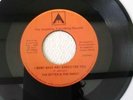
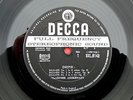
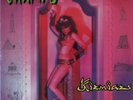
Quintet of the hot club of France 4 x 78 Django Reinhardt hot jazz grapelli
Very Nice cover and 4 lightly played 78 records. Recorded in France pre WW11..a rare find!
Quintette du Hot Club de France, often abbreviated to "QdHCdF" or just "QHCF", ("The Quintet of the Hot Club of France") was a jazz group founded in France in 1934 by guitarist Django Reinhardt and violinist Stéphane Grappelli, and active in one form or another until 1948.
One of the earliest and most significant continental jazz groups in Europe, the Quintette was described by critic Thom Jurek[1] as "one of the most original bands in the history of recorded jazz." Their most famous lineup featured Reinhardt, Grappelli, bassist Louis Vola, and rhythm guitarists Roger Chaput and Joseph Reinhardt (Django's brother) who filled out the ensemble's sound and added occasional percussive effects.
History
There are several versions of how the band was formed. The most generally accepted version amongst modern jazz historians is that the group evolved from a series of backstage jams led by Django Reinhardt, with Stephane Grappelli. However, bassist Louis Vola said in an interview that he found the Reinhardt brothers playing on a beach at Toulon.[2] He invited them to jam with his own band.
After a series of informal jam sessions at the Hotel Claridge, concert promoters Pierre Nourry and Charles Delaunay (leaders of the "Hot Club de France", a society chaired by Hugues Panassié devoted to the appreciation of jazz) urged the formation of a full-time group.[3] With the addition of Reinhardt's brother Joseph on second rhythm guitar, the quintet popularized the gypsy jazz style. A series of European tours were very successful, with the group enjoying particular popularity in the UK. Several bassists and rhythm guitarists rotated in and out of the group, with Django and Grappelli remaining the sole constants. In 1937, the American jazz singer Adelaide Hall opened a nightclub in Montmartre along with her husband Bert Hicks and called it 'La Grosse Pomme.' She entertained there nightly and hired the Quintette du Hot Club de France as one of the house bands at the club.[4][5] As World War II broke out in September 1939, the Quintette was on a concert tour of England. Reinhardt, who spoke virtually no English, immediately returned to France, where he thought he would feel safer than in the UK. Grappelli, meanwhile, stayed in England.
Django continued using the Quintette name with a different group, featuring Hubert Rostaing as the first of several clarinetists backed by a more conventional rhythm section with drums, bass and a rhythm guitar played by Django's son Lousson Reinhardt, or his brother Joseph. This version of the Quintette often featured six, not five, players, and was usually billed as "Django et le Quintette du Hot Club de France", or sometimes as Django's "Nouveau Quintette". Due to wartime shortages of material, this version of the Quintette did not issue many recordings, although they did issue the first recording of the Django Reinhardt composition Nuages, later to become a jazz standard.
In 1946, after the war, Grappelli and Django re-teamed under the Quintette banner in an all-string format. As before, they cycled through a number of rhythm guitarists and bassists. This last iteration of the Quintette performed and recorded intermittently until about 1948.
Payment and Shipping:
We accept: PayPal (verified shipping address only). California residents expect to pay 8.75% sales tax, unless you have a valid Ca. Resale number.
We ship U.S.P.S. Priority for most items, U.S.P.S. Book Rate offered where applicable, and FedEx for larger item (direct signature required). We strongly recommend insurance, as we cannot assume liability for lost or damaged items in transit after they have been shipped without insurance.
Shipping outside the U.S. is a bit new for us, but it seems to be working OK. If you do not need insurance, airmail letter rate is the cheapest, but if you require insurance, the US Post Office will not ship the cheapest way, but makes us use Air Parcel, which is double the cost of the cheap Air Letter postage rate. We wrap well, so breakage isn't a problem, as long as it doesn't get lost. In that case, once it has left out Post Office uninsured, we can not track it or be responsible for lost items. If this is understood, please feel free to bid, and thanks
for asking.
inkfrog terapeak
price rating