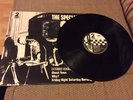
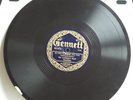
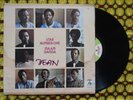
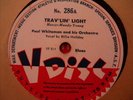
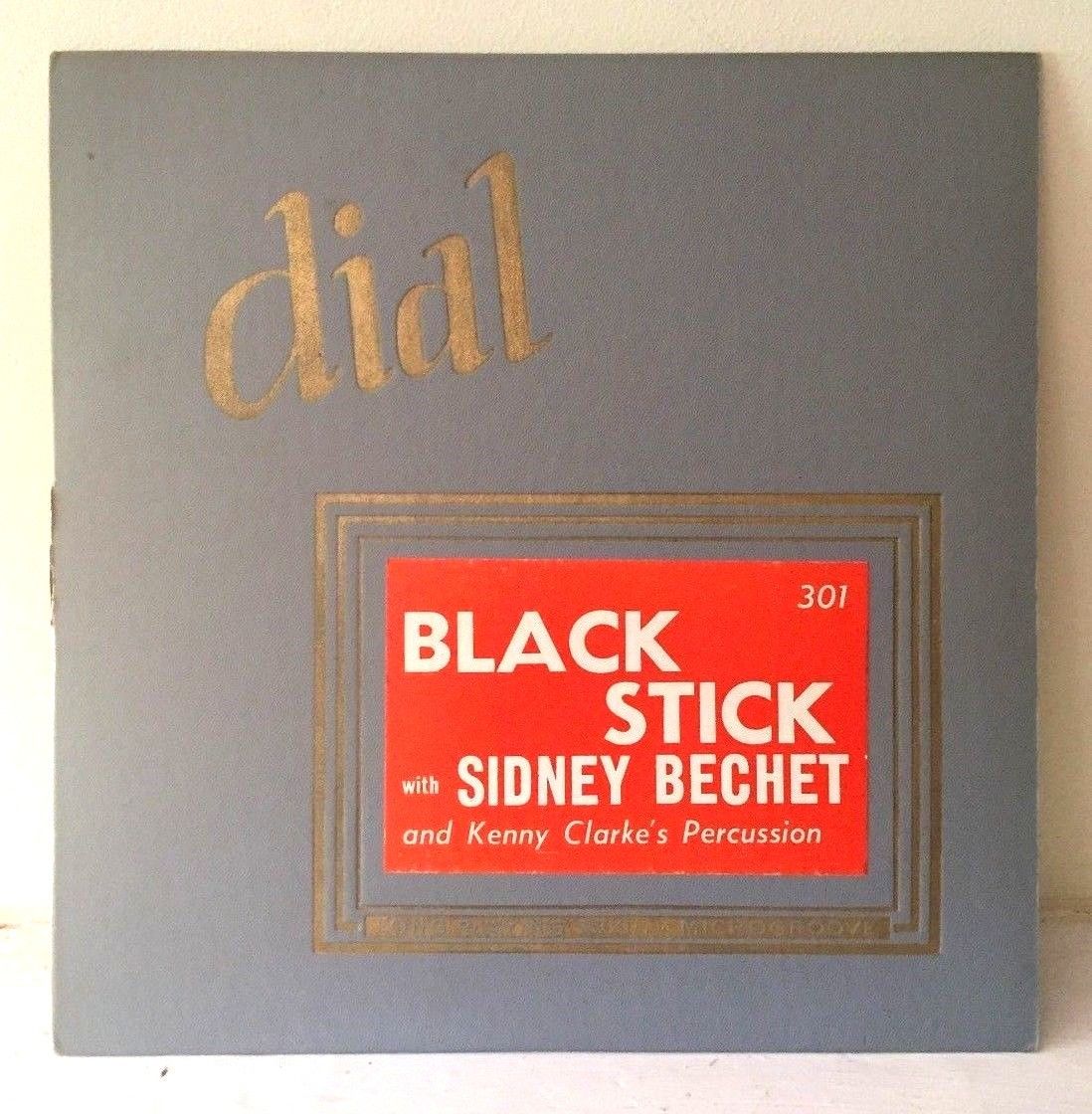
RARE 10" LP BLACK STICK jazz SIDNEY BECHET 33 1/3 rpm KENNY CLARKE Dial Records
$
31


Favourite Auctions
To save auctions to your favourites, please login
If you don't have an account, please register
Description
rare album
BLACK STICK
with SIDNEY BECHET
and Kenny Clarke's Percussion
Dial Records
301
Label: Dial Records
Format: -33 rpm 10" LP
Record Grading:
Visual Grading = Very Good
(light scuff marks)
Audio Grading = Excellent
Record Actually Listened to - Audio Graded
Sleeve Grading: VG
(1 1/2 inch split at center of left edge of sleeve)
Item being offered is actually pictured, not stock photos
Tracklist
Out of Nowhere
Blackstick
Mon Homme
Klook Klux Khan
Careless Love
Mme. Becassine
Moulin A Cafe
Ni Queue Ni Tete
Shipping: $3.75
Online information:
"Sidney Bechet (May 14, 1897 – May 14, 1959) was an American jazz saxophonist, clarinetist, and composer. He was one of the first important soloists in jazz, beating trumpeter Louis Armstrong to the recording studio by several months. His erratic temperament hampered his career, and not until the late 1940s did he earn wide acclaim.
Bechet was born in New Orleans in 1897 to a middle-class Creole of color family. His older brother, Leonard Victor Bechet, was a full-time dentist and a part-time trombonist and bandleader. Sidney learned to play several musical instruments kept around the house, mostly by teaching himself; he decided to specialize in the clarinet. At the age of six, he started playing with his brother's band at a family birthday party, debuting his talents to acclaim. Later in his youth, Bechet studied with Lorenzo Tio, "Big Eye" Louis Nelson Delisle, and George Baquet. Bechet played in many New Orleans ensembles using the improvisational techniques of the time (obbligatos, with scales and arpeggios, and varying the melody). He performed in parades with Freddie Keppard's brass band, the Olympia Orchestra, and in John Robichaux's dance orchestra. In 1911–12, he performed with Bunk Johnson in the Eagle Band of New Orleans and in 1913–14 with King Oliver in the Olympia Band.
Bechet spent his childhood and adolescence in New Orleans, but from 1914 to 1917 he was touring and traveling, going as far north as Chicago and frequently performing with Freddie Keppard. In the spring of 1919, Bechet traveled to New York City where he joined Will Marion Cook's Syncopated Orchestra. Soon after, the orchestra traveled to Europe; almost immediately upon arrival, they performed at the Royal Philharmonic Hall in London. The group was warmly received, and Bechet was especially popular. While in London, Bechet discovered the straight soprano saxophone and developed a style unlike his clarinet tone. His saxophone sound could be described as emotional, reckless, and large. He often used a broad vibrato, similar to what was common among some New Orleans clarinetists at the time. Bechet was convicted of assaulting a woman and was imprisoned in London from September 13 to 26, 1922. He was deported to the United States, leaving Southampton on November 3 and arriving in New York on November 13, 1922. On July 30, 1923, he began recording; it is some of his earliest surviving studio work. The session was led by Clarence Williams, a pianist and songwriter, better known at that time for his music publishing and record producing. Bechet recorded "Wild Cat Blues" and "Kansas City Man Blues". "Wild Cat Blues" is in a multithematic ragtime style, with four 16-bar themes, and "Kansas City Man Blues" is a 12-bar blues. He interpreted and played each uniquely, with outstanding creativity and innovation.
On September 15, 1925, Bechet and other members of the Revue Nègre, including Josephine Baker, sailed to Europe, arriving at Cherbourg, France, on September 22. The revue opened at the Théâtre des Champs-Élysées, Paris, on October 2. Bechet toured Europe with various bands, reaching as far as Russia in mid-1926. In 1928, he led his own small band at the Bricktop's Club in Montmartre, Paris. Bechet was jailed for 11 months in Paris when a woman passerby was wounded during a shoot-out. The most common version of the story, as related in Ken Burns's documentary film Jazz, is that the shoot-out started when another musician-producer told Bechet that he was playing the wrong chord. Bechet challenged the man to a duel and said, "Sidney Bechet never plays the wrong chord." After his release, Bechet was deported to New York, arriving right after the stock market crash of 1929. He joined Noble Sissle’s orchestra, which toured in Germany and Russia. In 1932, Bechet returned to New York City to lead a band with Tommy Ladnier. The band, consisting of six members, performed at the Savoy Ballroom. He went on to play with Lorenzo Tio and also got to know Roy Eldridge, another trumpeter.
In 1938 "Hold Tight, Hold Tight (Want Some Seafood Mama)", commonly known as Hold Tight, was composed by Bechet's guitarist Leonard Ware and two session singers with claimed contributions from Bechet himself. The song became known for what at the time were considered suggestive lyrics, and then for a series of lawsuits over songwriter royalties. Over time Bechet had increasing difficulty finding music gigs. He eventually started a tailor shop with Ladnier. During this time, they were visited by various musicians and played in the back of the shop. In the 1940s, Bechet played in several bands, but his financial situation did not improve until the end of that decade.
By the end of the 1940s, Bechet had tired of struggling to make music in the United States. His contract with Jazz Limited, a Chicago-based record label, was limiting the events at which he could perform (for instance, the label would not permit him to perform at the 1948 Festival of Europe in Nice). He believed that the jazz scene in the United States had little left to offer him and was getting stale. In 1950 he moved to France, after his performance as a soloist at the Paris Jazz Fair caused a surge in his popularity in that country, where he easily found well-paid work. In 1951, he married Elisabeth Ziegler in Antibes. In 1953, he signed a recording contract with Disques Vogue that lasted for the rest of his life. He recorded many hit tunes, including "Les Oignons", "Promenade aux Champs-Elysees," and the international hit "Petite Fleur". He also composed a classical ballet score in the late Romantic style of Tchaikovsky called La Nuit est sorcière ("The Night Is a Witch"). Some existentialists in France took to calling him le dieu ("the god").
Bechet died in Garches, near Paris, of lung cancer on May 14, 1959, his 62nd birthday, and is buried in a local cemetery."
Great addition to any collection !
Happy Bidding and Have a Great Summer
price rating