RARE Oriental/Asian Ethnic Record Set 78rpm 1931JAPAN BALI SIAM JAVA CHINA TUNIS
$
230


Favourite Auctions
To save auctions to your favourites, please login
If you don't have an account, please register
Description
Musik des Orients. Hrsg. von der Carl-Lindström AG. Mit Kommentar von E. M. von Hornbostel. Mit 12 Schellackplatten und einigen fotogr. Abbildungen. Berlin [1928]. OHLwd. mit OBrosch. (Kommentarheft) in Einstecklasche. Quer-4to. 1 Bl., 25 S.
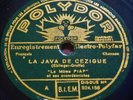
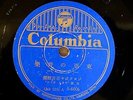
A true collector's item! Musik des Orients, 20 ethnic music recordings on 10 records from the early 20th century. A collection of music from China, Bali, Java, Siam, Tunis, Egypt, Persia. Four recordings on the Parlophon label, the remainder on the Odeon label. Made in Germany, 1931.
On behalf of the Carl Lindström A. G. Kulturabteilung, Erich von Hornbostel ,one of the first ethno-musicologists, produced a 12-record (24 recordings) set of early 20th century Oriental Ethnic music. He wrote an accompanying 26-page booklet, one page for each recording, with photographs of the musicians and a description of the musical context, the scales and the instruments. Unfortunately the collection offered here is missing recordings 3 & 4 (Japan) and 17 & 18 (India). The booklet is included.
On behalf of the Carl Lindström A. G. Kulturabteilung, Berlin S. O. 36, Erich von Hornbostel produced a 12-record set entitled Musik des Orients . This set contained recordings from Japan, China, Java, Bali, Siam (Thailand), India, Persia, Egypt and Tunis (4 records on the Parlophon label and 8 records on the Odeon label) and a 26-page booklet with explanatory notes and 15 photographs. After much delay it was finally issued in May 1931.
In May 1931 The Kulturabteilung of the Carl Lindström A.G. in Berlin issued an important album of 18 ten-inch and 6 eleven-inch recordings entitled Musik des Orients, which had previously been made in the Orient. These were selected by Prof. Dr. E.M. von Hornbostel, one of the first ethno-musicologists. He wrote an accompanying 26-page booklet (22 x 28 cm), one page for each recording, with photographs of the musicians and a description of the musical context, the scales and the instruments (internet)
1. (Japan) Naga-uta “Urashima”
2. (Japan) Ha-uta “Umenimo Haru”
3. (Japan) Shinnai “Sekitori Senryonobori”
4. (Japan) Matsumae - Oiwake
5. (China) Klassisches Drama (Kun-ch’ü) “P’i-p’a-chi”
6. (China) Modernes Drama (His-pi) “Tso fang Tsao
7. (China) Modernes Drama (Pang-tsè) “Nan-tien-mên”
8. (Java - Sundanesisch) “Udan mas”
9. (Java-Jogjakarta) Gamelan Slendro “Sekar gadung”
10. (Java-Jogjakarta) Gamelan Pelog “Kinanti madumurti”
11. (Bali) Gender Wajang “Selèndero”
12. (Bali) Gamelan Anklung “Berong pengètjèt”
13. (Bali) Gamelan Djogèd “Tjetjing Kereman”
14. (Bali) Djangèr Putih saput anduk”
15. (Bali) Gamelan Gong “Lagu Keblar”
16. (Siam) Musikdrama, Szene aus der Rama-Legende
17. (Vorderindien, 11”) Jummoo Gesang, Râga Biläval
18. (Vorderindien, 11”) Meerut “Râga Bhairavi”
19. (Persien, 11”) Volkstümlicher Gesang
20. (Aegypten), Kunstlied Maqäm Sika
21. (Aegypten 11”) Bäshrav “Kuzum” Maqäm Hijaz” part 1
22. (Aegypten 11”) Bäshrav “Kuzum” Maqäm Hijaz” part 2
23. (Tunis) Kunstlied “Maqam Mezmum”
24. Derwish- Chor, Maqam-Dil
price rating