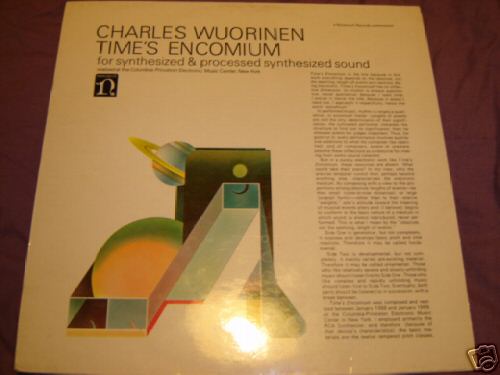
RARE UK issue on Nonesuch - CHARLES WUORINEN 1970 ex/ex
£
25
$
33


Favourite Auctions
To save auctions to your favourites, please login
If you don't have an account, please register
Description
Hello & thankyou for choosing to look at this
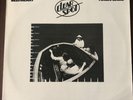
very rare stereo UK issue LP on the collectable NONESUCH label
cat no. 2590 002 STEREO
Black & silver print NONESUCH label states
"Made in Gt. Britain by Polydor Records Ltd."
CHARLES WUORINEN
"Time's Encomium for synthesised and
processed and synthesised sound"
side 1 - Part I [14.53]
side 2 - part II [16.47]
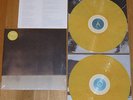
NICE & FLAT / GLOSSY VINYL EX BOTH SIDES only few of very slight bag marks are visible under close scrutiny in direct sunlight.
A side label has been pressed with more than one label on it so top label is uneven... experience tells me that this label could be easily removed to reveal mint label underneath.
B side label shows a few spindle scuffs.
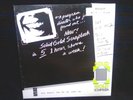
Some notes copied from the sleeve as follows:
"Time's Encomium is the title because in this work everything depends on the absolute, not the seeming, length of events and sections. Being electronic, Time's Encomium has no inflective dimension. Its rhythm is always quantitative, never qualitative. Because I need time, I praise it; hence the title. Because it doesn't need me, I approach it respectively; hence the word 'encomium.'
"In performed music, rhythm is largely a qualitative, or accentual matter. Lengths of events are not the only determinants of their significance; the cultivated performer interprets the structure to find out its significance; then he stresses events he judges important. Thus, for good or ill, every performance involves qualitative additions to what the composer has specified; and all composers, aware or unaware, assume these inflections as a resource for making their works sound coherent.
"But in a purely electronic work like Time's Encomium, these resources are absent. What could take their place? In my view, only the precise temporal control that, perhaps beyond anything else, characterizes the electronic medium. By composing with a view to the proportions among absolute lengths of events -- be they small (note-to-note distances) or large (overall form) -- rather than to their relative 'weights,' one's attitude toward the meaning of musical events alters and (I believe) begins to conform to the basic nature of a medium in which sound is always reproduced, never performed. This is what I mean by the 'absolute, not the seeming, length of events.'
"Part I is generative, but not completely. It mainly varies pre-existing material. Therefore it may be called ornamental. Those who like relatively severe and slowly-unfolding music should listen first to Part I. Those who like complex and rapidly unfolding music should listen first to Part II. Eventually, both parts should be listened to in succession, with a break between.
"Time's Encomium was composed and realized between January 1968 and January 1969, at the Columbia-Princeton Electronic Music Center in New York. I employed primarily the RCA Synthesizer, and therefore (because of that device's characteristics) the basic materials are the twelve tempered pitch classes, and pitch-derived time relations. The RCA Synthesizer -- familiar through several works of Milton Babbitt -- is prejudiced by its design toward 12-tone equal temperament. This may be a disadvantage if one is attempting non-tempered pitch relations; but if one accepts the limitation as a boundary condition of one's work from the start, it ceases to be a problem. In the near future, however, when computer synthesis becomes widespread, the issue will disappear.
"Afterwards, I made the large-scale structure by processing the synthesized material in one of the Center's analog studios. Thus the work consists of a core of synthesized music, most of which appears in Part I, surrounded and interlarded [varied by mixing together] with analog-studio transformations of that music. The synthesized can always be identified by its clarity of pitch, and the familiar, almost 'instrumental' sound of its constituent events. The processed almost always contains reverberation. Thus metaphorically, the listener stands in the midst of the synthesized music, which presents itself to him with maximal clarity; and stretching away from him, becoming more and more blurred in detail, the various transformations -- from the slightly altered to the unrecognizable."
Other information about Charles Wuorinen:
Charles Wuorinen (b. 1938) has composed over 200 works covering a broad range of concert music, from large-scale works for orchestra, opera, and ballet to chamber, vocal, and choral music. Influenced by the work of Milton Babbitt, Arnold Schoenberg, and Igor Stravinsky, Wuorinen employs rigorous serial techniques in the structure and details of his compositions, resulting in a complex and often rhythmically energetic music. Fractal geometry and the work of Benoit Mandelbrot have also played a significant role in his work.
Wuorinen was born in New York City and began composing at the age of five. He studied composition with Otto Luening, Jack Beeson, and Vladimir Ussachevsky at Columbia University in New York, where he also began his teaching career. He has since served on the faculties of Princeton and Yale Universities, the University of Iowa, University of California in San Diego, Manhattan School of Music in New York, New England Conservatory in Boston, and the State University of New York at Buffalo. Wuorinen currently teaches at Rutgers University in New Jersey.
Wuorinen co-founded with Harvey Sollberger The Group for Contemporary Music in 1962, and was among the founders of the American Composers Orchestra. He received the Pulitzer Prize in music in 1970 for Time's Encomium (1968-1969), an electronic composition written on commission from Nonesuch Records. Orchestras and ensembles from across the US have commissioned works from Wuorinen, who is also the recipient of many awards including fellowships from the Guggenheim, Koussevitzky, MacArthur, and Rockefeller Foundations.
Active as a pianist and conductor, Wuorinen has appeared with orchestras throughout the US and Europe. He is the author of Simple Composition (1979), an introduction to his use of the twelve-note system. Wuorinen's recent compositions include Josquiniana (2002) for the Brentano String Quartet, Fenton Songs II (2002) to poems of James Fenton, and the opera HarCharles Wuorinen (b. 1938) has composed over 200 works covering a broad range of concert music, from large-scale works for orchestra, opera, and ballet to chamber, vocal, and choral music. Influenced by the work of Milton Babbitt, Arnold Schoenberg, and Igor Stravinsky, Wuorinen employs rigorous serial techniques in the structure and details of his compositions, resulting in a complex and often rhythmically energetic music. Fractal geometry and the work of Benoit Mandelbrot have also played a significant role in his work.
Wuorinen was born in New York City and began composing at the age of five. He studied composition with Otto Luening, Jack Beeson, and Vladimir Ussachevsky at Columbia University in New York, where he also began his teaching career. He has since served on the faculties of Princeton and Yale Universities, the University of Iowa, University of California in San Diego, Manhattan School of Music in New York, New England Conservatory in Boston, and the State University of New York at Buffalo. Wuorinen currently teaches at Rutgers University in New Jersey.
Wuorinen co-founded with Harvey Sollberger The Group for Contemporary Music in 1962, and was among the founders of the American Composers Orchestra. He received the Pulitzer Prize in music in 1970 for Time's Encomium (1968-1969), an electronic composition written on commission from Nonesuch Records. Orchestras and ensembles from across the US have commissioned works from Wuorinen, who is also the recipient of many awards including fellowships from the Guggenheim, Koussevitzky, MacArthur, and Rockefeller Foundations.
Active as a pianist and conductor, Wuorinen has appeared with orchestras throughout the US and Europe. He is the author of Simple Composition (1979), an introduction to his use of the twelve-note system. Wuorinen's recent compositions include Josquiniana (2002) for the Brentano String Quartet, Fenton Songs II (2002) to poems of James Fenton, and the opera Haroun and the Sea of Stories (1997-2001) based on a novella by Salman Rushdie. His music can be heard on the Bridge, CRI, Desto, Deutsche Grammophon, GM, Koch International Classics, Music & Arts, Nonesuch, New World, and Tzadik labels.
oun and the Sea of Stories (1997-2001) based on a novella by Salman Rushdie. His music can be heard on the Bridge, CRI, Desto, Deutsche Grammophon, GM, Koch International Classics, Music & Arts, Nonesuch, New World, and Tzadik labels.
I have 1000's of 45's & E.P's and I am downsizing my extensive DJ collection
I have been collecting vinyl for over 30 years, both to DJ and for my own listening pleasure.
All records unless otherwise stated are tested for sound quality via a Project record deck / Thorens TD150 deck (dependent on my mood), matched Quad 33/303 power amp / pre amp and BBC reference quality monitors.
I care about my customers and I grade my records conservatively - Please check my 100% positive feedback...
I have no interest in inflating the stated quality of audio reproduction and wish all my customers to enjoy top-quality records.
price rating