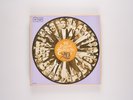
RECORDING THE 'TWENTIES: EVOLUTION OF THE AMERICAN RECORDING INDUSTRY 1920-1929
$
48


Favourite Auctions
To save auctions to your favourites, please login
If you don't have an account, please register
Description
RARE / OUT OF PRINT — PERFECT LIKE-NEW COPY
Recording the ’Twenties
The Evolution of the American Recording Industry, 1920–1929
By Allan Sutton
Winner of the 2013 ARSC Lifetime Achievement Award
Mainspring Press (2008)
ISBN 978-0-9772735-4-6
348 pages, illustrated / 6” x 9” quality softcover
________________________________
"Raises the bar for all future studies of the recording industry."
— Vintage Jazz Mart
"Brilliantly original... a book worth reading and using"
— ARSC Journal
Recording the 'Twenties is a landmark study chronicling the the American recording industry as it adapted to changing musical tastes; an increasingly diverse customer base; competition from new start-up labels; the introduction of electrical recording technology; the challenges posed by the advent of commercial broadcasting, "talkies," corporate takeovers, and foreign ownership; and, at decade’s end, the initial fallout from the Wall Street crash.
Based on extensive study of primary-source materials, Recording the 'Twenties dispels commonly accepted myths and misinformation found in earlier works — and now perpetuated on Wikipedia and other internet/social-media sites drawing on those outdated works — to provide the first thoroughly documented survey of this pivotal period in the history of the American entertainment and sound-recording industries.
Used copies of this highly sought-after volume currently list on some rare-and-collectible bookseller sites for more than $100, when available at all. This copy is a mint first printing, still in its original shrink-wrap, from a small cache of Mainspring Press books recently recovered from a former distributor.
Table of Contents
Part I: The Acoustic Era
1 • The State of the Industry (1920)
2 • The Studio-Artist System (1920)
3 • The Phonograph Boom (1920–1921)
4 • Recession and the Recording Industry (1921–1922)
5 • The Dime-Store Labels (1921–1924)
6 • The Vaudeville Blues Craze (1920–1921)
7 • The First Black Record Producers (1920–1924)
8 • Segregating the Markets (1921–1925)
9 • Developing the Country Music Market (1922–1925)
10 • Going Afield (1921–1924)
11 • Recording on the West Coast (1921–1929)
12 • "Democratizing" the Classics (1920–1924)
13 • Classical Recording Comes of Age (1923–1925)
14 • The Radio Challenge (1920–1925)
Part II: The Electric Era
15 • Dawn of the Electrical Era (1920–1925)
16 • Victor, Columbia, and the Western Electric System (1922–1926)
17 • Brunswick, General Electric, and the "Light-Ray" System (1925–1926)
18 • Completing the Electrical Conversion (1925–1928)
19 • Crooners, Salon Groups, and the End of the Studio-Artist System (1925–1929)
20 • The Talent Scouts (1923–1929)
21 • The Second Race Record Boom (1926–1929)
22 • Birth of the Country Music Industry (1926–1929)
23 • Classical Recordings and the Music Appreciation Movement (1925–1929)
24 • Consolidation and Foreign Ownership (1926–1927)
25 • The Radio–Phonograph Alliances (1926–1929)
26 • Motion Pictures and the Recording Industry (1926–1929)
27 • Building Entertainment Empires (1926–1929)
28 • The Year of the Crash (1929)
Epilogue (1930–1942)
Appendix I: Record Sales in the 1920s
Appendix II: A Directory of 1920s Record Companies
Subject Index • Music Title Index
Condition: Out of original shrink-wrap but otherwise a perfect, Like-New copy
____________________
OUR CONDITION GRADING:
NEW A brand-new, first-quality copy (in original shrink-wrap and/or dust jacket, if applicable).
LIKE NEW A clean, crisp copy with no significant signs of use. Out of original shrink-wrap (if applicable), and may have barely noticeable scuffing on cover, dust jacket or spine, but otherwise indistinguishable from New.
EXCELLENT As above, but with slightly more apparent signs of use. Covers may show a little more scuffing or traces of shelf wear, but are still clean and bright.
VERY GOOD A clean and tight copy overall, but with obvious signs of use. May have some scattered markings and unobtrusive dog-ears. Covers show light scuffing and shelf wear and/or other cosmetic defects (noted in the listing) that will not affect use or durability. No library markings, highlighting or heavy annotations, or serious cracking or sun-fade on spines, unless otherwise noted.
ACCEPTABLE A passable “reading copy,” obviously well-used used but still serviceable. No missing or damaged pages. Bindings are still sound but may be somewhat loose or slightly cocked, with heavy scuffing and/or shelf wear. Other defects (which will be noted in the listing) may include creasing and/or sun-fade on spines, dog-ears, edge bumps, library or other stampings, highlighting or annotations on pages (but not the point of obscuring the text), and/or light stains or discoloration.
RETURNS POLICY:
Returns are accepted if an item has been inaccurately graded, based upon the grading scale shown above; if we have failed to note a significant defect; or if the item was damaged in shipment. Returns for any other reason will not be accepted.
Qualified returns must be postmarked no later than 7 days from the package delivery date, as verified by the US Postal Service tracking data. Reimbursement for return shipping cost is limited to actual cost at USPS Media Mail rates. If a different return-shipping method is used, the sender is responsible for any cost in excess of the Media Mail rate. Refunds will be credited only to the account that was used to make the purchase.
price rating