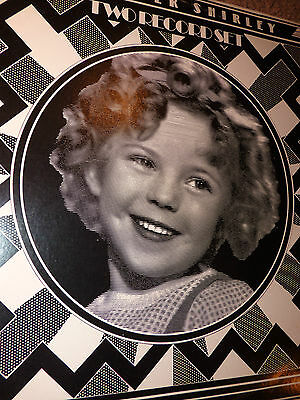
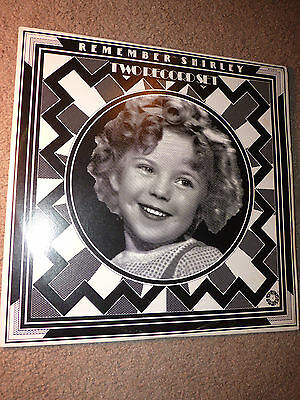
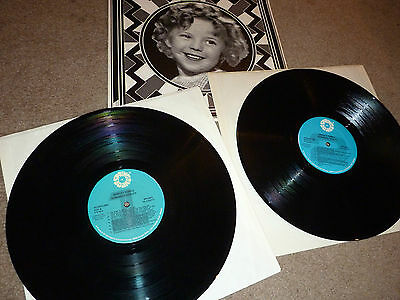
Remember Shirley SHIRLEY TEMPLE 1973 2 Record LP Album Set Good Ship Lollipop
$
28
Favourite Auctions
To save auctions to your favourites, please login
If you don't have an account, please register
Description
Selling an Awesome "Remember Shirley" SHIRLEY TEMPLE 1973 2 Record LP Album Set Good Ship Lollipop Awesome!! Great Graphic!!
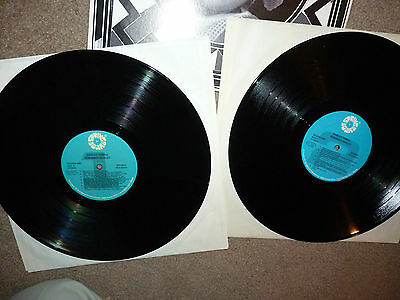
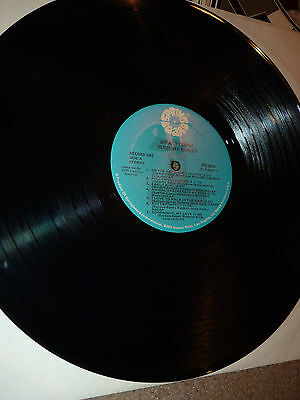
This is an awesome 40 year old SHIRLEY TEMPLE Collectible 2 LP album record set with great graphics.
Great musical recordings from Shirley Temple movies dating back to 1934. On it's own the album cover will look great on the wall and along side a vintage display. Great bright and cheerful Shirley Temple cover. Would look great hanging in a Music Room, Recording Studio, Office, Den, Man Cave, Mom Cave, Dorm Room or just about anywhere. High resolution photos convey condition and details. This piece will ship Fast and Safe.
This item would be a great addition to MUSIC and record collectors and Vintage Hollywood collectors, Shirley Temple and MOVIE Collectors and will look great in a display or on a wall or shelf. Will look great wherever you display it.
Very appealing and pleasant theme. This item looks great and is very cheerful and Fun. Many lonh hours of listening fun in this 2 record album set.
Bid confident that this item will ship Fast and Safe. If there are any questions, contact us.
Payment method is PayPal.
Shipping & Handling costs are $4.00 for First Class Domestic. Will ship Fast and Safe.
Thank you
Inventory Location T27
Shirley Temple
From Wikipedia, the free encyclopedia. Shirley Temple16-year-old Temple in 1944 in Ottawa at a ceremony to raise money for Canadian Victory bonds Born Shirley Temple[note 1]
(1928-04-23) April 23, 1928 (age 85)
Santa Monica, California, U.S. Residence Woodside, California Other names Shirley Jane Temple Education Tutors; Private high school Alma mater Westlake School for Girls (1940–45) Occupation Film actress (1932–1950)
TV actress/entertainer (1958–1965)
Public servant (1969–1992) Years active 1932–1965 (as actress)
1967–1990 (as public servant) Known for Juvenile film roles Notable work(s) Bright Eyes, The Little Colonel, Curly Top, Wee Willie Winkie, Heidi, A Little Princess, The Bachelor and the Bobby-Soxer, Fort Apache Television Shirley Temple's Storybook, The Shirley Temple Show Political party Republican Spouse(s) John Agar (1945–1950)
Charles Alden Black (1950–2005; his death) Children Linda Susan Agar (b. 1948)
Charles Alden Black, Jr. (b. 1952)
Lori Alden Black (b. 1954) Awards Academy Award
Kennedy Center Honors
Screen Actors Guild Life Achievement Award Website www.shirleytemple.com
Shirley Temple Black (born Shirley Temple; April 23, 1928) is an American film and television actress, singer, dancer, and former U.S. ambassador to Ghana and Czechoslovakia. She began her film career in 1932 at the age of three, and in 1934, found international fame in Bright Eyes, a feature film designed specifically for her talents. She received a special Juvenile Academy Award in February 1935 for her outstanding contribution as a juvenile performer to motion pictures during 1934, and film hits such as Curly Top and Heidi followed year after year during the mid-to-late 1930s. Licensed merchandise that capitalized on her wholesome image included dolls, dishes, and clothing. Her box office popularity waned as she reached adolescence, and she left the film industry in her teens.[1] She appeared in a few films of varying quality in her mid-to-late teens, and retired completely from films in 1950 at the age of 22. She was the top box-office draw four years in a row (1935–38) in a Motion Picture Herald poll.[2][3]
Temple returned to show business in 1958 with a two-season television anthology series of fairy tale adaptations. She made guest appearances on television shows in the early 1960s and filmed a sitcom pilot that was never released. She sat on the boards of corporations and organizations including The Walt Disney Company, Del Monte Foods, and the National Wildlife Federation. In 1967, she ran unsuccessfully for United States Congress, and was appointed United States Ambassador to Ghana in 1974 and to Czechoslovakia in 1989. In 1988, she published her autobiography, Child Star. Temple is the recipient of awards and honors including Kennedy Center Honors and a Screen Actors Guild Life Achievement Award.
She is No. 18 on the American Film Institute's list of the greatest female American screen legends of all time.
Early years
Shirley Temple was born on April 23, 1928 in Santa Monica, California. She is the daughter of Gertrude Amelia Temple (née Krieger), a homemaker, and George Francis Temple, a bank employee. The family was of English, German, and Dutch ancestry.[4][5] She had two brothers, George Francis, Jr. and John Stanley.[5][6][7] Mrs. Temple encouraged her infant daughter's singing, dancing, and acting talents, and in September 1931 enrolled her in Meglin's Dance School in Los Angeles, California.[8][9][10] About this time, she began styling Shirley's hair in ringlets similar to those of silent film star Mary Pickford.[11]
In January 1932, Temple was signed by Educational Pictures following a talent search at the dance school. She appeared in a series of one-reelers called Baby Burlesks,[12][13][14][15] and a series of two-reelers called Frolics of Youth playing Mary Lou Rogers, a youngster in a contemporary suburban family.[16] To underwrite production costs at Educational, Temple and her child co-stars modeled for breakfast cereals and other products.[17][18] She was lent to Tower Productions for a small role in her first feature film Red-Haired Alibi in 1932,[19][20] and, in 1933, to Universal, Paramount, and Warner Bros. for various bit parts.[21][22]
Fox films
Temple's hand and foot prints at Grauman's Chinese TheaterEducational Pictures declared bankruptcy in 1933 and Temple signed with Fox Film Corporation in February 1934.[23][24] She appeared in bit parts and was loaned to Paramount and Warner Bros for bit parts.[25] In April 1934, Stand Up and Cheer! became Temple's breakthrough film. Her charm was evident to Fox heads and she was promoted well before the film's release. Within months, she became the symbol of wholesome family entertainment.[26] Her salary was raised to $1,250 a week, and her mother's to $150 as coach and hairdresser.[27] In June, her success continued with a loan-out to Paramount for Little Miss Marker.[28][29]
On December 28, 1934, Bright Eyes was released. It was the first feature film crafted specifically for Temple's talents and the first in which her name appeared above the title.[30][31] Her signature song "On the Good Ship Lollipop" was introduced in the film and sold 500,000 sheet music copies. The film demonstrated Temple's ability to portray a multi-dimensional character and established a formula for her future roles as a lovable, parentless waif whose charm and sweetness mellow gruff older men.[32] In February 1935, Temple became the first child star to be honored with a miniature Juvenile Oscar for her 1934 film accomplishments,[33][34][35][note 2] and added her foot and hand prints to the forecourt at Grauman's Chinese Theatre a month later.[36]
Twentieth Century Fox
Fox Films merged with Twentieth Century Pictures to become Twentieth Century-Fox in 1934. Producer and studio head Darryl F. Zanuck focused his attention and resources upon cultivating Temple's superstar status. With four successful films to her credit, she was the studio's greatest asset. Nineteen writers known as the Shirley Temple Story Development team created 11 original stories and some adaptations of the classics for her.[37][note 3]
Biographer Anne Edwards writes about the tone and tenor of Temple films under Zanuck, "This was mid-Depression, and schemes proliferated for the care of the needy and the regeneration of the fallen. But they all required endless paperwork and demeaning, hours-long queues, at the end of which an exhausted, nettled social worker dealt with each person as a faceless number. Shirley offered a natural solution: to open one's heart."[38] Edwards points out that the characters created for Temple would change the lives of the cold, the hardened, and even the criminal with positive results.[38] Edwards quotes a nameless filmographer: "She assaults, penetrates, and opens [the flinty characters] making it possible for them to give of themselves. All of this returns upon her at times forcing her into situations where she must decide who needs her most. It is her agony, her Calvary, and it brings her to her most despairing moments ... Shirley's capacity for love ... was indiscriminate, extending to pinched misers or to common hobos, it was a social, even a political, force on a par with democracy or the Constitution."[39] Temple films were seen as generating hope and optimism, and President Franklin D. Roosevelt said, "It is a splendid thing that for just fifteen cents an American can go to a movie and look at the smiling face of a baby and forget his troubles."[40][note 4]
First Lady Eleanor Roosevelt and Shirley Temple in July 1938Most films Temple starred in were cheaply made at $200,000 or $300,000 per picture and were comedy-dramas with songs and dances added, sentimental and melodramatic situations aplenty, and little in the way of production values. Her film titles are a clue to the way she was marketed—Curly Top and Dimples, and her "little" pictures such as The Little Colonel and The Littlest Rebel. Temple often played a fixer-upper, a precocious Cupid, or the good fairy in these films, reuniting her estranged parents or smoothing out the wrinkles in the romances of young couples. She was very often motherless, sometimes fatherless, and sometimes an orphan confined to a dreary asylum.[41] Elements of the traditional fairy tale were woven into her films: wholesome goodness triumphing over meanness and evil, for example, or wealth over poverty, marriage over divorce, or a booming economy over a depressed one.[42] As Temple matured into a pre-adolescent, the formula was altered slightly to encourage her naturalness, naïveté, and tomboyishness to come forth and shine while her infant innocence, which had served her well at six but was inappropriate for her tweens (or later childhood years), was toned down.[41]
1935–37
At Zanuck's request, Temple's parents agreed to four films a year from their daughter (rather than the three they wished), and the child star's contract was reworked with bonuses to sweeten the deal. A succession of films followed: The Little Colonel, Our Little Girl, Curly Top (with the signature song "Animal Crackers in My Soup"), and The Littlest Rebel in 1935. Curly Top and The Littlest Rebel were named to Variety's list of top box office draws for 1935.[43] In 1936, Captain January, Poor Little Rich Girl, Dimples,[note 5] and Stowaway were released.
Based on Temple's many screen successes, Zanuck increased budgets and production values for her films. In 1937, John Ford was hired to direct the sepia-toned Wee Willie Winkie (Temple's own favorite) and an A-list cast was signed that included Victor McLaglen, C. Aubrey Smith, and Cesar Romero.[44][45] The film was a critical and commercial hit,[44] but British film critic Graham Greene muddied the waters in October 1937 when he wrote in a British magazine that Temple was a "complete totsy" and accused her of being too nubile for a nine-year-old:
Her admirers—middle-aged men and clergymen—respond to her dubious coquetry, to the sight of her well-shaped and desirable little body, packed with enormous vitality, only because the safety curtain of story and dialogue drops between their intelligence and their desire.[46]
Temple and Twentieth Century-Fox sued for libel and won. The settlement remained in trust for Temple in an English bank until she turned twenty-one, when it was donated to charity and used to build a youth center in England.[47][48]
The only other Temple film released in 1937 was Heidi, which, according to Edwards, was a story suited to Temple's "slightly more mature personality".[47] Edwards points out that Temple's hair had darkened and her ringlets brushed back into curls. Temple's theatrical instincts had sharpened, Edwards observes, and she suggested the Dutch song and dance dream sequence.[49] After minor disagreements about the dance steps with the other children in the scene, director Allan Dwan had badges made reading 'Shirley Temple Police'. Every child was issued one after swearing allegiance and obedience to Temple. Shirley wore one reading 'Chief'.[50]
1938–40
Temple in The Little PrincessThe Independent Theatre Owners Association paid for an advertisement in the Hollywood Reporter in May 1938 that included Temple on a list of actors who deserved their salaries while others, such as Katharine Hepburn and Joan Crawford, were described as "whose box-office draw is nil".[51] That year Rebecca of Sunnybrook Farm, Little Miss Broadway, and Just Around the Corner were released. The latter two were panned by the critics, and Corner was the first Temple film to show a slump in ticket sales.[52] The following year, Zanuck secured the rights to the children's novel, A Little Princess, believing the book would be an ideal vehicle for Temple. He budgeted the film at $1.5 million (twice the amount of Corner) and chose it to be her first Technicolor feature. The Little Princess was a 1939 critical and commercial success with Temple's acting at its peak. Convinced Temple would successfully move from child star to teenage actress, Zanuck declined a substantial offer from MGM to star Temple as Dorothy in The Wizard of Oz and cast her instead in Susannah of the Mounties, her last money-maker for Twentieth Century-Fox.[53][54] The film was lackluster and dropped Temple from number one box-office favorite in 1938 to number five in 1939.[55]
In 1939, Temple was the subject of the Salvador Dalí painting Shirley Temple, The Youngest, Most Sacred Monster of the Cinema in Her Time.
In 1940, Temple starred in two consecutive flops at Twentieth Century-Fox, The Blue Bird and Young People[56][57] Temple's parents bought up the remainder of her contract and sent her at the age of 12 to Westlake School for Girls, an exclusive country day school in Los Angeles.[58] At the studio, Temple's bungalow was renovated, all traces of her tenure expunged, and the building reassigned as an office complex.[57]
Last films and retirement
Within a year of her departure from Twentieth Century-Fox,[note 6] MGM signed Temple for her comeback, and made plans to team her with Judy Garland and Mickey Rooney first for the Andy Hardy series, and then when that idea was quickly abandoned, teaming Temple with Garland and Rooney for the musical Babes on Broadway. However, realizing that both Garland and Rooney could easily upstage Temple, MGM replaced Shirley in that film with Virginia Weidler. As a result, Temple's only film for Metro became Kathleen in 1941, a story about an unhappy teenager. The film was not a success and her MGM contract was canceled after mutual consent. Miss Annie Rooney followed for United Artists in 1942, but it too was unsuccessful.[note 7] The actress retired for almost two years from films, throwing herself into school life and activities.[59]
In 1944, David O. Selznick signed Temple to a personal four-year contract. She appeared in two wartime hits for him: Since You Went Away and I'll Be Seeing You. Selznick however became involved with Jennifer Jones and lost interest in developing Temple's career. She was loaned to other studios with Kiss and Tell, The Bachelor and the Bobby-Soxer,[note 8] and Fort Apache being her few good films at the time.[60]
According to biographer Robert Windeler, her 1947–49 films neither made nor lost money, but "had a cheapie B look about them and indifferent performances from her".[61] Selznick suggested she move abroad, gain maturity as an actress, and even change her name. She had been typecast, he warned her, and her career was in perilous straits.[61][62] After auditioning for and losing the role of Peter Pan on the Broadway stage in August 1950,[63] Temple took stock, admitted her recent movies had been poor fare, and announced her official retirement from films on December 16, 1950.[61][64]
Temple-related merchandise and endorsements
Temple leaving the White House offices with her mother and her bodyguard Grif, 1938Many Temple-inspired products were manufactured and released during the 1930s. Ideal Toy and Novelty Company in New York City negotiated a license for dolls with the company's first doll wearing the polka-dot dress from Stand Up and Cheer!. Shirley Temple dolls realized $45 million in sales before 1941.[65] A mug, a pitcher, and a cereal bowl in cobalt blue with a decal of Temple were given away as a premium with Wheaties.
Successfully-selling Temple items included a line of girls' dresses and accessories, soap, dishes, cutout books, sheet music, mirrors, paper tablets, and numerous other items. Before 1935 ended, Temple's income from licensed merchandise royalties would exceed $100,000, doubling her income from her movies. In 1936, her income would top $200,000 from royalties. She endorsed Postal Telegraph, Sperry Drifted Snow Flour, the Grunow Teledial radio, Quaker Puffed Wheat,[65] General Electric, and Packard automobiles.[32][note 9]
Marriages and children
In 1943, 15-year-old Temple met John Agar (1921–2002), an Army Air Corps sergeant, physical training instructor, and a member of a Chicago meat-packing family.[66][67] On September 19, 1945, when Temple was 17 years old, they were married before 500 guests in an Episcopal ceremony at Wilshire Methodist Church.[24][68][69] On January 30, 1948, Temple gave birth to their daughter, Linda Susan.[24][70][71] Agar became a professional actor and the couple made two films together: Fort Apache (1948, RKO) and Adventure in Baltimore (1949, RKO).[71] The marriage became troubled,[71][72] and Temple divorced Agar on December 5, 1949.[32][71] She received custody of their daughter and the restoration of her maiden name.[71][73][74] The divorce was finalized on December 5, 1950.
In January 1950, Temple met Charles Alden Black, a WWII United States Navy intelligence officer and Silver Star recipient who was Assistant to the President of the Hawaiian Pineapple Company.[75][76] Conservative and patrician, he was the son of James B. Black, the president and later chairman of Pacific Gas and Electric, and reputedly one of the richest young men in California.[76] Temple and Black were married in his parents' Del Monte, California home on December 16, 1950, before a small assembly of family and friends.[24][76][77]
The family relocated to Washington, D.C. when Black was recalled to the Navy at the outbreak of the Korean War.[78] Temple gave birth to their son, Charles Alden Black, Jr., in Washington, D.C. on April 28, 1952.[24][79][80] Following the war's end and Black's discharge from the Navy, the family returned to California in May 1953. Black managed television station KABC-TV in Los Angeles, and Temple became a homemaker. Their daughter Lori was born on April 9, 1954.[24] Lori went on to be a bassist in the grunge band The Melvins. In September 1954, Charles, Sr. became director of business operations for the Stanford Research Institute and the family moved to Atherton, California.[81] The couple remained married for 54 years until his death on August 4, 2005, at home in Woodside of complications from a bone marrow disease.[82]
Television
Between January and December 1958 Temple hosted and narrated a successful NBC television anthology series of fairy tale adaptations called Shirley Temple's Storybook. Temple acted in three of the sixteen hour-long episodes, and her son made his acting debut in the Christmas episode, "Mother Goose".[83][84] The series was popular but faced some problems. The show lacked the special effects necessary for fairy tale dramatizations, sets were amateurish, and episodes were telecast in no regular time-slot, making it difficult to generate a following.[85] The show was reworked and released in color in September 1960 in a regular time-slot as The Shirley Temple Show.[86][87] It faced stiff competition from Maverick, Lassie, Dennis the Menace, the 1960 telecast of The Wizard of Oz, and the Walt Disney anthology television series however, and was canceled at season's end in September 1961.[88]
Temple continued to work on television, making guest appearances on The Red Skelton Show, Sing Along with Mitch, and other shows.[86] In January 1965, she portrayed a social worker in a sitcom pilot called Go Fight City Hall that was never released.[89] In 1999, she hosted the AFI's 100 Years... 100 Stars awards show on CBS, and, in 2001, served as a consultant on an ABC-TV production of her autobiography, Child Star: The Shirley Temple Story.[90]
Motivated by the popularity of Storybook and television broadcasts of Temple's films, the Ideal Toy Company released a new version of the Shirley Temple doll and Random House published three fairy tale anthologies under Temple's name. Three hundred thousand dolls were sold within six months and 225,000 books between October and December 1958. Other merchandise included handbags and hats, coloring books, a toy theater, and a recreation of the Baby,Take a Bow polka-dot dress.[91]
Life after Hollywood
Shirley Temple Black, United States Ambassador to Czechoslovakia (1990)Political ambitions
Following her venture into television, Temple became active in the Republican Party in California, where, in 1967, she ran unsuccessfully for the United States House of Representatives in a special election to fill a vacant seat.[92][93] She ran as a conservative and lost to liberal Republican Pete McCloskey, a staunch opponent of the Vietnam War.[94]
She was appointed Representative to the 24th United Nations General Assembly by President Richard M. Nixon (September – December 1969),[95][96] and was appointed United States Ambassador to Ghana (December 6, 1974 – July 13, 1976) by President Gerald R. Ford.[97] She was appointed first female Chief of Protocol of the United States (July 1, 1976 – January 21, 1977), and was in charge of arrangements for President Jimmy Carter's inauguration and inaugural ball.[97][98] She served as the United States Ambassador to Czechoslovakia (August 23, 1989 – July 12, 1992), having been appointed by President George H. W. Bush.[32]
Breast cancer
In the autumn of 1972, Temple was diagnosed with breast cancer. The tumor was removed, and a modified radical mastectomy performed. Following the operation, she announced it to the world via radio, television, and a February 1973 article for the magazine McCall's. In doing so, she became one of the first prominent women to speak openly about breast cancer.[99]
Corporation commitments
Temple has served on numerous boards of directors of large enterprises and organizations including The Walt Disney Company, Del Monte, Bank of America, the Bank of California, BANCAL Tri-State, Fireman's Fund Insurance, the United States Commission for UNESCO, the United Nations Association, and the National Wildlife Federation.[100]
Awards and honors
Temple is the recipient of many awards and honors including a special Juvenile Academy Award,[24] the Life Achievement Award from the American Center of Films for Children,[97] the National Board of Review Career Achievement Award,[101] Kennedy Center Honors,[102][103] and the Screen Actors Guild Life Achievement Award.[104] On September 11, 2002, a life-size bronze statue of the child Temple by sculptor Nijel Binns was erected on the Fox Studio lot.[105]
On March 14, 1935, Temple left her footprints and handprints in the wet cement at the forecourt of Grauman's Chinese Theatre in Hollywood.
On February 8, 1960, she received a star on the Hollywood Walk Of Fame for her work in films.
Filmography
Main article: Shirley Temple filmography, features and short subjectsReferences
Notes
- Jump up ^ While Temple occasionally used Jane as a middle name, her birth certificate reads "Shirley Temple". Temple's birth certificate was altered to prolong her babyhood shortly after she signed with Fox in 1934; her birth year was advanced from 1928 to 1929. Even her baby book was revised to support the 1929 date. She admitted her real age when she was 21 (Burdick 5; Edwards 23n,43n).
- Jump up ^ Temple was presented with a full-sized Oscar in 1985 (Edwards 357).
- Jump up ^ In keeping with her star status, Winfield Sheehan, head of Fox Films before the merge, had built Temple a four-room bungalow at the studio with a garden, a picket fence, a tree with a swing and a rabbit pen. The living room wall was painted with a mural depicting Temple as a fairy tale princess wearing a golden star on her head. Under Zanuck, Temple was assigned a bodyguard, John Griffith, a childhood friend of Zanuck's (Edwards 77), and, at the end of 1935, Frances "Klammie" Klampt became Temple's tutor at the studio (Edwards 78).
- Jump up ^ Temple and her parents traveled to Washington, D.C. late in 1935 to meet President Roosevelt and his wife Eleanor. The presidential couple invited the Temple family to a cook-out at their home in Hyde Park, New York where Eleanor, bending over an outdoor grill, was hit smartly in the rear with a pebble from the slingshot Temple carried everywhere in her little lace purse (Edwards 81).
- Jump up ^ In Dimples, Temple was upstaged for the first time in her film career by Frank Morgan who played Professor Appleby with such zest as to render Temple almost the amateur (Windeler 175).
- Jump up ^ In 1941, Temple worked radio with four shows for Lux soap and a four-part Shirley Temple Time for Elgin. Of radio she said, "It's adorable. I get a big thrill out of it, and I want to do as much radio work as I can." (Windeler 43)
- Jump up ^ Temple received her first on-screen kiss in the film (from Dickie Moore, on the cheek) (Edwards 136).
- Jump up ^ Temple took her first on-screen drink (and spit it out) in Bobby-Soxer. The Women's Christian Temperance Union protested that unthinking teenagers might do the same after seeing Temple in the film (Life Staff 140).
- Jump up ^ In the 1990s, audio recordings of Temple's film songs and videos of her films were released with Temple receiving no profits. Dolls continued to be released as well as porcelain dolls authorized by Temple and created by Elke Hutchens. The Danbury Mint released plates and figurines depicting Temple in her film roles, and, in 2000, a porcelain tea set (Burdick 136)
Footnotes
- Jump up ^ "Shirley Temple". biography.com. Retrieved August 15, 2012.
- Jump up ^ Balio 227
- Jump up ^ Windeler 26
- Jump up ^ Edwards 15,17
- ^ Jump up to: a b Windeler 16
- Jump up ^ Edwards 15
- Jump up ^ Burdick 3
- Jump up ^ Edwards 29–30
- Jump up ^ Windeler 17
- Jump up ^ Burdick 6
- Jump up ^ Edwards 26
- Jump up ^ Edwards 31
- Jump up ^ Black 14
- Jump up ^ Edwards 31–4
- Jump up ^ Windeler 111
- Jump up ^ Windeler 113,115,122
- Jump up ^ Black 15
- Jump up ^ Edwards 36
- Jump up ^ Black 28
- Jump up ^ Edwards 37,366
- Jump up ^ Edwards 267–9
- Jump up ^ Windeler 122
- Jump up ^ Black 31
- ^ Jump up to: a b c d e f g Edwards 355
- Jump up ^ Edwards 370–4
- Jump up ^ Barrios 421
- Jump up ^ Windeler 135
- Jump up ^ Edwards 62
- Jump up ^ Windeler 122,127
- Jump up ^ Edwards 67
- Jump up ^ Windeler 143
- ^ Jump up to: a b c d Thomas; Scheftel
- Jump up ^ Black 98–101
- Jump up ^ Edwards 80
- Jump up ^ Windeler 27–8
- Jump up ^ Black 72
- Jump up ^ Edwards 74–5
- ^ Jump up to: a b Edwards 75
- Jump up ^ Edwards 76
- Jump up ^ Edwards 75–6
- ^ Jump up to: a b Balio 227–8
- Jump up ^ Zipes 518
- Jump up ^ Balio 228
- ^ Jump up to: a b Windeler 183
- Jump up ^ Edwards 104–5
- Jump up ^ Edwards 105,363
- ^ Jump up to: a b Edwards 106
- Jump up ^ Windeler 35
- Jump up ^ Edwards 107
- Jump up ^ Edwards 111
- Jump up ^ "Box-office Busts/Boys and Girls". Life. pp. 13, 28. Retrieved September 8, 2012.
- Jump up ^ Edwards 120–1
- Jump up ^ Edwards 122-3
- Jump up ^ Windeler 207
- Jump up ^ Edwards 124
- Jump up ^ Burdick 268
- ^ Jump up to: a b Edwards 128
- Jump up ^ Windeler 38
- Jump up ^ Windeler 43–5
- Jump up ^ Windeler 49,51–2
- ^ Jump up to: a b c Windeler 71
- Jump up ^ Edwards 206
- Jump up ^ Edwards 209
- Jump up ^ Black 479–81
- ^ Jump up to: a b Black 85–6
- Jump up ^ Edwards 147
- Jump up ^ Windeler 53
- Jump up ^ Edwards 169
- Jump up ^ Windeler 54
- Jump up ^ Black 419–21
- ^ Jump up to: a b c d e Windeler 68
- Jump up ^ Edwards 199–200
- Jump up ^ Black 449
- Jump up ^ Edwards 199
- Jump up ^ Edwards 207
- ^ Jump up to: a b c Windeler 72
- Jump up ^ Edwards 211
- Jump up ^ Edwards 215
- Jump up ^ Edwards 217
- Jump up ^ Windeler 72–3
- Jump up ^ Windeler 74
- Jump up ^ Dawicki 2005
- Jump up ^ Edwards 231,233,393
- Jump up ^ Windeler 255
- Jump up ^ Burdick 112-3
- ^ Jump up to: a b Edwards 393
- Jump up ^ Burdick 115
- Jump up ^ Burdick 115-6
- Jump up ^ Edwards 235–6,393
- Jump up ^ "Child Star: The Shirley Temple Story (2001)". rotten tomatoes. Retrieved August 15, 2012.
- Jump up ^ Edwards 233
- Jump up ^ Edwards 243ff
- Jump up ^ Windeler 80ff
- Jump up ^ Sean Howell (Wednesday, July 1, 2009). "Documentary salutes Pete McCloskey". The Almanac Online. Embarcadero Publishing Co. Retrieved 2010-01-01.
- Jump up ^ Edwards 356
- Jump up ^ Windeler 85
- ^ Jump up to: a b c Edwards 357
- Jump up ^ Windeler 105
- Jump up ^ Thornton, Michael (April 18, 2008). "Shirley Temple: the superstar who had her childhood destroyed by Hollywood". Daily mail. Retrieved August 15, 2012.
- Jump up ^ Edwards 318,356–7
- Jump up ^ "Shirley Temple Black". The National Board of Review. Retrieved 2009-10-29.
- Jump up ^ "History of Past Honorees". The John F. Kennedy Center for the Performing Arts. Retrieved 2009-10-28.
- Jump up ^ Burdick 136
- Jump up ^ "Shirley Temple Black: 2005 Life Achievement Recipient". Screen Actors Guild. Archived from the original on 2008-09-07. Retrieved 2009-10-30.
- Jump up ^ "The Shirley Temple Monument". Nijart. Retrieved 2009-10-27.
price rating

![Evie Sands - Get Out Of Your Own Way [Used Very Good Vinyl LP] UK - Import](https://www.popsike.mobi/php/thumbnail.php?url=https://www.popsike.pics/pix/20210804/165000157140.jpg)