Rimsky Korakov Leopold Stokowski Scheherazade
C$
205
$
143


Favourite Auctions
To save auctions to your favourites, please login
If you don't have an account, please register
Description
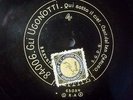
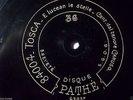
Rimsky Korakov & Leopold Stokowski "SCHEHERAZADE" Orthophonic Collection
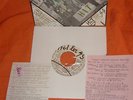
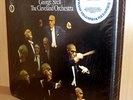
I came across this very unique Rimsky Korsakov & Leopold Stokowski collection of orthophonic recordings, newspaper clippings from the 1927s and 28s and some autographed pictures. Investigating more I discovered how important and interesting my fined was.
Some of the collection includes:
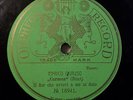
- 2 double sided Orthophonic recordings (see pictures for more specific information)
- A 1927 brochure of Nicholas Rimsky Korsakov “SCHEHERAZADE” Symphonic Suite from the Arabian Nights, which gives the history of the recordings including that, was performed by Leopold Stokowski
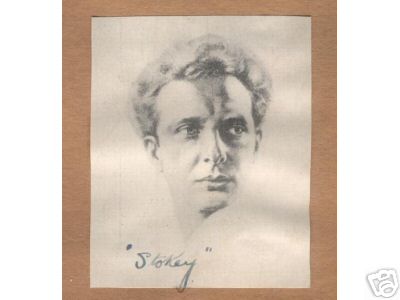
- 3 Pictures of Leopold Stokowski (2 prints with one autographed, 1 drawing autographed)
- 8 newspaper articles on the composer, symphonies, etc.. Some with dates from May 1928 (see pictures or email me for more specifics).
- All this collection is in a hardcover book which is labeled Rimsky-Korsakov “Scheherazade” in gold colored writing
Following is some information that I borrowed to help show you how interesting this collection is. The news paper articles that come with this collection are even more interesting!!!!
See Pictures Below !!!
Rimsky Korsakov - Basic Biography (from - the World Book)
Rimsky-Korsakov, Nikolai (1844-1908), was a celebrated Russian composer and music teacher. His symphonic suite Scheherazade (1888) ranks as one of the most popular orchestral works ever written.
Rimsky-Korsakov became famous for his imaginative blend of orchestral sounds. Examples include Capriccio Espagnol (1887) and the Russian Easter Overture (1888). Rimsky-Korsakov based many of his 15 operas on Russian history and folklore. Only one of them, Le Coq d'Or (The Golden Cockerel, completed in 1907), won international fame. But his operas The Snow Maiden (1882), Sadko (1898), and Tsar Saltan (1900) are popular in the Soviet Union. Two of his most famous pieces come from his operas "Song of India" from Sadko and "The Flight of the Bumblebee" from Tsar Saltan.
Nikolai Andreyevich Rimsky-Korsakov was born in Tikhvin, near Novgorod. From 1856 to 1862,he attended the Naval Academy in St. Petersburg. In 1861, Rimsky-Korsakov met the composer Mily Balakirev and joined a group of young composers who later became known as The Five. This group, led by Balakirev, urged Russian composers to stress their national heritage in their music.
In 1862, Rimsky-Korsakov sailed on a three-year naval cruise, during which he visited the United States. He completed his first symphony aboard ship. After returning to St. Petersburg in 1865, he revised the symphony under Balakirev's supervision. It had its first performance that same year.
In 1871, Rimsky-Korsakov left the navy and joined the faculty of the St. Petersburg Conservatory. He realized that he knew almost no music theory, and so he taught himself counterpoint, harmony, and music form. He became one of the world's greatest music theorists. He taught several students who achieved fame as composers, including Sergei Prokofiev and Igor Stravinsky.
Rimsky-Korsakov also edited and revised compositions that his friends Alexander Borodin and ModestMussorgsky had left unfinished when they died. Orchestras and opera companies usually perform Rimsky- Korsakov's version of Mussorgsky's opera Boris Godunov. Borodin's opera Prince Igor is usually performed in the version completed by Rimsky-Korsakov and the Russian composer Alexander Glazunov.
(from - the World Book)
Leopold Stokowski - Biography (from - The Leopold Stokowski Site)
Leopold Stokowski was one of the greatest conductors of all time. Born in London on April 18, 1882, he started his musical career as an organist. In 1903, he took the post of principal organist at St. James’ Church in London, situated in a small side off the famous Piccadilly. Although only 21 years old, he became soon well-known and after two years received an offer from St. Bartholomew’s Church in New York, which he accepted enthusiastically. The congregation loved him, particularly for his uncommon musical repertoire. But he went too far with this. In 1908, he was thrown out after he had concluded a service with Stars and Stripes Forever with all the organ-stops pulled out.
The next year, the famous pianist Olga Samaroff made it possible for him to conduct a concert with the Cincinnati Symphony Orchestra on May 12, 1909, in which she was the soloist. The concert was a great success and Stokowski was instantly engaged for the next season. Despite triumphal successes, however, he left Cincinnati in 1911, due to internal quarrels. Back in Europe, he married Olga.
In 1912, he returned to the United States, this time to the Philadelphia Orchestra, where he conducted his first concert on October 11. The Philadelphia Orchestra was then rather a middle-class orchestra but Stokowski improved its sound within short time. The result became later known as the Philadelphia Sound and was achieved with some unusual innovations. First, he allowed the strings free bowing, which means the string players were free to move their bows up and down as they pleased, rather than in unison. This produces a very warm, silky and vivid sound, as it had never been heard before. Stokowski also made several changes to the orchestra’s seating arrangement to improve the transparency and clarity of the sound.
But it was not only this what made him popular. He sometimes produced his concerts like a stage-play by placing light spots on him or his always baton-less conducting hands, by speeches to the audience and even once by hiding the orchestra behind a curtain.
Stokowski always made a mystery of himself. Asked about his age, he would give 1887 as his year of birth instead of 1882 . Throughout his whole life he spoke with a strange pseudo-east-European accent of which nobody ever had an idea where he, as a born Lodoner, could have it from.
In 1940, Stokowski made the famous film Fantasia together with Walt Disney, in which cartoon figures move in ballet-like sequences to classical music. The music for the film was recorded in eight-channel stereophony and surprised its spectators for both its visual and acoustical achievements. Stokowski also appeared in some other, rather slushy films,
Musically, he provoked a still-lasting controversy over his bombastic symphonic transcriptions of Bach works, which are considered sacrilege by baroque purists. He also had no inhibitions about making changes to the scores of other great masters, such as Beethoven or Tchaikovsky, if this served the work in any way. He also made his own orchestral arrangements of other works, such as Mussorgski’s Pictures at an Exhibition and A Night on the Bare Mountain or Debussy’s La cathédrale engloutie.
Stokowski left Philadelphia in 1941, turning to various musical projects. He had many engagements as guest conductor all over the world and founded several orchestras, such as The All-American Youth Orchestra, The American Symphony Orchestra, The Symphony of the Air and "His" Symphony Orchestra (for recording sessions with Capitol Records).
With a legendary concert on June 14, 1972, Stokowski celebrated the sixtieth anniversary of his first appearance with the London Symphony Orchestra.
Stokowski was always very interested in improving the sound quality of recording media. Therefore, it is a great luck for the record lover that he became so old. He made still excellent (perhaps even his best) stereo recordings in his higher age.
The difference between his recordings and those of other conductors is simply that he is a magician. When you hear Stokowski, suddenly the music begins to develop its own life. The sound is usually richer than everywhere else and so intense that you can’t believe it is produced by a hundred people and not by only one. It is said that Stokowski kept on playing the organ his whole life: through the orchestra.
At 94, he was optimistic enough to sign a five years contract with Columbia Records. Unfortunately, this could not avert his destiny. He died on September 13, 1977, at the age of 95 in his house in Nether Wallop, Hampshire, England. It was the day on which he was to record Rachmaninov’s Second Symphony, a wonderful work he never recorded commercially.
(from - The Leopold Stokowski Site)
On Mar-02-04 at 18:42:44 PST, seller added the following information: Western Union® Auction Payments — auction payments made easy