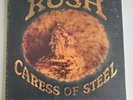
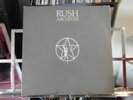
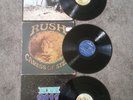
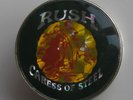
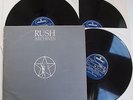
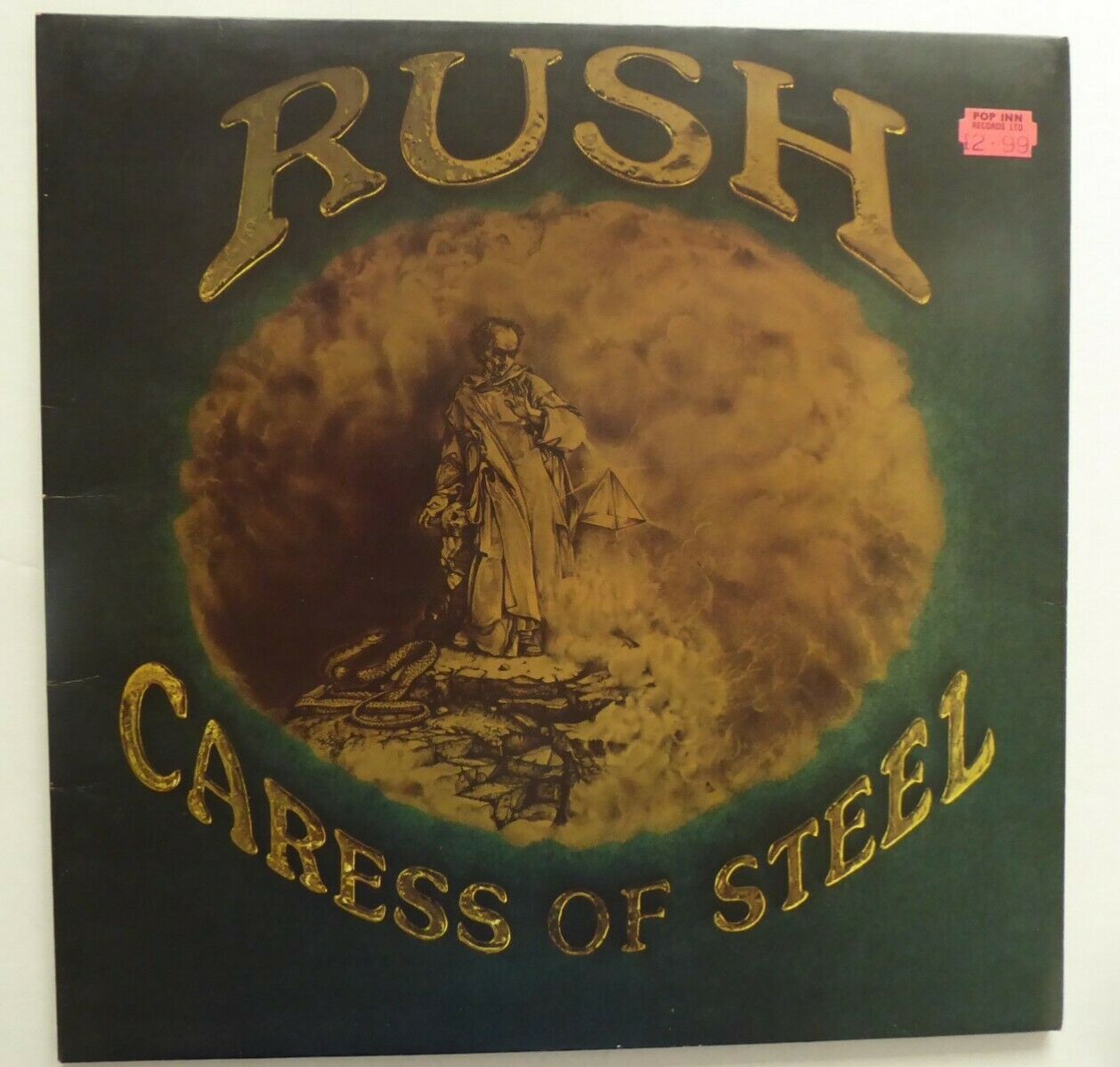
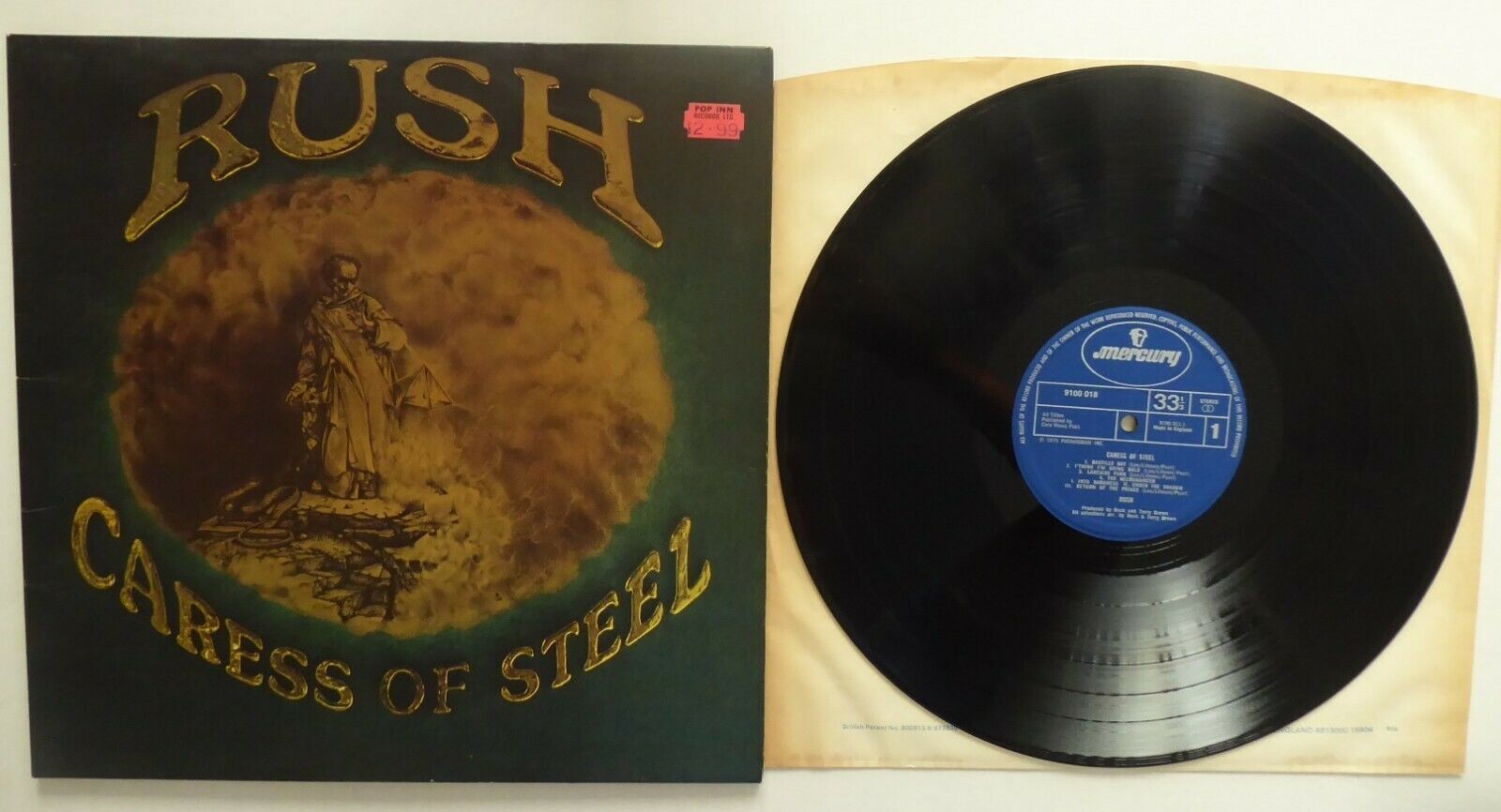
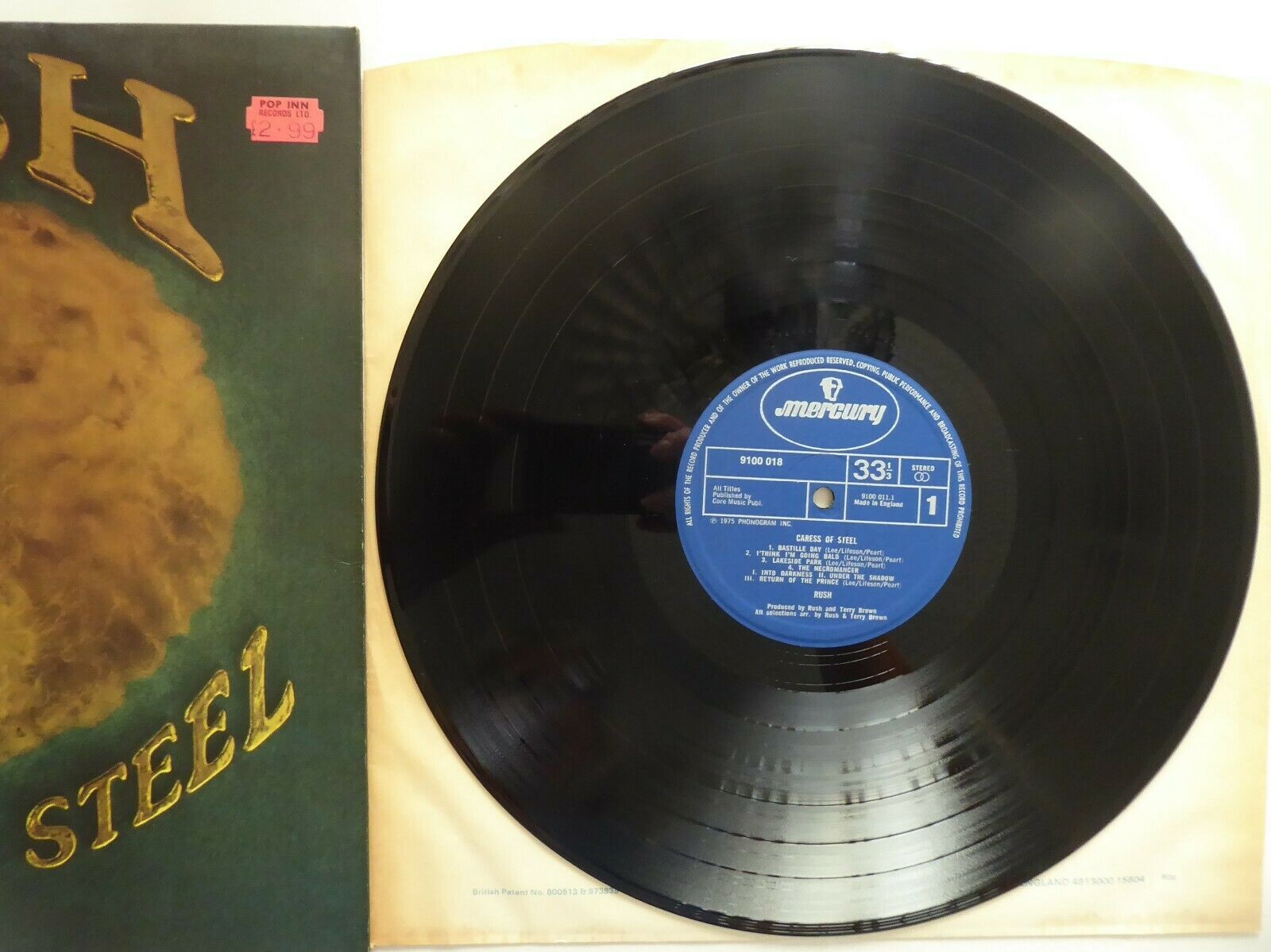
Rush "Caress of Steel" original 1975 vinyl LP Mercury 9100 018 Gatefold sleeve
£
15
$
20
Favourite Auctions
To save auctions to your favourites, please login
If you don't have an account, please register
Description
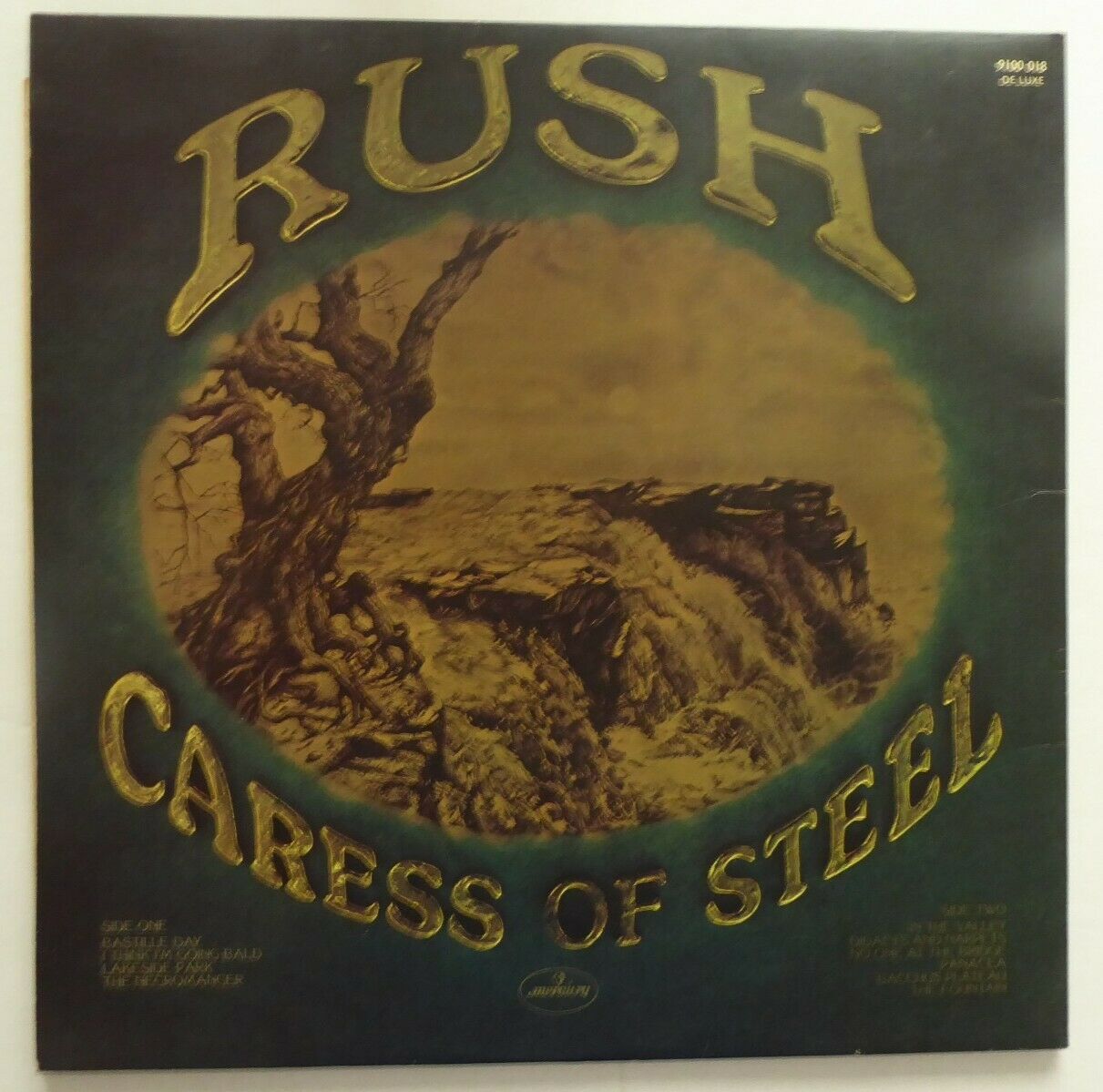
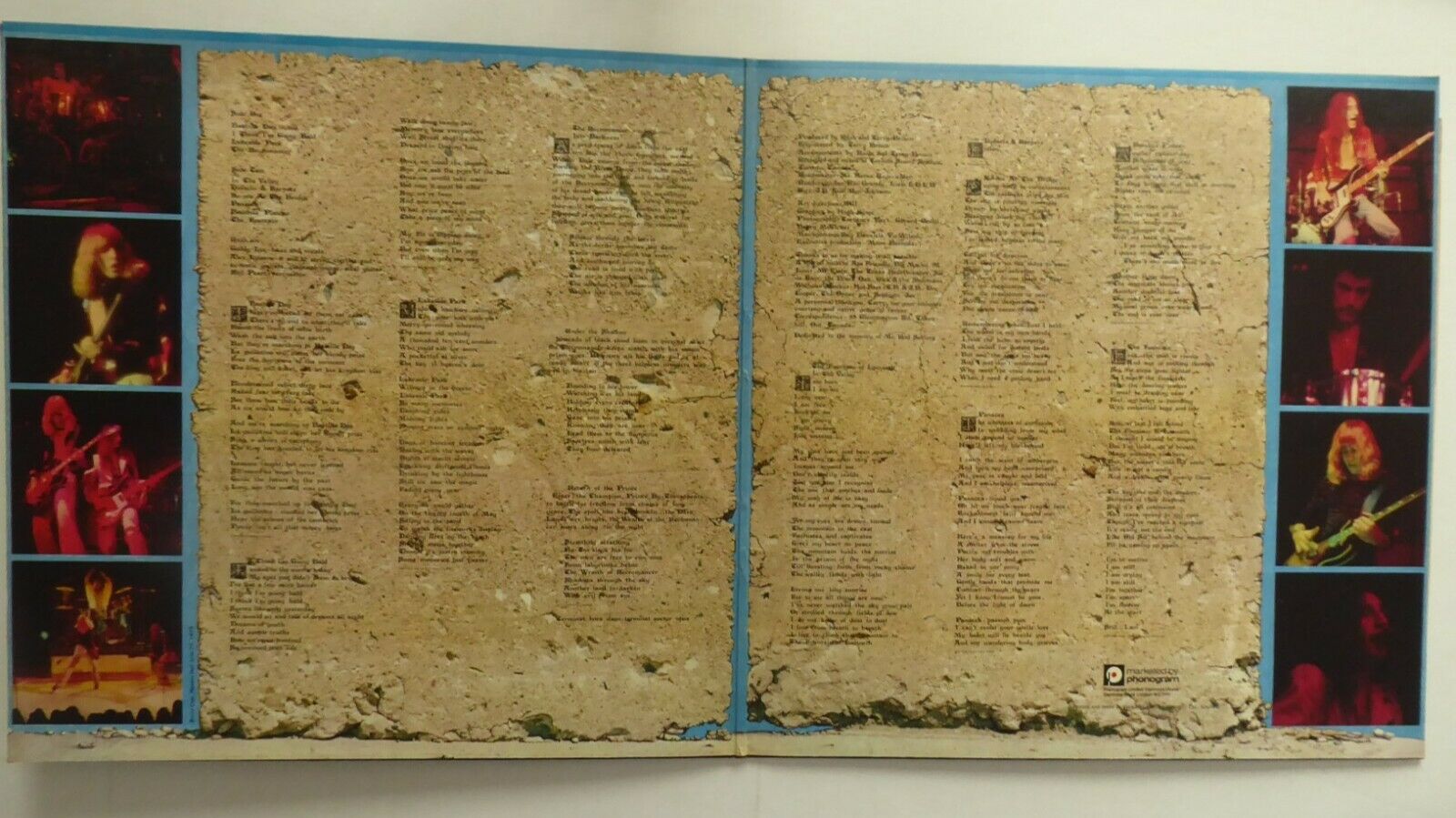
Rush "Caress of Steel" original 1975 vinyl LP Mercury 9100 018 in Gatefold sleeve. Condition is Used. Dispatched with Royal Mail 2nd Class. Both the sleeve and the vinyl are in excellent condition.
Caress of Steel is the third studio album by Canadian rock band Rush, released in 1975. The album showcases the band's continued evolution to hard progressive rock as opposed to the blues-based hard rock style of the band's first album.
Although Rush's previous album Fly by Night dabbled in longer conceptual pieces such as "By-Tor & the Snow Dog", such works were the central focus of Caress of Steel. Long pieces broken up into various sections and long solo passages are prominent elements of the album. It includes the band's first two epic pieces, "The Necromancer" and "The Fountain of Lamneth", which were also blamed by the record company for the commercial failure of the album itself; the latter runs 20 minutes total and comprises the entire second side of the original vinyl release.
The album cover for Caress of Steel was intended to be printed in a silver colour to give it a "steel" appearance. A printing error resulted in giving the album cover a copper colour. The error was not corrected on subsequent printings of the album. The cover artwork for Caress of Steel was designed by Hugh Syme, the first Rush album to feature his work. Syme has designed the cover artwork for every Rush album since.
Geddy Lee admitted in the 2010 documentary film Rush: Beyond the Lighted Stage that he thought bandmates Alex Lifeson, Neil Peart and he were "pretty high" during the making of Caress of Steel.
"Bastille Day"
Rush's Led Zeppelin influence is still prominent on this record, most obviously in the song "Bastille Day", which discusses the storming of the Bastille in the French Revolution. An instrumental section of the song was played during the R30 Tour as part of the "R30 Overture".
"I Think I'm Going Bald"
"I Think I'm Going Bald" was written for Canadian rocker Kim Mitchell, who at the time was frontman of the band Max Webster and a close friend of the members of Rush. According to the book Contents Under Pressure, it was also inspired by the song "Goin' Blind" by Kiss, whom Rush had frequently been an opening act for in their earlier years.
"Lakeside Park"
Mentioned in the song "Lakeside Park", May 24 is Victoria Day, a Canadian holiday. Lakeside Park itself is a park in Port Dalhousie, St. Catharines, Ontario, where drummer and lyricist Neil Peart grew up and worked during the summer as a teenager.
"The Necromancer"
A necromancer is one who practices necromancy, a type of divination involving the summoning of spirits of the deceased. "The Necromancer" contains heavy influence from J. R. R. Tolkien's literary mythology; the Necromancer was an alias used by the character Sauron during the timeframe of The Hobbit. Also, in the introductory prologue to the song, the lyrics allude to "three travelers, men of Willow Dale" as the song's protagonists. This is a reference to the band itself, and an allusion to the Toronto suburb of Willowdale, where Geddy Lee and Alex Lifeson grew up and formed the first incarnation of the band. Part III of the song, titled "Return of the Prince", sees the return of the character By-Tor from the song "By-Tor and The Snow Dog" on Fly by Night; however, this time By-Tor is a hero and not a villain. "Return of the Prince" was released as a single in some countries.
On the inside gatefold of the album, just below the lyrics to "The Necromancer", the Latin phrase "Terminat hora diem; terminat auctor opus" appears, which translates (loosely) to:
"[as] The hour ends the day; the author ends his work." The source of this phrase is Christopher Marlowe's play Doctor Faustus (1588)."The Fountain of Lamneth"
The final song on the album, "The Fountain of Lamneth", predates epics such as "2112" and the Cygnus X-1 series, and is only 34 seconds shorter than "2112". It is the first epic song Rush had recorded, consisting of six parts which form a complete story about a man in search of the Fountain of Lamneth, chronicling the individual occurrences of his journey.
"Didacts and Narpets"Regarding "Didacts and Narpets" (which consists mostly of a drum solo), in the October 1991 news release from the Rush Backstage Club, Neil Peart said: "Okay, I may have answered this before, but if not, the shouted words in that song represent an argument between Our Hero and the Didacts and Narpets – teachers and parents. I honestly can't remember what the actual words were, but they took up opposite positions like: 'Work! Live! Earn! Give!' and like that." A didact is a teacher; "narpet" is an anagram of "parent".
Track listing
All lyrics are written by Neil Peart; all music is composed by Alex Lifeson and Geddy Lee except where noted.
Side one No. Title Length 1. "Bastille Day" 4:39 2. "I Think I'm Going Bald" 3:42 3. "Lakeside Park" 4:10 4. "The Necromancer- I. Into the Darkness – 4:20
- II. Under the Shadow – 4:25
- III. Return of the Prince – 3:51"
- I. In the Valley – 4:18
- II. Didacts and Narpets – 1:00
- III. No One at the Bridge – 4:21
- IV. Panacea (Lee) – 3:16
- V. Bacchus Plateau (Lee) – 3:15
- VI. The Fountain – 3:50"
Personnel
Rush[edit]
- Geddy Lee – vocals, bass guitar
- Alex Lifeson – electric and acoustic guitar, classical guitar
- Neil Peart – drums, percussion
price rating