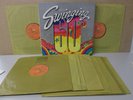
SEALED LP: ALAN WHITE: RAMSHACKLED
$
28


$ 28
Sold For
Jun 17, 2016
Sold Date
Jun 14, 2016
Start Date
1
Number Of Bids
USA
Country Of Seller
eBay
Sold at
Favourite Auctions
To save auctions to your favourites, please login
If you don't have an account, please register
Description
Alan White: Ramshackled
FACTORY SEALED LP
Format: Sealed LPCountry: U.S.A.
Record Company & Release Number: Atlantic: SD 18167
Original release date/year: 1976
Bar Code: NONE
Condition of the cover: Mint
Condition of the record: Sealed - Assumed Mint
Shipping Weight: 1 pounds, 1 ounces
My inventory number: 209201B
Notes: - - -
Please contact me if you have any difficulty viewing the photos.
Songs
- Ooooh Baby (Goin' to Pieces)
- One Way Rag
- Avakak
- Spring - Song of Innocence
- Giddy
- Silly Woman
- Marching into a Bottle
- Everybody
- Darkness, Pts. 1 - 3
- Bud Beadle: Flute, Saxophone, Wind
- David Bedford: Arranger, Conductor
- Madeline Bell: Vocals (bckgr)
- Vicki Brown: Vocals (bckgr)
- Ken Craddock: Keyboards, Vocals
- Colin Gibson: Bass, Percussion, Guitar (Bass)
- Steve Gregory: Flute, Sax (Tenor), Wind
- Paul Hardiman: Engineer, Second Engineer
- Henry S. Hodgeson: Artwork
- Pete Kirtley: Guitar, Vocals
- Henry Lowther: Trumpet
- Alan Marshall: Vocals
- Nunu: Production Coordination
- Andy Phillips: Percussion, Drums (Steel)
- Bob Potter: Producer, Engineer
- David Tucker: Cutting Engineer
- Ian Vincentini: Design, Concept
- Alan White: Percussion, Drums, Vocals, Producer, Engineer
- Joanne Williams: Vocals (bckgr)
Review by Alex Henderson, All Music Guide
- In the '70s, drummer Alan White was among the Yes members who recorded solo projects; the others included Jon Anderson, Chris Squire, and Rick Wakeman. Ramshackled, White's only solo album, was far from a huge seller, but some Yes fans bought it out of curiosity. Many of them were no doubt expecting to hear progressive rock, but this out of print LP is a long way from Relayer or Tales from Topographic Oceans. Instead, White turns his attention to blue-eyed soul-pop and, to a lesser degree, jazz fusion with erratic results. While the singing is unimpressive, some of the material is OK. "One Way Rag," "Giddy," and "Ooooh Baby" have more in common with Van Morrison than with Yes, King Crimson, or Genesis, and the jazz fusion instrumental "Avakak" might have worked on a CTI session of the early to mid-'70s. Meanwhile, the most embarrassing tune on the album is "Silly Woman," a painfully square and downright corny attempt at reggae or Caribbean music. Although Ramshackled isn't terrible, most of the Yes fans who bought it agreed that their money hadn't been well spent. The LP soon ended up in the cutout bins, and White's attempt at solo career died a quick death.
Alan White biography by Bruce Eder, All Music Guide
- It's one of the great ironies in Alan White's career that he came to fame in the shadow of the drummer he replaced in Yes, Bill Bruford. In a way it was neither musician's fault -- Bruford was considered, after Carl Palmer, the hottest drummer in England, while White had, in the public's perception, played in a few highly visible bands and gigs without a lot of acclaim. In fact, at 23 years of age, he had a decade's experience as a professional musician. White's father was an amateur pianist, and his own first instrument was the piano. He gravitated toward the drums, however, and at age 12 he got his own drum kit from his uncle, who was also a drummer. He quickly abandoned lessons in favor of developing his own style and approach. By 13, he was playing in a group called the Downbeats and becoming the subject of local press articles because of his age. In his mid-teens, White was playing gigs seven nights a week for a good part of the year, primarily doing covers of Beatles and other British beat tunes of the early to mid-'60s. White tried studying technical drawing, with the hope of eventually pursuing a career as an architect, but musical success intervened when his group, rechristened the Blue Chips, got a contract with Polygram Records after winning a Melody Maker band contest in London. They cut a single in 1965, and sometime after that White joined Billy Fury's backing band, the Gamblers, spending three months playing with them in Germany during 1966. White passed through the lineups of a lot of short-lived late-'60s outfits including Ginger Baker's Airforce (playing some keyboards there as well), where he was in the unfortunate position of working alongside legendary drummer Phil Seaman, who managed to eclipse his younger colleague at every turn. From that group, he moved on to a brief tenure in Balls alongside Denny Laine and Trevor Burton, late of the Moody Blues and the Move, respectively, and Graham Bond, and then played with Joe Cocker. He also spent two years as a member of Terry Reid's band. It was in 1969 that he got his highest exposure, however, as a member of John Lennon's Plastic Ono Band. Lennon first pressed White into service for the Toronto Rock 'n Roll Revival show that became the Live Peace In Toronto album, although at the time no LP was intended -- by sheer luck, the existence of a bootleg release resulted in an official Apple Records LP that sold millions of copies, and had White's name placed on an equal footing in the band credits with Lennon and Eric Clapton. He also played on the single "Instant Karma" and on the Imagine album, which were some of the hottest records of the era. White played on albums by George Harrison, Doris Troy, Gary Wright, and Alan Price between 1969 and 1972. Additionally, Price had worked as the producer with a band of White's called Griffin, which included Graham Bell, Ken Craddock, Pete Kirtley, and Colin Gibson, who had cut an LP in 1969. He was getting as much exposure as any British drummer of the era when his entry to Yes took place. The group's original drummer, Bill Bruford, had already carved out a name for himself in four years with the group that made him the idol of tens of thousands of aspiring drummers around the world. Known for his complex rhythms and a very jazz-influenced approach to playing, Bruford had become both popular and respected as a member of Yes. He had also grown unhappy, however, with some of the music that the group was generating on their fifth album, Close to the Edge. By the spring of 1972, he was increasingly eager to move on to other vistas, and finally left officially on July 19, 1972. The fact that White was a friend of Eddie Offord, Yes' producer, and of lead singer Jon Anderson, helped smooth the way for his entry into the group, and Bruford himself had welcomed him as his successor. In point of fact, he'd come into the studio in the months before Bruford's exit, unofficially, listening and watching what was going on, and had tried playing the material from Close to the Edge and handled it. Upon Bruford's exit, White learned the group's entire concert repertory in three days for an upcoming show. White never looked back, from that summer 1972 tour right into the 21st century. Fans never minded either, once he established his reputation, which he did on that tour and the triple live LP Yessongs that came from it. Bruford was represented on a handful of tracks, but White was the drummer on most of the material, including the all-important (and new) Close to the Edge material. He was perfect for the spot he filled -- Bruford's jazz-influenced playing had added immeasurably to the band's first four albums, and he'd achieved extraordinary things in spite of his dislike of the music on Close to the Edge, but Yes was evolving into a bigger, arena rock band with a sound that required power as well as eloquence, and White revealed that he had power to spare. Not everything that White put his hand to worked, to be sure. He was perhaps less responsible than the credited composers for the excesses of Tales From Topographic Oceans, but that didn't make White's percussion interlude on that album's "The Ritual") any easier listening. For the most part, however, White became the bedrock of the group's sound during the turbulent late-'70s era, when Yes was struggling with membership changes and the end of the progressive rock boom, which reduced their sales and audience. He worked in one surprisingly engaging solo album during this period, called Ramshackled, in tandem with similar efforts by the other members of the band, but his commitment was to the group. Indeed, it was White's breaking his ankle (at a roller-disco, no less) in late 1979 that precipitated the momentary end of the band that year, amid a disastrous attempt at recording a new album. And White, along with Chris Squire, would become one of the carryover members of the group during the period in which Trevor Horn and Geoff Downes joined, as well as all subsequent Yes recordings to the present day. No more fitting tribute to Alan White's abilities exists than that paid him by Bill Bruford, who applauds the sheer power of White's playing and the fact that he has retained his inventiveness over any number of extended arena-to-arena tours. Coupled with his down-to-earth attitude, which has permitted him to work on records as different as Tales From Topographic Oceans and Owner of a Lonely Heart, his steadiness and reliability have made White a mainstay of the group for three decades. And thanks to cumulative sales of many tens of millions of LPs, CDs, and singles, White remains one of the most well known and oft-heard drummers in rock music, rivaling Ringo Starr, Charlie Watts, Ginger Baker, Nick Mason, Ian Paice, and John Bonham.
- This record came from a record store called "Phantasmagoria" which was located in Allentown, Pennsylvania. Phantasmagoria went out of business in 1978. I purchased most of their unsold inventory some years later when I owned "Music Madness" - a new & used record store in Catasauqua, Pennsylvania.
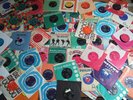
- Phantasmagoria used round colored stickers to indicate the price of the albums. They had a chart on the wall with the color sticker combinations for the customers to use so they knew the price of the albums. Most of the albums still have these stickers on them, and in some rare cases, the stickers are written on. Some of the records have prices on them. This is the price you would have paid for the record in 1978 if you would have bought it at Phantasmagoria. Please don't confuse these prices with their current value.
- All sealed albums are being sold as collector's items and cannot be returned due to manufacturer's defects. It may be almost impossible to replace many of the sealed albums that I am selling.
- If I list an album as "New", but not sealed, it is because the album is probably an import or from a small USA record company. Back in the 70's, many imported albums were not sealed by the record companies, and the importers/distrubutors did not spend the time or money to seal them before being sent to the stores. I will not knowingly misrepresent an album as new if I have any doubts.
- All pictures are of the exact item being sold.
- I always leave feedback before your item ships. Please consider leaving feedback for me after you have had a chance to inspect and enjoy your purchase.
- Please avoid questions on the last day of the auction. I might not have enough time to give you an answer before the auction ends.
- All album reviews, credits and artist biographies are from All Music Guide. If you haven't been to their web site, you have to check it out. It's one of the most comprehensive music references on the internet. In some cases, credits may include reissue (CD) information. Obviously any credits referenced to CDs do not apply to this album release.
Counter by AuctionTamer
price rating