SEALED LP: JOHN MAYALL: NOTICE TO APPEAR
$
25


$ 25
Sold For
May 20, 2016
Sold Date
May 19, 2016
Start Date
1
Number Of Bids
USA
Country Of Seller
eBay
Sold at
Favourite Auctions
To save auctions to your favourites, please login
If you don't have an account, please register
Description
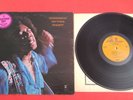
John Mayall: Notice to Appear
FACTORY SEALED LP
Format: Sealed LPCountry: U.S.A.
Record Company & Release Number: ABC: ABCD-926
Original release date/year: 1975
Bar Code: NONE
Condition of the cover: Mint
Condition of the record: Sealed - Assumed Mint
Shipping Weight: 1 pounds, 0 ounces
My inventory number: 208020B
Notes: - - -
Please contact me if you have any difficulty viewing the photos.
Songs
- Lil' Boogie in the Afternoon
- Mess of Love
- That Love
- Boy Most Likely to Succeed
- Who's Next, Who's Now
- Hail to the Man Who Lives Alone
- There Will Be a Way
- Just Knowing You Is a Pleasure
- Hard Day's Night
- Old Time Blues
- Dee McKinnie: Vocals
- Nick Messina: Trumpet
- Earl Lon Price: Wind
- Lon Price: Flute, Sax (Tenor)
- Soko Richardson: Drums, Sax (Baritone)
- Jay Spell: Organ, Piano (Electric), Keyboards
- Allen Toussaint: Percussion, Keyboards, Arranger, Piano, Producer, Clavinet
- James Booker: Organ, Keyboards
- Rick Vito: Guitar
- Larry Taylor: Bass
- Larry Blouin: Saxophone, Sax (Baritone)
- Tony Broussard: Bass
- Herman V. Ernest III: Drums
- Don "Sugarcane" Harris: Violin
- Steve Hughes: Guitar
- Kim Joseph: Conductor, Conga
- Ken Laxton: Engineer
- John Mayall: Guitar, Harmonica, Piano (Electric), Main Performer, Melodica, Vocals, Keyboards, Piano
ALBUM REVIEW NOT AVAILABLE ON ALLMUSIC.COM
Biography
John Mayall biography by Richie Unterberger
- As the elder statesman of British blues, it is John Mayall's lot to be more renowned as a bandleader and mentor than as a performer in his own right. Throughout the '60s, his band, the Bluesbreakers, acted as a finishing school for the leading British blues-rock musicians of the era. Guitarists Eric Clapton, Peter Green, and Mick Taylor joined his band in a remarkable succession in the mid-'60s, honing their chops with Mayall before going on to join Cream, Fleetwood Mac, and the Rolling Stones, respectively. John McVie and Mick Fleetwood, Jack Bruce, Aynsley Dunbar, Dick Heckstall-Smith, Andy Fraser (of Free), John Almond, and Jon Mark also played and recorded with Mayall for varying lengths of times in the '60s.
- Mayall's personnel has tended to overshadow his own considerable abilities. Only an adequate singer, the multi-instrumentalist was adept in bringing out the best in his younger charges (Mayall himself was in his thirties by the time the Bluesbreakers began to make a name for themselves). Doing his best to provide a context in which they could play Chicago-style electric blues, Mayall was never complacent, writing most of his own material (which ranged from good to humdrum), revamping his lineup with unnerving regularity, and constantly experimenting within his basic blues format. Some of these experiments (with jazz-rock and an album on which he played all the instruments except drums) were forgettable; others, like his foray into acoustic music in the late '60s, were quite successful. Mayall's output has caught some flak from critics for paling next to the real African-American deal, but much of his vintage work -- if weeded out selectively -- is quite strong; especially his legendary 1966 LP with Eric Clapton, which both launched Clapton into stardom and kick-started the blues boom into full gear in England.
- When Clapton joined the Bluesbreakers in 1965, Mayall had already been recording for a year, and been performing professionally long before that. Originally based in Manchester, Mayall moved to London in 1963 on the advice of British blues godfather Alexis Korner, who thought a living could be made playing the blues in the bigger city. Tracing a path through his various lineups of the '60s is a daunting task. At least 15 different editions of the Bluesbreakers were in existence from January 1963 through mid-1970. Some notable musicians (like guitarist Davy Graham, Mick Fleetwood, and Jack Bruce) passed through for little more than a cup of coffee; Mayall's longest-running employee, bassist John McVie, lasted about four years. The Bluesbreakers, like Fairport Convention or the Fall, was more a concept than an ongoing core. Mayall, too, had the reputation of being a difficult and demanding employer, willing to give musicians their walking papers as his music evolved, although he also imparted invaluable schooling to them while the associations lasted.
- Mayall recorded his debut single in early 1964; he made his first album, a live affair, near the end of the year. At this point the Bluesbreakers had a more pronounced R&B influence than would be exhibited on their most famous recordings, somewhat in the mold of younger combos like the Animals and Rolling Stones, but the Bluesbreakers would take a turn for the purer with the recruitment of Eric Clapton in the spring of 1965. Clapton had left the Yardbirds in order to play straight blues, and the Bluesbreakers allowed him that freedom (or stuck to well-defined restrictions, depending upon your viewpoint). Clapton began to inspire reverent acclaim as one of Britain's top virtuosos, as reflected in the famous "Clapton is God" graffiti that appeared in London in the mid-'60s.
- In professional terms, though, 1965 wasn't the best of times for the group, which had been dropped by Decca. Clapton even left the group for a few months for an odd trip to Greece, leaving Mayall to straggle on with various fill-ins, including Peter Green. Clapton did return in late 1965, around the time an excellent blues-rock single, "I'm Your Witchdoctor" (with searing sustain-laden guitar riffs), was issued on Immediate. By early 1966, the band was back on Decca, and recorded its landmark Bluesbreakers LP. This was the album that, with its clean, loud, authoritative licks, firmly established Clapton as a guitar hero, on both reverent covers of tunes by the likes of Otis Rush and Freddie King and decent originals by Mayall himself. The record was also an unexpected commercial success, making the Top Ten in Britain. From that point on, in fact, Mayall became one of the first rock musicians to depend primarily upon the LP market; he recorded plenty of singles throughout the '60s, but none of them came close to becoming a hit.
- Clapton left the Bluesbreakers in mid-1966 to form Cream with Jack Bruce, who had played with Mayall briefly in late 1965. Mayall turned quickly to Peter Green, who managed the difficult feat of stepping into Clapton's shoes and gaining respect as a player of roughly equal imagination and virtuosity, although his style was quite distinctly his own. Green recorded one LP with Mayall, A Hard Road, and several singles, sometimes writing material and taking some respectable lead vocals. Green's talents, like those of Clapton, were too large to be confined by sideman status, and in mid-1967 he left to form a successful band of his own, Fleetwood Mac.
- Mayall then enlisted 19-year-old Mick Taylor; remarkably, despite the consecutive departures of two star guitarists, Mayall maintained a high level of popularity. The late '60s were also a time of considerable experimentation for the Bluesbreakers, which moved into a form of blues-jazz-rock fusion with the addition of a horn section, and then a retreat into mellower, acoustic-oriented music. Mick Taylor, the last of the famous triumvirate of Mayall-bred guitar heroes, left in mid-1969 to join the Rolling Stones. Yet in a way Mayall was thriving more than ever, as the U.S. market, which had been barely aware of him in the Clapton era, was beginning to open up for his music. In fact, at the end of the 1960s, Mayall moved to Los Angeles. Released in 1969, The Turning Point, a live, all-acoustic affair, was a commercial and artistic high point.
- In America at least, Mayall continued to be pretty popular in the early '70s. His band was no more stable than ever; at various points some American musicians flitted in and out of the Bluesbreakers, including Harvey Mandel, Canned Heat bassist Larry Taylor, and Don "Sugarcane" Harris. Although he's released numerous albums since and remained a prodigiously busy and reasonably popular live act, his post-1970 output generally hasn't matched the quality of his '60s work. Following collaborations with an unholy number of guest celebrities, in the early '80s he re-teamed with a couple of his more renowned vets, John McVie and Mick Taylor, for a tour. It's the '60s albums that you want, though there's little doubt that Mayall has over the past decades done a great deal to popularize the blues all over the globe, whether or not the music has meant much on record.
- This record came from a record store called "Phantasmagoria" which was located in Allentown, Pennsylvania. Phantasmagoria went out of business in 1978. I purchased most of their unsold inventory some years later when I owned "Music Madness" - a new & used record store in Catasauqua, Pennsylvania.
- Phantasmagoria used round colored stickers to indicate the price of the albums. They had a chart on the wall with the color sticker combinations for the customers to use so they knew the price of the albums. Most of the albums still have these stickers on them, and in some rare cases, the stickers are written on. Some of the records have prices on them. This is the price you would have paid for the record in 1978 if you would have bought it at Phantasmagoria. Please don't confuse these prices with their current value.
- All sealed albums are being sold as collector's items and cannot be returned due to manufacturer's defects. It may be almost impossible to replace many of the sealed albums that I am selling.
- If I list an album as "New", but not sealed, it is because the album is probably an import or from a small USA record company. Back in the 70's, many imported albums were not sealed by the record companies, and the importers/distrubutors did not spend the time or money to seal them before being sent to the stores. I will not knowingly misrepresent an album as new if I have any doubts.
- All pictures are of the exact item being sold.
- I always leave feedback before your item ships. Please consider leaving feedback for me after you have had a chance to inspect and enjoy your purchase.
- Please avoid questions on the last day of the auction. I might not have enough time to give you an answer before the auction ends.
- All album reviews, credits and artist biographies are from All Music Guide. If you haven't been to their web site, you have to check it out. It's one of the most comprehensive music references on the internet. In some cases, credits may include reissue (CD) information. Obviously any credits referenced to CDs do not apply to this album release.
Counter by AuctionTamer
price rating