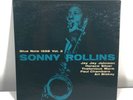
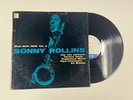
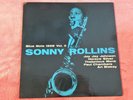
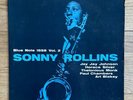
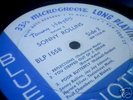
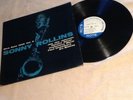
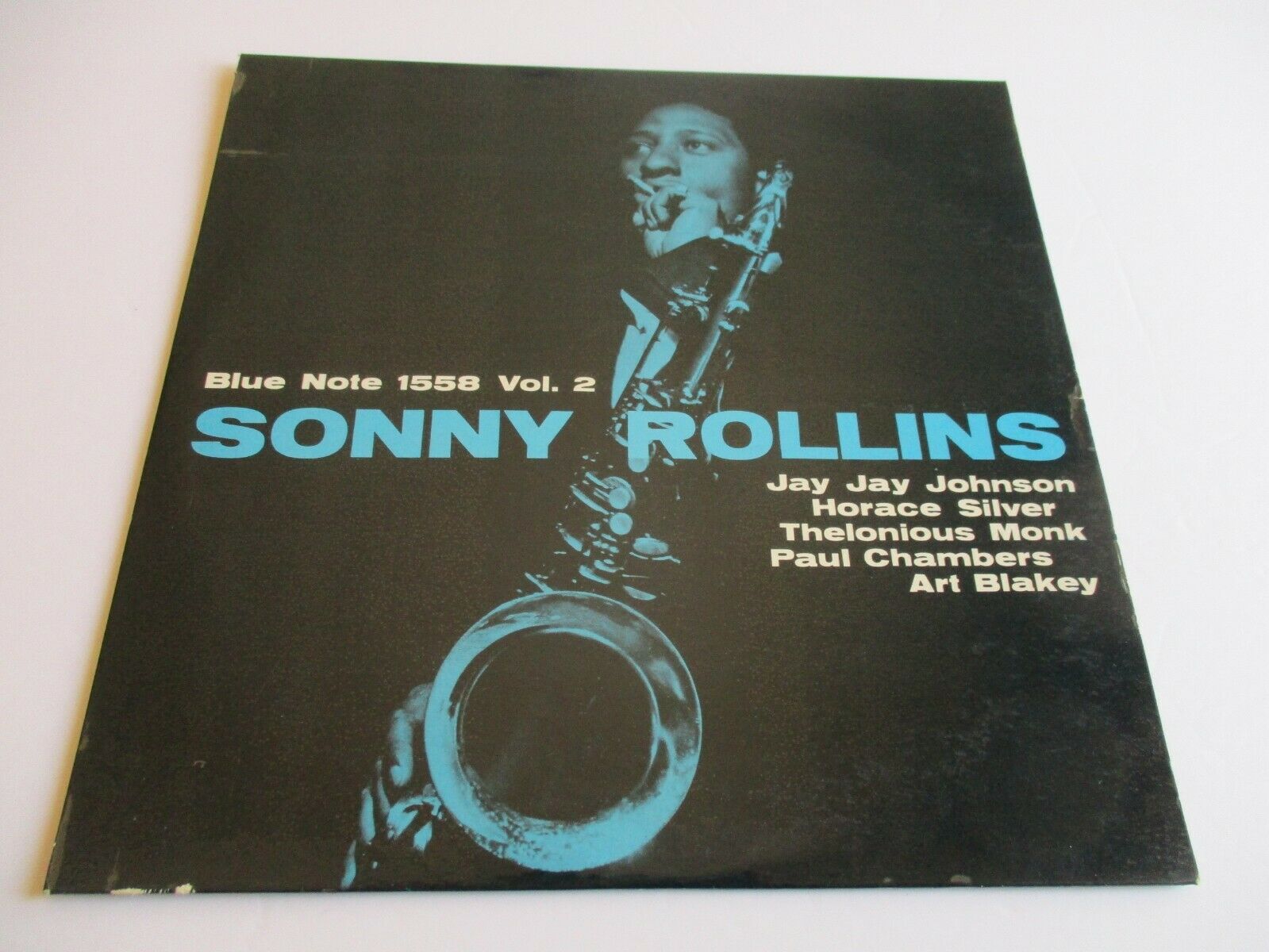
SONNY ROLLINS Blue Note 1558 Vol 2 Vinyl LP1957 BLP 1558 Microgroove VG+
$
225


Favourite Auctions
To save auctions to your favourites, please login
If you don't have an account, please register
Description
SONNY ROLLINS Blue Note 1558 Vol 2 Vinyl LP BLP 1558 Microgroove The opening riff of “Why Don’t I?” could have been an outtake from Volume 1 with its loud, honking Rollins riff announcing his unmistakable tone in a similar manner to the Volume 1 jams “Decision” and “Bluesnote”. Despite the presence of a piano here, Rollins hints at the legendary style of pianoless strolling he would perfect the following year, all while trading loud, fast riffs with Art Blakey in a conversation punctuated by the drummer’s own Elvin Jones-esque grunts and patented press roll. It all makes for an exciting conclusion to the take.
Another surprising highlight of the album is the song “Wail March”. I am not usually a fan of marches, from the traditional bop march of “Blues March” by Blakey’s Messengers to the almost avant garde style of march found on Bobby Hutcherson’s “Les Noires Marchant”, but “Wail March” changed that quickly. Normally turned off by their corny, almost antiquated style of beat, “Wail March” is a freewheeling song with the driving snare of any classic march but also wild, reckless improvisation by Rollins and trombonist J.J. Johnson and an admittedly catchy chorus.
The track on this record that most critics laud is the rendition of the Thelonious Monk standard “Misterioso”, instantly memorable because of a repeating, haunting piano riff played by Monk with a sporadic stabbing motion. It has been recorded on many other albums, but this version instantly became my favorite. Every member of the band plays to their strengths on this song. J.J. Johnson has a memorable solo where he fluidly recreates the opening riff while Rollins finds yet another way to insert “Camptown Races” into a song. Horace Silver and Monk appear on the track — a rarity — and they do a remarkable job of playing their own styles. So many musicians have tried to play Monk’s songs just like he did and failed. These guys all knew how to play with Monk. They all retain their own unique sounds all while paying respect to the song’s original theme.
Many people think that there is a mystique to the classic Blue Note sound captured by engineer Rudy Van Gelder. That, of course, is an unscientific way of saying that there is an unexplainable and unique sound to these records.
Original Pressing, Mono, "47 WEST 63rd NYC", RVG Hand Etched, Deep groove on both sides, 9M and RVG hand etched in dead wax of side 2. The Plastylite 'P' a.k.a. "ear" in dead wax of both sides. No "R", 1st Edition New York 23 address on back cover, no "inc"
- Sonny Rollins, tenor saxophone
- J.J. Johnson, trombone (all but “Reflections”)
- Horace Silver, piano (all but “Reflections”)
- Thelonious Monk, piano (“Reflections” and “Misterioso” only)
- Paul Chambers, bass
- Art Blakey, drums
Recorded April 14, 1957 at Van Gelder Studio, Hackensack, New Jersey
Released in September 1957
JPHBX17-2MM-SONNYROLLINSBLUENOTE-BLP1558
Visit My eBay Store: JPRYAN2011
price rating