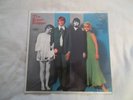
Sealed LP: Al Kooper: Al's Big Deal/Unclaimed Freight
$
30


$ 30
Sold For
Apr 26, 2010
Sold Date
Apr 19, 2010
Start Date
$ 20
Start price
4
Number Of Bids
USA
Country Of Seller
eBay
Auctioned at
Favourite Auctions
To save auctions to your favourites, please login
If you don't have an account, please register
Description
Al Kooper: Al's Big Deal/Unclaimed Freight
FACTORY SEALED LP
Format: Sealed LPRecord Company/Release Number: Columbia: PG 33169
Bar Code: NONE
Original release date: 1975
Country: U.S.A.
Condition of the cover: Mint
Condition of the record: Sealed - Assumed Mint
Shipping Weight: 1 pounds, 6 ounces
Opening bid: 19.99
Inventory number: 208443
Notes: 2LPs in a gatefold cover NOTE ABOUT MULTIPLE COPIES
This only applies to the winning bidder. If I have multiple copies of this record, and you are interested in buying any extras, let me know. I will sell you as many copies that I can (it depends on how many I have), and every additional extra will be discounted 10% less than your winning bid. I'm sorry, but I cannot disclose if I have any extra copies until after the auction ends. Please contact me if you have any difficulty viewing the photos.
Songs:
- I Can't Quit Her
- I Love You More Than You'll Ever Know
- My Days Are Numbered
- Without Her
- So Much Love/Underture
- Albert's Shuffle
- Season of the Witch
- If Dogs Run Free
- 59th Street Bridge Song (Feelin' Groovy)
- Weight
- Bury My Body
- Jolie
- I Stand Alone
- Brand New Day
- Sam Stone
- New York City (You're a Woman) (Excerpt from New York City: 6 Am ...)
- I Got a Woman
- Phil Macy: Engineer
- Rick Marotta: Drums
- Rodney Mills: Engineer
- Wayne Moss: Guitar
- Robert Nix: Drums
- Linda November: Vocals, Vocals (Background)
- Roger Pope: Drums
- Skip Prokop: Drums
- Don Puluse: Engineer
- Albertine Robinson: Vocals, Vocals (Background)
- Roy Segal: Engineer
- Valerie Simpson: Vocals, Vocals (Background)
- Maretha Stewart: Scat
- Jerry Weiss: Trumpet, Flugelhorn, Horn
- Stu Woods: Bass
- Charlie McCoy: Harmonica
- Arthur Levy: Liner Notes
- Jim Marshall: Photography
- Hugh Fielder: Liner Notes
- Gary Nichamin: Design, Layout Design
- Joe Scott: Horn Arrangements
- Emerson-Loew: Photography
- Shuggie Otis: Guitar
- Herbie Flowers: Bass
- Barry Goldberg: Keyboards
- The Blossoms: Vocals, Vocals (Background)
- John Simon: Piano
- Ken Scott
- Ron Cornelius: Guitar
- Tasha Thomas: Vocals, Vocals (Background)
- Barry Bailey: Guitar, Guitar (Electric)
- Randy Brecker: Trumpet, Horn, Flugelhorn
- Harvey Brooks: Bass
- Kenneth A. Buttrey: Drums
- Charles Calello: Horn Arrangements, String Arrangements
- Fred Catero: Engineer
- Charlie Daniels: Bass, Guitar
- J.R. Cobb: Guitar
- Bobby Colomby: Drums, Vocals, Vocals (Background)
- Dean Daughtry: Piano
- Jim Fielder: Bass
- Eileen Gilbert: Vocals, Vocals (Background)
- Paul Goddard: Bass
- Al Gorgoni: Guitar, Gut String Guitar
- Dick Halligan: Trombone, Horn
- Hilda Harris: Vocals, Vocals (Background)
- Eddie Hoh: Drums
- John Kahn: Bass
- Steve Katz: Guitar, Guitar (Electric)
- Wells Kelly: Drums
- Jerry Kennedy: Guitar
- Russ Kunkel: Drums
- Tim Langford: Engineer
- Patti Austin: Vocals, Vocals (Background)
- Bob Dylan: Guitar (Acoustic), Vocals, Guitar
- Al Kooper: Organ, Arranger, Mellotron, Main Performer, Horn Synthesizer, Synthesizer Strings, 6-String Bass, Vibraphone, Producer, Vocals, Guitar, Keyboards
- Melba Moore: Vocals, Vocals (Background)
- Paul Simon: Vocals, Harmony, Vocals
- Stephen Stills: Guitar
- Fred Lipsius: Arranger, Saxophone, Sax (Alto)
- Michael Bloomfield: Guitar
- As an anthology, the humorously titled Al's Big Deal/Unclaimed Freight captures the stylistic essence of what has made Al Kooper such a vital addition to rock & roll. Although somewhat superseded in the digital domain by Rare + Well Done: The Greatest & Most Obscure Recordings, this title was available almost two decades prior to that 201 two-CD set. This collection delves into Kooper's solo canon as well as his ensemble work with the Child Is Father to the Man version of Blood, Sweat & Tears. There is also a healthy sampling of his super sessions and collaborations with such luminaries as Michael Bloomfield, Stephen Stills, Shuggie Otis, and even Bob Dylan. The material is split into the self-explanatory subheadings of "The Songs" and "The Jams." The former incorporates shorter and more focused standout performances such as "I Can't Quit Her" and "I Love You More Than You'll Ever Know" from BS&T. There are highlights from Kooper's solo discs as well. These include "Brand New Day" and the haunting cover of John Prine's "Sam Stone," as well as the respective title tracks from the LPs I Stand Alone and New York City (You're a Woman). Incidentally, the latter track is available here in a remixed form exclusive to this package. "The Jams" reveal the amazing instrumental prowess that Kooper brings to his collaborative efforts. As a musician, his ability to interact and improvise are no more evident than on "Albert's Shuffle" and "Season of the Witch" from the definitive Super Session album. However, at the center is Kooper's uncanny ability to support guitarists Stills and Bloomfield. In essence, he aurally corrals their sinuous and soulful fretwork with his tastefully pervasive organ leads. The 1989 CD pressing of Al's Big Deal/Unclaimed Freight omitted the tracks "Without Her," " "My Days Are Numbered," and "So Much Love" and added "The Heart Is a Lonely Hunter" -- which was concurrently not available on CD elsewhere. ~ Lindsay Planer, All Music Guide
- Al Kooper, by rights, should be regarded as one of the giants of '60s rock, not far behind the likes of Bob Dylan and Paul Simon in importance. In addition to co-writing one classic mid-'60s pop-rock song, "This Diamond Ring" (though it was written as an R&B number), he was a very audible sessionman on some of the most important records of mid-decade, including Bob Dylan's "Like a Rolling Stone." Kooper also joined and led, and then lost two major groups, the Blues Project and Blood, Sweat & Tears. He played on two classic blues-rock albums in conjunction with his friend Mike Bloomfield. As a producer at Columbia, he signed the British invasion act the Zombies just in time for them to complete the best LP in their entire history; and still later, Kooper discovered Lynyrd Skynyrd and produced their best work. Instead, in terms of public recognition, Kooper has been relegated to second-rank status, somewhere midway between John Mayall and Steve Winwood. Apart from the fact that he's made, and continues to make great music, it's the public's loss that he's not better respected outside the ranks of his fellow musicians.
- Kooper was born in Brooklyn, New York, in 1944, the son of Sam and Natalie Kooper. As a boy, he enjoyed singing along to the Bessie Smith records that his father played, and they provided his introduction to blues and, by extension, gospel, R&B and soul, all of the sounds that would form the basis for his own music. Equally important, he revealed himself a natural musician -- one day he sat down in front of a piano and started playing one of the then current hits of the early '50s, with no prior training or experience. He learned on his own, and also took up the guitar. Kooper's main interest during the 1950s lay in gospel music. When rock & roll broke, Kooper was drawn to the vocal side of the new music, forming a doo-wop outfit that sang on street corners in his neighborhood in the late '50s. He turned professional in 1959, joining the line-up of the Royal Teens ("Short Shorts," "Believe Me") as a guitarist. By the early '60s, he'd begun writing songs, and among his early efforts was "I Must Be Seeing Things," which was a hit for Gene Pitney.
- Kooper's biggest hit as a songwriter came in late 1964, with a song that he co-authored with Bob Brass and Irwin Levine called "This Diamond Ring" -- they'd written it with the Drifters in mind, but the legendary R&B group passed, and it ended up in the hands of Liberty Records producer Snuff Garrett. He made it the first song to be cut by a new group called Gary Lewis & the Playboys. The record entered the charts late in 1964 and spent the early weeks of 1965 in the number one spot. The recording, although not to Kooper's liking compared to what he'd visualized for the Drifters, started a string of almost unbelievably fortuitous events in his life and career. In those days, he was trying to make a big part of his living as a session guitarist, and when a friend, producer Tom Wilson, invited him to observe at a Bob Dylan recording session that spring, he brought his instrument along with him in the hope that something might happen. When they needed a second keyboard player for the organ on "Like a Rolling Stone," Kooper bluffed his way to the spot. Dylan loved the part that Kooper improvised and boosted it in the mix.
- Kooper later played as part of the band that backed Dylan when he introduced electric music to the Newport Folk Festival in 1965, and was on the Blonde on Blonde album as well. That same year, Kooper was invited by Wilson to sit in on keyboards for an audition tape by a newly-formed New York blues-rock outfit called the Blues Project, and was asked to join the group. He eventually became one of the lead singers, and three massively important and critically acclaimed albums coincided with his year-long stay. By the time he'd exited the Blues Project, Kooper was ready to start a band with a jazz and R&B sound that he had in mind -- one with a serious horn section -- and the result was Blood, Sweat & Tears. Signed to Columbia Records in late 1967, they cut a debut album that was made up almost entirely of Al Kooper songs, and which set the music pages and their authors afire with enthusiasm -- The Child Is Father to the Man, as their debut record was titled, was one of the most important and daring albums of the '60s, as essential as any long-player ever cut by the Beatles or the Rolling Stones.
- Unfortunately, Blood, Sweat & Tears generated more press than sales -- although that debut album did ride the low reaches of the charts for almost a year -- and tensions within the group and pressure from the record company, which wanted a more commercial sound that would sell more records, led to Kooper's exit from the band. Now out of his second successful group in two years, Kooper returned to playing sessions and turned up on records by Jimi Hendrix, the Who, and the Rolling Stones ("You Can't Always Get What You Want"). He also got a job at Columbia Records -- a runner-up prize for having been forced out of Blood, Sweat & Tears (which, by then, was making a fortune for the label with a retooled sound and line-up) -- as a producer. He engineered a concert recording by Simon & Garfunkel that could have been their first official live album. More important was a pair of albums that Kooper cut with his longtime friend, guitarist Michael Bloomfield. Those records, Super Session, cut with Stephen Stills, and The Live Adventures of Mike Bloomfield and Al Kooper were among Columbia's best-selling LPs of the period; they were the kind of albums that, coupled with The Child Is Father to the Man, helped put Columbia Records on the cutting edge of popular music.
- Kooper's other major contribution during his tenure at Columbia was signing the Zombies, a British Invasion-era band that hadn't charted a single in two years, for one album. The group seemed to be on their last legs and were, in fact, about to break up, but Columbia got one classic album (Odessey & Oracle) and a monster hit single ("Time of the Season") from the deal. The least prominent of Kooper's projects during this era, ironically enough, was his solo album I Stand Alone, on which he cut new versions of songs he'd written or been associated with over the previous decade. He spread himself too thin in making the record, and the album failed to sell in serious numbers. A follow up record, Kooper Session, was similarly ignored despite the presence of blues guitar prodigy Shuggie Otis, but Kooper remained one of the most successful names in rock music.
- During the early '70s, Kooper had his own label, Sounds of the South, set up through MCA -- his big discovery was Lynyrd Skynyrd. He produced their first three albums, whose sales eventually numbered in the millions. Kooper also produced records by the Tubes, B.B. King, Nils Lofgren, and Joe Ely, among many others, during the '70s, and he found time during that decade to write what remains the best book ever written about rock & roll from an insider's perspective, -Backstage Passes. Kooper's recording activity slackened off in the 1980s, although he performed with Dylan, Tom Petty, and Joe Walsh, and did some soundtrack work in television and films. During the 1990s, after a more-than-20-year hiatus, he returned to recording his own sound with ReKooperation, an instrumental album released by the MusicMasters label, a company much more closely associated with jazz and classical than rock.
- Equally important were a handful of live gigs by principal members of the original Blood, Sweat & Tears, their first shows in 25 years. These performances led to a series of birthday shows at New York's Bottom Line in 1994, which yielded the double-CD concert recording Soul of a Man. Kooper covered most of his own music history with the key members of the original Blood, Sweat & Tears and the definitive Blues Project line-up (who had gotten back together every so often, beginning in the early '70s). Kooper pulled together a unified sound, built around soul, jazz, and gospel influences, despite the varied personnel involved, in his most accomplished solo project ever. Anyone counting the records on which Al Kooper has played a key role -- as songwriter, singer, keyboardman, guitarist, or producer -- would come up with tens of millions of albums and singles sold, and a lot of radio airtime. His career recalls that of Steve Winwood in some respects, though he's never had a solo hit. Even in the '90s, however, Kooper remains a formidable performing talent, and one of the most inspired and intelligent people in rock music.
FINE PRINT
- All pictures are of the exact item being sold.
- This record came from a record store called "Phantasmagoria" which was located in Allentown, Pennsylvania. Phantasmagoria went out of business in 1978. I purchased most of their leftover inventory some years later when I owned a new & used record store in Catasauqua called "Music Madness". Music Madness is still listed in the phone book if you want to try to contact me.
- Phantasmagoria used round colored stickers to indicate the price of the albums. They had a sign on the wall with the color sticker combinations for the customers to use so they knew the price of the albums. Most of the albums still have these stickers on them, and in some rare cases, the stickers are written on.
- Your item(s) will be shipped within two business days after I receive your payment.
- I always leave feedback before your item ships. Please consider leaving feedback for me after you have had a chance to inspect and enjoy this record.
- Please avoid questions on the last day of the auction. I might not have enough time to give you an answer before the auction ends.
- Payment by PayPal only (except for items when local pick-up has been arranged).
- Almost all album reviews, credits and artist biographies are from All Music Guide. If you haven't been to their web site, you should check it out. It's one of the most comprehensive music references on the internet. In some cases, the above credits may include reissue (CD) information. Obviously any credits referenced to CDs do not apply to these album releases.
- All sealed albums are being sold as collector's items and cannot be returned due to manufacturer's defects. It may be almost impossible to replace many of the sealed albums that I am selling.
- IT IS NOT MY INTENTION TO MAKE A PROFIT ON THE POSTAGE. ANY ACCIDENTAL OVERCHARGE GREATER THAN $1 WILL BE REFUNDED TO YOU. (I've been know to refund less than $1 overcharges too.)
Shipping
Domestic (U.S.A.) buyers:- Pick-up is fine with me. Just be prepared to pay by cash. No shipping fees apply. E-mail me to setup a time that is convenient for the both of us.
- All uninsured and underinsured shipments are the responsibility of the buyer.
- I have started to add a $1.00 "handling fee" which is to help defray the cost of a new mailing box. This is approximately what I pay for them from BagsUnlimited. If you opt to have your record(s) shipped by Priority Mail, I will refund the dollar since the box from the Post Office is free. If you don't chose Priority Mail and you feel that the dollar is unfair, let me know so I can refund it. Upon refunding your dollar, I will package your album(s) in an "almost new" mailer which was used to send a record to me (yes, I'm a collector too).
- Foreign buyers must pay with US dollars through PayPal only. Please do not send cash - it's too risky.
- SHIPPING: I will send an invoice with options for the cost of shipping after the auction ends. You will have the choice of the following two options:
- USPS First Class International: Estimated delivery time to most countries is about 10-30 days. (Customs may delay delivery)
- USPS Priority Mail International: Estimated delivery time to most countries is about 6-10 days. (Customs may delay delivery)
- All uninsured and underinsured shipments are the responsibility of the buyer.
- I have started to add a $1.00 "handling fee" which is to help defray the cost of a new mailing box. This is approximately what I pay for them from BagsUnlimited. If you opt to have your record(s) shipped by Priority Mail, I will refund the dollar since the box from the Post Office is free. If you don't chose Priority Mail and you feel that the dollar is unfair, let me know so I can refund it. Upon refunding your dollar, I will package your album(s) in an "almost new" mailer which was used to send a record to me (yes, I'm a collector too).
- The buyer is responsible for all customs regulations and fees in their own country. Unless you ask me to ask me to value your items at less than the winning bid, I will put the winning bid price on the customs form. If you request lower values on the customs forms, any associated risks are yours.
- You can go to the USPS International Postage Calculator to approximate the cost of your postage. The shipping weight for this record is listed near the beginning of this listing. If you are purchasing multiple records and need to manually calculate the postage, subtract 8 ounces (the weight of the box) from the shipping weight as shown above for each additional record.
If you also collect Grand Funk, let me know if you have anything that you might want to sell or trade. I am always looking to add something new to my collection.
price rating