Spacemen 3 "The Perfect Prescription" LP Glass Spiritualized Spectrum Sonic Boom
$
80


Favourite Auctions
To save auctions to your favourites, please login
If you don't have an account, please register
Description
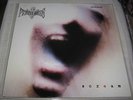
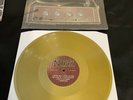
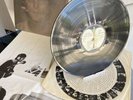
Spacemen 3 "The Perfect Prescription" LP Glass Records (UK)
Vinyl is EX, Jacket is VG+
Original Press
Track Listing:
A1 Take Me To The Other Side 4:28 A2 Walkin' With Jesus 3:43 A3 Ode To Street Hassle 4:01 A4 Ecstasy Symphony 1:54 A5 Transparent Radiation (Flashback) Arranged By – Pierce*, Kember*Written-By – Barthelm*, Thompson*, Cunningham* 9:03 B1 Feel So Good 5:16 B2 Things'll Never Be The Same 6:05 B3 Come Down Easy 6:46 B4 Call The Doctor 3:52Spacemen 3 were an English alternative rock band, formed in 1982 in Rugby, Warwickshire by Peter Kember and Jason Pierce. Their music was "colourfully mind-altering, but not in the sense of the acid rock of the 1960s; instead, the band developed its own minimalistic psychedelia" (Stephen Erlewine, AllMusic). Spacemen 3 came to prominence on the independent music scene around 1989, gaining a cult following. However, they disbanded shortly afterwards, releasing their final studio album post-split in 1991 after an acrimonious parting of ways. They gained a reputation as a ‘drug band’ due to the members’ drug taking habits and the candid interviews and outspoken views of Kember about recreational drug use. Kember and Pierce were the only members common to all line-ups of the band. Both founding members have enjoyed considerable success with their subsequent projects, Sonic Boom/Spectrum and Spiritualized.
History
Formation and early years (1982-85)
The creative and song-writing force throughout Spacemen 3's history were Peter Kember and Jason Pierce. They met at the (now defunct) Rugby Art College on Lower Hillmorton Road, Rugby, Warwickshire in Autumn 1982, both aged 16, and became close friends. Pierce was in a band called Indian Scalp, but he left them near the end of 1982 in order to collaborate with Kember. The two guitarists recruited drummer Tim Morris, who played with a couple of other bands and had a rehearsal space at his parental home which they used. Shortly afterwards they were joined by an acquaintance, Pete Bain, on bass. Morris and Bain had previously played together in a band called Noise on Independent Street. Pierce handled lead vocal duties. Now a 4-piece, the band originally adopted the name The Spacemen. Their first live performances occurred around winter 1982/83, playing at a party and then at a couple of gigs they managed to get at a local bar; at the latter their set included a 20-minute version of the one-chord song "O.D. Catastrophe".
In Autumn 1983, Pierce, having finished his course at Rugby Art College, started attending an art school in Maidstone, Kent. This prompted Bain and Morris to leave and join a new local band, The Push, being formed by Gavin Wissen. Kember and Pierce recruited a replacement drummer, Nicholas "Natty" Brooker. They continued without a bassist and Pierce would regularly return to Rugby for rehearsals. In early 1984, they only performed at a few local, low key venues. Still a trio, they changed their name to Spacemen 3. Kember explained:
“ The "3" came about completely by mistake. We did a poster which was just for The Spacemen, which we were for a while. But it was "The" Spacemen and I hated that, it sounded like a 50s rock 'n' roll group – that's all very well, but we didn't want to be imagined as…one of those surf bands. So we stuck the 3 on afterwards – that came about from a poster we did which had "Are Your Dreams At Night 3 Sizes Too Big?" with a very big 3 on it and it really worked as a logo, it just fell into place. It's really for the third eye. ”Despite having played fewer than ten gigs, Spacemen 3 decided to produce a demo tape. In 1984 they made their first studio recordings at the home studio of Dave Sheriff in Rugby. This material - which included early iterations of the songs "Walkin’ with Jesus", "Come Down Easy" and "Thing'll Never be the Same" – was used for a short demo tape entitled For All The Fucked Up Children Of The World We Give You Spacemen 3. They got a few hundred cassette copies made and produced their own artwork and booklet to accompany it, selling the tapes for £1 at a local record shop. Spacemen 3’s music at this stage had a loose, swampy Blues feel; some songs included harmonica and slide guitar, and their style sounded akin to The Cramps. These early demo recordings, which Kember later recalled as being "really dreadful", would later be released unofficially in 1995 on the Sympathy for the Record Industry label, thus providing an insight into the band’s embryonic sound.
Around 1984 and 1985, Spacemen 3 were doing gigs every two or three months on the local Rugby/Northampton/Coventry circuit, and had a regular spot at The Black Lion public house in Northampton. Their gigs had an ‘anti performance’ element: Kember and Pierce would play their guitars sitting down and would barely acknowledge the audience. They would illuminate the stage with some cheap, old optokinetic disco light-show equipment which they had acquired, providing a psychedelic backdrop. Kember:
“ We went out of our way to control our audience. We purposely, really wilfully made sure that we disenfranchised anyone who might've just stumbled upon us. We wanted to make sure, absolutely, that all those people who were there were actually there because they were getting it. ”By summer 1985, Spacemen 3 were headlining at The Black Lion and becoming one of the biggest local bands. Around this time they started to co-host a weekly club night together with another local band, Gavin Wissen's 'The Cogs of Tyme'. 'The Reverberation Club’, as it was called, was held at The Blitz public house in Rugby on Thursdays. "50s, 60s and 70s punk" records were played and it soon provided a live venue for Spacemen 3 and various other local bands. At one of their gigs at The Black Lion in 1985, they came to the attention of Pat Fish, the leader of the recording band The Jazz Butcher; he felt Spacemen 3 were "extraordinary" and "like nothing else".
The Perfect Prescription era (1987-88)
1987In January 1987, Spacemen 3 commenced work on their second album, The Perfect Prescription. This was recorded at Paul Atkins’ VHF Studios, near Rugby. VHF had been recommended to the band by in-house sound engineer Graham Walker with whom they had worked previously when recording their first demo tape. The first set of demo recordings they made at VHF Studios relating to the new album were dubbed the ‘Out Of It Sessions’. Procurable only as bootleg, this work shows the transition in Spacemen 3’s musical style that was occurring around winter 1986/87.
VHF Studios’ 8-track facilities needed updating though, and a deal was agreed that Spacemen 3 would receive a large amount of studio time in return for financing new 16-track recording and mixing equipment at VHF, at a cost of around £3,000. Spacemen 3 would spend over eight months at VHF Studios. Importantly, this allowed them generous time to experiment, and develop and refine their sound and material in a studio setting, assisted by Graham Walker. In the album liner notes of Forged Prescriptions, a re-release of The Perfect Prescription, Kember recalled:
“ This is Spacemen 3 in bloom, midsummer before the seeds were scattered, right at the point where we worked together well and in compliment to each other. I still have strong memories of days where we would crash out listening to nothing but one song over and over... Mattresses were installed into the studio’s lounging space and our kaleidoscopic light show stayed on throughout the session... We spent several months...recording and re-working these pieces until we felt they were ready, slowly learning more about the studio and its techniques as we went. ”Whilst working on the album, "Transparent Radiation"- a cover of a song by the Red Crayola- was recorded, and released as a single in July 1987. "Transparent Radiation" was awarded Single of the Week by Sounds. The B-side included "Ecstasy Symphony", a new experimental piece using an organ drone multi-tracked and fed through various effects (this would presage some of Peter Kember's later work and his interest in analogue synthesisers).
The Perfect Prescription was completed in September 1987 and released the same month. Kember described it as "kind of a concept album, it’s about our better and worse experiences with drugs". Produced by Kember and Pierce, they agreed to restrict the amount of guitar overdubs in order that it would be easier to replicate the songs live. The Perfect Prescription received little critical attention in the UK, being better received in the United States. However, it represented Kember and Pierce’s "collaborative zenith" (Erik Morse), and the album "is practically a best-of in all but name" (Ned Raggett, AllMusic).
The Perfect Prescription "marked a serious artistic development, drawing deeper from gospel, ambient, and spiritual music, granting a serenity and depth to their spaced-out garage psychedelia" (Stephen Erlewine, AllMusic). Although retaining the same minimalist approach, Spacemen 3's sound was now sparser and mellower. Extra textures and complexity were evident, provided by overdubs and additional instrumentation, with the organ sound of the VHF Studio’s Farfisa being a significant introduction. The instrumental palette was also extended with acoustic guitar, violin (from local musician Owen John), saxophone and trumpet (from members of The Jazz Butcher) being used on some songs. Much of the album did not feature drums. This was the first album on which Kember contributed lead vocals.
Spacemen 3 performed live on about twenty occasions during 1987. This included several gigs in the Netherlands and Belgium in March, and a few dates in London, Sheffield and Leeds later on in the year.
All records are shipped in professional 7” & 12” box mailers. All CDs are shipped in padded bubble mailers. Buy multiple items and save on shipping. Thanks for Visiting!!