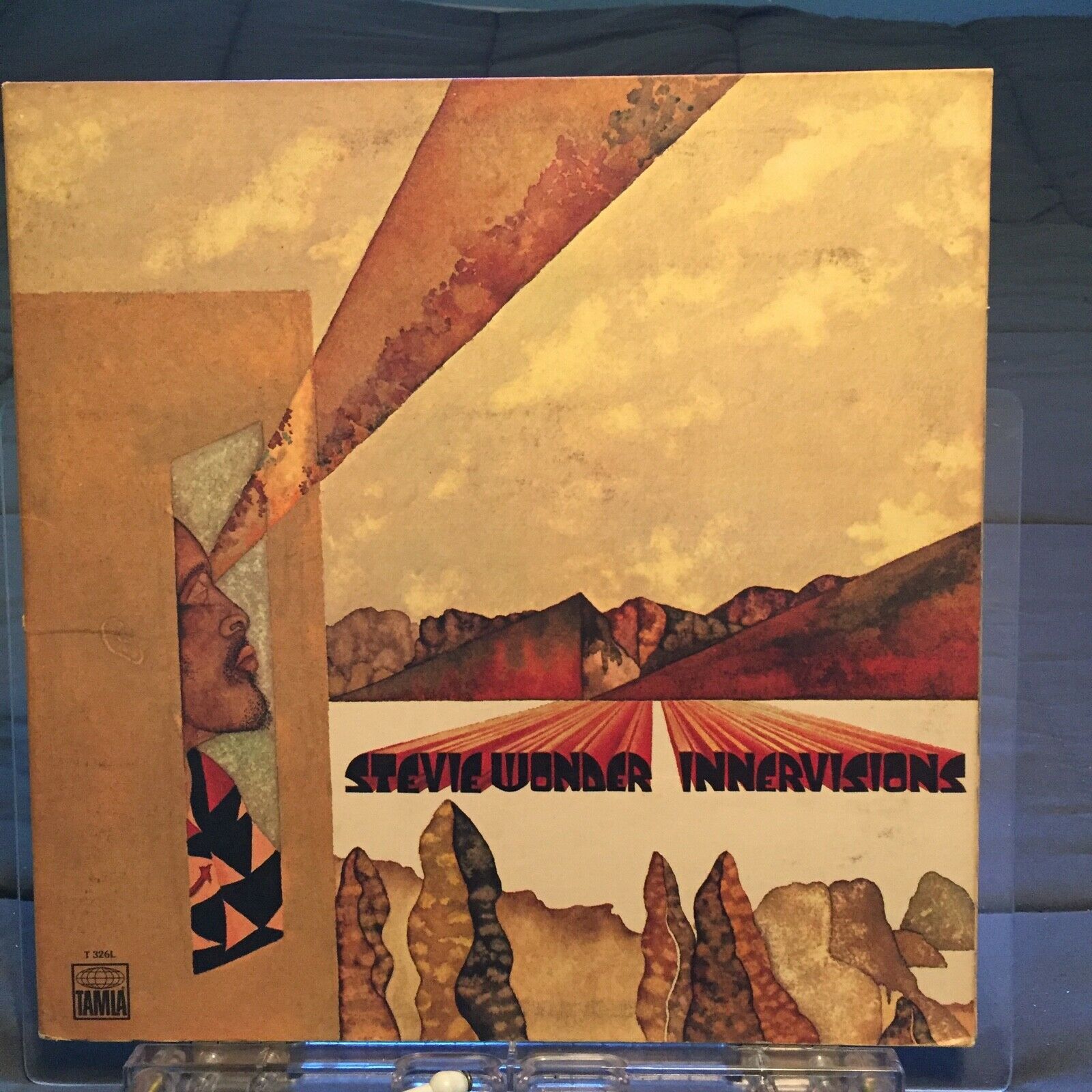
Stevie Wonder 'Innervisions' Vinyl LP 1973 Tamla T 326L Grammy Hall of Fame
$
20

Favourite Auctions
To save auctions to your favourites, please login
If you don't have an account, please register
Description
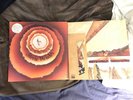
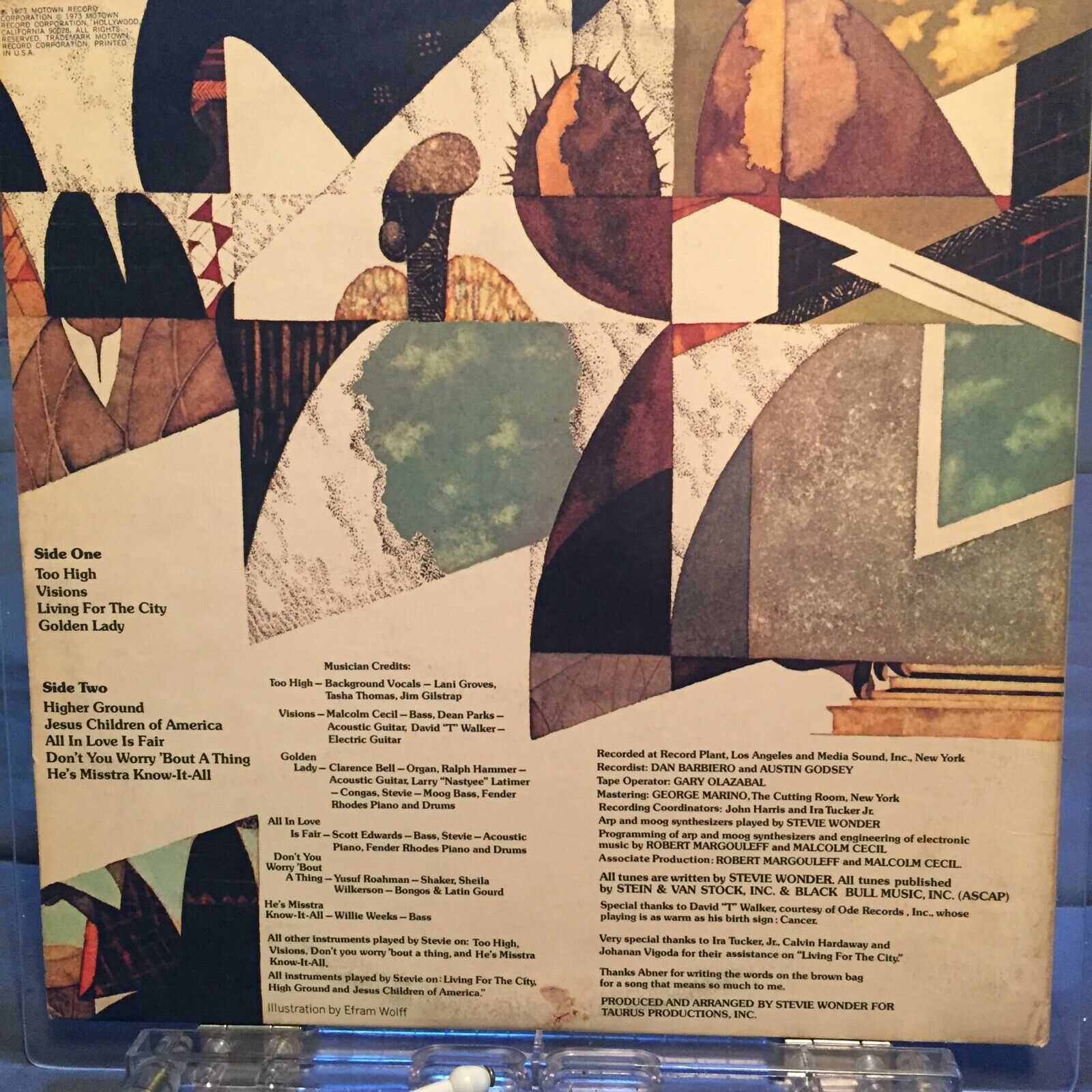
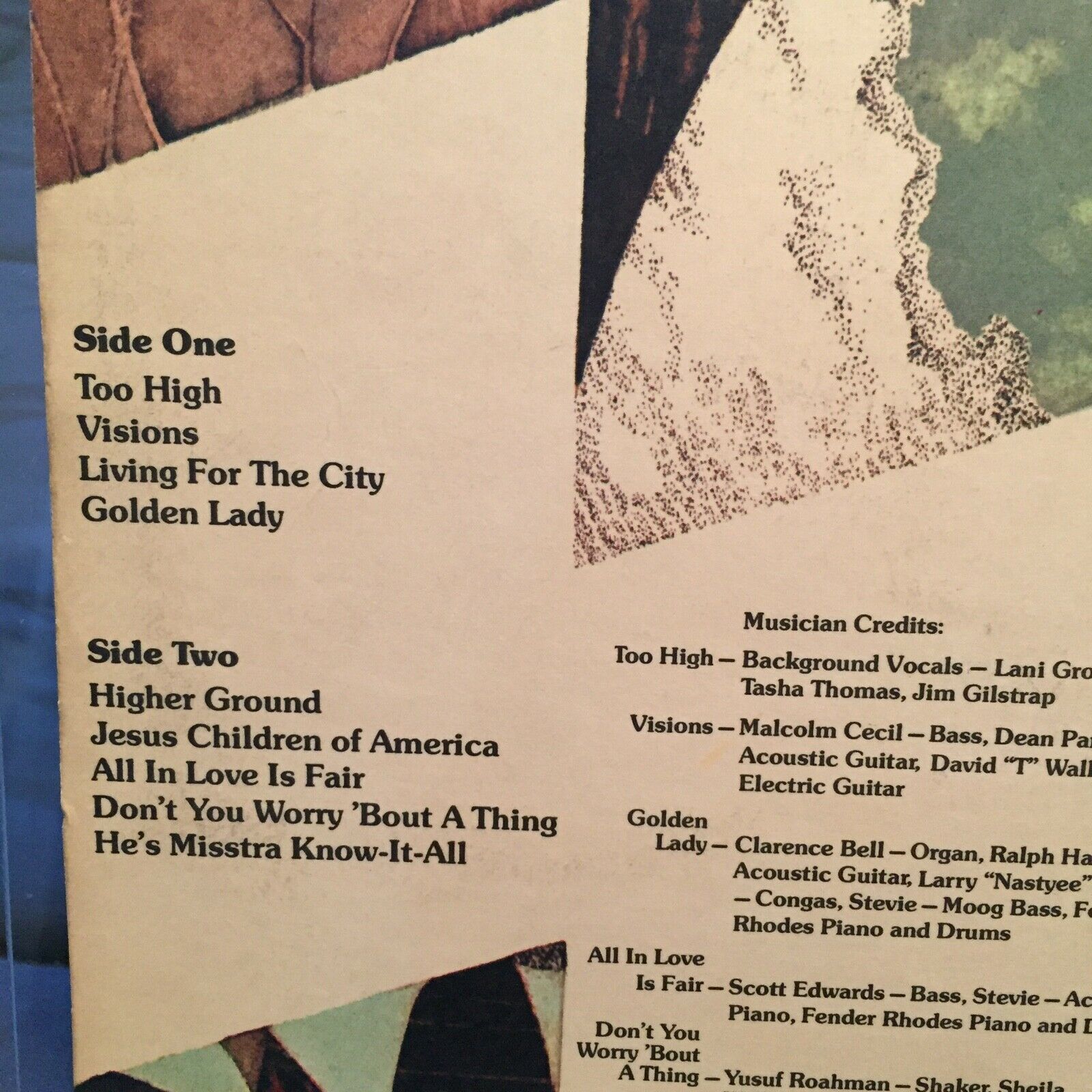
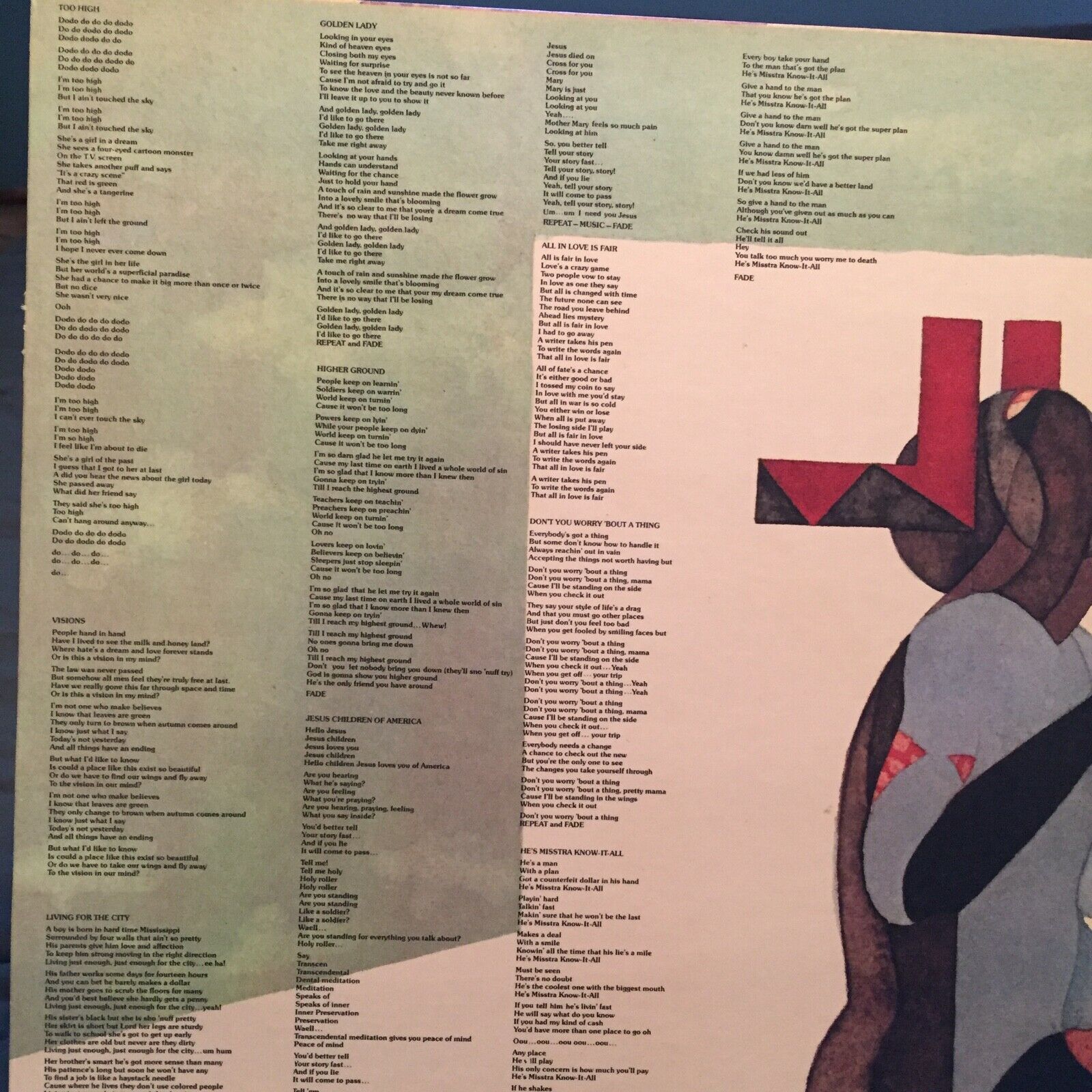
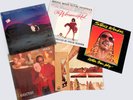
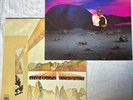
Stock photos are not used. Photos of actual item serve as a description of sleeve condition. Look at them. There is a reflection of light on some of the vinyl ~ not a scratch.
Innervisions is the sixteenth studio album by American singer, songwriter and musician Stevie Wonder, released August 3, 1973, on the Tamla label for Motown Records, a landmark recording of his "classic period".[2] It is also regarded as Wonder's transition from Little Stevie Wonder and romantic ballads to a more musically mature, conscious and grown-up artist.[3] With Wonder being the first artist to experiment with the ARP synthesizer on a large scale, Innervisions became hugely influential on the subsequent future of commercial black music.
As with many of Wonder's albums, the lyrics, composition and production of Innervisions are almost entirely his own work, with the ARP used prominently throughout the album. The instrument was a common motif among musicians of the time because of its ability to construct a complete sound environment. Wonder also played all or virtually all instruments on six of the album's nine tracks, making most of Innervisions a representative one-man band.
The nine tracks of Innervisions encompass a wide range of themes and issues: from drug abuse in "Too High", through inequality and systemic racism in "Living for the City", to love in the ballads "All in Love Is Fair" and "Golden Lady". The album's closer, "He's Misstra Know-It-All", is a scathing attack on then-US President Richard Nixon, similar to Wonder's song a year later, "You Haven't Done Nothin'".[4] "Living for the City" was one of the first soul music songs to deal explicitly with systemic racism and to use everyday sounds of the street like traffic, voices and sirens which were combined with the music recorded in the studio.[5][6][7]
Innervisions peaked at number four on the Billboard Top LPs & Tapes and number one on the Billboard Soul LPs. At the 16th Grammy Awards, it won Album of the Year and Best Engineered Non-Classical Recording, while "Living for the City" won Best R&B Song. Innervisions is widely considered by fans, critics, and colleagues to be one of Wonder's finest works and one of the greatest albums ever made.[8] It was ranked number 23 on Rolling Stone's list of The 500 Greatest Albums of All Time, and re-ranked number 24 in the 2012 book version.[9] In 1999, Innervisions was inducted into the Grammy Hall of Fame.[10]
Side one
- "Too High" – 4:36
- Stevie Wonder – lead vocal, Fender Rhodes electric piano, harmonica, drums, Moog bass
- Lani Groves, Tasha Thomas, & Jim Gilstrap – background vocals
- "Visions" – 5:23
- Stevie Wonder – lead vocal, Fender Rhodes electric piano
- Malcolm Cecil – upright bass
- Dean Parks – acoustic guitar
- David T. Walker – electric guitar
- "Living for the City" – 7:22
- Stevie Wonder – lead vocal, background vocals, Fender Rhodes electric piano, drums, Moog bass, T.O.N.T.O. synthesizer, handclaps
- "Golden Lady" – 4:40
- Stevie Wonder – lead vocal, piano, Fender Rhodes electric piano, drums, Moog bass, T.O.N.T.O. synthesizer
- Clarence Bell – Hammond organ
- Ralph Hammer – acoustic guitar
- Larry "Nastyee" Latimer – congas
Side two
- "Higher Ground" – 3:42
- Stevie Wonder – lead vocal, Hohner clavinet, drums, Moog bass, tambourine, handclaps
- "Jesus Children of America" – 4:10
- Stevie Wonder – lead vocal, background vocal, Fender Rhodes electric piano, Hohner clavinet, handclaps, tambourine, handclapping, drums, Moog bass
- "All in Love Is Fair" – 3:41
- Stevie Wonder – lead vocal, piano, Fender Rhodes electric piano, drums
- Scott Edwards – electric bass
- "Don't You Worry 'bout a Thing" – 4:44
- Stevie Wonder – lead vocal, background vocal, piano, drums, Moog bass
- Yusuf Roahman – shaker
- Sheila Wilkerson – bongos, Latin gourd
- "He's Misstra Know-It-All" – 5:35
- Stevie Wonder – lead vocal, background vocal, piano, drums, handclaps, T.O.N.T.O. synthesizer, congas
- Willie Weeks – electric bass
Technical personnel[edit]
- Recordists – Dan Barbiero, Austin Godsey
- Tape operator – Gary Olazabal
- Mastering – George Marino
- Recording coordinators – John Harris, Ira Tucker Jr.
- Synthesizer programmers – Robert Margouleff, Malcolm Cecil
- Album art – Efram Wolff
price rating




![[SOUL/FUNK] EXC LP STEVIE WONDER Innervisions [Original 1973 TAMLA Issue]](https://www.popsike.mobi/php/thumbnail.php?url=https://www.popsike.pics/pix/20240606/156244325381.jpg)