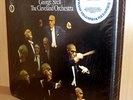
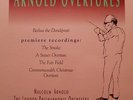
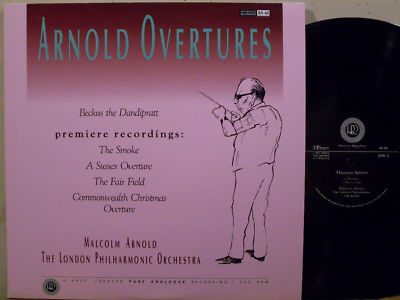
TAS REFERENCE RR-48 Arnold Overtures BEST LIST HP NM
$
174


Favourite Auctions
To save auctions to your favourites, please login
If you don't have an account, please register
Description
A SPECIAL NOTE REGARDING RECORDS-THE SMALL PRINT
-
TAS REFERENCE RR-48 Arnold Overtures BEST LIST HP NM
GATEFOLD COVER IS VG++-1992
RECORDS (2) ARE VG++ TO NM –A FEW HAIRLINE SCUFFS ON SIDE 2 & 3, ONE VERY -
LIGHT SCUFF ON SIDE 4 THAT DOES NOT AFFECT ITS PLAY-POSSIBLE SLIGHT SURFACE -
NOISE DEPENDING ON THE QUALITY YOUR SYSTEM
A Professor Keith Johnson Pure Analog Recording *
TAS List Awesome Copy, A Prize In Classic And A Prize Of The Recording, -
This “MALCOLM ARNOLD” Is Spiritual And Very Attractive !!! This Pure Analogue Superb Sounding -
Very Fine Indeed, Just Get The Volume Right
1992 Original Made In USA With Long Out Of Print .
TAS List Record Original By Reference Recordings
Stunning Copy Of A Legendary Recording
Side A :
1. A Sussex Overture (12:11)
2. Beckus the Dandipratt (10:45)
Side B & Side C :
1. The Smoke (11:56)
2. The Fair Field (9:17)
Side D :
1. Commonwealth
Christmas Overture (18:55)
Arnold Was born in 1921 and came to music through Sir Thomas Beecham’s early Delius Society recordings -
and through the trumpet playing of Louis Armstrong. Arnold took up the trumpet himself and became one of -
the most admired players of his generation. In 1943, at the age of 21, he joined the London Philharmonic -
Orchestra as principal trumpet and stayed with them on and off for about seven years before giving up -
playing to become a full-time composer.
He was a legendary performer. Stanley Woods, co-principal trumpet of the present-day LPO, told me it was -
hearing Arnold’s playing in Ernest Ansermet’s 1946 LPO recording of Stravinsky’s Firebird which inspired -
him to become a trumpet player himself. During his time to performer Arnold often played under Beecham -
whom he worshipped as a conductor and whose genius for creating a feeling of absorbed tranquility he has -
surely inherited. In fact when Arnold in due course took up conducting on a regular basis he earned almost -
as many plaudits for that as for the compositions he poured out year after year in an apparently ceaseless -
flow of inspiration (there are hardly any’ duds’). Famous instrumentalists like trumpeter Philip Jones and -
violinist Kenneth Sillito talk of performances of Berlioz (Symphonie fantastique) and Mozart (Symphony -
No. 29) respectively they gave under Arnold’s direction which, they claim, rank among the finest they ever -
experienced: which, coming from seasoned orchestral veterans, is no idle compliment.
Although weakened in recent years by a heart attack and other ailments, Arnold is still charismatic as a -
conductor. He is good to watch: clear beat, the arms describing wide semaphoric gestures, all the music’s -
important points tellingly underlined. In former years he was renowned for the kind of vitality born of -
hyperactivity. You can see it in action in some BBC footage from the late 1960s when he’s rehearsing some -
of Thomas Merritt’s music in Truro Cathedral, and on another occasion when he conducted the London -
Symphony Orchestra in a studio performance of his own Cornish Dances. He has always been, in my -
estimation, an unsurpassed conductor of his own music. I asked him once how he’d managed to achieve the -
spellbinding stillness at the end of the Fifth Symphony’s slow movement when he recorded it with the -
CBSO in 1972 -- for me one of the great moments in his recorded legacy. He shrugged his shoulders. “You -
know the musicians,” was all he said. Like Beecham, Arnold listens intently and encourages players to play -
their own way, to express their own personalities. So it was during the sessions for the making of this album. -
In the Smoke, in Beckus and in the Commonwealth Christmas Overture tempos in some of the misterioso -
sections so seem slow as to bring the music almost to a standstill. Yet the result is, paradoxically, not loss -
but gain. A certain static quality, when for periods at a stretch nothing very much seems to be happening, -
has always been one of the most enigmatic and original features of Arnold’s music. And these passages, -
when charged with meaning and tension as they are here, change their character completely. They are magic. -
So are the extremes of dynamic he obtains: pianissimo is a whisper, fortissimo ear-splitting. (He complained -
once in an interview about what he regards as the present-day habit to “coast along at a comfortable mezzo -
-forte, nothing more, nothing less.”) “I don’t know how he does it,” said David Nolan (who led the LPO for -
these sessions) with engaging candour, “but do it he certainly does!” Arnold nowadays does the minimum -
of routine rehearsal and says hardly anything. He prefers to record complete ‘takes’ of works with -
a minimum of editorial ‘patching’; that way, the composer/conductor determines the overall shape and feel -
of the performance rather than the producer/editor. But in fact it’s not what he does or says that counts in -
this context, but who and what he is: one of the great musicians of the age.
Partially Funded By The Absolute Sound, This 2LPs Package Is A Stunner, First Note To Last . -
To Boot, It Has The Composer At Baton And Premieres Four Works Not Recorded Elsewhere, In THE -
SMOKE, A SUSSEX OVERTURE, THE FAIR FIELD, And COMMONWEALTH CHRISTMAS -
OVERTURE .
The Whole She-Bang Was Monitored Utilizing Spectral Electronics (Designed By Keith Johnson, By -
The Way) And Listened To Through Crosby Modified Quads And Snell Type Bs (The Big Ones) .
At Home, When This Arrives, Open It Up On Your Loudspeakers Until You Find The Proper "Size ." -
This Is Watford Town Hall, Remember, So Adjust Accordingly, Adjusting Volume Up And Down During -
Dynamic Parts, Till The Sense Of Space Itself Comes Alive . Then Go Back To The Beginning, With That -
Setting Found, And Strap-In . This Is Going To Move Some Air ……………… And You .
One Of The Most Acclaimed Sets Of MALCOLM ARNOLD .
TO VIEW A PREVIOUS SALE-
http://www.popsike.com/php/detaildatar.php?itemnr=150470894980PLEASE NOTE THAT FOR ALL DOMESTIC PACKAGES WE WILL REQUIRE DELIVERY CONFIRMATION
THIS IS AN EXTRA .80.
INTERNATIONAL CUSTOMERS , IT IS $15 PER LP AND ADD $4
ADDITIONAL PER LP
Unless you buy a vinyl record that is SEALED, or in NEAR-MINT condition,there will always be some type of surface sounds, or background noise, known as pops and crackling.
If the LP has been played a couple of times, it can never be perfect. This is especially noticeable in classical records, which have quiet passages.
I know there is software that you can use to clean up your records to record on CDs, if you so choose.
You are buying vinyl LPs because they sound better than CDs, however the pops and crackling come with an LP.
Ratings and Definitions of LP Conditions in order to avoid confusion:
ALL TAS RECORDS ARE LISTENED TO ON MY EQUIPMENT WHICH IS A HIGH END TECHNICS TURNTABLE & CARTRIDGE WITH A SANSUI AMP. I DO TRY TO LISTEN TO SECTIONS OF ALL RECORDS, BUT SOMETIMES THEY ARE VISUALLY GRADED IF THEY LOOK REALLY CLEAN.
Mint (M). Absolutely perfect in every way. Never been played or still sealed. I use this rating very sparingly – Cover must be in the shrink wrap for this grade. Some promo copies can get this grade since they originally were never in shrink wrap.
Near Mint (NM). LP cover, inserts, e.g., lyrics sleeves, posters, promo cards, have no creases, folds, seam splits or other noticeable flaws. LP shows hardly any signs that it ever has been played or it has been treated with great respect, cover can be in shrink wrap unless it is a promo copy.
Very Good Plus Plus (VG++). This LP may show some signs that it was played a few times or many times but the LP was treated with respect. LP surface may show some signs of wear and may have slight scuffs or very light scratches/hairlines that do not affect the overall listening experience. The cover may have some ring/spine wear and discoloration. Inner sleeves/booklets may have some slight wear. The LP cover may have also a cut-out hole, corner indentation not disturbing the overall condition of the LP itself. Can have a sticker or label attached if it is a promo copy. There will be pops and crackling in the quiet sections.
Very Good Plus(VG+). Conditions as described in VG++ may be found in a more pronounced way on LP for this rating. Surface noise may be evident upon playing, especially in soft and other passages, but not overpowering the music. Wear may be noticeable. Scratches may affect the sound in places. The cover and the labels may show some writing, or have stickers or residue attached.
Very Good (VG). LP in Very Good condition will have surface noise and scratches and it might have one skip, which will be noted in the description. The cover or sleeve may have seam splits, (however archival transparent tape will be used to fix the seam).
Good (G). I WILL NOT SELL A RECORD IN THIS CONDITION.
Also, there will be grading which is in between like VG to VG+ as cover might be one grade and record another.
A SPECIAL NOTE REGARDING REFUNDS:
Each request for a refund will be dealt with on an individual basis and please email me so the situation can be worked out.
FOR INTERNATIONAL BUYERS: Any item returned for refund must be in the same condition it was shipped in and clearly marked on the customs form "RETURN FOR REFUND" otherwise a customs fee will be charged to me and WILL BE DEDUCTED from the refund amount.
price rating

![Golden Earring - Switch [Limited 180-Gram Transparent Blue Colored Vinyl] [New V](https://www.popsike.mobi/php/thumbnail.php?url=https://www.popsike.pics/pix/20210202/143935948660.jpg)
![LEE MOSES[DAY TRIPPER REACH OUT]MINT PROMO SOUL FUNK w/PRESS SHEET 45 Musicor](https://www.popsike.mobi/php/thumbnail.php?url=https://www.popsike.pics/pix/20240122/325978262718.jpg)