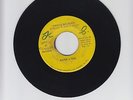
TEXAS ALEXANDER Pre-War Blues Okeh 8705 Nice VG cond
$
71


Favourite Auctions
To save auctions to your favourites, please login
If you don't have an account, please register
Description
A great record by Texas Alexander who made the very first recording of House of the Rising Sun in 1928.
This record is on the Okeh label, record #8705 and it is in VG condition. I am not sure which is side a or b so here are the titles: Ninety-Eight Degree Blues and Gold Tooth Blues. The record has some scuffs and scratches, a very, very small edge chip on Gold Tooth Blues (does not effect play whatsoever), some very very slight spindle wear on Gold Tooth Blues side, but this record plays and sounds like a VG+. The label condition is a bout a VG with some wear and fading from play. This is a great record showing how Lightnin Hopkins cousin (Texas Alexander) was one of the founding fathers of Texas Blues!
Remember, this has FREE shipping, so bid with that in mind!
Source: ALLMUSIC by Steve James
A primal, stirring blues voice, Alexander was well known in the Brazos River bottomlands when he started recording in 1927. From bluesmen like Lightnin' Hopkins and Lowell Fulson comes a verbal image of this big-voiced master of blues song craft standing on a wagon bed at a country fair or picnic. His vibrant tenor, one step away from a field holler, rang out over the revelry as he improvised verse after verse.
His early records for Okeh are notable not only for the personal originality of his songs, but for the musical motifs against which they are set. Unable to play himself, Alexander used a variety of accompanists. On disc these range from the brilliant guitar work of Little Hat Jones, Lonnie Johnson and Eddie Lang to the string band blues of the Mississipi Sheiks and the full on jazz of King Oliver's New Orleans band.
Alexander's performing and recording career continued into the '30s with sessions for Vocalion. In 1940, he was sent to the state pen at Paris, TX, for killing his wife. After his release in 1945 he spent time in Houston, joining his cousin Lightnin' Hopkins for live shows and recording for the Freedom label with pianist Buster Pickens. By 1954 he was back in the bottomlands where he died a debilitated victim of the ravages of syphillis. His recordings -- titles like "Corn Bread Blues" or "Frisco Train" -- are an express ticket back to days before records and radio, when the blues were young and lived way up country.
price rating










![RED GARLAND TRIO - Satin Doll PRESTIGE 7859 [M] 1959 w/Rowser, Watkins RARE](https://www.popsike.mobi/php/thumbnail.php?url=https://www.popsike.pics/pix/20120814/150878875966.jpg)