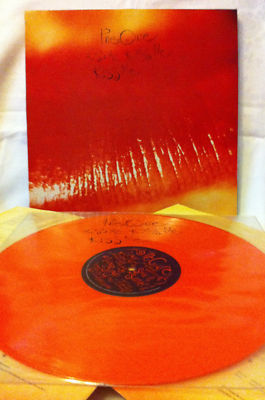
THE CURE - Kiss Me Double LP & Bonus Orange Mini LP (Vinyl, 1987, Ltd Edition )
£
53
$
70


Favourite Auctions
To save auctions to your favourites, please login
If you don't have an account, please register
Description
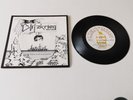
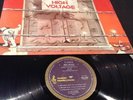
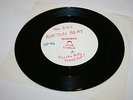
Great condition Limited Edition copy of The Cure's 1987 double LP, 'Kiss Me, Kiss Me, Kiss Me' with a Bonus 12" Orange vinyl EP. Also comes with a sticker proclaiming, 'Contains Bonus orange vinyl disc - 3 records including 3 top 30 Singles 'why can't I be you', 'catch' 'Just Like heaven'.
FORMAT: 3 x Vinyl LP, 33rpm
RECORD LABEL: Fiction
COUNTRY OF ORIGIN: UK
RELEASE DATE: May 1987
CATALOGUE NO: FIXH 13
(NOTE: I am now play-grading all my vinyl. I can't promise to play everything all the way through, but will be checking for any curving or warping and/or excessive surface noise - hiss, snap, crackles & pops. And if there are any dodgy looking areas with gouges, scratches, pit marks etc. I will double check that there is no skipping or sticking, and that playback is not adversely affected)
LPs: Excellent
BONUS DISC: Near Mint
OUTER SLEEVE: Excellent
INNER SLEEVES: Excellent
POSTAGE: £3.00 UK. £4.00 EUROPE. £7.00 THE REST OF THE WORLD.
STORED OUT OF SUNLIGHT IN VERTICAL POSITION. FROM A PET, DAMP AND SMOKE FREE HOME.
ANY QUESTIONS OR REQUESTS FOR MORE DETAILED PHOTOS ETC, PLEASE DO NOT HESITATE TO CONTACT ME.
I TRY & GRADE ALL SLEEVES AND VINYL AS FAIRLY & ACCURATELY AS POSSIBLE, BUT IF YOU FEEL I HAVE GRADED THIS RECORD INCORRECTLY, OR IF ANY OF THE ABOVE INFORMATION IS INCORRECT PLEASE TELL ME.
ALL VINYL WILL BE POSTED IN A GLASS CLEAR, VERY BEST QUALITY 450G PVC SLEEVE, IN A CARDBOARD RECORD MAILER, WITH CARDBOARD STIFFENERS, REMOVING ALL INNERS TO PREVENT SPLITTING TO THE SEAMS IN TRANSIT.
RECORDS WILL BE REMOVED FROM ORIGINAL INNERS & PLACED IN GENERIC PAPER SLEEVES FOR SHIPMENT.
Tracklisting
A1 The Kiss
A2 Catch
A3 Torture
A4 If Only Tonight We Could Sleep
B1 Why Can't I Be You?
B2 How Beautiful You Are...
B3 The Snake Pit
B4 Hey You !!!
C1 Just Like Heaven
C2 All I Want
C3 Hot Hot Hot !!!
C4 One More Time
C5 Like Cockatoos
D1 Icing Sugar
D2 The Perfect Girl
D3 A Thousand Hours
D4 Shiver And Shake
D5 Fight
Bonus Orange Vinyl
A1 A Japanese Dream
A2 Breathe
A3 A Chain Of Flowers
B1 Sugar Girl
B2 Snow In Summer
B3 Icing Sugar
LP Review (courtesy of Allmusic.com)
Simultaneously more accessible and ambitious than any of the Cure's previous albums, the double album Kiss Me, Kiss Me, Kiss Me finds Robert Smith expanding his pop vocabulary by tentatively adding bigger guitars, the occasional horn section, lite-funk rhythms, and string sections. It's eclectic, to be sure, but it's also a mess, bouncing from idea to idea and refusing to develop some of the most intriguing detours. Even if Kiss Me doesn't quite gel, its best moments -- including the deceptively bouncy "Why Can't I Be You?" and the stately "Just Like Heaven" -- are remarkable and help make the album one of the group's very best.
Band Profile (courtesy of Allmusic.com)Out of all the bands that emerged in the immediate aftermath of punk rock in the late '70s, few were as enduring and popular as the Cure. Led through numerous incarnations by guitarist/vocalist Robert Smith (born April 21, 1959), the band became notorious for its slow, gloomy dirges and Smith's ghoulish appearance, a public image that often hid the diversity of the Cure's music. At the outset, the Cure played jagged, edgy pop songs before slowly evolving into a more textured outfit. As one of the bands that laid the seeds for goth rock, the group created towering layers of guitars and synthesizers, but by the time goth caught on in the mid-'80s, the Cure had moved away from the genre. By the end of the '80s, the band had crossed over into the mainstream not only in its native England, but also in the United States and in various parts of Europe. The Cure remained a popular concert draw and reliable record-seller rhroughout the '90s, and their influence could be heard clearly on scores of new bands during the new millenium, including many that had little to do with goth.
Originally called the Easy Cure, the band was formed in 1976 by schoolmates Smith (vocals, guitar), Michael Dempsey (bass), and Laurence "Lol" Tolhurst (drums). Initially, the group specialized in dark, nervy guitar pop with pseudo-literary lyrics, as evidenced by the Albert Camus-inspired "Killing an Arab." A demo tape featuring "Killing an Arab" arrived in the hands of Chris Parry, an A&R representative at Polydor Records; by the time he received the tape, the band's name had been truncated to the Cure. Parry was impressed with the song and arranged for its release on the independent label Small Wonder in December 1978. Early in 1979, Parry left Polydor to form his own record label, Fiction, and the Cure was one of the first bands to sign with the upstart label. "Killing an Arab" was then re-released in February of 1979, and the Cure embarked on its first tour of England.
The Cure's debut album, Three Imaginary Boys, was released in May 1979 to positive reviews in the British music press. Later that year, the group released the non-LP singles "Boys Don't Cry" and "Jumping Someone Else's Train." That same year, the Cure embarked on a major tour with Siouxsie and the Banshees. During the tour, the Banshees' guitarist, John McKay, left the group and Smith stepped in for the missing musician. For the next decade or so, Smith would frequently collaborate with members of the Banshees.
At the end of 1979, the Cure released a single, "I'm a Cult Hero," under the name the Cult Heroes. Following the release of the single, Dempsey left the band to join the Associates; he was replaced by Simon Gallup at the beginning of 1980. At the same time, the Cure added a keyboardist, Mathieu Hartley, and wrapped up production on the band's second album, Seventeen Seconds, which was issued during the spring of 1980. The addition of a keyboardist expanded the group's sound, was which now more experimental and often embraced slow, gloomy dirges. Nevertheless, the band still wrote pop hooks, as demonstrated by the group's first U.K. hit single, "A Forest," which peaked at number 31. After the release of Seventeen Seconds, the Cure launched its first world tour. Following the Australian leg of the tour, Hartley exited the lineup and his former bandmates chose to continue without him, releasing their third album in 1981 (Faith) and watching it peak at number 14 in the charts. Faith also spawned the minor hit single "Primary." The Cure's fourth album, the doom-laden, introspective Pornography, was released soon after in 1982. Pornography expanded their cult audience even further and cracked the U.K. Top Ten. After the Pornography tour was completed, Gallup quit the band and Tolhurst moved from drums to keyboards. At the end of 1982, the Cure released a new single, the dance-tinged "Let's Go to Bed."
Smith devoted most of the beginning of 1983 to Siouxsie and the Banshees, recording the Hyaena album with the group and appearing as the band's guitarist on the album's accompanying tour. That same year, Smith also formed a band with Banshees bassist Steve Severin; after adopting the name The Glove, the group released its only album, Blue Sunshine. By the late summer of 1983, a new version of the Cure -- featuring Smith, Tolhurst, drummer Andy Anderson, and bassist Phil Thornalley -- had assembled and recorded a new single, a jaunty tune named "The Lovecats." The song was released in the fall of 1983 and became the group's biggest hit to date, peaking at number seven on the U.K. charts. The new lineup of the Cure released The Top in 1984. Despite the pop leanings the number 14 hit "The Caterpillar," The Top was a return to the bleak soundscapes of Pornography. During the world tour supporting The Top, Anderson was fired from the band. In early 1985, following the completion of the tour, Thornalley left the band. The Cure revamped their lineup after his departure, adding drummer Boris Williams and guitarist Porl Thompson; Gallup returned on bass. Later in 1985, the Cure released their sixth album, The Head on the Door. The album was the most concise and pop-oriented record the group had ever released, which helped send it into the U.K. Top Ten and to number 59 in the U.S., the first time the band had broken the American Hot 100. "In Between Days" and "Close to Me" -- both pulled from The Head on the Door -- became sizable U.K. hits, as well as popular underground and college radio hits in the U.S.
The Cure followed the breakthrough success of The Head on the Door in 1986 with the compilation Standing on a Beach: The Singles. Standing on a Beach reached number four in the U.K., but more importantly it established the band as a major cult act in the U.S.; the album peaked at number 48 and went gold within a year. In short, Standing on a Beach set the stage for 1987's double album Kiss Me, Kiss Me, Kiss Me. The album was eclectic but it was a hit, spawning four hit singles in the U.K. ("Why Can't I Be You," "Catch," "Just Like Heaven," "Hot Hot Hot!!!") and the group's first American Top 40 hit, "Just Like Heaven." Following the supporting tour for Kiss Me, Kiss Me, Kiss Me, the Cure's activity slowed to a halt. Before the Cure began working on their new album in early 1988, the band fired Tolhurst, claiming that relations between him and the rest of the band had been irrevocably damaged. Tolhurst would soon file a lawsuit, claiming that his role in the band was greater than stated in his contract and, consequently, he deserved more money.
In the meantime, the Cure replaced Tolhurst with former Psychedelic Furs keyboardist Roger O'Donnell and recorded their eighth album, Disintegration. Released in the spring of 1989, the album was more melancholy than its predecessor, but it was an immediate hit, reaching number three in the U.K. and number 14 in the U.S., and spawning a series of hit singles. "Lullaby" became the group's biggest British hit in the spring of 1989, peaking at number five. In the late summer, the band had its biggest American hit with "Love Song," which climbed to number two. On the Disintegration tour, the Cure began playing stadiums across the U.S. and the U.K. In the fall of 1990, the Cure released Mixed Up, a collection of remixes featuring a new single, "Never Enough." Following the Disintegration tour, O'Donnell left the band and the Cure replaced him with their roadie, Perry Bamonte. In the spring of 1992, the band released Wish. Like Disintegration, Wish was an immediate hit, entering the British charts at number one and the American charts at number two, as well as launching the hit singles "High" and "Friday I'm in Love." The Cure embarked on another international tour after the release of Wish. One concert, performed in Detroit, was documented on a film called Show and on two albums, Show and Paris. The movie and the albums were released in 1993.
Thompson left the band in 1993 to join Jimmy Page and Robert Plant's band. After his departure, O'Donnell rejoined the lineup as a keyboardist, and Bamonte switched from synthesizer duties to guitar. During most of 1993 and early 1994, the Cure were sidelined by an ongoing lawsuit from Tolhurst, who claimed joint ownership of the band's name and also sought to restructure his royalty payments. A settlement (ruling in the band's favor) eventually arrived during the fall of 1994, and the Cure shifted their focus to the task at hand: recording a follow-up album to Wish. However, drummer Boris Williams quit just as the band prepared to begin the recording process. The group recruited a new percussionist through advertisements in the British music papers; by the spring of 1995, Jason Cooper had replaced Williams. Throughout 1995, the Cure recorded their tenth proper studio album, pausing to perform a handful of European musical festivals in the summer. The album, titled Wild Mood Swings, was finally released in the spring of 1996, preceded by the single "The 13th."
A combination of pop tunes and darker moments that lived up to its title, Wild Mood Swings received a mixed reception critically and commercially, slowing but not halting the momentum gained by Wish. Galore, the Cure's second singles collection focusing on the band's hits since Standing on a Beach, appeared in 1997 and featured the new song "Wrong Number." The Cure spent the next few years quietly -- giving a song to the X-Files soundtrack, Robert Smith appearing in a memorable episode of South Park -- re-emerging in 2000 with Bloodflowers, their last album of original material for Fiction. Designed as the final installment in a heavy goth trilogy that stretched all the way back to Pornography and included Disintegration, Bloodflowers was well received and a respectable success, earning a Grammy nomination for Best Alternative Music Album. The next year, the Cure closed out their contract with Fiction with the career-spanning Greatest Hits, which was also accompanied by a DVD release of their most popular videos. During 2002, they spent some time on the road, capping off their tour with a three-night stand in Berlin, where they played each album of their "goth trilogy" on a different night; the event was documented on the home video release Trilogy.
The Cure signed an international deal with Geffen Records in 2003 and then launched an extensive reissue campaign in 2004 with the rarities box set Join the Dots: B-Sides & Rarities, 1978-2001 (The Fiction Years); double-disc expanded editions of their earliest albums soon followed. Also in 2004, the band released its first album for Geffen, an eponymous effort recorded live in the studio. Heavier but not necessarily harder -- and certainly not gloomier than Bloodflowers -- The Cure was partially designed to appeal to a younger audience familiar with the Cure through their influence on a new generation of bands, many of which were showcased as opening acts on the band's supporting tour for the album. The Cure underwent another lineup change in 2005, as Bamonte and O'Donnell left the group and Porl Thompson came back for his third stint. This new, keyboard-less lineup debuted in 2005 as the headlining act at the benefit concert Live 8 Paris, then headed out on the summer festival circuit, highlights of which were captured on the 2006 DVD release Festival 2005. The Cure popped up on various festivals over the next two years, playing a more extensive European tour in early 2008, as they completed their 13th album. Originally conceived as a double album, the record was split in two prior to its release, with the lighter, poppier material released first as 4:13 Dream in October 2008.
price rating