THE JESTERS vs. THE PARAGONS Winley LP VG++
$
255


Favourite Auctions
To save auctions to your favourites, please login
If you don't have an account, please register
Description
CLASSIC DO WOP THAT CAN'T BE BEAT
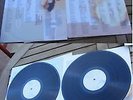
The Jesters vs. The Paragons -"WAR", mono, on Winley 6003. This is not the same album that was issued on Jubilee and reissued over the years. I don't know which came first but this is the ultra-rare album on the Winley label with different songs than the Jubilee lp and the great group cover. The mother of all 'battle of the bands' albums.Record Grade: VG++, the recore retains almost all of its original gloss. There are light scuffs that appear to be the result of sliding the record in and out of the inner sleeve.
Cover Grade: VG+, high gloss cover has minor wear but there is fraying to the bottom seam
Labels: Original orange and black labels are in excellent condition
Song Titles:
- The Wind
- Sally Green
- Come Let Me Show You
- Down in Uncle Henry's Basement
- Tutti Frutti
- That's How it Goes
THE PARAGONS - Kneel and Pray
- Just a Memory
- Florence, Don't Leave Me
- Don't Cry Baby
- So You Will Know
- Two Hearts are Better than One
About the Jesters: by Bryan Thomas
The Jesters are best known for their soaring falsetto-driven minor hit "So Strange" and for their cover versions of the Chantels' "The Plea" and the Diablos' 1954 classic "The Wind" (which had established Nolan Strong's place as an R&B legend). The latter barely managed to chart on Billboard's national chart (number 110 on June 20, 1960), but the Jesters' addition of a fifth harmony vocal part definitely added to the song's enduring beauty. Like many acts before them, they exemplified the New York City vocal group sound of the mid-'50s. They were particularly influential on mostly white, early-'60s vocal groups like the Excellents and the Imaginations. The Jesters formed in 1956, when Lenny McKay (lead), James Smith (aka "Jimmy") (second tenor), Leo Vincent (baritone), and Noel Grant (bass) were still attending Cooper Junior High School in Harlem, located on 120th Street. The group often practiced under a nearby elevated railway station. The group got their name from Grant after his favorite movie, Danny Kaye's The Court Jester. Meanwhile, 17-year-old Adam Jackson was attending Samuel Gompers High School in the Bronx and was singing in a quintet called the Continentals. His group managed to land a TV performance later that year singing the Flamingos' "I'll Be Home." In early 1957, Jackson joined up with the Jesters. Jackson and McKay soon began sharing the lead vocal duties (Jackson's falsetto was often the highlight to McKay's lead) and both were songwriters, but it is generally considered that McKay was the group's leader. They eventually auditioned for and were turned down by Columbia Records, but that didn't deter them. The group performed at the Apollo amateur night contest and after winning first prize three times, they were spotted and signed by Winley Records owner Paul Winley. The Jesters' first single was "So Strange," a drowsy doo wop song which became a local New York favorite and even charted on a variety of East Coast disc jockey lists. On July 15th, the single had built up enough steam to jump onto the lowest position of Billboard's national pop chart for a single week, landing at number 100. Their next single was a classic rhythm ballad that is often considered the epitome of mid-'50s New York doo wop: "Please Let Me Love You." Once again, McKay took the lead tenor and Jackson the falsetto. By that time, the Jesters had begun touring the chitlin circuit. When they returned to the Apollo for shows alongside labelmates the Paragons and a stellar group of R&B stars — Ben E. King, Ruth Brown, Jimmy Jones, the Olympics, and Dante and the Evergreens — they were consummate pros. Their third single for Winley was a solid remake of the Chantels' ballad "The Plea," which climbed up the charts to number 74 pop in March 1958. (Incidentally, the arranger for all of these recordings was former Pearls and Valentines' vocalist David Clowney. He became more well-known some 14 months later under the name Dave "Baby" Cortez when he struck instrumental gold with his own number one hit, "Happy Organ," in 1959). In June 1958, the Jesters dropped their fourth and final single for Winley with the original lineup, this one another two-sided classic, "Now That You're Gone," but by then, the group was splintering: McKay and Grant left and Vincent had been drafted. To replace them, Jackson and Smith brought in baritone Melvin Lewis (the Climbers) along with his brother Donald Lewis on bass. In the meantime, Paul Winley noticed his release schedule of label issues seemed to always have a Paragons single followed by a Jesters single. This, along with the increasing popularity of "battle of the groups" shows and street corner sing-offs, gave him the idea for the classic album featuring two of his vocal groups dueling it out. Issued around 1959, The Paragons Meet the Jesters LP — with its cover depicting members of a hotshot street gang — was one of the first rock & roll compilation LP's ever conceived. It sold very well on the East Coast. By May 1960, this new Jesters quartet had its first single, a revision of the Diablos' 1954 classic "The Wind." It was an excellent version and scored number 110 on Billboard's June 20, 1960, national pop chart. Like the original version, this one featured the group chanting the words "blow wind" in harmony behind Adam Jackson's ethereal tenor lead and smooth-as-silk talking bridge. Their last two singles were not of the caliber of their earlier 45s and never charted. The Jesters did some backup work for other Winley artists, namely Charlie White of the Clovers ("Nobody's Fault but Mine" in 1958) and Ann Fleming, Winley's wife ("Jive Time Baby" in 1960), and during the early '60s, even backed Ben E. King onstage at the Apollo. The group's main man — Lenny McKay — never returned and that may be part of the reason that the Jesters never were able to attain the heights that many of their contemporaries did. They never really ever broke up, working occasional gigs throughout the ensuing decades and often performing in a routine based on their LP with the Paragons. In 1974 they became a quintet when Adam Jackson's brother Ronald Jackson (former lead of the Youngtones, Xtra Records, 1957) joined up. In 1991, the group was still around, with Adam Jackson on lead, Ronald Jackson on tenor, Melvin Lewis on baritone, Donald Lewis on bass, and Marshall Cherry on second tenor. The group continued to perform well into the decade and were still going strong at the beginning of 2000. Along with the aforementioned Paragons, the Vanguards, Diablos, and the Five Keys, this group's wonderful recordings reveal perhaps the best use of falsetto leads (artificially produced tones in an upper register beyond the normal range especially of a tenor) of the doo wop era.
About the Paragons: by Bruce Eder
Founded in Brooklyn, NY, the Paragons were a black vocal harmony quintet signed to the New York-based Winley label, which was also home to the Jesters ("The Wind"). Julius McMichael (lead), Ben Frazier (first tenor), Donald Travis (second tenor), Ricky Jackson (baritone), and Al Brown (bass) had a distinctive sound with McMichael's high tenor voice as the lead, very much defining this distinctly New York-centered doo wop sound. They began their recording career for Winley with the single "Florence" b/w "Hey Little School Girl," which was released in early 1957 and was a regional hit. Julius McMichael lasted through three more notable singles, "Let's Start," "Twilight," and "So You Will Know," all of which did well without ever charting nationally, before he exited the lineup to become a member of the Olympics. His replacement in the Paragons' lineup was Bill Witt. The Paragons endured into the early '60s with more lineup changes and label changes as well, to Musicraft and then to Tap. They lucked out with Tap right out of the starting gate when their first single for the new label, "If," charted, which prompted Winley, their original label, to release more material that it was holding on the quintet. The group's success on the charts in the early '60s seemed to presage their subsequent history — the Paragons remained active throughout the 1960s, right into the rock & roll revival, where new audiences, consisting both of old fans of '50s music and new appreciators of harmony vocal groups, discovered the work of this fine, enduring group and boosted their listenership. In more recent years, the group have recorded new versions of their classic material, and continue to play to audiences at rock & roll revival shows.
MY GRADING SYSTEMS: I’ve been told that I grade conservatively. My NM (near mint) is my highest grade for opened records (which would also include unplayed records). It’s a 9 or 10 on a 1-10 scale. M- would be equivalent to an 8; VG++ to a 7; VG+ to a 6; VG to a 5; VG- to a 4; G to a 3; F to a 2 and P to a 1. The same scale applies when I grade covers (jackets). Significant defects are specifically noted and taken into consideration in the grade.
GRADING DESCRIPTIONS
RECORDS:- GRADING Grading is based on the following criteria
- Sealed = store stock new
- Near Mint = like new or near new with only one or two small insignificant defects, a 9 or better on a 1-10 scale
- Mint- = extremely nice. Would be Near Mint, except for a couple of light hairlines or scuffs, which do not affect play
- VG++ = still a very nice record with all or nearly all of its original gloss but may have a few more light, surface marks, hairlines, needle tracks or the like which should not materially effect play
- VG+ = a nice, but used record that may have a series of light scuffs or scratches. It probably plays with a few pops, but has no serious problems.
- VG = a well-used record that still should sound OK when played, but may have moderate surface noise, pops, etc.
- VG- = a very well-worn record that plays through without skipping, but will do until a better copy comes along.
- Good = not actually good at all but probably will play through but with much in the way of surface noise, pops, crackles, etc. Still, will have no cracks, chips or the like
- Fair = you’re getting this record just to own but not to play
- Poor = the sky’s the limit, generally I will discard a record this bad (and sell the cover, jacket or sleeve alone) unless the label holds some particular interest
VISUAL GRADING: All records are visually graded only unless I state that they are play-graded. Some labels such as RCA, Capitol, Colpix, Atlantic, MGM were pressed on better quality vinyl and will sound better than a record which visually appears the same on labels such as Crown, Score or Design. Recording techniques also varied. The sound on live albums may be far inferior to studio recordings. There may also be defects in the pressing which are invisible. The point is that an album on RCA graded VG+ may sound far better than an album on Crown graded Near Mint. I have no problem issuing a refund if you are dissatisfied with the sound on a record as long as it’s requested as per my stated return policy below. But please don’t be shocked if a record visually graded Near Mint doesn’t sound state of the art. If I base my grade on a PLAY GRADE, I will state this specifically in my grading section.
COVERS: There are really too many possible defects regarding covers to be as specific in my definitions as I had been with my record grades. But please keep in mind these general grading guidelines:
- I will give greater weight to the condition of the front cover than back cover when assigning an overall grade
- No cover with a cut out hole or saw mark will be graded Near Mint even if it is still in factory shrink and there is no other wear
- I will not reduce the grade of a cover for stickers which are glued to the jacket by the record company (eg. Contains the hit song The Twist); but will reduce the grade for stickers glued on the cover by stores, previous owners, etc.
- If I write that a cover has a bb hole, I’m talking about a small cut out hole
- A saw mark is a narrow cut in the perimeter of the cover, could be anywhere and vary in length from 1/2” to 2” at the most.
- The overall grade takes into consideration any stated defects. For example, if I grade a cover VG+ and then state it has 6” top and bottom seam splits - I’ve already reduced the grade because of the seam splits. If the seams weren’t split, the cover would be graded higher such as VG++ or Mint-.
Shipping Costs:
As before, the buyer pays for shipping. For one or two albums, the cost for priority mail in the United States is $6.50. for media rate postage within the U.S. the cost will be $3.00.The cost for shipping a 7” record via 1st class is $2.50 and the cost for shipping a compact disc via 1st class is $3.20. Save money when I mail 2 or more records or items in the same package.
Insurance is optional but highly recommended for “high ticket” purchases. The cost for insurance in the U.S. is $1.30 for up to $50; $2.20 for up to $100; $3.20 for up to $200 and $1.00 additional for each additional $100 of insurance. Rates are quoted in my winning bid notices. The shipping charges for box sets, multi-record sets and other items of non-standard size and weight will be quoted.
If you live in a foreign country, please provide me with your address after the auction closes and I will give you postage rates.
Please check out my other eBay auctions
. I’ve been listing all types of records - mostly LP’s - including 50’s and 60’s rock ‘n’ roll, country, folk jazz, blues, personalities, new wave and punk, surf, psych, spoken word, comedy, etc., etc....... I try to list unusual, unique or obscure records, not the ones that you see all the time. While a majority of my listings are albums, you’ll often find a nice selection of 45’s, EP’s or picture sleeves...and an occasional 78 or two.My return policy: I don’t get many returns but customers are important to me so I like to offer a relatively hassle-free return policy. However, in order to return the record or other item, you must notify me by e-mail of your intent shortly after your receipt of the record or other item and within a reasonable time after the auction’s close. Also, the item must be returned in its original condition , i.e. the way it was shipped when it left my hands. While a very high percentage of my records arrive safe and sound (I use professional mailers and a filler or two, more for 78’s), they occasionally are damaged in transit. If that happens, I won’t accept the return of the record or other item - that’s why you have the option of obtaining insurance.
Any other questions? About anything? Please e-mail me at ibuyvinyl@nc.rr.com .
On Nov-06-03 at 12:41:28 PST, seller added the following information:Western Union®BidPaySM - auction payments made easy.
THE JESTERS