The ACID TEST LSD LP Psych Ken Kesey Merry Pranksters Tim Leary Grateful Dead
$
50


Favourite Auctions
To save auctions to your favourites, please login
If you don't have an account, please register
Description
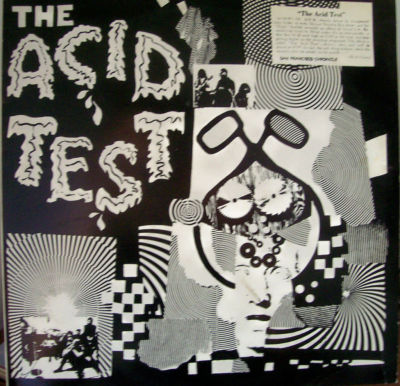
THE ACID TEST " Recorded from 14 hours of the actual trip "
Psycho Records 4 1982 UK
Limited Edition 115 / 300
This edition is actually just as rare as the original D.I.Y. Sound City '66 pressing
This record has been on a few trips of it's own and still carries within it some traces of the primordial aethers through which it has passed !
Vinyl = VG + ( Great shape , a little wear on the label )
Cover = VG + ( some wear but overall great shape ! )
_____________________________________
"As essential a piece of '60s counterculture as you're ever going to find on vinyl", as stated in the Acid Archives book by author Patrick Lundborg.
This legendary document, recorded in January 1966 in San Francisco, depicts the early scene of what would become the psychedelic epicenter of the world, in this Acid Test staged by psych-godfather Ken Kesey and his Merry Pranksters, with the Grateful Dead playing somewhere in the background. This is as close to 1966 San Francisco you will ever get, if you've ever regretted not having been there -- or if you were and don't remember.
And here's a little reminder ....
The first of Ken Kesey's Acid Tests is held in Santa Cruz.
In 1964, novelist and agent provocateur Ken Kesey embarked on a cross-country trip with his Merry Pranksters aboard a school bus that was given a psychedelic paint job. It was an expedition fueled not only by gasoline but by LSD, which was plentifully ingested by Kesey's counterculture pioneers searching for new horizons.
Ken Kesey decided to go public with his own parties. On November 27, 1965, he put up a small poster in a bookstore advertising an "Acid Test" in a private home. It was clear to an acidhead what Kesey hoped to do: throw a big party where everyone took LSD and made some collective cosmic breakthrough. Not by meditation and listening to Indian music, the way Timothy Leary was recommending on the East Coast, but by courting the unexpected. If you came to an Acid Test, you'd find Kesey's Merry Pranksters messing with microphones and gadgets, plus a light show, a slide show about American Indians, a rock band called the Warlocks, Kesey's own musical group (the Psychedelic Symphonette) and lots of weird people.
But how to describe what he was inviting people to? Kesey considered it participatory theater, like the Happenings that were the current rage in the art world. Everybody paid a dollar admission, including Kesey.
In December, Kesey held a public Acid Test at a bar in Oakland. It was advertised by a bizarre poster showing a Greek statue that was saying: Only one way out! I'll take the course myself.7 Hundreds of people came. A week later Kesey threw another Acid Test in a remote community north of San Francisco.
Each Acid Test was larger than the one before it, and amazingly, no lightning bolt struck it down. Maybe Kesey was right. Maybe you didn't have to think about the squares and the police at all. Maybe by overcoming fear, by taking LSD boldly and disregarding the consequences, you could make your breakthrough.
The Pranksters' destination was "Furthur”, and a sign on the back of the bus warned Caution: Weird Load.
Kesey orchestrated the Acid Tests, a series of LSD spiked multimedia happenings in 1965 and 1966.
Music was invariably provided by the Grateful Dead, shown performing in Palo Alto as the Warlocks in 1965.
Revelers at an Acid Test appear to be going with the flow as best they can.
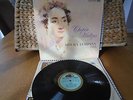
The cover for The Acid Test LP.
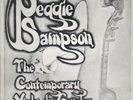
"Can You Pass the Acid Test?" is the rhetorical question asked by a poster announcing the Muir Beach Acid Test in 1965.
Neal Cassady, the larger than life subject of Jack Kerouac's Beat Generation manifesto On the Road and the Merry Pranksters' bus driver, hangs out at a 1966 Acid Test in Los Angeles.
The second Acid Test is held at a house in San Jose following a Rolling Stones concert. Hand lettered invitations reading Can You Pass the Acid Test? are given out, and 2400 revelers show up. The Grateful Dead. who have recently changed their name from the Warlocks perform.
January 8 The largest Acid Test yet do-airs 2,400 people to San Francisco's Fillmore Auditorium The Grateful Dead play while banks of Audiovisual equipment create a chaotic backdrop of light and sound.
On January 8, 1966, the Merry Pranksters put on a colossal Acid Test at the Fillmore Auditorium, in San Francisco’s black ghetto. They had put down
a deposit on the hall two days earlier, ignoring the landlord’s earnest warning that there would be no ,way to publicize an event in that short a time. The Pranksters just smiled mysteriously. About twentyfour hundred people showed up.
The Fillmore was a huge dance floor with a balcony running along two sides. The Pranksters wired it up with so much electronic equipment -
including the TV Portapaks they were going to carryaround - that the floor was littered with electronic boxes and skeins of electric cable. The whole place actually gave off a low, buzzing hum.
The show started in the usual fashion with Kesey’s Psychedelic Symphonette playing random sequences of notes at one end of the floor. Down at the other end, the Warlocks, who had recentlychanged their name to the Grateful Dead, were simultaneously playing rock & roll built around the expansive noodlings of guitarist Jerry Garcia.
In the middle of the floor stood a baby bathtub full of Kool Aid spiked with LSD.
From then on, the evening was psychedelic chaos. Pranksters wore comicbook superhero costumes and wandered around doing everything they could to make the trip weirder. Phrases that read like excerpts from a Kesey novel in progress were projected onto the walls. Perhaps this whole event was a Kesey novel, set in some kind of space age madhouse.
Because of city regulations, the Acid Test was required to end at 2:00 a.m., and the police showed up to make sure the curfew was observed. “Who’s in charge?” they demanded. Hilarious. Everything had been totally out of control for hours.
The police went around pulling plugs and turning off switches. The Pranksters went around after them turning everything back on again. When the lights went off, the crowd cheered. When they went back on, they cheered again. A group of people on the floor had found a ladder and were climbing toward the police, chanting, “Hug the heat! Hug the heat!” just as Kesey’s lawyers arrived to smooth everything over.
Neal Cassady, one of the original beatniks, was there that night. He had been hanging around with the Merry Pranksters for some time. Habitually wired on amphetamines, he would usually be talking a motormouthed stream of consciousness while juggling a hammer to deal with his speed induced restlessness. But here, staring down from the Fillmore balcony at all the stoned people crawling through mountains of electronic equipment and giant sculptures, he seemed downright placid.
A poster announcing the Acid Test Graduation, which was to be held at Winterland in San Francisco on Halloween 1966.
In actuality, the event had to be moved at the last minute, though the spirits of the graduating class nonetheless remained high.
The event that followed the Fillmore Acid Test was boldly named the Trips Festival. It aimed at incorporating everything that had been part of these public gatherings into whatever else might fit. Stewart Brand had rented Longshoremen’s Hall from January 21-23, 1966.
The Trips Festival poster read: the general tone of things has moved from the self-conscious Happening to a more jubliant occasion where the audience participates because it’s more fun to do so than not. Maybe this is the rock REVOLUTION.
Not just maybe. From the first night, the LSD party engulfed the cabaret theater skits and slides of American Indians. A band called the Loading Zone was hurried onstage to handle the vast, undirected energy that pulsed through the hall. The second night was supposed to feature avant-garde films, a light show and the music of Big Brother and the Holding Company, fresh from their first gig. But the Grateful Dead swept everybody offstage and the event turned into another thundering Acid Test, complete with flashing strobe lights and fluorescing colors while Kesey’s messages were projected on the wall in the unparalleled chaos (one such message: “Anybody who knows he is God, go up onstage”). When the event closed down at 2:00 a.m., there was still a line outside. This was nothing new to producer Bill Graham, who had been desperately running around all night with his clipboard, trying to keep the vast, polymorphous event organized.
The third night, which hadn’t been entirely planned, automatically became another Acid Test and dance with the Grateful Dead, the video cameras, the giant sculptures and the rest. In the roaring chaos, an Olympic trampolinist who wore a mask to preserve his amateur status dove from the balcony into a trampoline under stroboscopic light.
Well over 6,000 people had attended the Trips Festival. It was the only place to be that weekend. A band named the Mystery Trend, who hadn’t been paying attention, booked a theater on Saturday. Only three people showed up.
Gleeful anarchy reigns at the Trips Festival a three night psychedelic happening at Longshoremen’s Hall in 1966. A poster for the festival mark it as an event to rememberthat is, if you could.
January 21 - 23 1966 The multimedia Trips Festival is held at Longshoremen's Bull in San Francisco. A psychedelic poster handbill promises slides, movies. sound tracks, flowers. Food. rock 'n' roll eagle lone whistle, indians and anthropologists revelations ... A, the unexpected able. The Grateful Dead and Big Brother and the Holding Company perform, and Owsley's latest batch of acid is circulated.
"Acid Test" signboard, about 1964
The adventures of the Merry Pranksters—a band of artists, writers, and students who embraced free expression, defined a lifestyle opposed to mainstream American values, and traveled the country in a psychedelic schoolbus—were popularized in Tom Wolfe's 1968 book The Electric Kool-Aid Acid Test. Led by the novelist Ken Kesey, the group became a symbol for the counterculture based in San Francisco during the 1960s. In the early 1990s Smithsonian curators contacted Kesey hoping to acquire the famous bus, named Furthur, but it was badly deteriorated. In 1992 they collected archival material and this colorful plywood panel, which the Pranksters used to advertise concerts and poetry readings. Fittingly, Kesey signed the deed of gift with a Day-Glo marker.
Kesey sees that they, the Pranksters, already have the expertise and the machinery to create a mindblown state such as the world has never seen, totally wound up, lit up, amplified and... controlled...
For months Kesey has been trying to work out... the fantasy... of the Dome. This was going to be a great geodesic dome on top of a cylindrical shaft. It would look like a great mushroom. Many levels. People would climb a stairway up the cylinder [...] and the dome would have a great foam-rubber floor where they could lie down on. Sunk down in the foam rubber, below the floor level, would be movie projectors, video-tape projectors, light projectors. All over the place, up in the dome, everywhere, would be speakers, microphones, tape machines, live, replay, variable lag. People could take LSD or speed or smoke grass and lie back and experience what they would, enclosed and submerged in a planet of lights and sounds such as the universe had never knew. Lights, movies, video tapes, video tapes of themselves, flashing and swirling over the dome from the beams of searchlights rising from the floor from between their bodies, The sound roiling around in the globe like a typhoon. Movies and tapes of the past, tapes and video tapes, broadcasts and pictures of the present, tapes and humanoid sounds of the future - but all brought together now - here and now [...] into the delated cerebral cortex...
The geodesic dome, of course, was Buckminster Fuller's inspiration. The light projections were chiefly Gerd Stern's, Gerd Stern of the USCO group [...] But the magic dome, the new planet, was Kesey and the Pranksters. The idea went beyond what would later be known as mixed-media entertainment, now [1968] a standard practice in "psychedelic discotheques" and so forth. The Pranksters had the supra-medium, a fourth dimension - acid - Cosmo - All-one - Control - The Movie -
acid test 1960's, with Kesey and Babbs
But why a dome? The answer to all the Prankster fantasies, public and private, the whole solution - they already found it; namely, the Hell's Angels party. The two day rout hadn't been a party but a show. It had been more than a show even. It had been an incredible concentration of energy. Not only Pranksters, but people from all over, heads, non-heads, intellectuals, curiosity-seekers, even cops, had turned up and gotten swept up in the incredible energy of the thing. They had been in the Prankster movie. It was one show that hadn't been separated into entertainers and customers, with the customers buying a ticket and saying All right, now entertain me. At the Angel's party everybody got high together and everybody did his [her] thing and entertained everybody else, Angels being Angels, Ginsberg being Ginsberg, Pranksters being Pranksters, and cops being cops. Even the cops did their thing, splashing those big lush evil revolving red turret lights off the dirt cliff and growling and baying and hassling cars. [Tom Wolfe: 1967: 231-232]
The movie, that's one of Kesey's magic ideas. To be / live in their own movie rather than within a movie created by others. That is to break the magic capture of the system, not to acknowledge their narratives, conventions and laws...
The acid test went on and soon it got to Los Angeles, where it became the Electric Kool-Aid Acid Test. Some Pranksters, - Hugh Romney - decided to put the LSD in big Kool Aid containers, playing with the homey, innocuous drink of middle America.
... the night of the Acid Test in Watts. Imagine Watts, only a few months after the riots, on acid. All us crazy-looking middle class white kids all dressed up in weird things with goony eyes. I remember the black people in the neighborhood standing out there laughing. They found it hilarious. There was a general air of good feeling. Take a couple hundred or so freaked-out people in Watts and a a bunch of freaked-out hippies and you wouldn't know what to expect, but it was very nice. [Law: 23]
price rating