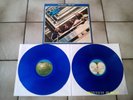
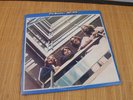
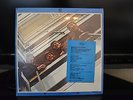
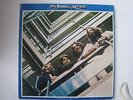
The Beatles ? 1967-1970 Blue Album ? Rare EX 1973 Apple Records 1st Press 2xLP
$
25


Favourite Auctions
To save auctions to your favourites, please login
If you don't have an account, please register
Description
Welcome to Classic Cadillac Records! My goal is to provide each and every customer with the best possible buying experience, no matter the size of the order. Unlike most sellers, I advertise all my items clearly and in as much detail as possible, without shouting at you in all caps. I take multiple high quality pictures and never use stock photos, so you know exactly what you?re buying. I take great pride in my work and go the extra mile, which can clearly be seen in my listings compared to other sellers that put minimal effort into theirs. I visually grade all my records as accurately as possible and will never grade anything above Near Mint unless it?s still sealed. Please note that a visual grade can differ from a play grade, and am happy to spot check a record upon request. All orders are shipped within 1 business day (usually sooner) and packed with extra care to ensure fast, safe arrival. I combine shipping on multiple orders to save you money and gladly ship worldwide. Please look closely at all pictures, read all relevant details and ask any questions you may have before buying. I offer a full 30-day return policy on everything I sell, so buy with confidence! And most importantly, thanks for looking! 1967–1970 Compilation album by the Beatles Released 2 April 1973 Recorded 28 November 1966 – 1 April 1970 Studio EMI, Olympic, Apple and Trident Studios, London Genre Rock, psychedelic rock Length 99:40 Label Apple Producer George Martin and Phil Spector Compiler Allen Klein The Beatles chronology 1962–1966
(1973) 1967–1970
(1973) Rock 'n' Roll Music
(1976) Professional ratings Review scores Source Rating AllMusic Blender Rolling Stone
1967–1970 (widely known as "The Blue Album") is a compilation of songs by the English rock band the Beatles, spanning the years indicated in the title. It was released with 1962–1966 ("The Red Album"), in 1973. 1967–1970 made number 1 on the American Billboard chart and number 2 on the British Album Chart. This album was re-released in September 1993 on CD, charting at number 4 in the United Kingdom.
The album was compiled by Beatles manager Allen Klein. Songs performed by the Beatles as solo artists were also considered for inclusion, but as with the cover songs on 1962–1966, limited space resulted in this idea having to be abandoned.
As with 1962–1966, this compilation was produced by Apple/EMI at least partially in response to a bootleg collection titled Alpha Omega, which had been sold on television the previous year. Print advertising for the two records made a point of declaring them "the only authorized collection of the Beatles."
Album covers
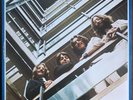
For the group's 1963 debut LP Please Please Me, photographer Angus McBean took the distinctive colour photograph of the group looking down over the stairwell inside EMI House (EMI's London headquarters in Manchester Square, demolished in 1995). In 1969, the Beatles asked McBean to recreate this shot. Although a photograph from the 1969 photo shoot was originally intended for the then-planned Get Back album, it was not used when that project saw eventual release in 1970 as Let It Be. Instead, another photograph from the 1969 shoot, along with an unused photograph from the 1963 photo shoot, was used for both this LP and 1962–1966.
The inner gatefold photo for both LPs is by Don McCullin from the "Mad Day Out" photo session in London on Sunday 28 July 1968.
The album cover was designed by Tom Wilkes.
International versions
Unlike the 1962–1966 collection, the Blue Album was largely the same in the US and UK, although there were some variations.
The US edition had both "Penny Lane" and "Hello, Goodbye" in fake stereo, and "I Am the Walrus" with a four-beat electric piano introduction; the UK version had the more common six-beat beginning.
In the Spanish edition "One After 909" substituted "The Ballad of John and Yoko", a song that was banned from the airwaves shortly after being released as a single in 1969, for its allusion to "Christ" and "Gibraltar" in the lyrics.
The albums had several other variants and anomalies. "Get Back" was described as the album version in the US liner notes, although it was in fact the single version. In both countries, "Hey Jude" was around nine seconds shorter than it had been on the original single, although the full length was restored for the 1993 compact disc edition.
The original vinyl version faded in during the crowd noise at the beginning of "A Day in the Life". The fade in was different on both the UK and US versions. The original compact disc edition, meanwhile, featured a clean version previously heard on the Imagine: John Lennon soundtrack album in 1988.
The album liner notes state that all songs were produced by George Martin, except "Across the Universe" and "The Long and Winding Road" produced by Phil Spector, meaning that George Martin was credited as producer of the song "Don't Let Me Down" which usually has no official producer's credit.
Release variations
- Original 1973 release: Apple SKBO-3404 (Whole and sliced apples in blue background)
- Second 1976 pressing: Capitol SKBO-3404 (Capitol target label on back of album cover, blue label with "Capitol" in light blue letters at bottom)
- 1978 first blue vinyl release: Capitol SEBX-11843 (Capitol dome label on back of album cover, large dome logo at top of light blue labels)
- 1980 East German release. Amiga 8 55 742. One disc only with 14 tracks mostly from disc one of the original version.
- 1993 CD release. Apple 0777 7 97039 2 0 (Whole and sliced apples in blue background)
- 2010 remastered CD release. Apple 5099990674723 (Whole and sliced apples in blue background)
Track listing
- The single versions of "Get Back" and "Let It Be" make their album debuts in this compilation.
- All tracks written by John Lennon and Paul McCartney except where noted.
price rating




![THE BEATLES 1967-1970 [Vinyl LP] Apple SKBO-3404 Greatest Hits Blue Album](https://www.popsike.mobi/php/thumbnail.php?url=https://www.popsike.pics/pix/20160821/201651165483.jpg)