The Beatles "Rubber Soul" Parlophone PMC 1267 1/1 UK 1st Loud + inner 1965
£
40
$
53


Favourite Auctions
To save auctions to your favourites, please login
If you don't have an account, please register
Description
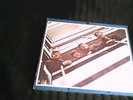
The Beatles "Rubber Soul" Parlophone PMC 1267 UK 1st press Mono Vinyl, LP, "Loud Cut", Ernest J. Day print, housed in an "Emitex" inner sleeve, and released in 1965.
The vinyl has a few surface marks but played through beautifully on my elderly stereo - no hop, stick or jump, and only an occasional crackle between tracks. It is housed n its original, "Emitex" inner sleeve, which is slightly creased but otherwise in good shape - no rips or writing. The Ernest J Day sleeve is a little grubby to the back, but that apart, is also in good condition, again with no rips or writing. The spine is intact and legible. Matrix / Runout Side 1 : XEX 579-1 A HL Matrix / Runout Side 2 : XEX 580-1 C OD
"Rubber Soul" is the Beatles' sixth studio album. It was released on 3 December 1965 in the United Kingdom, on EMI's Parlophone label, accompanied by the non-album double A-side single "Day Tripper" / "We Can Work It Out". The original North American release, issued by Capitol Records, contains ten of the fourteen songs and two tracks withheld from the band's "Help!" album. "Rubber Soul" met with a highly favourable critical response and topped sales charts in Britain and the United States for several weeks.
The recording sessions took place in London over a four-week period beginning in October 1965. For the first time in their career, the band were able to record an album free of concert, radio or film commitments. Often referred to as a folk rock album, particularly in its Capitol configuration, "Rubber Soul" incorporates a mix of pop, soul and folk musical styles. The title derives from the colloquialism "plastic soul" and was the Beatles' way of acknowledging their lack of authenticity compared to the African-American soul artists they admired. After "A Hard Day's Night" in 1964, it was the second Beatles LP to contain only original material.
The songs demonstrate the Beatles' increasing maturity as lyricists, and in their incorporation of brighter guitar tones and new instrumentation such as sitar, harmonium and fuzz bass, the group striving for more expressive sounds and arrangements for their music. The project marked a progression in the band's treatment of the album format as an artistic platform, an approach they continued to develop with "Revolver" and "Sgt. Pepper's Lonely Hearts Club Band". The four songs omitted by Capitol, including the February 1966 single "Nowhere Man", later appeared on the North American release "Yesterday and Today".
"Rubber Soul" was highly influential on the Beatles' peers, leading to a widespread focus away from singles and onto creating albums of consistently high-quality songs. It has been recognised by music critics as an album that opened up the possibilities of pop music in terms of lyrical and musical scope, and as a key work in the creation of styles such as psychedelia and progressive rock. Among its many appearances on critics' best-album lists, Rolling Stone ranked it fifth on the magazine's 2012 list "The 500 Greatest Albums of All Time". In 2000, it was voted at number 34 in the third edition of Colin Larkin's book All Time Top 1000 Albums. The album was certified 6× platinum by the RIAA in 1997, indicating shipments of at least six million copies in the US. In 2013, "Rubber Soul" was certified platinum by the BPI for UK sales since 1994.
This is the first, so-called 'loud cut' version of Rubber Soul: "Shortly into the production run, EMI decided that Moss had cut the album too loud and ceased production. After Moss re-cut mono lacquers on November 19, new metal parts were made, and Hayes resumed pressing the album. The albums pressed with stampers generated from the initial lacquers were not destroyed and can be identified by the "-1" following the XEX 579 (Side 1) and XEX 580 (Side 2) matrix numbers..." [Bruce Spizer, 'Beatles For Sale On Parlophone, p. 204]
Author Andrew Grant Jackson describes "Rubber Soul" as a "synthesis of folk, rock, soul, baroque, proto-psychedelia, and the sitar". According to author Joe Harrington, the album contained the Beatles' first "psychedelic experiments", heralding the transformational effect of LSD on many of the original British Invasion acts. Author Bernard Gendron dismisses the commonly held view that "Rubber Soul" is a folk rock album; he cites its incorporation of baroque and Eastern sounds as examples of the Beatles' "nascent experimentalism and eclectic power of appropriation", aspects that he says suggest an artistic approach that transcends the genre. According to The Encyclopedia of Country Music, building on the Beatles' 1964 track "I Don't Want to Spoil the Party", the album can be seen in retrospect as an early example of country rock, anticipating the Byrds' "Sweetheart of the Rodeo" album.
Further to Lennon's more introspective outlook in 1964, particularly on "Beatles for Sale", the lyrics on "Rubber Soul" represent a pronounced development in sophistication, thoughtfulness and ambiguity. According to music critic Greil Marcus, "the Beatles were still writing about love, but this was a new kind of love: contingent, scary and vital", and so, while the music was "seduction, not assault", the "emotional touch" was tougher than before. Author James Decker considers it significant that "Rubber Soul" "took its narrative cues more from folk crossovers such as Bob Dylan and the Byrds than from the Beatles' pop cohorts". In particular, the relationships between the sexes moved from simpler boy-girl love songs to more nuanced and negative portrayals. In this way, Lennon and McCartney offered candid insights into their respective personal lives.
"Rubber Soul" was the group's first album not to feature their name on the cover, an omission that reflected the level of control they had over their releases and the extent of their international fame. The cover photo of the Beatles was taken by photographer Robert Freeman in the garden at Lennon's house. The idea for the "stretched" effect of the image came about by accident when Freeman was projecting the photo onto an LP-size piece of cardboard for the Beatles' benefit, and the board fell slightly backwards, elongating the projected image. McCartney recalled the band's reaction: "That's it, Rubber So-o-oul, hey hey! Can you do it like that?" Author Peter Doggett highlights the cover as an example of the Beatles, like Dylan and the Stones, "continu[ing] to test the limits of the portrait" in their LP designs.
The distinctive lettering was created by illustrator Charles Front, who recalled that his inspiration was the album's title: "If you tap into a rubber tree then you get a sort of globule, so I started thinking of creating a shape that represented that, starting narrow and filling out." The rounded letters used on the sleeve established a style that became ubiquitous in psychedelic designs and, according to journalist Lisa Bachelor, "a staple of poster art for the flower power generation".
Neil McCormick of The Daily Telegraph wrote in 2009: "this is where things start to get very interesting ... Rubber Soul is the result of their first extended period in the studio. The production is open and spacious, adorned but not yet overcrowded with new instruments and ideas. The songs themselves are like little Pop Art vignettes, where the lyrics are starting to match the quality of the melodies and arrangements." Scott Plagenhoef of Pitchfork describes the album as "the most important artistic leap in the Beatles' career – the signpost that signaled a shift away from Beatlemania and the heavy demands of teen pop, toward more introspective, adult subject matter". Paul Du Noyer wrote in his review for Blender in 2004: "Their talent was already a source of wonder, but now the songs themselves were turning mysterious. Under the influence of Bob Dylan – and, it might be said, marijuana – the Fab Four laced their tunefulness with new introspection, wordplay and social comment. University professors and newspaper columnists started taking note."
Writing in Paste, Mark Kemp says that the influence of Dylan and the Byrds seems overt at times but the album marks the start of the Beatles' peak in creativity and, in the context of 1965, offered "an unprecedented synthesis of elements from folk-rock and beyond". According to Richie Unterberger of AllMusic, the album's lyrics represented "a quantum leap in terms of thoughtfulness, maturity, and complex ambiguities", while the music was similarly progressive in its use of sounds beyond "the conventional instrumental parameters of the rock group". He adds that Rubber Soul is "full of great tunes" from Lennon and McCartney notwithstanding their divergence from a common style, and demonstrates that Harrison "was also developing into a fine songwriter". Writing in the Encyclopedia of Popular Music, Colin Larkin describes it as "not a collection of would-be hits or favourite cover versions … but a startlingly diverse collection, ranging from the pointed satire of 'Nowhere Man' to the intensely reflective 'In My Life'." In the 2004 edition of The Rolling Stone Album Guide, Rob Sheffield recognises Help! as "the first chapter in the [Beatles'] astounding creative takeoff", after which the band "grew up with an album of bittersweet romance, singing adult love ballads that feel worldly but not jaded".
price rating