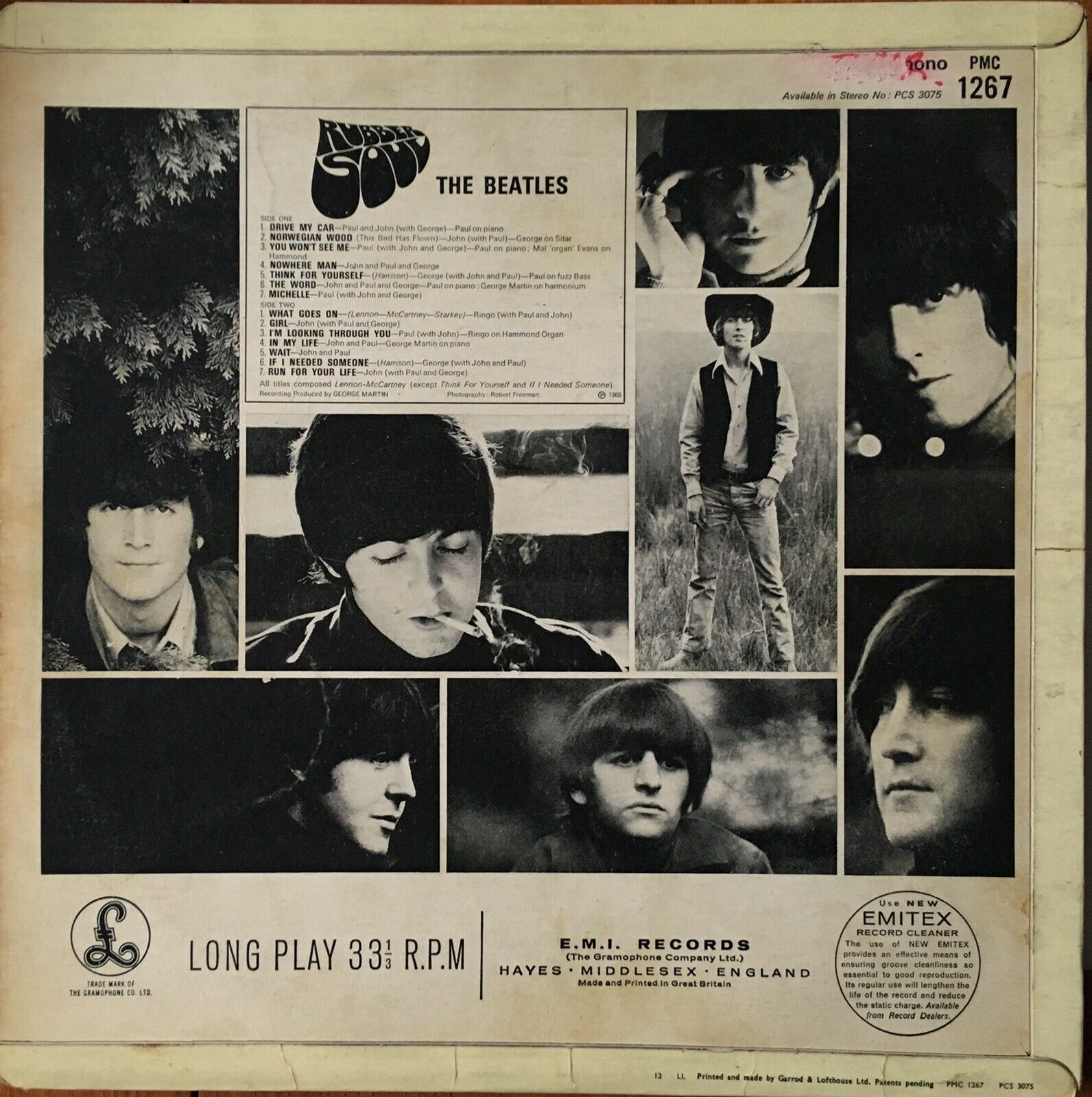
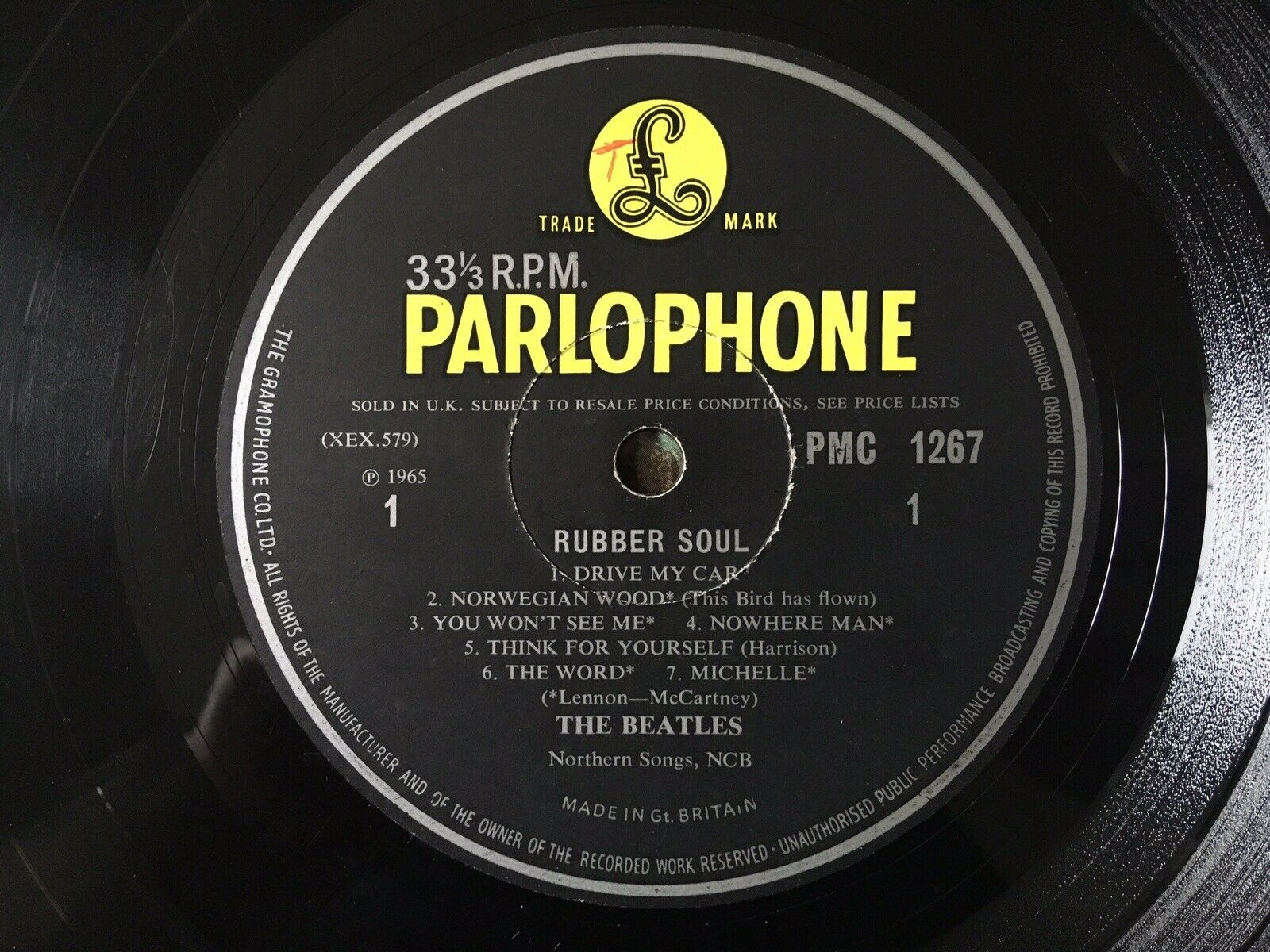
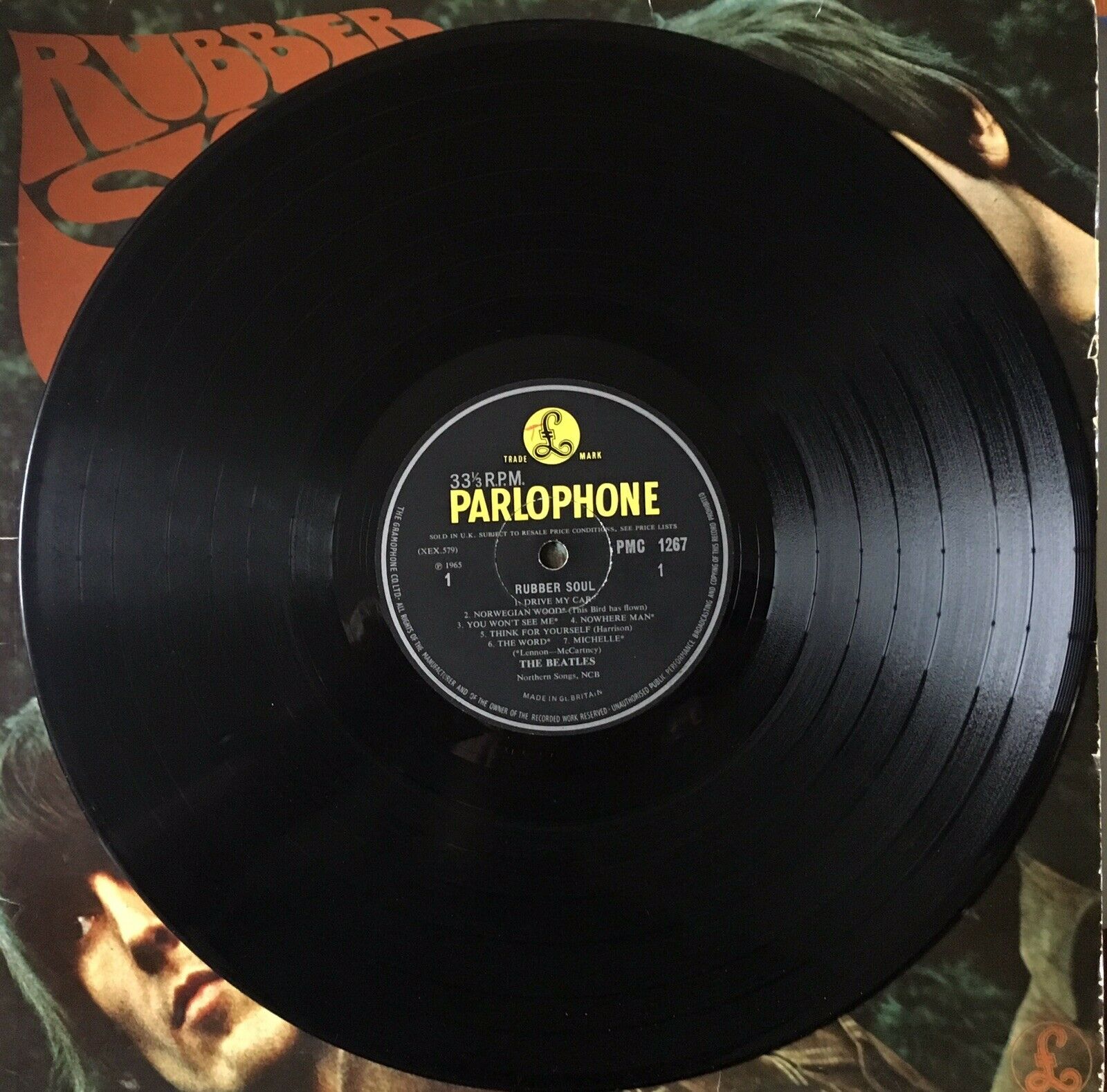
The Beatles ?"Rubber Soul" Parlophone PMC 1267 Loud Cut 1/1 UK 1st G&L 1965
£
51
$
68
Favourite Auctions
To save auctions to your favourites, please login
If you don't have an account, please register
Description
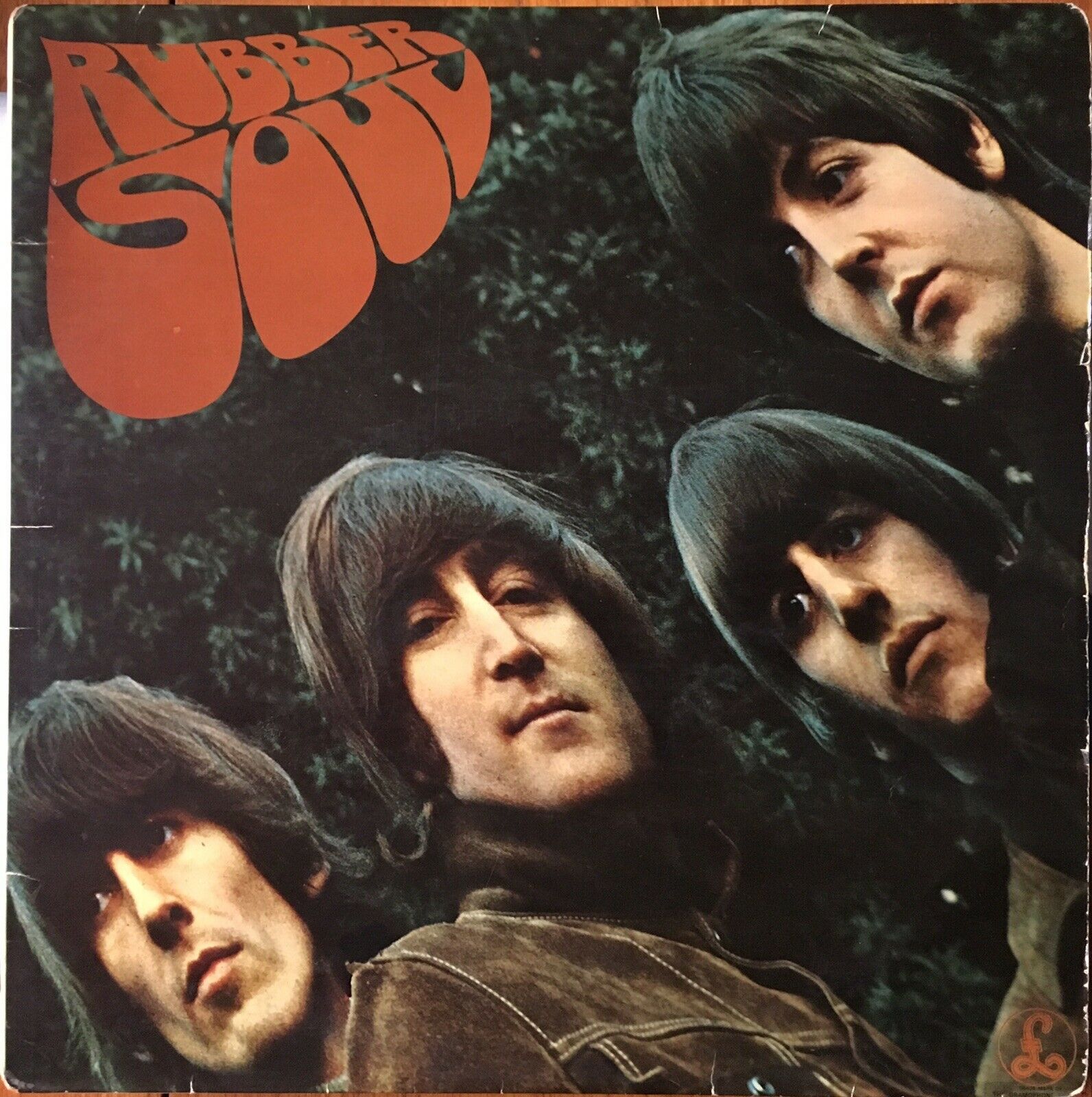
The Beatles ? "Rubber Soul" Parlophone ?PMC 1267 UK 1st press "Loud Cut" Vinyl, LP released in 1965 in a front laminated flip-back sleeve. The LP was printed and made by Garrod & Lofthouse.
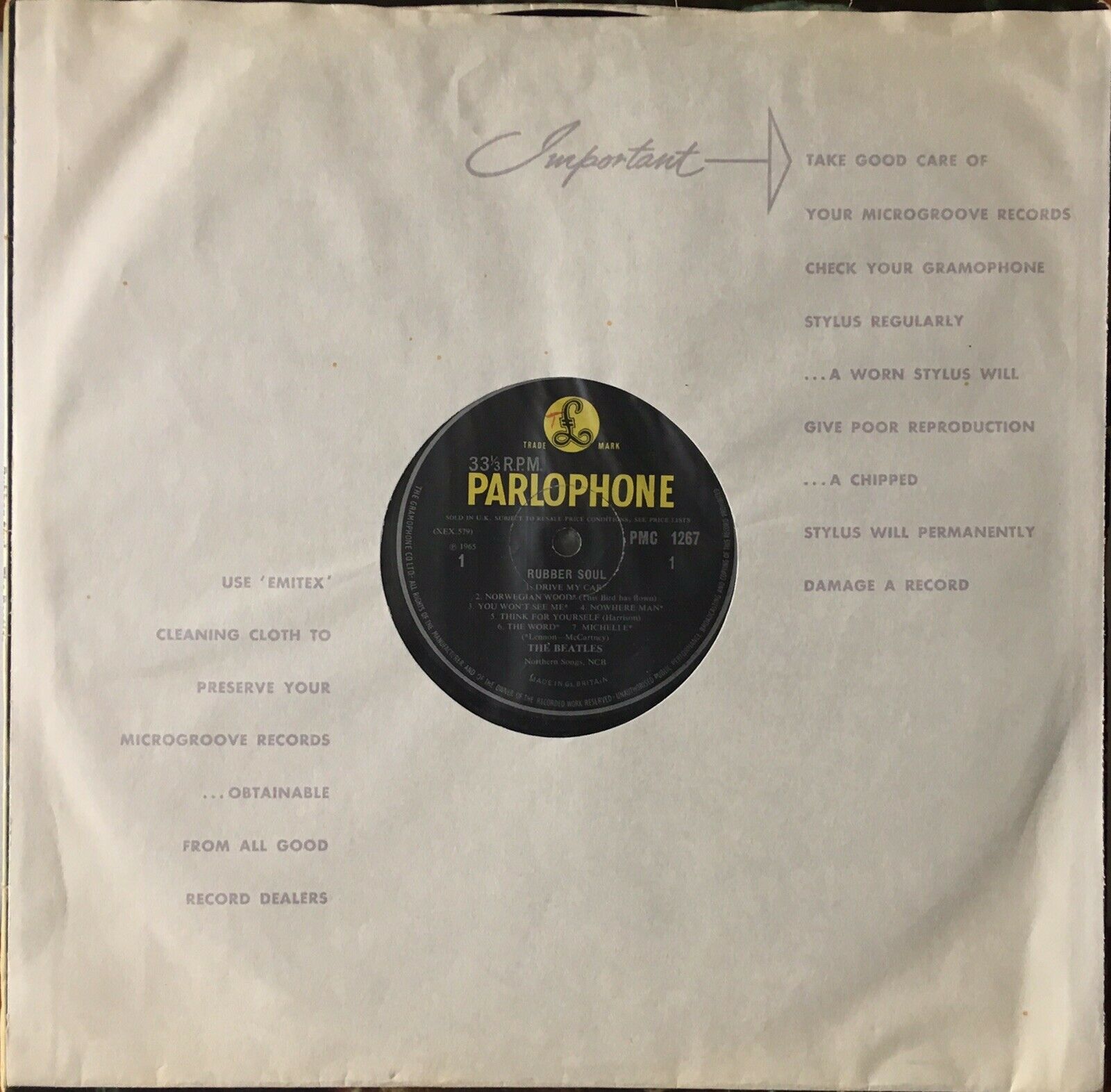
The vinyl does have several surface scuffs, but played through beautifully on my elderly stereo - no hop, stick or jump. It is housed in an "Emitex" inner sleeve, which shows minimal signs of use, and which is in great shape - no rips or writing. The sleeve has a couple of creases to the laminate, but nothing major and it is intact with no rips or writing. There is a red mark to the rear, where it appears a previous owner may have removed a sticker. The spine is intact and legible. Matrix / Runout Side 1 : XEX 579-1 Matrix / Runout Side 2 : XEX 580-1
"Rubber Soul" is the Beatles' sixth studio album. It was released on 3 December 1965 in the United Kingdom, on EMI's Parlophone label, accompanied by the non-album double A-side single "Day Tripper" / "We Can Work It Out". The original North American version of the album was altered by Capitol Records to include a different selection of tracks. "Rubber Soul" met with a highly favourable critical response and topped record charts in Britain and the United States for several weeks.
Often referred to as a folk rock album, "Rubber Soul" incorporates a mix of pop, soul and folk musical styles. The title derives from the colloquialism "plastic soul" and was the Beatles' way of acknowledging their lack of authenticity compared to the African-American soul artists they admired. After "A Hard Day's Night" in 1964, it was the second Beatles LP to contain only original material. For the first time in their career, the band were able to record the album over a continuous period, uninterrupted by touring commitments.
The songs demonstrate the Beatles' increasing maturity as lyricists and, in their incorporation of brighter guitar tones and new instrumentation such as harmonium, sitar and fuzz bass, the group striving for more expressive sounds and arrangements for their music. The project marked a progression in the band's treatment of the album format as an artistic platform, an approach they continued to develop with "Revolver" and "Sgt. Pepper's Lonely Hearts Club Band". The North American version of "Rubber Soul" contained ten of the fourteen new songs, supplemented by two tracks withheld from the band's "Help!" album. The four songs omitted by Capitol, including the February 1966 single "Nowhere Man", later appeared on the June 1966 North American-only release "Yesterday and Today".
Most of the songs on "Rubber Soul" were composed soon after the Beatles' return to London following their August 1965 North American tour. The album reflects the influence of their month in America. Aside from setting a new attendance record when they played to over 55,000 at Shea Stadium on 15 August, the tour allowed the band to meet with Bob Dylan in New York and their longtime hero Elvis Presley in Los Angeles. Although the Beatles had released their album "Help!" that same month, the requirement for a new album in time for Christmas was in keeping with the schedule established in 1963 by Brian Epstein, the group's manager, and George Martin, their record producer.
In their new songs, the Beatles drew inspiration from soul music, particularly the singles they heard on US radio that summer, by acts signed to the Motown and Stax record labels, and from the contemporary folk rock of Dylan and the Byrds. Author Robert Rodriguez highlights the Byrds as having achieved "special notice as an American act that had taken something from the Brits, added to it, then sent it back". In doing so, Rodriguez continues, the Byrds had joined the Beatles and Dylan in "a common pool of influence exchange, where each act gave and took from the other in equal measure". According to music critic Tim Riley, "Rubber Soul" served as a "step toward a greater synthesis" of all the elements that throughout 1965 represented a "major rock 'n' roll explosion", rather than just the emergence of folk rock. Citing Dylan and the Rolling Stones as the Beatles' artistic peers during this period, he says that on "Rubber Soul", these two acts "inspire rather than influence their sound".
Two years after the start of Beatlemania, the band were open to exploring new themes in their music through a combination of their tiring of playing to audiences full of screaming fans, their commercial power, a shared curiosity gained through literature and experimentation with hallucinogenic drugs, and their interest in the potential of the recording studio. John Lennon was encouraged to address wider-ranging issues than before in his songwriting through Dylan's example. A further impetus was a discussion he had with BBC journalist Kenneth Allsop about whether, as in Lennon's 1965 book A Spaniard in the Works, his lyrics were conceived as merely "another form of nonsense rhyming". Author Mark Prendergast describes "Rubber Soul" as "the first Beatles record which was noticeably drug-influenced". In Lennon's description, it was "the pot album".
"Rubber Soul" was the group's first album not to feature their name on the cover, an omission that reflected the level of control they had over their releases and the extent of their international fame. The cover photo of the Beatles was taken by photographer Bob Freeman in the garden at Lennon's house. The idea for the "stretched" effect of the image came about by accident when Freeman was projecting the photo onto an LP-size piece of cardboard for the Beatles' benefit, and the board fell slightly backwards, elongating the projected image. McCartney recalled the band's reaction: "That's it, Rubber So-o-oul, hey hey! Can you do it like that?" Author Peter Doggett highlights the cover as an example of the Beatles, like Dylan and the Stones, "continu[ing] to test the limits of the portrait" in their LP designs.
The distinctive lettering was created by illustrator Charles Front, who recalled that his inspiration was the album's title: "If you tap into a rubber tree then you get a sort of globule, so I started thinking of creating a shape that represented that, starting narrow and filling out." The rounded letters used on the sleeve established a style that became ubiquitous in psychedelic designs and, according to The Guardian, "a staple of poster art for the flower power generation".
Critical response to "Rubber Soul" was highly favourable. Allen Evans of the NME wrote that the band were "still finding different ways to make us enjoy listening to them" and described the LP as "a fine piece of recording artistry and adventure in group sound". While outlining to American readers the differences in the UK-format release, KRLA Beat said "Rubber Soul" was an "unbelievably sensational" work on which the Beatles were "once again ... setting trends in this world of pop". Newsweek lauded the Beatles as "the Bards of Pop", saying that the album's combination of "gospel, country, baroque counterpoint and even French popular ballads" lent the band a unique style in which their songs were "as brilliantly original as any written today". Like Newsweek, The New York Times had belittled the group when they first performed in America in February 1964, but following the release of "Rubber Soul", according to author Bob Spitz, entertainment critic Jack Gould offered a "glowing tribute" in the newspaper's Sunday magazine.
The writers of Record Mirror's initial review found the album lacking some of the variety of the group's previous releases but also said: "one marvels and wonders at the constant stream of melodic ingenuity stemming from the boys, both as performers and composers. Keeping up their pace of creativeness is quite fantastic." By contrast, a week later, Richard Green wrote in the same magazine that most of the album "if recorded by anyone but the Beatles, would not be worthy of release", with many of the tracks devoid of "the old Beatles excitement and compulsiveness". Green acknowledged that his was an unpopular opinion, before concluding: "Judging LPs strictly on their merits, recent albums from Manfred Mann, the Beach Boys and Jerry Lee Lewis rank high above "Rubber Soul"."
In another review that Richard Williams later cited as an example of the British pop press not being "quite ready" for the album, Melody Maker found the Beatles' new sound "a little subdued" and said that tracks such as "You Won't See Me" and "Nowhere Man" "almost get monotonous – an un-Beatle-like feature if ever there was one". Author Steve Turner also highlights the comments made by the Melody Maker and Record Mirror reviewers, who were typically aged over 30, as indicative of how UK pop journalists lacked "the critical vocabulary" and "the broad musical perspective" to recognise or engage with progressive music. Turner adds that "Rubber Soul" "may have perplexed the old guard of entertainment correspondents, but it was a beacon for fledgling rock critics (as they would soon be called)".
In a September 1966 review of "Revolver", KRLA Beat said that the title of "Rubber Soul" had "become a standard phrase used to describe a creation of exceptional excellence in the field of music", such that several highly regarded releases had since earned the description "a 'Rubber Soul in its field'". Writing in Esquire in 1967, Robert Christgau called it "an album that for innovation, tightness, and lyrical intelligence was about twice as good as anything they or anyone else (except maybe the Stones) had done previously".
"Rubber Soul" is frequently cited by commentators as the first of the Beatles' "classic" albums. In an article coinciding with the 50th anniversary of its release, for The Guardian, Bob Stanley lamented that "Rubber Soul" was often overlooked in appraisals of the Beatles' recording career, whereas "Revolver" and "The Beatles" had each gained in stature to surpass Sgt. Pepper. Stanley highlighted "Rubber Soul" as having been "a good 18 months ahead of its time" and "the first album of the rock era that sounded like an album". Also writing in December 2015, in Rolling Stone, Rob Sheffield especially admired the singing and the modern qualities of the female characters depicted in the lyrics. He said that the album was "way ahead of what anyone had done before" and, given the short period in which they had to record, he called it the Beatles' "accidental masterpiece". Conversely, Jon Friedman of Esquire finds the work vastly overrated, with only the Lennon-dominated songs "Norwegian Wood", "Nowhere Man", "In My Life" and "Girl" worthy of praise, and he dismisses it as "dull" and "the Beatles' most inconsequential album". Although he considers that McCartney "comes off third-string" to Lennon and Harrison, Plagenhoef defends the album's subtle mood; highlighting the influence of cannabis on the Beatles throughout 1965, he writes: "With its patient pace and languid tones, "Rubber Soul" is an altogether much more mellow record than anything the Beatles had done before, or would do again. It's a fitting product from a quartet just beginning to explore their inner selves on record." In his review for Rough Guides, Chris Ingham highlights the musical arrangements, three-part harmonies and judicious use of new sounds, in addition to the band's improved musicianship and songwriting. He says that "Rubber Soul" usually trails the Beatles' next four albums in critics' assessments of their work, yet "it's undoubtedly their pre-acid, pre-antagonism masterpiece: beat music as high art".
price rating