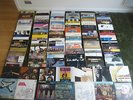
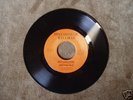
The Beatles Yesterday & Today LP RECORD Vintage Butcher
$
305


Favourite Auctions
To save auctions to your favourites, please login
If you don't have an account, please register
Description
ARTIST: Beatles, The TITLE: Yesterday And Today MEDIA: LP LABEL: Capitol GENRE: Rock RELEASE DATE: 1966 CONDITION (INNER / OUTER): 6 / 6 OTHER INFORMATION: S RELEASE REFERENCE NUMBER: ST-2553 SELLER CATALOG / STOCK NUMBER: 67763
On Dec-15-08 at 19:47:54 PST, seller added the following information:BEATLES FANS, SEE Item number: 220330649094 BRITSHACK LOVES THE BEATLES!!!!!!
I have sadly been recieving emails from concerned collecters about the authenticity of this item. This is an RIAA #4 Jacksonville press, NOT ALL BUTCHERS HAVE RINGO'S V NECK BLEED INTO THE SECOND SEAL. Underneath is the butcher cover, it was covered in Jacksonville, FL, exactl the same place it was pressed. You can have a specialist peel it and I will issue a full refund, plus costs if you are not satisfied. Ok, most butchers cannot just be peeled, I was expecting some 21st century Wal-Mart action, but alas no, and I am not going to try and peel it, no way. But be assured, the blood, guts and babies heads are all there, underneath the original stereo state. The peel is badly placed on this one too, it is so funny that a dumbass couldn't put a cover on straight, but yeah, it is true! I also got this checked out downtown by a Beatles guru and he was impressed I had a 'butchers'
Peace and Love Beatlemaniacs!
Overview
This album saw the release of all of the tracks from the previous two British releases that were not included on their American counterparts: Help! ("Act Naturally" and "Yesterday") and Rubber Soul ("Drive My Car", "Nowhere Man", "If I Needed Someone", and "What Goes On").[2] The recent single "Day Tripper" / "We Can Work It Out" was also included, as were three tracks from the upcoming LP Revolver: "I'm Only Sleeping", "Doctor Robert", and "And Your Bird Can Sing", issued here in preliminary mixes.[3] This cutting up of their albums irritated the Beatles, who felt they had "put a lot of work into the sequencing" of the British versions.[4] In fact, Revolver and this album were to be the last examples of this practice.
Released in June 1966, this album's controversial cover marked the first time that the Beatles' judgment was severely criticised by the media and the public.[5] Nevertheless, the album reached #1 on the U.S. Billboard charts by July 30, 1966 and was certified gold soon after. Apart from the butcher cover, this album is of interest to collectors for the appearance of unique mixes of Revolver-era tracks unavailable elsewhere. Because of Capitol Records' haste to release new product, "fake stereo" mixes of "Dr. Robert", "And Your Bird Can Sing", and "I'm Only Sleeping" were made from the original UK mono mixes and were treated with a degree of compression and reverb not found elsewhere.[6]
[edit] Track listing
All songs are credited to Lennon-McCartney, except where noted.
[edit] Side one
- "Drive My Car" – 2:30
- "I'm Only Sleeping" – 3:01
- "Nowhere Man" – 2:45
- "Doctor Robert" – 2:15
- "Yesterday" – 2:08
- "Act Naturally" (Morrison-Russell) – 2:33
[edit] Side two
- "And Your Bird Can Sing" – 2:01
- "If I Needed Someone" (Harrison) – 2:24
- "We Can Work It Out" – 2:15
- "What Goes On" (Lennon-McCartney-Starkey) – 2:51
- "Day Tripper" – 2:50
[edit] The "Butcher cover"
In early 1966, photographer Robert Whitaker had The Beatles in the studio for a conceptual art piece entitled "A Somnambulant Adventure." For the shoot, Whitaker took a series of pictures of the group dressed in butcher smocks and draped with pieces of meat and body parts from plastic baby dolls. The group played along as they were tired of the usual photo shoots and the concept was compatible with their own "black humour".[4] Although not originally intended as an album cover, The Beatles submitted photographs from the session for their promotional materials. In particular, John Lennon pushed to use it as an album cover. A photograph of the band smiling amid the mock carnage was used as promotional advertisements for the British release of the "Paperback Writer" single. Also, a similar photograph from this shoot was used for the cover of the 11 June 1966 edition of the British music magazine Disc.[7]
In the United States, Capitol Records printed approximately 750,000 copies of Yesterday and Today with the same photograph as "Paperback Writer".[7] They were assembled in Capitol's four U.S. plants situated in different cities: Los Angeles, California; Scranton, Pennsylvania; Winchester, Virginia; and Jacksonville, Illinois. Copies from the various plants may be easily differentiated by examining the number printed near the RIAA symbol on the back; for example, stereo copies from the Los Angeles plant are designated "5" and mono Los Angeles copies are marked "6". Mono copies outnumbered stereo copies by about 10 to 1, making the stereo copies far more valuable today. A small fraction of the original covers were shipped to disc jockeys and store managers as advance copies. Reaction was immediate. The record was immediately recalled. All copies were ordered shipped back to the record label, leading to its collectability. It has been substantiated that the record was indeed for sale in some stores, including Wallich's Music City in Hollywood and some Sears stores, in limited areas and probably for only one day.[8]
Capitol initially ordered plant managers to destroy the covers, and the Jacksonville plant delivered most of its copies to an area landfill. However, faced with so many jackets already printed, Capitol quickly changed course and decided instead to paste a much more conventional cover over the old one. This new cover, showing the group posed around an open steamer trunk, had to be trimmed on the open end of the album jacket by about 1/8 inch to address problems where the new sheet, known as a "slick", was not placed exactly "square" on top of the original cover. Tens of thousands of these so-called "Trunk" covers were sent out. As word of this manoeuvre made the rounds, people attempted, usually unsuccessfully, to peel off the pasted-over cover of their copy of the album, hoping to reveal the original image hidden below. Eventually, the soaring prices of Butcher covers spurred the development of intricate and complex techniques for peeling the Trunk cover off in such a way that only faint horizontal glue lines remained on the butcher cover beneath.
Copies that have never had the white cover pasted onto them, known as "first state" covers, are very rare and command the highest prices. Copies with the pasted-on cover intact above the butcher image are known as "second state" or "pasteovers"; today, pasteover covers that have remained unpeeled are also becoming increasingly rare and valuable. Covers that have had the Trunk cover steamed or peeled off to reveal the underlying butcher image are known as "third state" covers; these are now the most common (and least valuable, although their value varies depending on how well the cover is removed) as people continue to peel second state covers to reveal the butcher image underneath. The most valuable and highly prized First and Second State Butcher Covers are those that were never opened and remain still sealed in their original shrink wrap. In December 2005 a "first state" copy of the album was sold for $10,500.[9]
In 1987, then-president of Capitol Records, Alan Livingston released for sale twenty-four "first state" butcher covers from his private collection. When the original cover was scrapped in June 1966, Livingston took a case of already-sealed "Butcher" albums from the warehouse before they were to be pasted over with the new covers, and kept them in a closet at his home. These albums were first offered for sale at a Beatles convention at the Marriott Hotel near LAX on Thanksgiving weekend 1987 by Livingston's son Peter. These still-sealed pristine items, which included nineteen mono and five stereo versions, are the very rarest "pedigree" specimen "Butcher Covers" in existence. These so-called "Livingston Butchers" today command prices of $40,000 and up among collectors, the five stereo versions being the most rare and valuable of these.
At the time, some of the Beatles defended the use of the photograph. Lennon said that it was "as relevant as Vietnam" and Paul McCartney said that their critics were "soft".[7] However, not all of them were as comfortable with it. George Harrison commented, "I thought it was gross, and I also thought it was stupid. Sometimes we all did stupid things thinking it was cool and hip when it was naïve and dumb; and that was one of them."[4] Capitol Records apologized for the offense. Yesterday and Today was the only Beatles record to lose money for Capitol.[7]
price rating