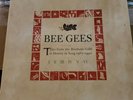
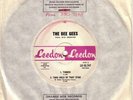
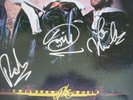
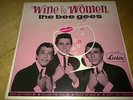
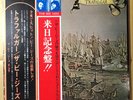
The Bee Gees How Can You Mend A Broken Heart 1971 Rare Test Pressing
$
500


Favourite Auctions
To save auctions to your favourites, please login
If you don't have an account, please register
Description
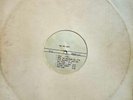
Ultra Rare Single Sided Test Pressing for The Bee Gees "How Can You Mend a Broken Heart" Pressed at Specialty Records Corporation in Olyphant, PA.
"How Can You Mend a Broken Heart" is a song released by the Bee Gees in 1971. It was written by Barry and Robin Gibb and was the first single on the group's 1971 album Trafalgar. It was their first US No. 1 single and also reached No. 1 in Cashbox magazine for two weeks.[2]
In the US Atco Records issued both mono and stereo versions of the song on each side as a promo single.[3] The B-side was a Maurice Gibb composition "Country Woman".
The song appears in the 2013 film American Hustle and on its soundtrack. It also provided the title to director Frank Marshall's 2020 documentary film The Bee Gees: How Can You Mend a Broken Heart.
Barry and Robin Gibb wrote the song in August 1970 with "Lonely Days" when the Gibb brothers had reconvened following a period of break-up and alienation. "Robin came to my place," says Barry, "and that afternoon we wrote 'How Can You Mend a Broken Heart' and that obviously was a link to us coming back together. We called Maurice, finished the song, went to the studio and once again, with only 'Broken Heart' as a basic structure, we went in to the studio with that and an idea for 'Lonely Days', and those two songs were recorded that night". They originally offered the song to Andy Williams, but ended up recording it themselves, although Williams did later cover the song on his album You've Got a Friend. Barry also explains, "We might imitate a certain group, later on, the group will pick up on the song and say that suits us." Maurice Gibb possibly had a hand in the writing of "How Can You Mend A Broken Heart" although the song is officially credited to Barry and Robin Gibb. The 2009 release Ultimate Bee Gees officially credited Maurice for the first time as co-writer of the song, for both the "Ultimate" CD and DVD, and it was credited to the moniker Barry, Robin and Maurice Gibb.
The song was recorded on 28 January 1971 in London, the same day as "We Lost the Road", "When Do I", "If I Were the Sky", "Bring Out the Thoughts in Me" and "Ellan Vannin".[6] The group's later song "My World" followed along the same musical ideas on this song.[5] Robin Gibb's remarked on the song, "The whole thing took about an hour to complete. The song reached the number one spot, to our great satisfaction."[1]
Reception The song was sung live for the first time in 1971, in a performance that was notable as drummer Geoff Bridgford's first appearance with the band.[7] Although failing to chart on the UK Singles Chart, the song became the Bee Gees' first US number one on the Billboard Hot 100 and also reached number four on the Billboard Adult Contemporary chart. Billboard ranked it as the No. 5 song for 1971. In Spain, it was released under the title "Cómo Puedes Arreglar Un Corazón Destrozado".[8]
Following the release of "How Can You Mend a Broken Heart", the song was nominated for a Grammy Award for Best Pop Vocal Performance by a Duo Or Group along with George Harrison's "My Sweet Lord" and others.[5] It was performed as part of a medley on The Midnight Special on 10 October 1975, in Japan on the Japanese TV special Love Sounds, and on the Mr. Natural tour in 1974. A live version recorded on 17–18 Nov 1989 at the National Tennis Centre, Melbourne, Australia was used for the benefit album Nobody's Child: Romanian Angel Appeal. In 1997-1999, the song was performed on the One Night Only tour as part of a medley. It was last performed by the Bee Gees in 2001.
Barry Gibb re-recorded the song as a duet with Sheryl Crow for his 2020 solo album Greenfields: The Gibb Brothers Songbook, Vol. 1.
Personnel Barry Gibb – lead and harmony vocals, acoustic guitar Robin Gibb – lead and harmony vocals Maurice Gibb – harmony vocals, bass guitar, piano, acoustic guitar, organ Geoff Bridgford – drums Bill Shepherd – orchestral and strings arrangement
price rating