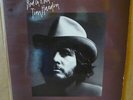
The Cheerful Insanity of GILES, GILES & FRIPP, LP, UK, 1970, NM / EX, 1ST STEREO
$
60


Favourite Auctions
To save auctions to your favourites, please login
If you don't have an account, please register
Description
Condition:
AMG Artist Biography by Bruce Eder
Giles, Giles & Fripp -- whose name always sounded more like an accounting firm than a rock group -- only existed for a little more than 15 months. They never got to play a single live performance under their own name, never charted a single anywhere in the world, and were so obscure in their own time and their own country that the one album that they recorded for English Decca Records' Deram label sold fewer than 1000 copies. But out of that trio grew the band that became King Crimson.
Drummer Michael Giles and his bassist brother Peter Giles were veterans of the rock scene in Bournemouth, having played in such bands as Johnny King & the Raiders, Dave Anthony & the Rebels, the Dowland Brothers, the Soundtracks, the Sands Combo, the Interns, and the longest lived of them, Trendsetters Ltd., between January of 1960 and May of 1967. By the spring of 1967, with lots of gigs (mostly backing other musicians, including visiting American acts such as the Drifters, Gene Vincent, and Napoleon XIV of "They're Coming to Take Me Away, Ha-Haaa" fame) behind them in Trendsetters Ltd., along with a handful of singles that went nowhere, the brothers decided to form their own band. In late August of 1967, they hooked up with Robert Fripp, an ex-member of groups such as the League of Gentlemen who was then playing guitar in a hotel orchestra. The resulting trio began rehearsing in earnest and, for a time, became a quartet with the addition of Doug Ward, an accordionist, with whom they got some regular work until Ward's injury in a road accident took him out of the lineup. Luckily, Giles, Giles & Fripp, as they named themselves, found some interest in their music at Decca Records, which was still one of the two major labels in England, and passed an audition to get signed to the company's progressive-oriented Deram Records imprint. The result was an album, The Cheerful Insanity of Giles, Giles & Fripp, cut during the winter and early spring of 1968 and a pair of singles. The album reflected the times and the members' respective tastes, a strange mixture of light jazz, psychedelia, droll humor, Goon Show/Monty Python-style comedy, and very offbeat balladry. It never sold, despite a surprisingly enthusiastic publicity push by Decca.
Meanwhile, the lineup of Giles, Giles & Fripp began changing, partly by accident. Peter Giles crossed paths with ex-Fairport Convention vocalist Julie Dyble, who was advertising for a band and working with Ian McDonald, a multi-instrumentalist who also wrote songs. For a time, Giles, Giles & Fripp and Dyble and McDonald worked together, recording a handful of tracks, and McDonald ended up staying after Dyble departed. Giles, Giles & Fripp now had a fourth member and soon a non-performing fifth member with the addition of McDonald's friend and one-time bandmate, lyricist Peter Sinfield. Their sound had also strengthened and evolved into something much more daring and challenging, following the addition of a Mellotron, a keyboard-activated music synthesizer, to their instrumental array. In late 1968, Peter Giles quit the group and decided to leave professional music behind, and Fripp brought in Greg Lake, an old friend who took over on bass and who would also serve as lead singer. By that time, "Giles, Giles & Fripp" was completely irrelevant as a name, as well as totally inaccurate, and in the ensuing months, the new quintet with a new sound selected the name King Crimson. Giles, Giles & Fripp were largely forgotten until King Crimson began developing a serious cult following in America, Europe, and Asia -- by 1974, The Cheerful Insanity of Giles, Giles and Fripp had been reissued, receiving far more attention than it ever did in 1968. The interest in King Crimson's music scarcely waned during the 1980s, and the first of several CD reissues (most containing bonus tracks) of the album followed in 1989. November of 2001 saw the release of The Brondesbury Tapes [1968], a collection of home recordings and outtakes by the band in its various incarnations.
Giles, Giles And Fripp ?– The Cheerful Insanity Of Giles, Giles And Fripp
Label: Deram ?– SPA 423 Format: Vinyl, LP, ReissueCountry: UK Released: 1970 Genre: Rock Style: Folk Rock, Psychedelic Rock, Classic Rock
TracklistHide Credits
A The Saga Of Rodney Toady Written By – Fripp A1 North Meadow Written By – P. Giles A2 Newly-weds Written By – P. Giles A3 One In A Million Written By – M. Giles A4 Call Tomorrow Written By – P. Giles A5 Digging My Lawn Written By – P. Giles A6 Little Children Written By – Fripp A7 The Crukster Written By – M. Giles A8 Thursday Morning Arranged By – Ivor RaymondeWritten By – M. Giles B Just George Written By – M. Giles B1 How Do They Know Written By – M. Giles B2 Elephant Song Written By – M. Giles B3 The Sun Is Shining Written By – M. Giles B4 Suite No. 1 Written By – Fripp B5 Erudite Eyes Written By – FrippCredits
- Backing Vocals – Breakaways, The
- Cello – A. Ford*, C. Tunnell*
- Engineer – Bill Price (tracks: A1, A2, A4 to A8, B1 to B5), Martin Smith (7) (tracks: A3)
- Keyboards – Mike Hill (3), Nicky Hopkins
- Performer – Michael Giles, Peter Giles, Robert Fripp
- Photography [Cover] – Gered Mankowitz
- Producer – Wayne Bickerton
- Trombone – C. Hardie*, T. Barker*
- Viola – J. Coulling*, R. Patten*
- Violin – B. Pecker*, G. Salisbury, G. Fields*, K. Isaacs*, R. Cohen*, W. Reid*
Notes
This release is the original and official reissue made by the Deram in 1970 on stereo.See our other EBAY auctions by using search by seller and using “recordcollectormichigan”
Ferndale, Michigan 48220
Phone: 248-548-9888
Hours: Monday thru Saturday NOON to 6:00 PM (Eastern)
GOLDMINE GRADING
MINT ---- It should appear to be perfect. No scuffs or scratches, blotches or stains, labels or writing, tears or splits. Mint means perfect.
NEAR MINT ---- Otherwise mint but has one or two tiny inconsequential flaws that do not affect play. Covers should be close to perfect with minor signs of wear or age just becoming evident: slight ring-wear, minor denting to a corner, or writing on the cover should all be noted properly.
VERY GOOD PLUS ---- The record has been handled and played infrequently or very carefully. Not too far from perfect. On a disc, there may be light paper scuffs from sliding in and out of a sleeve or the vinyl or some of the original luster may be lost. A slight scratch that did not affect play would be acceptably VG+ for most collectors.
VERY GOOD ---- Record displays visible signs of handling and playing, such as loss of vinyl luster, light surface scratches, groove wear and spindle trails. Some audible surface noise, but should not overwhelm the musical experience. Usually a cover is VG when one or two of these problems are evident: ring wear, seam splits, bent corners, loss of gloss, stains, etc.
GOOD ---- Well played with little luster and significant surface noise. Despite defects, record should still play all the way through without skipping. Several cover flaws will be apparent, but should not obliterate the artwork.
POOR ---- Any record or cover that does not qualify for the above "Good" grading should be seen as Poor. Several cover flaws.
price rating