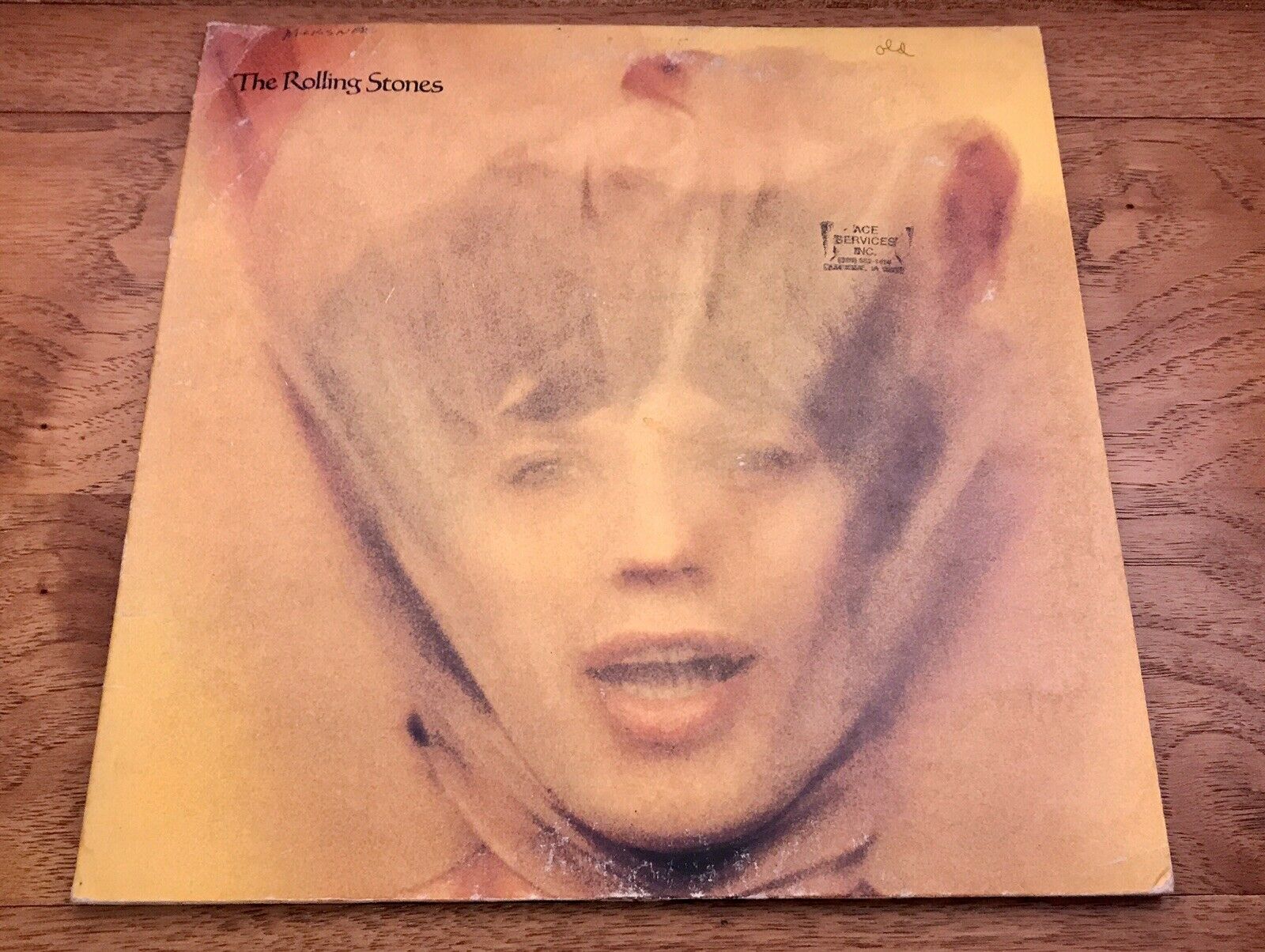
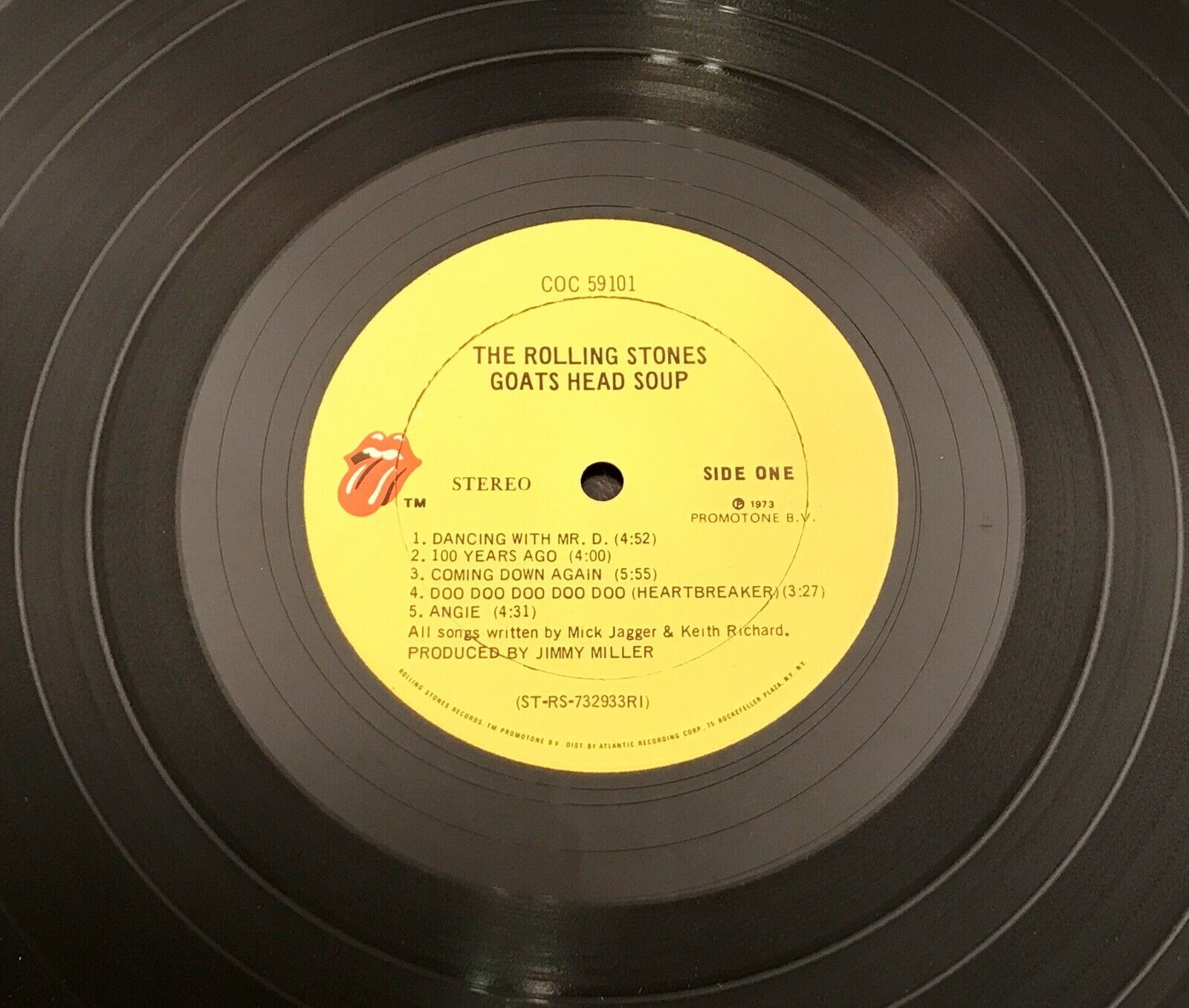
The Rolling Stones ?? Goats Head Soup ? 1973 Promotone Records Vinyl LP +Inserts
$
35


Favourite Auctions
To save auctions to your favourites, please login
If you don't have an account, please register
Description
Welcome to Classic Cadillac Records! My goal is to provide each and every customer with the best possible buying experience, no matter the size of the order. Unlike most sellers, I advertise all my items clearly and in as much detail as possible, without shouting at you in all caps. I take multiple high quality pictures and never use stock photos, so you know exactly what you're buying. I take great pride in my work and go the extra mile, which can clearly be seen in my listings compared to other sellers that put minimal effort into theirs. I visually grade all my records as accurately as possible and will never grade anything above Near Mint unless it's still sealed. Please note that a visual grade can differ from a play grade, and am happy to spot check a record upon request. All orders are shipped within 1 business day (usually sooner) and packed with extra care to ensure fast, safe arrival. I combine shipping on multiple orders to save you money and gladly ship worldwide. Please look closely at all pictures, read all relevant details and ask any questions you may have before buying. I offer a full 30-day return policy on everything I sell, so buy with confidence! And most importantly, thanks for looking!
Goats Head Soup Studio album by The Rolling Stones Released 31 August 1973 Recorded 25 November 1972 – 5 February 1973 Studio
- Dynamic Sound (Kingston, Jamaica)
- Village Recorders (Los Angeles)
- Island (London)
- Rock and roll
- blues rock
- funk rock
(1972) Goats Head Soup
(1973) It's Only Rock 'n Roll
(1974) Singles from Goats Head Soup
- "Angie" / "Silver Train"
Released: 20 August 1973 - "Doo Doo Doo Doo Doo (Heartbreaker)" / "Dancing with Mr. D"
Released: December 1973
Goats Head Soup is the eleventh British and thirteenth American studio album by the English rock band the Rolling Stones. It was released in August 1973 by Rolling Stones Records. Like its predecessor Exile on Main St., the band composed and recorded much of it outside of the United Kingdom due to their status as tax exiles. Goats Head Soup was recorded in Jamaica, the United States and the United Kingdom. The album contains 10 tracks, including the lead single "Angie" which went to number one as a single in the US and the top five in the UK.
The album was the last to be produced by Jimmy Miller who was a key architect of the Rolling Stones sound during their most acclaimed period which began with 1968's Beggars Banquet. Bass guitarist Bill Wyman only appears on three of the ten tracks on the album, but the rest of the Rolling Stones, lead vocalist Mick Jagger, lead guitarist Keith Richards, guitarist Mick Taylor and drummer Charlie Watts, play on every track, with the exception of "Winter", which does not feature Richards. In addition to the main band, the standard cadre of Rolling Stones collaborators also play extensively on the album, including saxophonist Bobby Keys, organist Billy Preston, and pianists Nicky Hopkins and Ian Stewart.
Goats Head Soup achieved number one chart positions in the UK, US, and several other world markets. However, it received mixed reviews from critics and audiences and is generally seen as the beginning of the band's decline after a string of critically acclaimed albums. The band supported the album on a tour of Europe following its release. The album was remastered and released in 1994 and again in 2009 by Virgin Records and Universal Music respectively. It was remixed by Giles Martin for a 2020 reissue, including a deluxe edition with bonus tracks and unreleased outtakes. The re-issue returned the album to number one in the UK charts.
Recording
In November 1972 the band relocated to Kingston, Jamaica's Dynamic Sound Studios. Keith Richards said in 2002: "Jamaica was one of the few places that would let us all in! By that time about the only country that I was allowed to exist in was Switzerland, which was damn boring for me, at least for the first year, because I didn't like to ski... Nine countries kicked me out, thank you very much, so it was a matter of how to keep this thing together..."
Of the recording process, Marshall Chess, the president of Rolling Stones Records at the time, said in 2002, "We used to book studios for a month, 24 hours a day, so that the band could keep the same set-up and develop their songs in their free-form way, starting with a few lyrics and rhythms, jamming and rehearsing while we fixed the sound. It amazed me, as an old-time record guy, that the Stones might not have played together for six or eight months, but within an hour of jamming, the synergy that is their strength would come into play and they would lock it together as one..."
Jagger said of their approach to recording at the time, "Songwriting and playing is a mood. Like the last album we did (Exile on Main St.) was basically recorded in short concentrated periods. Two weeks here, two weeks there – then another two weeks. And, similarly, all the writing was concentrated so that you get the feel of one particular period of time. Three months later it's all very different and we won't be writing the same kind of material as Goats Head Soup."
On the sessions and influence of the island, Richards said, "The album itself didn't take that long, but we recorded an awful lot of tracks. There were not only Jamaicans involved, but also percussion players who came from places like Guyana, a travelling pool of guys who worked in the studios. It was interesting to be playing in this totally different atmosphere. Mikey Chung, the engineer at Dynamic, for example, was a Chinese man — you realise how much Jamaica is a multi-ethnic environment."
The first track recorded at Dynamic was "Winter", which Mick Taylor said started with "just Mick (Jagger) strumming on a guitar in the studio, and everything falling together from there.". The main theme of the lyrics of the song go back to a 1968 outtake 'Blood Red Wine'. The song is also the only song on the album that does not feature Richards as a performer, with the electric rhythm guitar being played by Jagger. Mick Taylor would later record longer versions of Winter with Carla Olson for her The Ring Of Truth album and Silver Train for their Too Hot For Snakes album.
The album's lead single, "Angie", was an unpopular choice as lead single with Atlantic Records which, according to Chess, "wanted another 'Brown Sugar' rather than a ballad." Although the song was rumoured to be about David Bowie's first wife Angela, both Jagger and Richards have consistently denied this. In 1993, Richards, in the liner notes to the compilation album Jump Back: The Best of The Rolling Stones, said that the title was inspired by his baby daughter, Dandelion Angela. However, in his 2010 memoir Life, Richards denied this, saying that he had chosen the name for the song before he knew the sex of his expected baby: "I just went, 'Angie, Angie.' It was not about any particular person; it was a name, like 'ohhh, Diana.' I didn't know Angela was going to be called Angela when I wrote 'Angie'. In those days you didn't know what sex the thing was going to be until it popped out. In fact, Anita named her Dandelion. She was only given the added name Angela because she was born in a Catholic hospital where they insisted that a 'proper' name be added." According to NME, the lyrics written by Jagger were inspired by Jagger's breakup with Marianne Faithfull.
This was the last Rolling Stones album produced by Jimmy Miller, who had worked with the band since 1968's Beggars Banquet sessions. Unfortunately, Miller had developed a debilitating drug habit during the course of his years spent with the Stones.
Aside from the official band members, other musicians appearing on Goats Head Soup include keyboard players Billy Preston, Nicky Hopkins, and Ian Stewart.
Recording was completed in January 1973 in Los Angeles and May 1973 at London's Island Studios. The song "Silver Train" was a leftover from 1970s recordings at Olympic Sound. Goats Head Soup was also the band's first album without any cover songs since Their Satanic Majesties Request in 1967.
The sessions for Goats Head Soup were abundant with outtakes. Two of these — "Tops" and "Waiting on a Friend" — would surface on Tattoo You in 1981, and feature Mick Taylor on guitar; "Through the Lonely Nights" became the B-side to the "It's Only Rock 'n Roll (But I Like It)" single and was released on CD for the first time on the 2005 compilation Rarities 1971–2003. It is a soft rock ballad that features Richards on wah wah/Leslie speaker filtered guitar with Mick Taylor playing a brief solo. In addition, "Short and Curlies" was started at the Goats Head Soup sessions and ended up appearing on the It's Only Rock 'n' Roll LP.
Release and aftermath
At the time of release, Jagger said, "I really feel close to this album, and I really put all I had into it... I guess it comes across that I’m more into songs. It wasn’t as vague as [Exile on Main St.] which kind of went on so long that I didn’t like some of the things. There’s more thought to this one. It was recorded all over the place over about two or three months. The tracks are much more varied than the last one. I didn’t want it to be just a bunch of rock songs."
Preceded by "Angie" as the lead single, which sailed to number one in the United States and became a worldwide hit, Goats Head Soup was released in late August 1973 and also shot to the top of charts worldwide. The Rolling Stones' autumn 1973 European Tour followed soon after, in which four slots in the set list were given to the new material: "Doo Doo Doo Doo Doo (Heartbreaker)", "Star Star", "Dancing with Mr D", and "Angie" – although apart from a few earlier performances of "Silver Train" and "100 Years Ago", nothing else from Goats Head Soup was played live until the 2002–2003 Live Licks tour, when the band dusted off "Star Star". "Silver Train" and "Dancing with Mr D" were broken out for the 2014 and 2017 tours. (The popular bootleg recording Brussels Affair would result from this tour.)
Album art
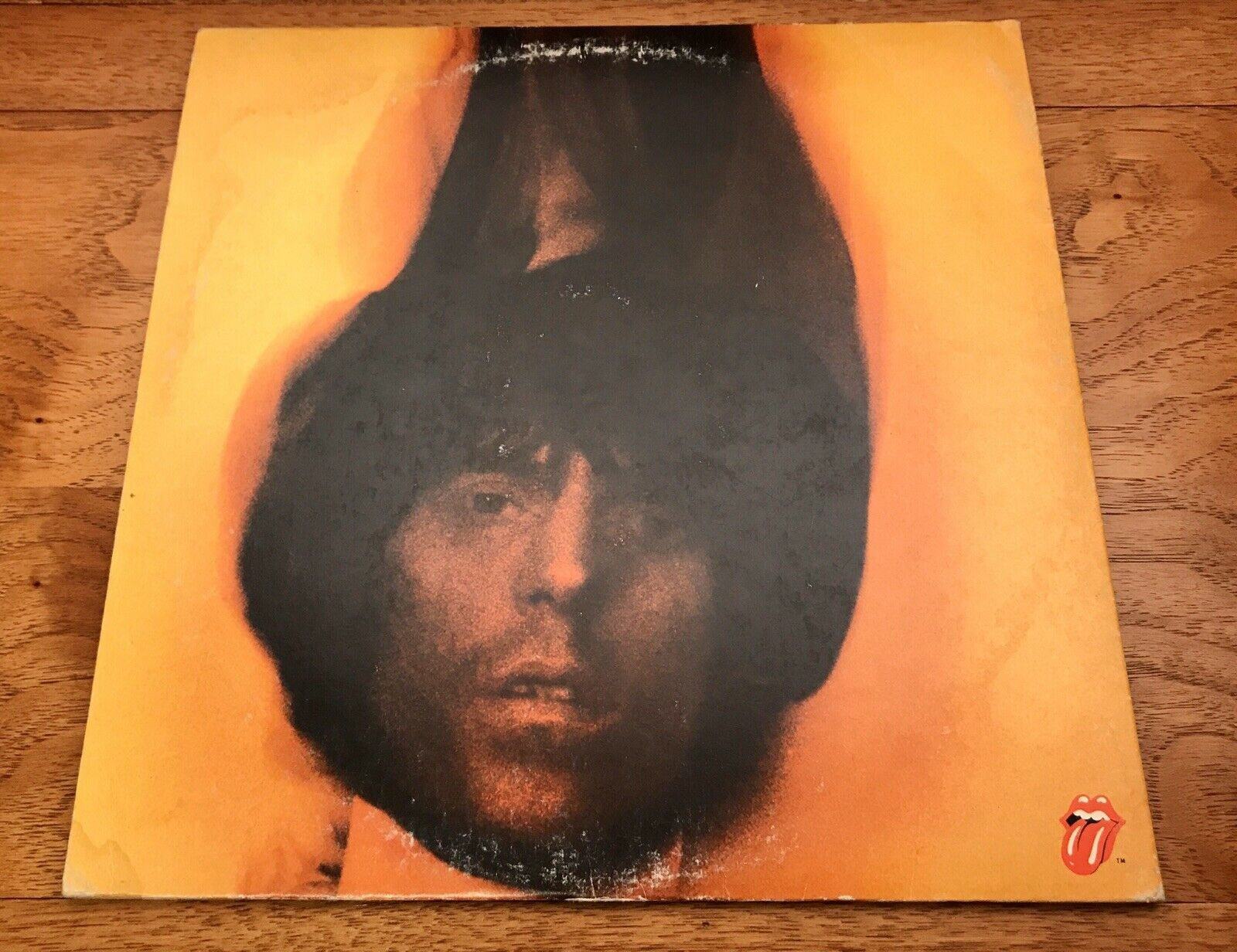
The album cover was designed by Ray Lawrence and photographed by David Bailey, a friend of Jagger's who had worked with the Rolling Stones since 1964. The portrait of Jagger on the front cover was approximately life size in the original 12-inch LP format. Jagger was reluctant to be shot enveloped by a pink chiffon veil, which Bailey said was meant to look like "Katharine Hepburn in The African Queen". The album's gatefold has all the band members wrapped around a similar fabric.
Critical reception
Professional ratings Review scores Source Rating AllMusic Christgau's Record Guide B The Great Rock Discography 6/10 MusicHound 2/5 NME 6/10 Q The Rolling Stone Album Guide Tom Hull B Virgin Encyclopedia of Popular MusicCritical reaction to the album was varied at the time. Bud Scoppa called the album "one of the year's richest musical experiences" in Rolling Stone, while Lester Bangs derided the effort in Creem, saying, "There is a sadness about the Stones now, because they amount to such an enormous 'So what?' The sadness comes when you measure not just one album, but the whole sense they're putting across now against what they once meant...". Billboard called it "another fine album characterized as always by a series of fine, hard rockcuts from Mick Jagger and Keith Richard and superb guitar work from Mick Taylor." Billboard particularly praised the three ballads, "Winter", "Can You Hear the Music" and "Angie".
Goats Head Soup is now generally considered to be the Stones' first step away from their "golden age" of 1968–1972 with Stephen Thomas Erlewine of AllMusic saying, "Sliding out of perhaps the greatest winning streak in rock history, the Stones slipped into decadence and rock star excess with Goats Head Soup... This is where the Stones' image began to eclipse their accomplishments, as Mick ascended to jet-setting celebrity and Keith slowly sunk deeper into addiction, and it's possible hearing them moving in both directions on Goats Head Soup, at times in the same song". Reviewing the album's 2009 reissue, Michael Hann of The Guardian gave the album a very positive review, stating that those who dismiss it in comparison to its predecessors are "missing a treat". Hann writes that the album foreshadowed the band's sound of the late 70s and 80s and the ballads "Angie" and "Coming Down Again" are some of the best songs in their entire catalogue.
The album's 2020 reissue attracted numerous reviews, with many agreeing that the album marked the beginning of the group's decline after a string of very well-received albums. Michael Gallucci of Ultimate Classic Rock felt that although the Stones didn't "bottom out" until 1976's Black and Blue, Goats Head Soup is where their decline began. Although he found that the new 2020 mix does enhance the album more than its original mix, it is "still sludgy, it still drags at points and it still occasionally comes off as lazy coasting by a band that felt it didn't have to try anymore now that it was on top of the world." David Browne of Rolling Stone writes that the original album failed to live up to its predecessor and "made it appear as if the Stones had gone overnight from the coolest, possibly greatest, rock and roll band to something less than that—just another big, commercial rock act." He felt that even throughout the new mixes, the band sounds "burnt out, regretful, melancholic, [and] even at times vulnerable". He ultimately concluded that with the reissue, Goats Head Soup "now feels historic". Jem Aswad of Variety similarly felt that the original album ended their "near-peerless streak" that began with Beggers Banquet. Although Aswad considers Goats Head Soup a "good album", she felt the reissue's outtakes were "forgettable" and the unreleased live album was worth it alone. Conversely, Alan Light of Esquire called Goats Head Soup a bad album, agreeing that it ended "one of the greatest runs in rock & roll history". He cites the ballads as its highlights and concluded "it marked the moment the band stopped simply being the Rolling Stones and started playing the part of "the Stones"." Michael Elliott of PopMatters agreed, writing that the album ended "the greatest four-album run in rock 'n' roll". He states that the album is where "their ascension" began to wane and "the idea of the Rolling Stones became just as important as the band itself. Nevertheless, Elliott went on to praise many of the tracks, particularly "Angie" and "Doo Doo Doo Doo Doo (Heartbreaker)". He also praised the unreleased tracks, writing that "Criss Cross" would have "easily" been a highlight if it was on the original album.
Track listing
1973 original release
All tracks are written by Mick Jagger and Keith Richards.
Side one No. Title Length 1. "Dancing with Mr. D" 4:53 2. "100 Years Ago" 3:59 3. "Coming Down Again" 5:54 4. "Doo Doo Doo Doo Doo (Heartbreaker)" 3:26 5. "Angie" 4:33 Side two No. Title Length 1. "Silver Train" 4:27 2. "Hide Your Love" 4:12 3. "Winter" 5:30 4. "Can You Hear the Music" 5:31 5. "Star Star" 4:25 Total length: 46:56price rating