The Time Has Come - Anne Briggs Very Rare & Collectable
£
103
$
136


Favourite Auctions
To save auctions to your favourites, please login
If you don't have an account, please register
Description
Artist: Anne Briggs
Title: The Time Has Come
Label & Number: CBS 64612
Year of Release: 1971
Sound Recording: Stereo
Tracks Side 1: 1) Sandman's Song (Anne Briggs) Tracks Side 2: 1) Clea Caught A Rabbit (Stan Ellison)
2) Highlodge Hare (Anne Briggs) 2) Tangled Man (Anne Briggs)
3) Fire and Wine (Steve Ashley) 3) Wishing Well (Anne Briggs/Bert Jansch)
4) Step Right Up (Henry McCulloch) 4) Standing On The Shore (Traditional)
5) Ride, Ride (Anne Briggs) 5) Tidewave (Anne Briggs)
6) The Time Has Come (Anne Briggs) 6) Everytime (Anne Briggs)
7) Fine Horsman (Lal Knight)
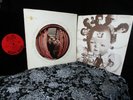
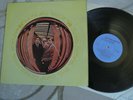
This vinyl record is in excellent condition throughout. The disc is clean on both sides with no scuffs. The sleeve has no creases just a little wear along the edges, worst on the spine at the top -see picture (which makes it look alot worse than it is in fact). There are no scribbles or marks on either the sleeve or original CBS inner sleeve.
This is a very clean example of a very rare and very collectable item
Album review - courtesy of allmusic.com
Anne Briggs' second album appeared in 1971, but in sharp contrast to her debut, where she'd sung traditional music with scarcely any accompaniment, this was virtually all contemporary material, most of it self-penned, with Briggs playing guitar and bouzouki
Included was the title track, which had already been covered by former boyfriend Bert Jansch, and showed Briggs to be a writer of some power (although, to be fair, Jansch's slower, more reflective version remains the better), and it's also the standout among Briggs' material, followed by "Wishing Well," where Jansch gets the co-writing credit. "Ride Ride" is a pastiche railroad song (obviously British railways don't have quite the same appeal), and the opening "Sandman's Song" harks back to innocent childhood, albeit a rather strange one.
The choice of covers is far from obvious, but very tasteful. Steve Ashley's "Fire and Wine" could almost be a traditional piece, while the perkiness of Henry McCulloch's "Step Right Up" works well with Briggs' artless voice.
Very much influenced by the folk revival which brought her into the public eye, her voice is untutored and unself-conscious, appealing in an offhand way. But it definitely quavers a little, even on her own work, and she seems most comfortable with the record's only traditional piece, "Standing on the Shore." To give credit, Briggs throws in a couple of bouzouki instrumentals, "Highlodge Hare" and "Clea Caught a Rabbit," that show some command of the instrument.
The whole here might be less than the sum of its parts — but the parts, in some intangible way, remain very appealing.
Artist Biography - courtesy of allmusic.com
In the annals of pop and folk music, there are few sagas stranger than that of Anne Briggs. An awesomely talented singer of traditional English folk music, possessing of as pure and breathtakingly beautiful a voice as one could hope to have, she was the single most important influence on a group of female British folksingers that includes Sandy Denny, Maddy Prior, June Tabor, and Linda Thompson. Even Norma Waterson, herself a hugely important figure in the British folk revival of the mid-'60s, admits to being influenced by Briggs' singing, and notes that Anne Briggs singlehandedly changed the way that English women folksingers sang. What makes this story so odd is that Briggs' entire recorded output consists of about 30 songs. She stopped singing at the age of 27, supposedly because she hated the sound of her recorded voice. As folk music became electrified and increasingly popular, and bands such as Fairport Convention and Pentangle were reinventing the British folk tradition, and more and more women (Sandy Denny, et al.) were singing in a style started by Briggs, her legend flourished, yet she refused to sing.
Briggs was born in Nottinghamshire in 1944 and began singing folk music while still in her teens. Within a couple of years she was a regular at local folk clubs, getting her big break as a result of the Centre 42 tour of 1962. The Centre 42 tour was an attempt by musicians and other artists (backed and supported by trade unions) to deliver politically leftist cultural activities to areas outside of London. Part of Centre 42's appeal was that in each city, local talent would audition for a slot as a support act. It was here that Briggs got her shot and was discovered by British folk legend Ewan MacColl. She was so good that MacColl convinced her to leave school and join the rest of the tour. While touring with Centre 42, Briggs began working with MacColl's friend and co-architect of the British folk music revival, Bert Lloyd. Briggs considers him the most important influence on her work, and her debut EP, The Hazards of Love, had Lloyd's fingerprints all over it. But he was not a mere Svengali trying to take advantage of a teenage folksinger; he wanted to give her the direction (as well as the songs) she needed to become a huge talent. Lloyd was smart enough to realize that this was an extraordinary, once-in-a-lifetime type of singer, and he treated her with kid gloves, getting her to relax (Briggs was notorious for her nervousness) and helping her record some wonderful music. But Briggs had a problem with recording her singing — she hated doing it and hated the way she sounded, so much so that she retired from music, three years shy of 30, already touted as the greatest legend in English folk music. Briggs still lives semi-reclusively in England and is still not recording or singing in public, but her influence remains powerful. As guitarist Martin Carthy so aptly put it: "She didn't mess about. There were no histrionics. There was no posing. There was no self-conscious style. She sang fluidly, easily, with tremendous passion."
This disc will be dispatched with full insurance, which is included in the P & P charge
On 12-Dec-07 at 14:27:51 GMT, seller added the following information:
***** URGENT AMENDMENT ********* PLEASE READ *******
On rechecking this record there is a flaw on on side 1 track 1 and side 2 track 3 resulting in a few clicks in both cases. Bearing this is in mind I would now rate this record as good but not excellent. Should you not be satisfied with this purchase I am now offering a no quibble refund.
price rating