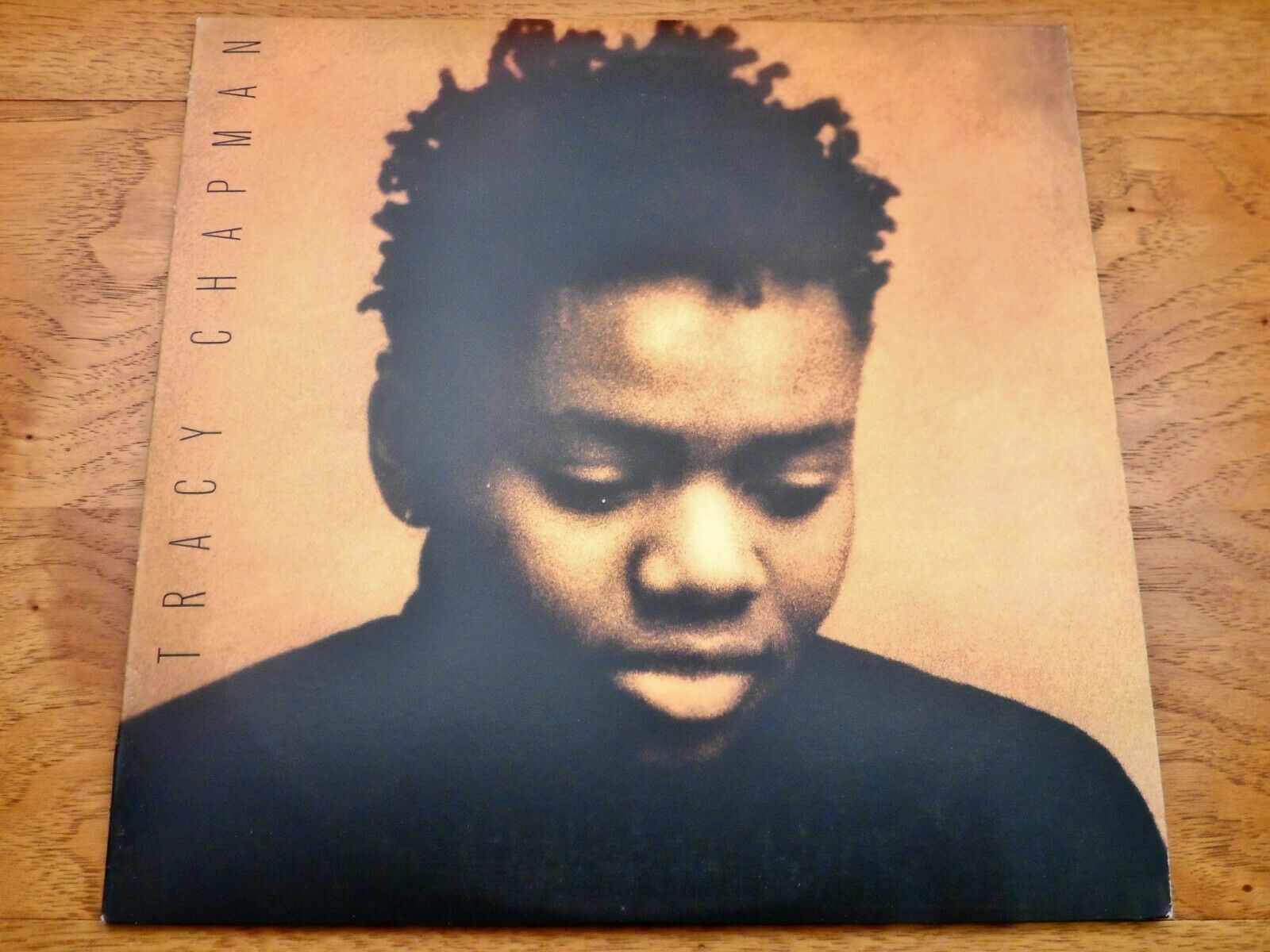
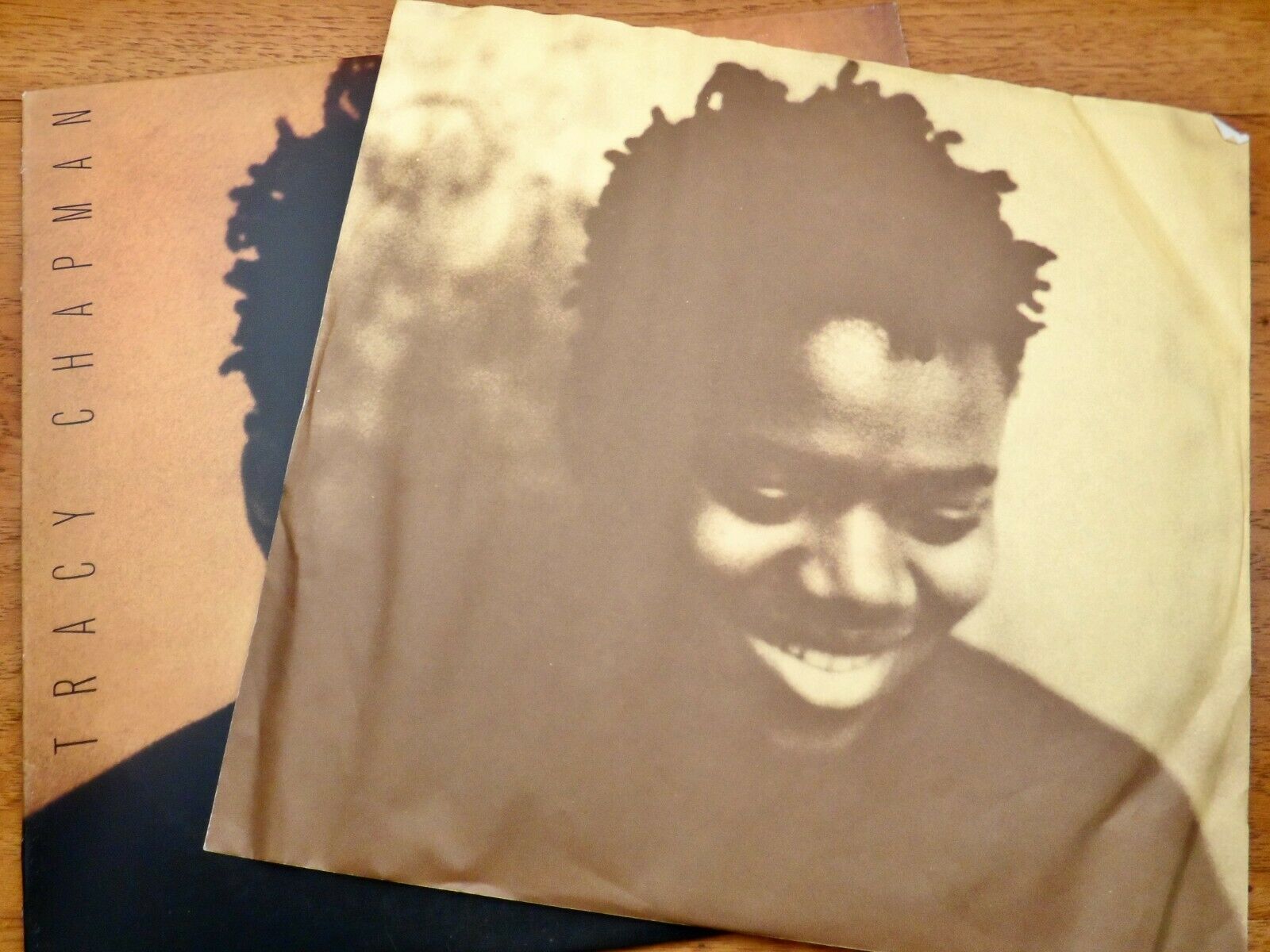
? Tracy Chapman S/T Debut ? Rare 1988 Elektra Records DMM Vinyl LP w/Insert ?
$
75


Favourite Auctions
To save auctions to your favourites, please login
If you don't have an account, please register
Description
Welcome to Classic Cadillac Records! My goal is to provide each and every customer with the best possible buying experience, no matter the size of the order. Unlike most sellers, I advertise all my items clearly and in as much detail as possible, without shouting at you in all caps. I take multiple high quality pictures and never use stock photos, so you know exactly what you're buying. I take great pride in my work and go the extra mile, which can clearly be seen in my listings compared to other sellers that put minimal effort into theirs. I visually grade all my records as accurately as possible and will never grade anything above Near Mint unless it's still sealed. Please note that a visual grade can differ from a play grade, and am happy to spot check a record upon request. All orders are shipped within 1 business day (usually sooner) and packed with extra care to ensure fast, safe arrival. I combine shipping on multiple orders to save you money and gladly ship worldwide. Please look closely at all pictures, read all relevant details and ask any questions you may have before buying. I offer a full 30-day return policy on everything I sell, so buy with confidence! And most importantly, thanks for looking!
Tracy Chapman Studio album by Tracy Chapman Released April 5, 1988 Recorded 1987–88 Studio Powertrax, Hollywood, California Genre Contemporary folk Length 36:11 Label Elektra Producer David Kershenbaum Tracy Chapman chronology Tracy Chapman
(1988) Crossroads
(1989) Singles from Tracy Chapman
- "Fast Car"
Released: April 1988 - "Talkin' 'bout a Revolution"
Released: July 1988 - "Baby Can I Hold You"
Released: October 1988
Tracy Chapman is the self-titled debut album by singer-songwriter Tracy Chapman, released on April 5, 1988, by Elektra Records. The album was recorded at the Powertrax studio in Hollywood, California. In 1987, Chapman was discovered by fellow Tufts University student Brian Koppelman. He offered to show her work to his father, who owned a successful publishing company; however, she did not consider the offer to be serious. After multiple performances, however, Koppelman found a demo tape of her singing her single "Talkin' 'bout a Revolution", which he promoted to radio stations, and she was eventually signed to Elektra Records.
In early attempts to produce the first album, many producers turned down Chapman as they did not favor her musical direction. David Kershenbaum, however, decided to produce it as he wanted to record an acoustic music album. It was recorded in Hollywood, California in eight weeks. Most of the writing is based on political and social causes.
Tracy Chapman gained critical acclaim from a wide majority of music critics, praising the simplicity, Chapman's vocal ability and her political and social lyrical content. The album received commercial success in most of the countries it was released, making it to the top of the charts in many countries, including Austria, New Zealand, Switzerland, Denmark, and the United Kingdom. It peaked at No. 1 on the US Billboard 200 and was certified six-times platinum by the Recording Industry Association of America (RIAA), with sales exceeding over six million copies in the United States alone.
Three singles were released from the album, with the most commercially successful single being "Fast Car". The song was performed at the Nelson Mandela 70th Birthday Tribute. It rose to the top ten on the US Billboard Hot 100 and also did well in Australia, New Zealand, Ireland, the United Kingdom, and other European countries. Tracy Chapman is one of the best-selling albums of all time.
Background
In 1987, Chapman was discovered by fellow Tufts University student Brian Koppelman. In an interview he said "I was helping organize a boycott protest against apartheid at school, and [someone] told me there was this great protest singer I should get to play at the rally." He went to see Chapman perform at a coffeehouse called Cappuccino. He said "Tracy walked onstage, and it was like an epiphany. Her presence, her voice, her songs, her sincerity—it all came across." After this, Koppelman told her that his father was at the time a co-owner of SBK Publishing and could help her make a record. She did not consider the offer seriously. Koppelman, however, was very interested in Chapman, so he attended most of her shows. She finally agreed to talk to him, but did not record any demos for him. He later discovered that she had recorded demos at the Tufts radio station WMFO for copyright purposes. Her demo of the song "Talkin' 'bout a Revolution" was taken to radio stations and, after the success, he copied it and took it to his father. According to the interview, "He immediately got the picture and flew up to see her." Her demo led her to a signing with Elektra Records. She said "I have to say that I never thought I would get a contract with a major record label [...] All the time since I was a kid listening to records and the radio, I didn't think there was any indication that record people would find the kind of music that I did marketable. Especially when I was singing songs like 'Talkin' 'bout a Revolution' during the Seventies [...] I didn't see a place for me there."
David Kershenbaum said that the album was "made for the right reasons". "There was a set of ideas that we wanted to communicate, and we felt if we were truthful and loyal to those ideas, then people would pick up on the emotion and the lyrical content that was there."
Recording
Chapman started writing songs when she was immediately signed to Elektra Records. Koppelman started finding producers for the album with the demo tape of her single "Talkin' 'bout a Revolution". However, she was turned down due to the popularity of dance-pop and synthpop at the time. They then found David Kershenbaum, who recalled later: "I'd been looking for something acoustic to do for some time . . . There was a sense in the industry of a slight boredom with everything out there and that people might be willing to listen again to lyrics and to someone who made statements."
Chapman's greatest concern during her meetings with Kershenbaum was that the integrity of her songs remain intact, because she wanted to record "real simple". Kershenbaum said, "I wanted to make sure that she was in front, vocally and thematically, and that everything was built around her." Every song that was featured on the result of the studio album was featured on her demo tape, except for "Fast Car", which resulted as one of the last songs recorded on the album. Kershenbaum recalled that the first time she sang and performed it for him, he "loved it the minute I [he] heard it."
The album was, in total, recorded in eight weeks at Powertrax, Kershenbaum's Hollywood studio. Interviewed in 2002 by The Guardian, Kershenbaum stated that a lot of the public wanted "what she had" and said, "And they weren't getting it. She got there at the right moment with stuff that was good." Chapman was also interviewed and talked about the background of the album. She said, "The first record [Tracy Chapman] is seen as being more social commentary . . . more political. But I think that's just all about perspective."
In an interview with The Guardian in 1996, Chapman said: "My first record was almost not my first record." The proposed producer for the studio album was killed in a car accident and the record company called in someone far less experienced to take over.
Critical reception
Professional ratings Review scores Source Rating AllMusic Encyclopedia of Popular Music Orlando Sentinel Pitchfork 9.4/10 Rolling Stone The Rolling Stone Album Guide The Village Voice B+Tracy Chapman received acclaim from music critics. According to Rolling Stone, Chapman "caught everyone's ear in the hair-metal late Eighties" with the album. Stephen Thomas Erlewine from AllMusic wrote, "Arriving with little fanfare in the spring of 1988, Tracy Chapman's eponymous debut album became one of the key records of the Bush era, providing a touchstone for the entire PC movement while reviving the singer-songwriter tradition." According to Erlewine, "the juxtaposition of contemporary themes and classic production precisely is what makes the album distinctive – it brings the traditions into the present." He highlighted the album as her best album of her whole discography. Robert Christgau was less enthusiastic in his review for The Village Voice. He found "Fast Car" and "Mountains o' Things" very perceptive and Chapman an innately gifted singer but was disappointed by the presence of "begged questions" and "naive left-folkie truisms" such as "Talkin' 'bout a Revolution" and "Why": "She's too good for such condescension ... Get real, girl."
Commercial response
Just two weeks after its release, the album sold one million copies worldwide, becoming a big commercial success.[3] In total, it sold over 20 million copies worldwide and is one of the first albums by a female artist to have more than 10 million copies sold worldwide.
Track listing
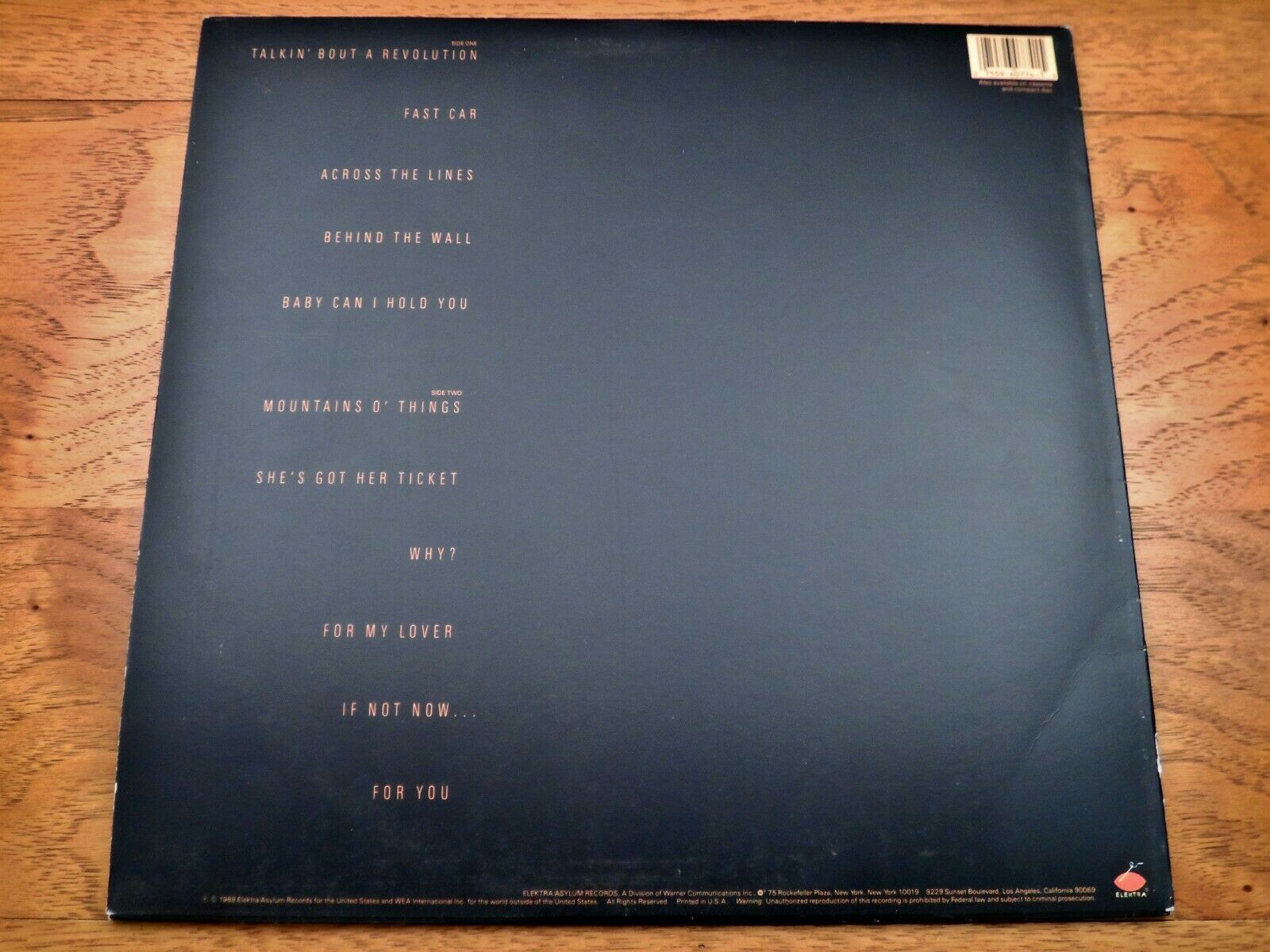
All songs written by Tracy Chapman.
- "Talkin' 'bout a Revolution" – 2:40
- "Fast Car" – 4:57
- "Across the Lines" – 3:25
- "Behind the Wall" – 1:50
- "Baby Can I Hold You" – 3:14
- "Mountains o' Things" – 4:39
- "She's Got Her Ticket" – 3:57
- "Why?" – 2:06
- "For My Lover" – 3:12
- "If Not Now…" – 3:01
- "For You" – 3:10
price rating









![Megadeth - The System Has Failed [LP] LIMITED ORANGE 180 Gram Audiophile Vinyl](https://www.popsike.mobi/php/thumbnail.php?url=https://www.popsike.pics/pix/20160729/371697183728.jpg)