U2-ZOOROPA WITH INNER & LYRIC INSERT 1993
£
24
$
31


Favourite Auctions
To save auctions to your favourites, please login
If you don't have an account, please register
Description
bbna4366 store
U2 - ZOOROPA
ORIGINAL PRESSING 1993
ISLAND RECORDS LABEL
CAT NUMBER U2 29 518047-1
PRINTED IN THE UK
MATRIX NUMBERS
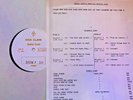
SIDE1 U2 29 A-3 NINA S-A-3
SIDE2 U2 29 B-2 NINA S-A-4
SIDE1
THE VINYL IS IN ABSOLUELY OUTSTANDING CONDITION WITH JUST SOME VERY LIGHT INNER SLEEVE WITHDRAWAL MARKS WHICH ARE ONLY VISIBLE UNDER STRONG LIGHT THE VINYL REALLY DOES LOOK VIRTUALLY UNPLAYED NO SIGNS OF WARPING
SIDE2
THE VINYL IS IN ABSOLUELY OUTSTANDING CONDITION WITH JUST SOME VERY LIGHT INNER SLEEVE WITHDRAWAL MARKS WHICH ARE ONLY VISIBLE UNDER STRONG LIGHT THE VINYL REALLY DOES LOOK VIRTUALLY UNPLAYED NO SIGNS OF WARPING
THE LABELS ARE IN ABSOLUELY OUTSTANDING CONDITION NICE VIBRANT COLOURS
THE COVER IS IN NR/MINT CONDITION CLEAR SPINE TEXT NO WRITING, NO RIPS NO SPLIT SEAMS VERY LIGHT WORN EDGES ONLY FROM STORAGE NO STICKER MARKS
THE ORIGINAL INNER SLEEVE MINT CONDITION NO RIPS OR SPLIT SEAMS
THE INNER LYRICS SLEEVE IS IN NR/MINT CONDITION
Zooropa (pronounced is the eighth studio album by the Irish rock band U2. Produced by Flood, Brian Eno, and The Edge, it was released on 5 July 1993 on Island Records. Inspired by the band's experiences on the Zoo TV Tour, Zooropa expanded on many of the tour's themes of technology and media oversaturation. The record continued the group's experimentation with alternative rock, electronic dance music, and electronic sound effects that began with their previous album, Achtung Baby, in 1991.
U2 began writing and recording for Zooropa in Dublin in February 1993, during a six-month break between legs of the Zoo TV Tour. The record was originally intended as an EP to promote the "Zooropa" leg of the tour that was to begin in May 1993, but during the sessions, the group decided to extend the record to a full-length LP Pressed for time, U2 wrote and recorded at a rapid pace, with songs originating from many sources. The album was not completed in time for the tour's resumption, forcing the band to travel between Dublin and their tour destinations in May to complete mixing and recording.
Zooropa, much like Achtung Baby, was critically and commercially successful, peaking at number one in several countries, despite none of its three singles—"Numb", "Lemon", and "Stay (Faraway, So Close!)"—being clear hits. In 1994, Zooropa won a Grammy Award for Best Alternative Music Album.
U2 regained critical favour with their commercially successful 1991 album, Achtung Baby, and the supporting Zoo TV Tour in 1992. The record was a musical reinvention for the group, incorporating influences from alternative rock, industrial, and electronic dance music into their sound. The tour was an elaborately-staged multimedia event that satirised television and the viewing public's over-stimulation by attempting to instill "sensory overload" in its audience. The band finished 1992 with one of their most successful years, selling 10 million copies of Achtung Baby and 2.9 million concert tickets, and grossing US$67 million in their 70-plus North American shows—easily the highest amount for any touring artist that year.
The group concluded the American "Outside Broadcast" leg of the tour on 25 November 1992, and they were left with a six-month break before the tour resumed with the "Zooropa" leg in Europe in May 1993. Rather than use the time to rest, lead vocalist Bono and guitarist The Edge were keen to record new material. Following a hectic year of touring, the two did not want to downshift their emotional state and settle back into domestic life. Bono said, "We thought we could live a normal life and then go back on the road in May 1993. But it turns out that your whole way of thinking, your whole body has been geared toward the madness of Zoo TV... So we decided to put the madness on a record. Everybody's head was spinning, so we thought, why not keep that momentum going...?" The Edge also wished to distract himself from the emotions he felt after separating from his wife during the Achtung Baby sessions in 1991. The other members ultimately agreed to join them for recording.
After handling audio engineering for the recording of Achtung Baby, Robbie Adams was invited by U2 to manage sound mixing on the Zoo TV Tour. Adams also recorded the group's tour soundchecks. In January 1993, the band asked him to compile these recordings and create loops of interesting parts that they could play to in the studio. After Adams spent a few weeks assembling loops, in February, the group entered The Factory in Dublin to begin composing rough demos. Bono and The Edge were most involved during this initial demoing process, which lasted six weeks. The group employed Brian Eno and his assisting partner Mark "Flood" Ellis—both of whom worked on Achtung Baby—to produce the sessions; long-time Eno collaborator Daniel Lanois was busy promoting his solo album and was unavailable. Similar to the Achtung Baby sessions, Eno worked two-week shifts. The group often gave him in-progress songs to adjust and add his own personality to. Initially, the band did not have a clear plan for how they would proceed with releasing the sessions' material.[9] Bassist Adam Clayton said, "I don't know if what we're doing here is the next U2 album or a bunch of rough sketches that in two years will turn into the demos for the next U2 album."The Edge was a proponent of making an EP of new material to promote the upcoming leg of the tour,describing his mentality as thus: "We've got a bit of time off. We've got some ideas hanging around from the last record, let's do an EP, maybe four new songs to spice the next phase of the tour up a bit. It'll be a fan thing. It'll be cool."
Soon after the sessions commenced, Bono pushed for the band to work towards a full-length LP. The Edge was initially hesitant, but saw the opportunity as a challenge to quickly record an album before returning to tour and prove the band had not become spoiled by the luxury of having ample recording time. Additionally, Bono and band manager Paul McGuinness had discussed the possibility of releasing a "one-two punch" of records since the beginning of the Achtung Baby sessions.In early March, U2 reached a consensus that their new material should be used for a full LP.Much like they had for the Achtung Baby sessions, the band split work between two studios at once; Adams operated a Soundtracs mixing console at The Factory, while Flood used an SSL console at the new Windmill Lane Studios.
Due to the time limit, U2 were forced to write and record songs at a more rapid pace.They continued their long-time practice of jamming in the studio. Eno and Flood edited together song sections they liked and then discussed the arrangements with the group. U2 suggested alterations and added lyrics and melodies, before returning to the studio and performing to the edited arrangements. Eno used an eraseable whiteboard to give instructions and cues to the band while they jammed; he pointed at chords and various commands, such as "hold", "stop", "change", and "change back", to direct their performances.To record all of the band's material and test different arrangements, the engineers utilised a technique they called "fatting", which allowed them to achieve more than 48 tracks of audio by using a 24-track analogue recording, a DAT machine, and a synchroniser.The production crew faced issues with audio spill at The Factory, as all group members recorded in the same room as the mixing desk and Bono frequently sang in-progress lyrics that were to be replaced. Flightcases and wood booths were built to separate the performers' sound as much as possible.
"Some of the ideas we started out with on Achtung Baby started to come into focus on the tour as we played around with the new stage set, the TV screens, the whole concept of a TV station on the road. We found out what it could do and then we started playing around with the imagery and the ideas that were in the airstream, gleaned from the world of advertising, CNN, MTV and so on. It struck a chord in us and the music that came out on Zooropa was very influenced by the tour. Normally it's the other way around; you put an album together and then you go off on the road and you're drawing from the album for your inspiration."
The Edge
Songs originated and were inspired from a variety of sources. "Zooropa" was the result of combining two separate pieces of music together, one of which the band discovered a recording of from a tour soundcheck. The verse melody to "Stay (Faraway, So Close!)" and an instrumental backing track that became "Numb" were originally from the sessions to Achtung Baby."Babyface", "Dirty Day", "Lemon", and "The Wanderer" were written during the Zooropa sessions. Country singer Johnny Cash recorded vocals for "The Wanderer" during a visit to Dublin, and although Bono recorded his own vocals for the song, he preferred Cash's version. The production crew and the band debated which version to include on the record.Throughout the sessions, U2 were undecided on a unifying musical style for the release, and as a result, they maintained three potential track listings—one for the best songs, one for "vibes", and one for a soundtrack album. Bono suggested editing the best segments of songs together to create a montage.
As May's "Zooropa" leg of the tour approached, U2 continued to record while simultaneously rehearsing for the tour. Their time limit prevented them from working on live arrangements for any of the new songs.Despite the sessions' rapid pace, the album was not completed by the time they had to resume touring. Moreover, Flood and Eno had to begin work on other projects. The Edge remembers everyone was telling the group, "Well, it's an EP. You did good but there's a lot more work needed to finish some of these songs." However, the band did not want to shelve the project, as they believed they were on a "creative roll" and that they would be in a completely different frame of mind if they revisited the material six months later.[10]
The group's solution was to continually fly back to Dublin after their May concerts to finish recording and mixing at night and during their off-days, before returning to their tour destinations. Clayton called the process "about the craziest thing you could do to yourself", while drummer Larry Mullen, Jr. said of it, "It was mad, but it was mad good, as opposed to mad bad." The group simultaneously used three separate rooms at Windmill Lane to mix, overdub, and edit. Adams said the hectic approach meant "there was never anybody sitting around waiting or doing nothing". Flood called the period one of "absolute lunacy". Eschewing console automation, the engineers adopted a "live performance" attitude to mixing, based on past experiences with Lanois. The band and production crew sat it on the mixing and offered encouragement, creating, as Adams put it, "kind of cheerleader thing. It all induces a nervous energy in you and creates a lot of pressure, and gives the whole thing a performance feel."
In the final weeks, the band decided to exclude the traditional rock songs and guitar-based tracks they had written in favour of an "album of disjointed, experimental pop". The Edge received a production credit—his first on a U2 record—for the extra level of responsibility he assumed for the album.Twenty songs were recorded during the sessions, but ultimately 10 were chosen.One piece that was left off the record was "In Cold Blood",which featured somber lyrics written by Bono in response to the Bosnian War and was previewed prior to the album's release. Other tracks that were left off the album included "Hold Me, Thrill Me, Kiss Me, Kill Me", "If God Will Send His Angels", "If You Wear That Velvet Dress", and "Wake Up Dead Man". The first was later released as a single from the Batman Forever soundtrack in 1995, and the latter three were included on the band's following studio album, Pop, in 1997.
"Zooropa"
Play sound
The first half of "Zooropa" is set amongst the neon signs of a brightly-lit futuristic city, with advertising slogans for lyrics. In the second half, the characters in the song express moral confusion.
Problems listening to this file? See media help.
With an even more "European" musical aesthetic than U2's previous album Achtung Baby, Zooropa is a further departure from the group's late-1980s "rootsy" sound. Much like how the group embraced technology for the Zoo TV Tour, the group utilizes technology as a musical resource to a greater extent on Zooropa. The record exhibits additional influences from alternative rock, electronic dance music, and industrial music. The danceable "Lemon", called a "space-age German disco" by Stephen Thomas Erlewine,features The Edge playing a guitar part using a rhythmic gated effect. The distorted "Daddy's Gonna Pay For Your Crashed Car" was described by Bono as "industrial blues".
Zooropa is a much more synthesised record than U2's past work, featuring various sound effects, audio loops, and use of synthesiser by The Edge and Brian Eno.Similar to how the Zoo TV Tour display screens sampled video footage from television programming, a number of songs from Zooropa sample audio. The introduction to the title track, "Zooropa", contains a noisy collage of indecipherable human voices from radio signals—credited to the "advertising world"—played over sustained synthesiser chords. The industrial-influenced "Numb" features a noisy backdrop of sampled, rhythmic noises, including "arcade sounds", a Walkman rewinding, and a Hitler Youth boy banging a bass drum in the 1936 propaganda film Triumph of the Will. "Daddy's Gonna Pay For Your Crashed Car" begins with a snippet of fanfare from Lenin's Favourite Songs and samples MC 900 Ft. Jesus' song "The City Sleeps".
The vocals on Zooropa are a further departure from U2's previous style. Throughout the record, Bono, as Jon Pareles describes, "underplays his lung power", in contrast to his impassioned, belting vocals from past work. Additionally, in songs such as "Lemon" and "Numb", Bono sings in what he calls a "Fat Lady" voice, an operatic falsetto.Two tracks feature other people on lead vocals: for "Numb", The Edge provides lead vocals in the form of a droning, monotonous list of "don't" commands;for the closing song "The Wanderer", country musician Johnny Cash sings lead vocals. The song was sequenced as the final track because U2 wanted to end the album on a "musical joke". It features Cash's haggard voice juxtaposed against a synthesised bassline. The group described the instrumentation as resembling the "ultimate Holiday Inn band from hell".
Bono is credited as the sole lyricist for eight of the ten songs, while The Edge received sole credit for "Numb". The duo share credits for the lyrics to "Dirty Day". Technology is a common theme on Zooropa, inspired by the group's experiences on the Zoo TV Tour. Jon Pareles wrote that the songs are about how "media messages infect characters' souls", while music journalist David Browne said the songs are concerned with "emotional fracturing in the techno-tronic age". Critic Robert Hilburn interpreted the album as U2 probing into what they saw as the "disillusionment of the modern age".
In the introduction to "Zooropa", background voices ask, "What do you want?"In response to the question, the lyrics in the first three verses of the song consist of various advertising slogans, including, "Better by design", "Be all that you can be", and "Vorsprung durch technik". In the song's second half, the theme of moral confusion and uncertainty becomes present in the remaining lyrics, particularly the lines "I have no compass / And I have no map". "Babyface" is about a man practicing his obsessive love for a celebrity by manipulating her image on a TV recording."Lemon", inspired by an old video of Bono's late mother in a lemon-coloured dress, describes man's attempts to preserve time through technology. This is reflected in lines such as, "A man makes a picture / A moving picture / Through the light projected he can see himself up close".The lyrics to "Numb" are a series of "don't" commands, amidst a noisy backdrop of sounds. The Edge notes that the song was inspired by one of the themes of Zoo TV, "that sense that you were getting bombarded with so much that you actually were finding yourself shutting down and unable to respond because there was so much imagery and information being thrown at you".
In contrast to the technology-inspired lyrics of many songs, others had more domestic themes. "The First Time" was Bono's interpretation of the story of the Prodigal son, but in his version, the son decides not to return home. Similarly, "Dirty Day" was written about a character who abandons his family and returns years later to meet his son. Many of the track's lyrics are taken from phrases that Bono's father commonly used, such as "No blood is thicker than ink" and "It won't last kissing time". "Stay (Faraway, So Close!)" is a love song written for an abused woman.Bono based his lyrics to "The Wanderer" on the Old Testament's Book of Ecclesiastes, and he modeled the song's character after the book's narrator, "The Preacher". In the song, the narrator wanders through a post-apocalyptic world "in search of experience", sampling all facets of human culture and hoping to find meaning in life.Bono described the song as an "antidote to the Zooropa manifesto of uncertainty", and he believes it presents a possible solution to the uncertainty expressed earlier on the album.
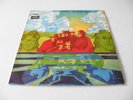
The sleeve was designed by Works Associates of Dublin under the direction of Steve Averill,who had created the majority of U2's album covers. The cover features a sketch of the circle of stars from the Flag of Europe with a "sad astronaut" drawing in the center.The illustration, created by Shaughn McGrath .was an alteration of the "graffiti babyface" by Charlie Whisker that was originally taken from the face of the Achtung Baby compact disc/vinyl record The cover's drawing was meant to represent the Soviet cosmonaut left floating in orbit for weeks after the collapse of the Soviet Union.In the background is a 3-by-3 montage of blurred images—similar to the 4-by-4 arrangement of images on Achtung Baby's sleeve. The images include shots of a woman's face and mouth, as well as photographs of European leaders, including Vladimir Lenin, Benito Mussolini, and Nicolae Ceau?escu. These images are obscured by distorted purple text, which comprises the names of unfinished songs from the album sessions, including "Hold Me, Thrill Me, Kiss Me, Kill Me", "Wake Up Dead Man", and "If You Wear That Velvet Dress". Author Višnja Cogan described this text as giving the impression of a "torn veil".
Zooropa was named for the "Zooropa" leg of the Zoo TV Tour, which began in May 1993 while the band completed the record. The name is a portmanteau of "zoo" (from Zoo TV Tour and "Zoo Station") and "Europa". One of the album's proposed titles was Squeaky.
Zooropa completed U2's contractual obligation to Island Records, and to PolyGram,the multinational that purchased Island in 1989.Although the group were free to sign a new contract elsewhere, their strong relationship with the label and its founder Chris Blackwell prompted the band to remain with Island/Polygram by signing a long term, six-album deal The Los Angeles Times estimated that the deal was worth US$60 million to U2. At the time, the group were cognizant of several emerging technologies that potentially impacted the future delivery and transmission of music to the purchasing public. As author Bill Flanagan speculated, "Record stores could become obsolete as music is delivered over cable, telephone wires, or satellite transmissions directly into consumers' homes." With uncertainty over the future of these technologies and the implications of entertainment and telecommunications companies merging, the band negotiated with Island that the division of their earnings from future transmission systems would be flexible and decided upon at a relevant time. U2 toyed with the idea of releasing Zooropa as an interactive audio-video presentation in lieu of conventional physical formats, but the deadline imposed by the Zoo TV Tour prevented the band from realising this idea.
U2's delivery of Zooropa in late May caught PolyGram somewhat off-guard, as they were not expecting a new album by the group for several years. With Achtung Baby, PolyGram had approximately six months to market the record and plan its release strategy, but the sudden delivery of Zooropa necessitated a more hurried promotional plan. PolyGram president/CEO Rick Dobbis explained: "For the last one, we prepared for six months. It was like a marathon. But this is like a sprint, and that is the spirit it was made in. The band was so excited about it, they sprinted to complete the album before the ... tour. We want to bring it to the street with that same spirit." Island/PolyGram's and U2's marketing for Zooropa was intended to focus less on singles and more on the record as a whole,and ultimately, only three singles were released, compared to Achtung Baby's five singles. The first single "Numb" was released in June 1993 exclusively on VHS as a "video single". It was directed by Kevin Godley. The song peaked at number seven in Australia and number nine in Canada, while reaching number two on the US Billboard Modern Rock Tracks chart. However, it failed to chart on the singles charts in the UK or US.
Zooropa was released on 5 July 1993, during the Zooropa leg of the Zoo TV Tour. An initial shipment of 1.6 million copies was available in stores at the time of release. The album performed very well commercially, debuting at number one in the United States,United Kingdom,Canada,Australia,New Zealand,France, Germany Austria Sweden, and Switzerland.It also reached number one in the Netherlands, Italy, Japan, Norway, Denmark, Ireland, and Iceland. In the US, the album spent its first two weeks on the Billboard 200 at the top spot, staying in the top 10 for seven weeks. In its first week on sale, Zooropa sold 377,000 copies in the US, the group's best debut in the country to that point Although the record reached impressive peak positions, it had a shorter stay on the music charts than Achtung Baby did. In total, Zooropa spent 40 weeks on the Billboard 200, 57 fewer weeks than Achtung Baby. Similarly, the album's stay of 31 weeks on the UK Albums Chart was a decrease of 56 weeks from its predecessor.
Two additional commercial singles were released from the album. "Lemon" received a limited commercial release in North America, Australia, and Japan in September 1993.The single peaked at number six in Australia and number three on the Modern Rock Tracks chart. The final commercial single was "Stay (Faraway, So Close!)", released worldwide in November 1993. It was the album's most successful single, topping the Irish Singles Chart and peaking at number five in Australia, number six in New Zealand, number four in the UK, and number 61 in the US—making it the record's only single to chart on the UK Singles Chart and Hot 100. "Zooropa" was released as a promotional single in Mexico and the United States.By the end of 1993, Zooropa had sold 1.8 million copies
Zooropa was well-received by critics. Anthony DeCurtis of Rolling Stone wrote in his four-star review that the album was "a daring, imaginative coda to Achtung Baby" and that "it is varied and vigorously experimental, but its charged mood of giddy anarchy suffused with barely suppressed dread provides a compelling, unifying thread." Spin wrote a positive review, commenting that the record "sounds mostly like a band shedding its skin, trying on different selves for size". The review said the album "has the feel of real collectivity", praising the cohesiveness of the individual band members' playing. The review concluded by saying the album "indicates U2 might be worthy of whatever absurd mutations the '90s throw our way". Jon Pareles of The New York Times praised the group for transforming themselves and becoming "raucous, playful and ready to kick its old habits". Pareles enjoyed the sonics and electronic effects that made the "sound of a straightforward four-man band ... hard to find" and commented that "The new songs seem destined not for stadiums ... but for late-night radio shows and private listenings through earphones.
David Browne of Entertainment Weekly gave the album an "A", calling it "harried, spontaneous-sounding, and ultimately exhilarating album". Browne noted that the album sounds "messy" and "disconnected", but clarified "that sense of incoherence is the point, since many of the songs touch on some form of emotional fracturing in the techno-tronic age". He concluded, "For an album that wasn't meant to be an album, it's quite an album." Robert Hilburn of the Los Angeles Times said that the record "captured the anxious, even paranoid tone of the Zoo TV Tour" so much so that "it stands as the first tour album that doesn't include any of the songs from the tour" and that it sounds like a "souvenir of the tour". In a positive review, Jim Sullivan of The Boston Globe called the album a "creative stretch", noting that the band experiments more yet retains their recognizable sound. He commented that the "yearning anthemic reach" of previous records is absent, as is the "obvious, slinky pop charm" of "Mysterious Ways" from their last album, and it is instead replaced with "darker corners, more disruptive interjections, more moodiness". The New Zealand Herald was more critical, noting that the album started as an EP and "just got longer but not necessarily better". The publication called it "more perplexing than challenging" and commented that it "sounds like the biggest band in the world having one of the biggest, strangest mid-life crises".In a retrospective review, Stephen Thomas Erlewine of Allmusic said in a four-star review that "most of the record is far more daring than its predecessor". For him, although there were moments that the album was "unfocused and meandering ... the best moments of Zooropa rank among U2's most inspired and rewarding music".
It won a Grammy Award for "Best Alternative Music Album"; in his acceptance speech during the March 1994 ceremony, Bono sarcastically mocked the "alternative" characterisation. It has sold 8 million copies.[citation needed]
Zoo TV Tour
Main article: Zoo TV Tour
In an outdoor stadium at night with an elaborate concert stage set bearing a logo that reads "Zoo TV", a number of white lights shine from various angles into the center of the audience on the stadium floor, where a musical performance is taking place on a very small stage.
The Zoo TV Tour was a multimedia-intensive event, featuring a stage that used dozens of video screens.
The band began the Zoo TV Tour in February 1992 in support of their previous album Achtung Baby. In contrast to the austere stage setups of previous U2 tours, Zoo TV was an elaborate multimedia event. It satirised television and the viewing public's over-stimulation by attempting to instill "sensory overload" in its audience. The stage featured large video screens that showed visual effects, random video clips from pop culture, and flashing text phrases. Live satellite link-ups, channel surfing, crank calls, and video confessionals were incorporated into the shows.
The Zooropa album was released in July 1993, halfway through the Zooropa leg of the tour. Of the 157 shows the band played during the Zoo TV Tour, approximately 30 of them were after the release of Zooropa. Many of the album's songs found permanent places in the shows' setlists. "Lemon" and "Daddy's Gonna Pay for Your Crashed Car" were performed with Bono in his MacPhisto persona, during encores of the Zoomerang Leg of the tour. "Dirty Day" was also played on this leg after the acoustic set. "Numb" was performed with The Edge playing guitar and on lead vocals, with Larry Mullen Jr. performing backing vocals while drumming. "Zooropa" was played only three times and "Babyface" twice more at the same shows on the Zooropa leg, but were cut out of the setlist after the band didn't feel they sounded right live. "Stay (Faraway, So Close!)" was performed acoustically for the Zooropa and Zoomerang legs.
Track listing
All songs written and composed by U2, with lyrics by Bono (except where noted).
1."Zooropa" Flood 6:31
2. "Babyface" Flood 4:01
3. "Numb" (The Edge) Robbie Adams 4:20
4. "Lemon" Flood 6:58
5. "Stay (Faraway, So Close!)" Flood 4:58
6. "Daddy's Gonna Pay for Your Crashed Car" Flood 5:20
7. "Some Days Are Better Than Others" Robbie Adams 4:17
8. "The First Time" Flood 3:45
9. "Dirty Day" (Bono and The Edge) Robbie Adams 5:24
10. "The Wanderer" Flood, Adams 5:41
A "hidden track" after "The Wanderer" features a ringing alarm similar to that which disc jockeys hear when there is 10 seconds of dead air.
price rating