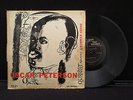
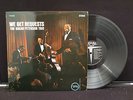
We Get Requests - Oscar Peterson LP MONO Ray Brown Ed Thigpen
$
40


Favourite Auctions
To save auctions to your favourites, please login
If you don't have an account, please register
Description
LP NM-
Jacket NM-
Artist Biography by Scott Yanow
Oscar Peterson was one of the greatest piano players of all time. A pianist with phenomenal technique on the level of his idol, Art Tatum, Peterson's speed, dexterity, and ability to swing at any tempo were amazing. Very effective in small groups, jam sessions, and in accompanying singers, O.P. was at his absolute best when performing unaccompanied solos. His original style did not fall into any specific idiom. Like Erroll Garner and George Shearing, Peterson's distinctive playing formed during the mid- to late '40s and fell somewhere between swing and bop. Peterson was criticized through the years because he used so many notes, didn't evolve much since the 1950s, and recorded a remarkable number of albums. Perhaps it is because critics ran out of favorable adjectives to use early in his career; certainly it can be said that Peterson played 100 notes when other pianists might have used ten, but all 100 usually fit, and there is nothing wrong with showing off technique when it serves the music. As with Johnny Hodges andThelonious Monk, to name two, Peterson spent his career growing within his style rather than making any major changes once his approach was set, certainly an acceptable way to handle one's career. Because he was Norman Granz's favorite pianist (along with Tatum) and the producer tended to record some of his artists excessively, Petersonmade an incredible number of albums. Not all are essential, and a few are routine, but the great majority are quite excellent, and there are dozens of classics.
Peterson started classical piano lessons when he was six and developed quickly. After winning a talent show at 14, he began starring on a weekly radio show in Montreal. Peterson picked up early experience as a teenager playing with Johnny Holmes' Orchestra. From 1945-1949, he recorded 32 selections for Victor in Montreal. Those trio performances find Peterson displaying a love for boogie-woogie, which he would soon discard, and the swing style of Teddy Wilsonand Nat King Cole. His technique was quite brilliant even at that early stage, and although he had not yet been touched by the influence of bop, he was already a very impressive player. Granz discovered Peterson in 1949 and soon presented him as a surprise guest at a Jazz at the Philharmonic concert. Peterson was recorded in 1950 on a series of duets with either Ray Brown or Major Holley on bass; his version of "Tenderly" became a hit. Peterson's talents were quite obvious, and he became a household name in 1952 when he formed a trio with guitarist Barney Kesseland Brown. Kessel tired of the road and was replaced by Herb Ellis the following year. The Peterson-Ellis-Brown trio, which often toured with JATP, was one of jazz's great combos from 1953-1958. Their complex yet swinging arrangements were competitive -- Ellis and Brown were always trying to outwit and push the pianist -- and consistently exciting. In 1958, when Ellis left the band, it was decided that no other guitarist could fill in so well, and he was replaced (after a brief stint by Gene Gammage) by drummer Ed Thigpen. In contrast to the earlier group, thePeterson-Brown-Thigpen trio (which lasted until 1965) found the pianist easily the dominant soloist. Later versions of the group featured drummers Louis Hayes (1965-1966), Bobby Durham (1967-1970), Ray Price (1970), and bassistsSam Jones (1966-1970) and George Mraz (1970).
In 1960, Peterson established the Advanced School of Contemporary Music in Toronto, which lasted for three years. He made his first recorded set of unaccompanied piano solos in 1968 (strange that Granz had not thought of it) during his highly rated series of MPS recordings. With the formation of the Pablo label by Granz in 1972, Peterson was often teamed with guitarist Joe Pass and bassist Niels Pedersen. He appeared on dozens of all-star records, made five duet albums with top trumpeters (Dizzy Gillespie, Roy Eldridge, Harry "Sweets" Edison, Clark Terry, and Jon Faddis), and teamed up with Count Basie on several two-piano dates. An underrated composer,Peterson wrote and recorded the impressive "Canadiana Suite" in 1964 and has occasionally performed originals in the years since. Although always thought of as a masterful acoustic pianist, Peterson has also recorded on electric piano (particularly some of his own works), organ on rare occasions, and even clavichord for an odd duet date with Joe Pass. One of his rare vocal sessions in 1965, With Respect to Nat, reveals that Peterson's singing voice was nearly identical to Nat King Cole's. A two-day reunion with Herb Ellis and Ray Brown in 1990 (which also included Bobby Durham) resulted in four CDs.Peterson was felled by a serious stroke in 1993 that knocked him out of action for two years. He gradually returned to the scene, however, although with a weakened left hand. Even when he wasn't 100 percent, Peterson was a classic improviser, one of the finest musicians that jazz has ever produced. The pianist appeared on an enormous number of records through the years. As a leader, he has recorded for Victor, Granz's Clef and Verve labels (1950-1964), MPS, Mercury, Limelight, Pablo, and Telarc.
All Lps are sight graded
Note: I Do Not Grade inner sleeves, If these are Important to you then you may e-mail me)
RECORD GRADING Based On Goldmine Grading Standards:
Near Mint (NM): A nearly perfect record. There may be one or two small inaudible defects. The record should show no obvious signs of wear. A 45 RPM or EP sleeve should have no more than the most minor defects, such as almost invisible ring wear or other sights of slight handling. An LP jacket should have no creases, folds, seam splits or any other noticeable similar defect. No cut-out holes, either.
Near Mint Minus (NM-): A record that should play mint but has a few slight visible marks. The album will have as much luster as an NM, there just may be some superficial scuffs from the sleeve or very light hairlines that shouldn't be audible. An NM- album cover subjectively fits somewhere in between VG+ and NM.
Very Good Plus (VG+): A Very Good Plus record will show some signs that it was played and otherwise handled by a previous owner who took good care of it. Record surfaces may show some slight signs of wear and may have slight scuffs or very light scratches that don t significantly affect play. Slight warps that do not affect the sound are OK. The label may have some ring wear or discoloration, but it should be barely noticeable. The center hole will not have been misshapen by repeated play. 45 Picture sleeves will have some slight wear, lightly turned-up corners, or a slight seam-split. An LP jacket may have slight signs of wear also and may be marred by a cut-out hole, indentation or corner indicating it was taken out of print and sold at a discount.
Very Good (VG): Many of the defects found in a VG+ record will be more pronounced in a VG disc. Surface noise will be evident upon playing, especially in soft passages and during a song s intro and fade, but will not overpower the music otherwise. Groove wear will start to be noticeable, as will light scratches (deep enough to feel with a fingernail) that will affect the sound. Labels may be marred by writing, or have tape or stickers (or their residue) attached. The same will be true of picture sleeves or LP covers. However, it will not have all of these problems at the same time, just two or three of them.
Good (G), Good Plus (G+): Good does not mean Bad! A record in Good or Good Plus condition can be put onto a turntable and will play though without skipping. But it will have significant surface noise and scratches and visible groove wear. A jacket or sleeve will have seam splits, especially at the bottom or on the spine. Tape, writing, ring wear or other defects will start to overwhelm the subject.
Poor (P), Fair (F): Below good. imperfections will be described.
Please check out my other items for sale. (I offer shipping discounts) I'll Be adding More Daily except for Friday and Saturday.
ALLSHIPPING PRICES ARE FINAL
additional items are 1.50 per item up to 6 within USA (if you are bidding on multiple items lots I have in one listing. you pay each shipping total added together)
Priorty shipping is available e-mail for total
Please Do A One Time payment for combined shipping on all all items won. Request a Final invoice if I have not already combined them for you
NOTE: Gatefold Lps Count as 2 Lps when shipping out of the country
SHIPPING TO CANADA Multiple LP Shipping Rates In USD
1 LP 11.50
2. Lps 13.00
3 Lps 15.00
4 Lps 17.00
5 Lps 26.00
6 Lps 29.00
Multiple Shipping Rates SHIPPING TO Rest Of The World Outside USA in USD
Note: Gatefold Lps Count as 2 Lps
1 LP 17.25
2 LP 20.00
3. Lps 26.50
4 Lps 30.00
5 Lps 48.00 (price jump becuse weight usually takes it to priority mail rate)
6 Lps 51.00
7 Lps 54.00
8 LPs 58.00
9 Lps 61.00
10 Lps 64.00
11 Lps 67.00
12 Lps 70.00
The MAN has to get his cut so Texas residents must add 8.25 % Sales Tax
If you are unsure about shipping costs please do not hesitate to e-mail me.
QUESTIONS:? Please ask. That is what I am here for. (I may not get to them if you wait close to an item's ending.)
MORE PICTURES? Just ask and I'll send them to you
MEDIA MAIL: is not recommended for rare items. Priority mail is faster and safer.
I leave feedback after item arrives and it is left for me. (It's easier to keep up with that way) Please limit your feedback comments to things within the realm of my responsibility.
Thank you for reading all of this :-)
price rating



![Stranger Things, Vol. 1 [Original Television Soundtrack] by Michael Stein](https://www.popsike.mobi/php/thumbnail.php?url=https://www.popsike.pics/pix/20190619/223557793601.jpg)








![sealed WHITE STRIPES Rag And Bone NME magazine + 7” vinyl record single [IN BAG]](https://www.popsike.mobi/php/thumbnail.php?url=https://www.popsike.pics/pix/20220416/144507037231.jpg)