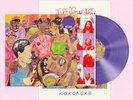
Whitesnake - Love Hunter - LP vg/vg+ play tested cleaned import
$
26


Favourite Auctions
To save auctions to your favourites, please login
If you don't have an account, please register
Description
Competitive pricing is my goal to get rid of the hundred's of Lp's. I try my best to grade lp's, and on occasion I will play test if time allows... I am trying to clean records that raises my ire of suspicion, but am finding my self these days cleaning everything. My only method of cleaning is a soft brush and cloth and some Audio Advisor product. I do not have a vacuum. I listen with my turntable & needle when I play grade an LP. If a stubborn noise erupts I will then look under a light and microscope. It is quite time consuming. So I may miss a thing or two sometimes on my listings, but I will always be here to help resolve the issue. All I ask is my buyers realize these points and be rest assured I offer a refund policy but I would prefer you email me so we can work something out first, I may have a back up copy... I have been collecting records since my 20's... Its has been a passion and a part-time hobby, I hope you love and enjoy music as much as I do, and selling is another way to get to know other people with a like minded interest as I. I offer a refund policy, so please give me the opportunity to make good if there is a problem with a transaction. I reserve the right to cancel a transaction after the sale If I find a missed defect on your behalf.
check prices, email me with concerns please.
Jacket vg Record vg+
shipping: 1-2 Lp's: $3.50 3-3 Lp's: $3.80 4-5 Lp's: $4.50 6-6 Lp's $5.50 7-9 Lp's $6.50
In March 1976, singer David Coverdale left the English hard rock group Deep Purple. He had joined the band three years prior and recorded three successful album with them. After leaving Deep Purple, Coverdale released his solo album White Snake in May 1977. His second solo album Northwinds was released in March 1978. Both combined elements of blues, soul and funk, as Coverdale had wanted to distance himself from the hard rock sound synonymous with Deep Purple. Both records featured former Snafu guitarist Micky Moody, whom Coverdale had known since the late 1960s. As Coverdale began assembling a backing band in London, Moody was the first to join. Among the other early candidates for the group were drummers Dave Holland and Cozy Powell, as well as guitarist Mel Galley. The decision to recruit a second guitarist was made at Moody's suggestion. Bernie Marsden, formerly of UFO and Paice Ashton Lord, agreed to join. Through him, they were also able to recruit bassist Neil Murray, who had played with Marsden in Cozy Powell's Hammer. The band's initial line-up was rounded out by drummer Dave "Duck" Dowle and keyboardist Brian Johnson, who had played together in Streetwalkers.
A newspaper advert for Whitesnake's first UK tour, promoting Coverdale's second solo album Northwinds.The band, dubbed David Coverdale's Whitesnake, played their first show at Lincoln Technical College on 3 March 1978. Their live debut had originally been scheduled for 23 February at the Sky Bird Club in Nottingham, but the show was cancelled. Coverdale had originally wanted the group to be simply called Whitesnake, but was forced to use his own name as it still carried some clout as the former lead singer of Deep Purple. In interviews, Coverdale would jokingly state that the name "Whitesnake" was a euphemism for his penis, while in fact, it came from the song of the same name found on his first solo album. After completing a small UK club tour, the band adjourned to a rehearsal place in London's West End to begin writing new songs. They soon caught the attention of EMI International's Robbie Dennis, who wanted to sign the group. According to Bernie Marsden, however, his higher-ups were not ready to commit to a full album. Thus, the band entered London's Central Recorders Studio in April 1978 to record an EP. By this point, original keyboardist Brian Johnston had been replaced by Pete Solley. Martin Birch, who had worked with Coverdale during his time in Deep Purple, was chosen to produce. The resulting record, Snakebite, was released in June 1978. In Europe, the EP was combined with four tracks from Coverdale's album Northwinds to make up a full-length album. Snakebite also contained a slowed down cover of Bobby Bland's "Ain't No Love in the Heart of the City", which had originally been used by the band to audition bass players. While the song was only included because the group were short on songs, the track would later become a popular live staple at Whitesnake concerts, with Coverdale calling it "the national anthem of the Whitesnake choir", referring to the band's audience. When Snakebite reached number 61 on the UK Singles Chart, the band were duly signed to EMI proper.
In July 1978, the band (now known simply as Whitesnake) entered Central Recorders in London to begin work on their first proper studio album with Martin Birch again producing. The recording and mixing only took ten days. Towards the end of the sessions, Pete Solley's keyboard parts were completely replaced by Coverdale's former Deep Purple bandmate Jon Lord, who agreed to join Whitesnake after much coaxing from Coverdale. Colin Towns and Tony Ashton were also approached, having previously played with fellow Deep Purple offshoots the Ian Gillan Band and Paice Ashton Lord, respectively. Whitesnake's debut album Trouble was released in October 1978, and it reached number 50 on the UK Albums Chart In a retrospective review for AllMusic, Eduardo Rivadavia stated: "A few unexpected oddities throw the album off-balance here and there, but all things considered, it is easy to understand why Trouble turned out to be the first step in a long, and very successful career." The release of Trouble was followed by an 18-date UK tour, beginning on 26 October 1978.The final show at the Hammersmith Odeon in London was recorded and released in Japan as the Live at Hammersmith.According to Coverdale, this was done to appease Japanese promoters who allegedly refused to book Whitesnake without some kind of a live recording.
Whitesnake toured across Europe and Japan in early 1983, before starting rehearsals for their next album at Jon Lord's house in Oxfordshire. Coverdale began steering Whitesnake's music more towards hard rock, which was emphasized by the additions of Mel Galley and Cozy Powell, whose past projects included Trapeze and Rainbow, respectively. Majority of Whitesnake's next album was co-written by Coverdale and Galley, while Micky Moody contributed to only one song. Whitesnake began recording their sixth album at Musicland Studios in Munich with producer Eddie Kramer, who had come recommended by John Kalodner. In August 1983, Whitesnake headlined the Monsters of Rock festival at Castle Donington, England. The show was filmed and later released as the band's first long-form video, titled Whitesnake Commandos. The band also premiered the new single "Guilty of Love", which was released to coincide with the festival. The entire album had originally been slated for release three weeks prior to the Donington show, but failed to meet the deadline. The band were having problems adapting to Eddie Kramer's style of producing, particularly his method of mixing the record. Eventually thing came to a head and Kramer was let go. Coverdale then rehired Martin Birch to complete the album. At the same time, Whitesnake embarked on another European tour, after which Micky Moody left the group. He later attributed his departure to a growing dissatisfaction working in the band, particularly with Coverdale. Moody remarked: "Me and David weren't friends and co-writers anymore. David was a guy who five, six years earlier was my best friend. Now he acted as if I wasn't there." Moody also felt uncomfortable with the level of influence he felt John Kalodner was having on the band. Colin Hodgkinson was also let go in late 1983, only to be replaced by his predecessor Neil Murray. Coverdale later explained the decision to rehire Murray by simply stating: "I'd missed his playing".To replace Moody, Coverdale initially looked to Michael Schenker and Adrian Vandenberg. According to Coverdale, John Kalodner had convinced him that in order for the band to achieve their full potential, they needed a "guitar hero" that could match Coverdale as a frontman.Schenker claims he turned down the offer to join Whitesnake, while Coverdale insists Schenker was not hired on the account of his reputation of being difficult to work with. Vandenberg declined the offer to join as well, due to the success he was having at the time with his own band. Coverdale then approached Thin Lizzy guitarist John Sykes, who he met when Whitesnake and Thin Lizzy played some of the same festivals in Europe. Sykes was initially reluctant to join, wanting to continue working with Thin Lizzy frontman Phil Lynott, but after several more offers he accepted. John Sykes and Neil Murray were officially confirmed as members of Whitesnake in January 1984. John Sykes performing with Whitesnake at the Oakland Coliseum, 1984.
Slide It In, Whitesnake's sixth studio album, was released on 30 January 1984. On the UK Albums Chart, it reached number nine. The album's highest chart position was in Finland, where it reached number four. Slide It In received mixed reviews from critics, with the production being a common complaint. Dave Dickson, writing for Kerrang!, called the record "the best thing Whitesnake have yet commited to vinyl", while Record Mirror's Jim Reid was highly critical of the lyrical content. AllMusic's Eduardo Rivadavia, in a retrospective review, called Slide It In "an even greater triumph" than the band's previous works, whereas Garry Bushell of Sounds gave Slide It In a particularly scathing review, in which he likened Coverdale's voice to that of a "dying dog". Whitesnake's new line-up made its live debut in Dublin on 17 February 1984. During a tour stop in Germany, Mel Galley broke his arm leaping on top of a parked car. He sustained nerve damage, leaving him unable to play guitar. As a result, Galley was forced to leave Whitesnake. By April 1984, a reunion of Deep Purple's Mark II line-up had become imminent, which led to Jon Lord also leaving. He played his final show with Whitesnake on 16 April 1984. That same day, Geffen Records released Slide It In in North America. Kalodner had been unimpressed by Martin Birch's work on the album and had demanded a complete remix for the American market. Though initially reluctant, Coverdale agreed after a trip to Geffen's offices in Los Angeles, where he came to the conclusion that Whitesnake's studio approach had become "dated" by American standards. Keith Olsen was brought on board to remix Slide It In, while John Sykes and Neil Murray were tasked with re-recording Micky Moody and Colin Hodgkinson's parts, respectively. The remixed version of Slide It In reached number 40 on the Billboard 200 chart. By 1986, the album had sold over 500,000 copies in the US. Critical reception was also positive, with Pete Bishop of The Pittsburg Press calling the album "muscular, melodic and musical all together". With the band now left as a four-piece (with Richard Bailey providing keyboards off-stage), Whitesnake supported Dio for several show in the US, after which they toured Japan as a part of the Super Rock '84 festival. Later that year, Whitesnake embarked on a six week North American tour supporting Quiet Riot. To further the band's reach in America, Whitesnake shot two music videos for the singles "Slow an' Easy" and "Love Ain't No Stranger", respectively. Both songs reached the Top Tracks chart in the US. In an effort to take America more seriously, Coverdale also relocated to the US.
thxs to wiki~
Long Way From Home 4:54 Walking In The Shadow Of The Blues 4:26 Help Me Thro' The Day 4:37 Medicine Man 4:57 You 'n' Me 3:27 Mean Business 3:45 Love Hunter 5:35 Outlaw 4:01 Rock'n'roll Women 4:43 We Wish You Well 1:32
price rating