lp record The Statesmen Out West with Hovie Lister Cowboy Camp Meeting
$
50


Favourite Auctions
To save auctions to your favourites, please login
If you don't have an account, please register
Description
lp records
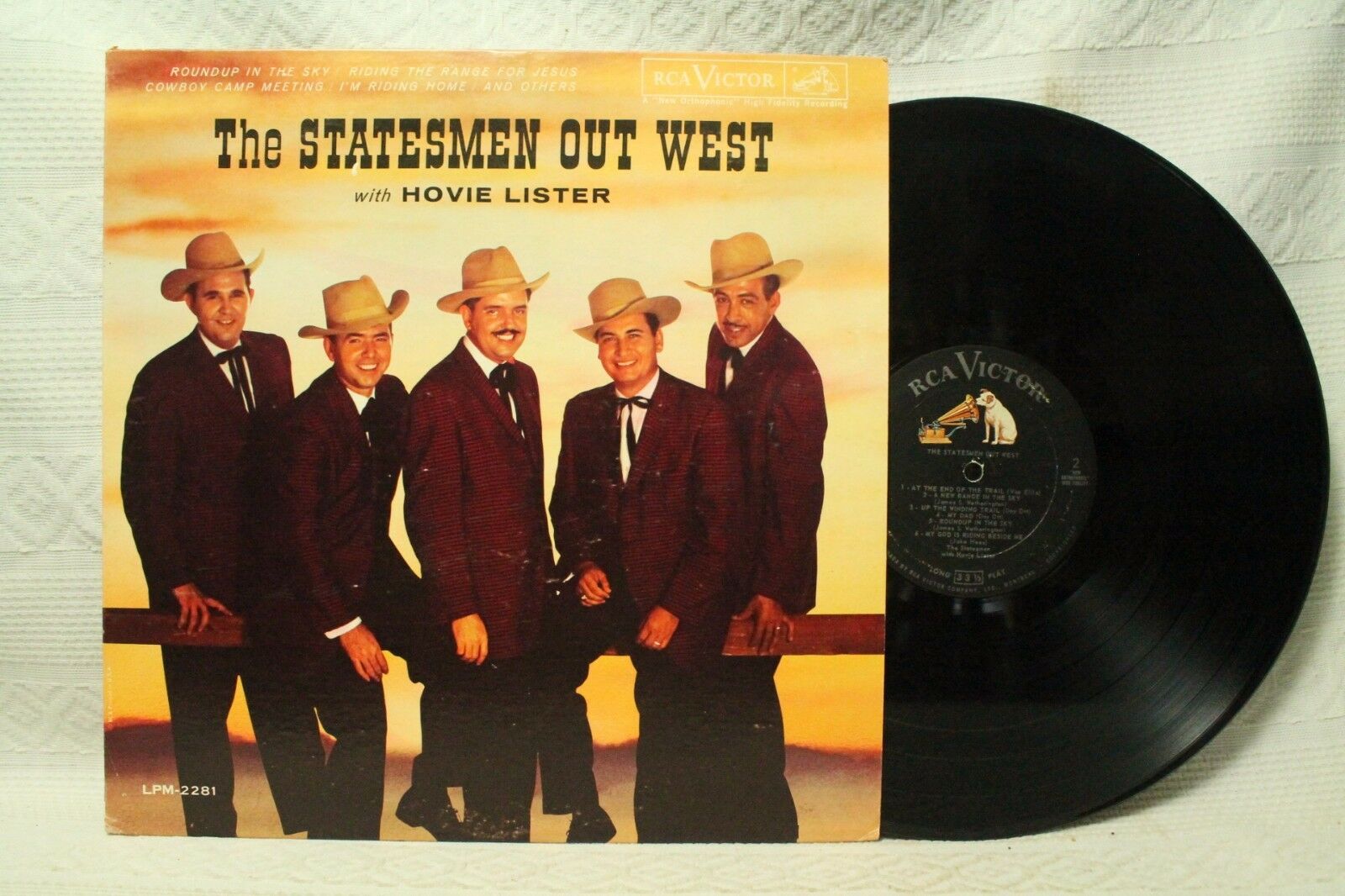
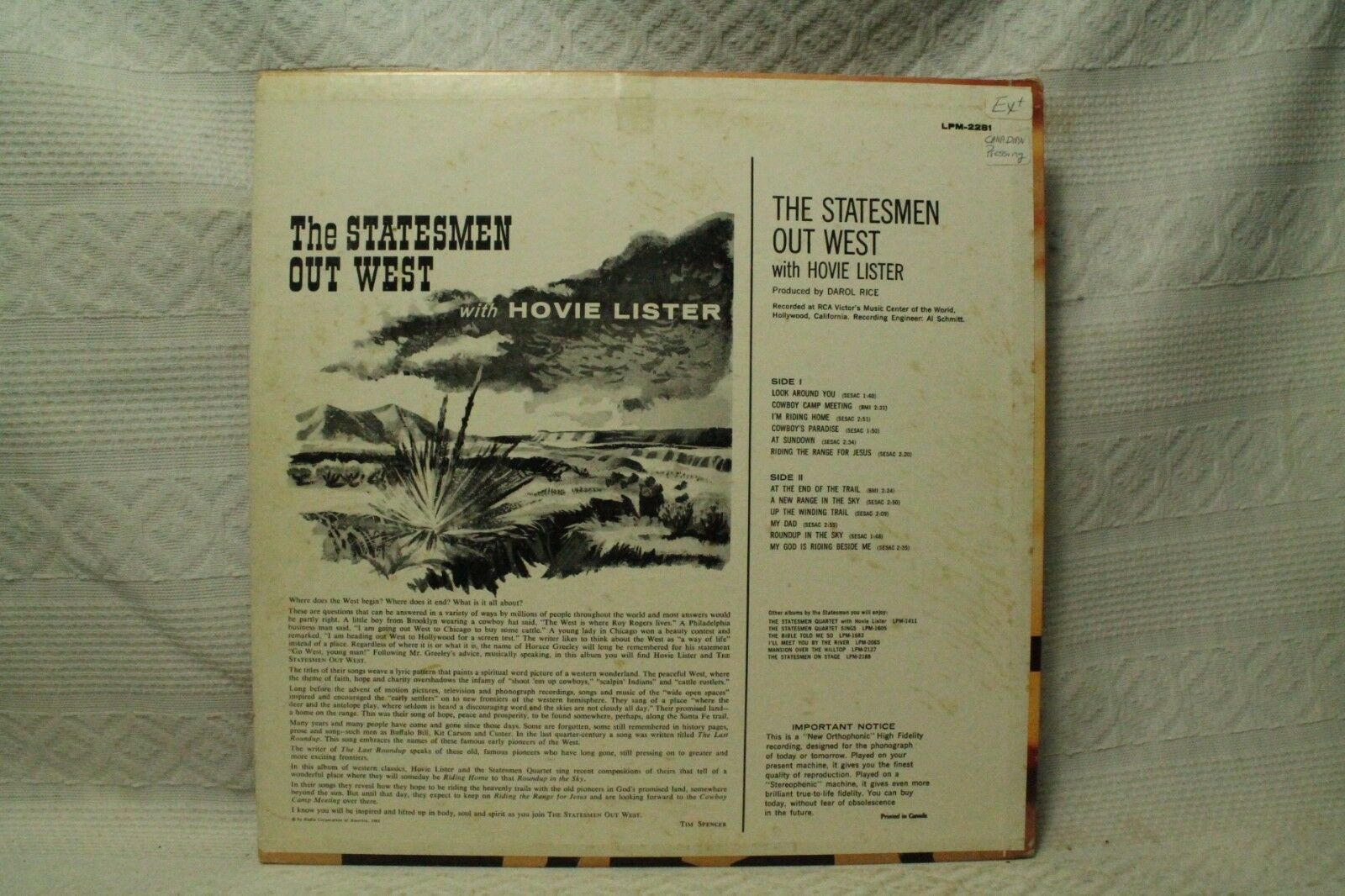
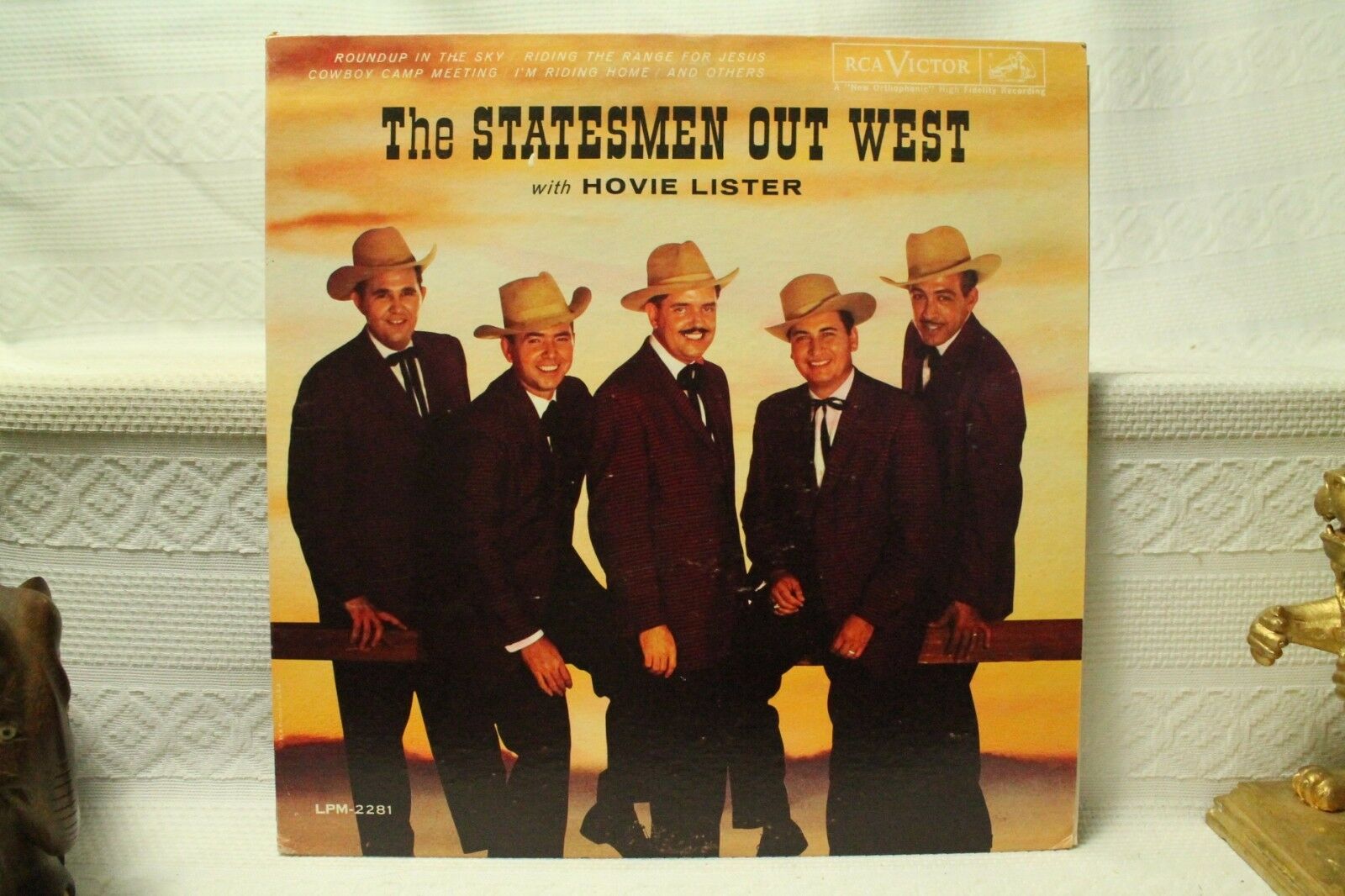
- The Statesmen Out West with Hovie Lister. rca Victor LPM 2281. vinyl Ex, just a little light scuff, scratches. album cover some wear, scuffing, yellowing , spotting on back cover. songs include: look around you. cowboy camp meeting. i'm riding home. cowboy's paradise. at sundown. riding the range for Jesus.. etc.
I am not a record grading expert, I have just visually inspected the records . I think you will be very happy with these records.
These records came from the estate of Lew Dewitt, Lewis Calvin "Lew" DeWitt (March 12, 1938 - August 15, 1990) was an American country music singer and composer. He was also a well known country music guitarist and tenor singer and was the original tenor and founding member of The Statler Brothers
visit my Ebay store bunch of old Stuff for lots of great books and more. Check out my other items!
The Statesmen Quartet (also known as Hovie Lister and The Statesmen Quartet) were an American southern gospel music group founded in 1948 by Baptist Minister Hovie Lister. Along with the Blackwood Brothers, the Statesmen Quartet were considered the most successful and influential gospel quartet of the 1950s and 1960s and had a wide influence on artists during that time from the gospel, country, pop, and rock and roll genre.[1] Along with hits spanning many decades, The Statesmen Quartet had many notable successes including being the first Gospel group to receive endorsement deals. Additionally, they made television commercials, appeared on numerous radio and TV shows, and were signed to RCA Victor before launching their own record label, Skylite Records, with The Blackwood Brothers. In 1952, The Statesmen Quartet entered into a business partnership with The Blackwood Brothers Quartet. The "Stateswood" team would dominate Southern Gospel music for the next two decades. First, "Cat" Freeman was replaced by Irish tenor Denver Crumpler. In 1953, Lister's vision of the premiere lineup came to fruition by adding Jake Hess (lead), Doy Ott (baritone), and James "Big Chief" Wetherington (bass), with Lister on piano and master of ceremonies. During the next years, The Statesmen Quartet achieved fame as one of the premiere groups of Southern gospel music.[1] With this lineup, The Statesmen began recording for RCA Victor and began starring in the Nabisco Hour national TV show as mentioned above. Popular songs of this period include "Get Away Jordan" and "Happy Rhythm". As early as 1950, The Statesmen used the phrase "Rockin' and rollin'" in a song, and Hovie Lister's frantic boogie-woogie piano, piano bench acrobatics, and hair shaken down in his eyes would have great influence on early rock and roll artists, namely Jerry Lee Lewis, who was a fan of gospel music and the Statesmen. On July 4, 1955, the Blackwood/Statesmen team traveled to Texas for an engagement that would feature several secular artists on the same program. Among them was Elvis Presley. Elvis was planning to sing his rock hits, but refrained out of respect of his gospel idols. The Statesmen exerted a powerful influence on young Elvis, who idolized and imitated Jake Hess' vocal styling and Wetherington's movements and gyrations on stage. In an interview with songwriter Bill Gaither, Hess remembered seeing young Elvis coming to Statesmen shows in Tupelo when Presley was only nine or ten. Hess said that the serious young Elvis would ask him, "How do you make a record?" or "How many suits you got?" On the Gaither Homecoming video "Oh My Glory", Hess recalls Presley attending Statesmen concerts and being invited up onstage to sing lead in his place on a couple of handpicked numbers. Phillip Goff, in The Blackwell Companion to Religion in America, provided a description of how The Statesmen began one live appearance. "Greeted by thunderous applause, the announcer approaches the microphone: "You're listening to the original Wally Fowler All Night Singing, November the sixth, right here in Nashville, Tennessee, nineteen hundred fifty-nine. This is the eleventh anniversary and the greatest crowd that's ever assembled for any program in the Ryman Auditorium is here tonight for the all night sing." Goff's description related but one aspect of The Statesmen's showmanship. Francis Edward Abernathy wrote about lasting changes that the group introduced to the world of gospel quartets: The Statesmen Quartet added flourishes which entertained new audiences -- exuberant singing, arm waving, hand clapping, and electrifying performances. This was alien behavior for traditional convention quartets. But the new behavior attracted interest. The Statesmen became so popular that subsequent gospel quartets imitated their style
Lewis Calvin "Lew" DeWitt (March 12, 1938 - August 15, 1990) was an American country music singer and composer. He was also a well known country music guitarist and tenor singer and was the original tenor and founding member of The Statler Brothers.For most of his career, DeWitt sang tenor for The Statler Brothers. Songs he wrote for the group include "Flowers on the Wall" which was a greatest hit during the late 60s and early 70s that made The Statler Brothers popular, "Things," "Since Then," "Thank You World," "The Strand," "The Movies," and "Chet Atkins' Hand." In November 1981, DeWitt took a leave of absence from the band due to surgery and treatment for Crohn's disease,[1] from which he had suffered since adolescence. At his suggestion, Jimmy Fortune was tapped as his temporary replacement. He would rejoin the group in June of the following year (with Fortune having been offered a permanent position in the group's backing band), but this arrangement lasted less than a week. He officially retired that same month with Fortune becoming his permanent replacement.[2]
Three years later, DeWitt, feeling that his health had taken a turn for the better through continuing treatment, mounted a solo career. During this time he would return to touring and would release two albums: Here to Stay (1984)[3] and On My Own (1985).[4] He also charted a solo single on the country charts: the No. 77 "You'll Never Know" in 1985. A third and final album for the Compleat label remains unreleased, although two singles were pulled from it just prior to the label going into bankruptcy.
He would remain active as a performer until late 1989,[5] when his health went into a downward spiral which culminated in his death on August 15, 1990. The cause of death was heart and kidney disease, stemming from complications of Crohn's disease.
The Statler Brothers (sometimes referred to in country music circles as simply The Statlers) were an American country music, gospel, and vocal group. The quartet was formed in 1955 performing locally and in 1964 they began singing backup for Johnny Cash.
Originally performing gospel music at local churches, the group billed themselves as The Four Star Quartet, and later The Kingsmen.[1] In 1963, when the song "Louie, Louie" by the garage rock band also called The Kingsmen became famous, the group elected to bill themselves as The Statler Brothers. Despite the name, only two members of the group (Don and Harold Reid) are actual brothers and none has the surname of Statler. The band, in fact, named themselves after a brand of facial tissue they had noticed in a hotel room (they joked that they could have turned out to be the Kleenex Brothers).[2] Don Reid sang lead; Harold Reid, Don's older brother, sang bass; Phil Balsley sang baritone; and Lew DeWitt sang tenor and was the guitarist of the Statlers before being replaced by Jimmy Fortune in 1983 due to DeWitt's ill health.[3] DeWitt continued to perform as a solo artist until his death on August 15, 1990 from heart and kidney disease.[4]
The band's style was closely linked to their gospel roots. "We took gospel harmonies," said Harold Reid, "and put them over in country music."[1]
The group remained closely tied to their gospel roots, with a majority of their records containing at least one gospel song. They produced several albums containing only gospel music and recorded a tribute song to the Blackwood Brothers, who influenced their music. The Statler Brothers also wrote a tribute song to Johnny Cash, who discovered them. The song was called "We Got Paid by Cash", and it reminisces about their time with Cash. Very early on in the group's history, before the group named themselves "The Statler Brothers," Joe McDorman was their original lead singer.[5]
The Statler Brothers started their career at a performance at Lyndhurst Methodist Church near their hometown of Staunton.[1] In 1964, they started to become Johnny Cash's backing vocal for an ?8 1?2-year run as his opening act.[2] This period of their career was memorialized in their song "We Got Paid by Cash". They were featured regularly on Cash's hit show The Johnny Cash Show on ABC. The show ran from 1969-1971. Due to their expanding career the Statlers left Cash's entourage around the mid 1970s to pursue their own careers. They left Cash on good terms.
Two of their best-known songs are "Flowers on the Wall", their first major hit that was composed and written by Lew DeWitt, and the socially conscious "Bed of Rose's". In the 1980s, the Statlers were a mainstay on The Nashville Network (TNN), where their videos were shown regularly. Also on TNN, between 1991 and 1998, they hosted their own show, The Statler Brothers Show, a weekly variety show which was the channel's top-rated program for its entire run.[6][7] Their songs have been featured on several film soundtracks. These range from "Charlotte's Web" in Smokey and the Bandit II, to "Flowers on the Wall" in the crime dramedy Pulp Fiction.
Throughout their career, much of their appeal was related to their incorporation of comedy and parody into their musical act, thanks in large part to the humorous talent of group member Harold Reid; they were frequently nominated for awards for their comedy as well as their singing. They recorded two comedy albums as Lester "Roadhog" Moran and the Cadillac Cowboys, and one-half of one side of the album Country Music Then and Now was devoted to satirizing small-town radio stations' Saturday morning shows.
They earned the number one spot on the Billboard chart four times: for "Do You Know You Are My Sunshine?" in 1978; "Elizabeth" in 1984; and in 1985, "My Only Love" and "Too Much on My Heart".[8]
Since forming, the Statler Brothers have released over 40 albums.[9]
The Statler Brothers purchased and renovated their former elementary school in Staunton, and occupied the complex for several years. The complex consisted of offices for the group, a small museum and auditorium, as well as an adjacent building which served as office space for unrelated businesses. A garage was built to store the two tour buses that the group had used for many years. The group has since sold the building which has been converted back into a school.[citation needed]
In 1970, the group began performing at an annual Independence Day festival in Gypsy Hill Park in Staunton. The event, known as "Happy Birthday USA", lasted for 25 years and included many country music figures including Mel Tillis, Charley Pride and many others. The event drew as many as 100,000 fans each year. The group also honored their hometown with the song "Staunton, Virginia" on their 1973 album Do You Love Me Tonight
Location: shelf by ping pong records should be cleaned before playing. may have dust, fingerprints, etc.
Add a map to your own listings. FREE Trial!
Track Page Views With
Auctiva's FREE Counter
price rating