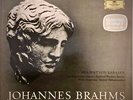
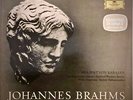
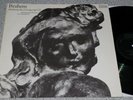
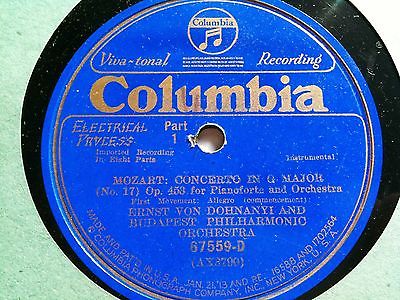
1928 Ernst von DOHNANYI Piano Plays Mozart Concerto G Maj No 17 Budapest Phil 78
$
50


Favourite Auctions
To save auctions to your favourites, please login
If you don't have an account, please register
Description
Please wait for me to send you an invoice. DO NOT USE EBAY CHECKOUT if you want the lowest possible postage.
Welcome to my auctions of great records
This is my FIRST WEEK of 2 weeks of great auctions – I WILL PACK AND BILL YOUR RECORDS after the close on MAY 22.
PLEASE DO NOT PAY before I send you an invoice. It will take me up to 48 hours to pack your records, but this is the ONLY WAY to get you the LOWEST POSTAGE. If you pay before I sent you an invoice, the EBAY system will charge you a HIGHER POSTAGE for shipping.
International shipping: approx postage 1x10"=$25: 1x12"=$36: 10"Album 4 Rec=50$: 12" Album 2 Rec=50$
HOWEVER in most cases I can get you SIGNIFICANT savings by using other services. Pls contact me for a quote.
About 30% less to Canada. Pls ignore international postage displayed in Ebay, rates are too high
Pleas do not use EBAY CHECKOUT, send me an invoice request instead and I will pack your records and bill you promptly.
A series of great classical orchestral and instrumental performances by major conductors, composers and instrumentalists.
"You can sum up Hungarian music in one word, Dohnanyi" -- B?la Bartok
One of the rare 78 rpm recordings of ERNST VON DOHNANYI, famous Hungarian pianist and Composer, whose piano playing has repeatedly been included in various lists of the "100 greatest pianists"
Ernst von DOHNANYI Piano Plays and conducts with his own cadenzas
He had previously recorded a Mozart concerto in the early 1930s in Hungary (No. 17, in G major, K. 453, playing and conducting the Budapest Philharmonic, for Columbia,
4x12" Columbia VIVA TONAL 78 rpm records no album
Condition:
EXCELLENT, rare faintest scuffs, plays very very quiet w rare ticks
The present program brings together examples of Ernö Dohnányi’s abilities as pianist, conductor and composer. Most of the recordings were made during a three-day period in June, 1928 when Dohnányi was on tour in London with the Budapest Philharmonic Orchestra, of which he had been music director since 1919.
The first two recording sessions were done for Columbia in one of their smaller London studios, possibly the Portman Rooms. The day after these sessions ended, Dohnányi and the orchestra moved to the more expansive acoustic of Queen’s Hall for an HMV session. It is interesting to compare the Columbia version of the Berlioz march, with its unforgiving dead studio acoustic to the HMV version, even with the latter’s handicap of having been released from a dubbed matrix. (HMV recorded three other sides at this time, all of Hungarian nationalist hymns, one of them being a 10-inch version of the same Dohnányi Hiszekegy presented here.)
Three years later, Dohnányi returned to London to record his Variations. Even though the sessions were held in a large venue (Kingsway Hall), the composer was again unlucky in that the matrices were over-recorded and distort during loud passages. He was to remake this recording in stereo in 1956, but this earlier version has its charms, not least in the humor which HMV producer/conductor Lawrance Collingwood finds in the orchestral accompaniment.
The sources for the transfers were American Columbia “Viva-Tonal” pressings for the Mozart; laminated English Columbias for the Liszt and Berlioz; black-label American Victor “Orthophonic” pressings for the Queen’s Hall items; and Victor “Z” and Gold pressings for the 1931 sessions.
Ern? Dohnányi (July 27, 1877 – February 9, 1960) was a Hungarian conductor, composer, and pianist. He used the German form of his name Ernst von Dohnányion most of his published compositions.
The Dohnányi family was ennobled by Leopold I, Holy Roman Emperor and King of Hungary.
Biography
Dohnányi was born in Pozsony, Kingdom of Hungary, Austria-Hungary (today's Bratislava, capital of Slovakia). He first studied music with his father, a professor of mathematics and amateur cellist, at gymnasium, but afterwards became a pupil at the Budapest Academy of Music, studying piano and composition with Carl Forstner, organist of the Bratislava Cathedral. In 1894 he became a pupil of István Thomán for piano and of Hans Koessler for composition. Béla Bartók was one of his classmates there. Dohnányi's first published composition, his Piano Quintet in C minor, earned the approval of Johannes Brahms, who promoted the work inVienna.
After a few lessons with Eugen d'Albert, Dohnányi made his debut in Berlin, 1897, and was at once recognized as an artist of high attainments. Similar success inVienna followed, and thereafter he made the tour of Europe with the greatest success. He made his London debut at a Richter concert in the Queen's Hall, where he gave a memorable performance of Beethoven's Piano Concerto No. 4.
Using his position as a conductor, Dohnányi pioneered Bartók's more accessible music to boost its popularity.
During the following season, he visited the United States. There, he established his reputation playing, again, the Beethoven Piano Concerto No. 4 for his American debut with the St. Louis Symphony.
Unlike most other famous pianists of the time, Dohnányi did not limit himself to solo recitals and concerto solos, but also played chamber music.
In 1902, one of his two sons, Hans von Dohnányi, was born to Ern? and his wife Elisabeth, who was also a pianist. Hans later distinguished himself as a leader of the anti-Nazi resistance in Germany, and was a friend and collaborator of Dietrich Bonhoeffer. Hans in turn became the father of the well-known orchestral conductor, Christoph von Dohnányi.
Joseph Joachim invited Dohnányi to teach at the Hochschule in Berlin, which he did from 1905 to 1915. Going back to Budapest, Dohnányi organized over a hundred concerts there each year. In 1919 he was appointed director of the Budapest Academy, but was replaced the same year for purely political reasons. He became music director of the Budapest Philharmonic Orchestra and promoted the music of Bartók and Zoltán Kodály and other Hungarians, but did not play his own music too often. Dohnányi's pupils include Andor Földes, Ervin Nyíregyházi, Géza Anda, Annie Fischer, Edward Kilenyi, Bálint Vázsonyi, Sir Georg Solti,Istvan Kantor, Joseph Running, Georges Cziffra, Frank Cooper and Ludovit (Lajos) Rajter.
In the 1920 season, he played the complete piano works of Beethoven. During the 1920s, he also recorded several of his works on the AMPICO reproducing piano.
In 1934 he was again appointed director of the Budapest Academy, a post he held until 1941, when he resigned from the post "as a protest against the anti-Jewish legislations [of that year]". That year he also had to disband the Budapest Philharmonic Orchestra.
After World War II, which had claimed the lives of both of his sons, one in combat and the other executed by the Nazis for his role in a plot to assassinate Hitler, Dohnányi moved to the United States. He had remained in fascist Hungary during the war, though using his influence and expending his own fortune to protect Jewish musicians. A whispering campaign against him was promoted by the new Communist government of Hungary, to the point where he found it necessary to leave. He was not able to revive his career as a concert pianist, but continued to compose, and became interested in American folk music; his last orchestral work, in 1953, is entitled American Rhapsody. This piece was written for the sesquicentennial of Ohio University and includes folk material such as On Top of Old Smokey and I am a Poor, Wayfaring Stranger. Dohnányi also found a teaching position for ten years at the Florida State University School of Music in Tallahassee, whose music library holds a large archive of Dohnányi's papers, manuscripts, and related materials. A link to searchable databases at Florida State's Warren D. Allen Music Library is provided below. An International Ernst von Dohnányi Festival was held there in 2002.
His last public performance, on January 30, 1960, was at Florida State University, conducting the university orchestra in a performance of the Beethoven Piano Concerto No. 4 with his doctoral student, Edward R. Thaden, as soloist. Following this performance, Dohnányi traveled to New York City to record some Beethoven piano sonatas, as well as other works, on stereo LP discs. He had previously recorded a Mozart concerto, his own Variations on a Nursery Tune, the second movement of his Ruralia Hungarica (Gypsy Andante), and a few solo works (but no Beethoven sonatas) on 78 rpm and various works, including Beethoven'sTempest Sonata, on early mono LP discs. He died ten days later, on February 9, 1960, of pneumonia in New York City. The BBC issued an LP recording taken from one of his last concerts with sonatas by Beethoven and Schubert, now considered one of the glories of the heritage of Romantic pianism.
His books entitled "Daily Finger Exercises for the Advanced Pianist in Three Volumes by Ernst Von Dohnanyi" was published by Mills Music, Inc. in 1962.
Compositions
Dohnányi's compositional style was eccentric. Although he colored upon influences from Hungarian folk music, he is considered a nationalist composer like Béla Bartók or Zoltán Kodály. Dohnányi's approach is deeply rooted in the strongest traditions of European classical music, and particularly bears the imprint ofJohannes Brahms.
More Great Records on sale right now:
http://shop.ebay.com/carsten_sf/m.html
http://shop.ebay.com/carsten_sf/m.html
====
A Quick NOTE ON GRADING AND SHIPPING:
As you can see from my feedback, I try hard to earn your POSITIVE FEEDBACK and FIVE STAR RATINGS.
If for any reason your transaction was NOT SATISFACTORY, pls contact me and I will work something out with you. YOU WILL NEVER HAVE A REASON TO GIVE ME A NEGATIVE RATING or a LOW STAR RATING.
Quick note on grading:
The Grade (Excellent to Fair, I don't give Mint) refers to the WEAR of the record. Any other defects are stated separately
When I listen to a record, I may also give it an aural grade (again E to F), and make a SUBJECTIVE judgment of the pressing quality for hiss and surface noise.
"SUPERQUIET" is basically noiseless, like a vinyl pressing.
"VERY QUIET" is an exceptionally quiet record for a given pressing.
"Quiet" is a record that is a great example without undue noise for a give pressing.
These judgments are SUBJECTIVE and will depend one the styli, phonograph etc. you use on your own equipment.
Pls check my other auctions for more great records and phonograph items:
Multiple item shipping: I am happy to combine items for shipment in one parcel.
If you win multiple items, pls send me an INVOICE REQUEST to calculate the correct postage. Ebay check out will not give you the multiple item discount!
Records will be packed safely between corrugated cardboard in a sturdy box with plenty of padding for safe shipment.
Shipment is usually Media Mail, unless another service is requested. Shipping is at your risk, I will be happy to insure items at your cost.
I charge actual postage plus a small fee for packing materials
As always, I guarantee your satisfaction. If you don't like the item, just return it, and I will refund the full purchase price.
If you are in the San Francisco area, I encourage pick-up in person.
US Domestic Shipping:
Here is a guideline for US Media Mail Shipping:
Prices below are for regular 78 rpm records. Up to about 5 records, I will ship Edison Discs for the same rates. Albums from Album Sets count as 1 record. Above that and for international shipments, it will be actual weight plus a small packing charge (1-3$ depending on size of shipment)
1 record: 4.50 – 5.00$
2 records: 5.75$
5 records: 7.50$
10 records: 9.50$
MANY MORE RECORDS: Don't worry. I safely ship 40 - 50 pounds of records double boxed in moving boxes, and even then Media Mail will probably not exceed 30$.
Please send me a message if you would like to lower your shipping rates!
International Buyers:
All'attenzione degli acquirenti italiani:
ATTENTION TO ITALIAN BUYERS:
Due to rare problems with delivery in ITALY, I will NOT GUARANTEE delivery of parcels sent by US Postal Service First Class and Priority Mail. If you prefer secure delivery, I will be happy to quote you either Registered Mail or shipment by FEDEX
I am very happy to ship records worldwide.
Please use the EBAY shipping cost only as a guideline. My actual charges are usually lower
One record usually ships for 25 – 28$ for 10" 35$ for most 12" records (Less for Canada).
I can get SIGNIFICANTLY LOWER rates from FedEx and the US Postal service for any kind of parcel weight, and will make use of all the cost-saving shipment methods
Pls contact me for a shipping estimate, or send me an invoice request after close of auction.
AND AGAIN -THANK YOU FOR YOUR INTEREST
As you can see from my feedback, I take great care in presenting, grading and shipping your items. I really want you to be happy with the purchase. If you feel that anything is wrong with the item or the shipping, contact me and we will work it out !!!
As always, I would appreciate any suggestions and corrections from you, pls contact me with any question.
Thank you very much, and good luck bidding !!!
price rating