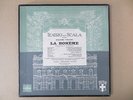
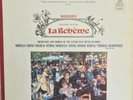
1938 Beniamino GIGLI Licia ALBANESE The Heart of LA BOHEME Excerpts Victor M-980
$
25


Favourite Auctions
To save auctions to your favourites, please login
If you don't have an account, please register
Description
A series of great OPERA Records from early G&Ts to World War II recordings on 78 rpm Victrola Records
Click this link for more great Opera and Vocal Records in my other listings!
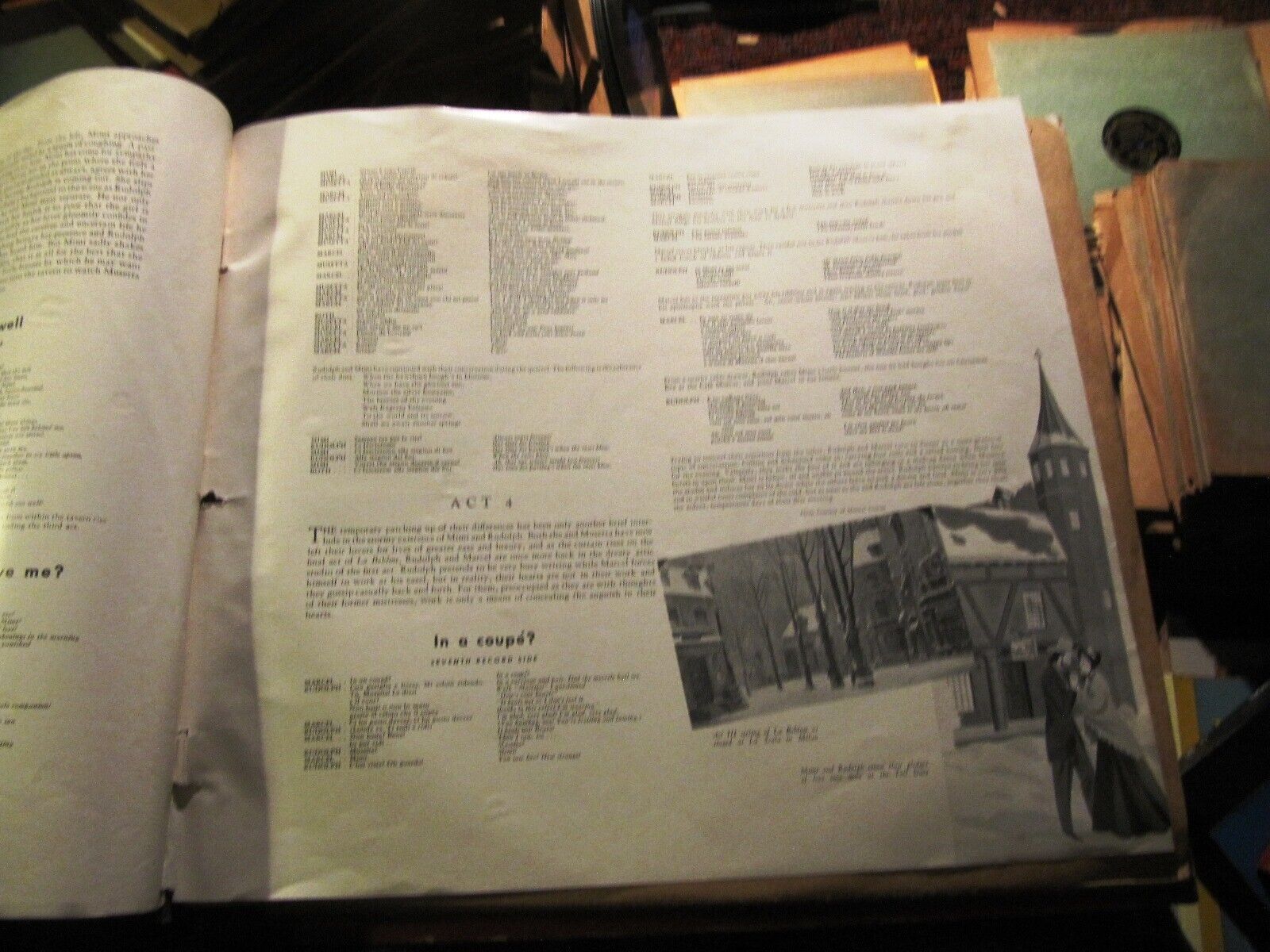
Selected scenes from the famous 1938 La Scala recording of La Boheme with a nicely done 7 page illustrated reader.
1938 Beniamino Gigli as Rudolfo, Licia Albanese as Mimi in La Boheme
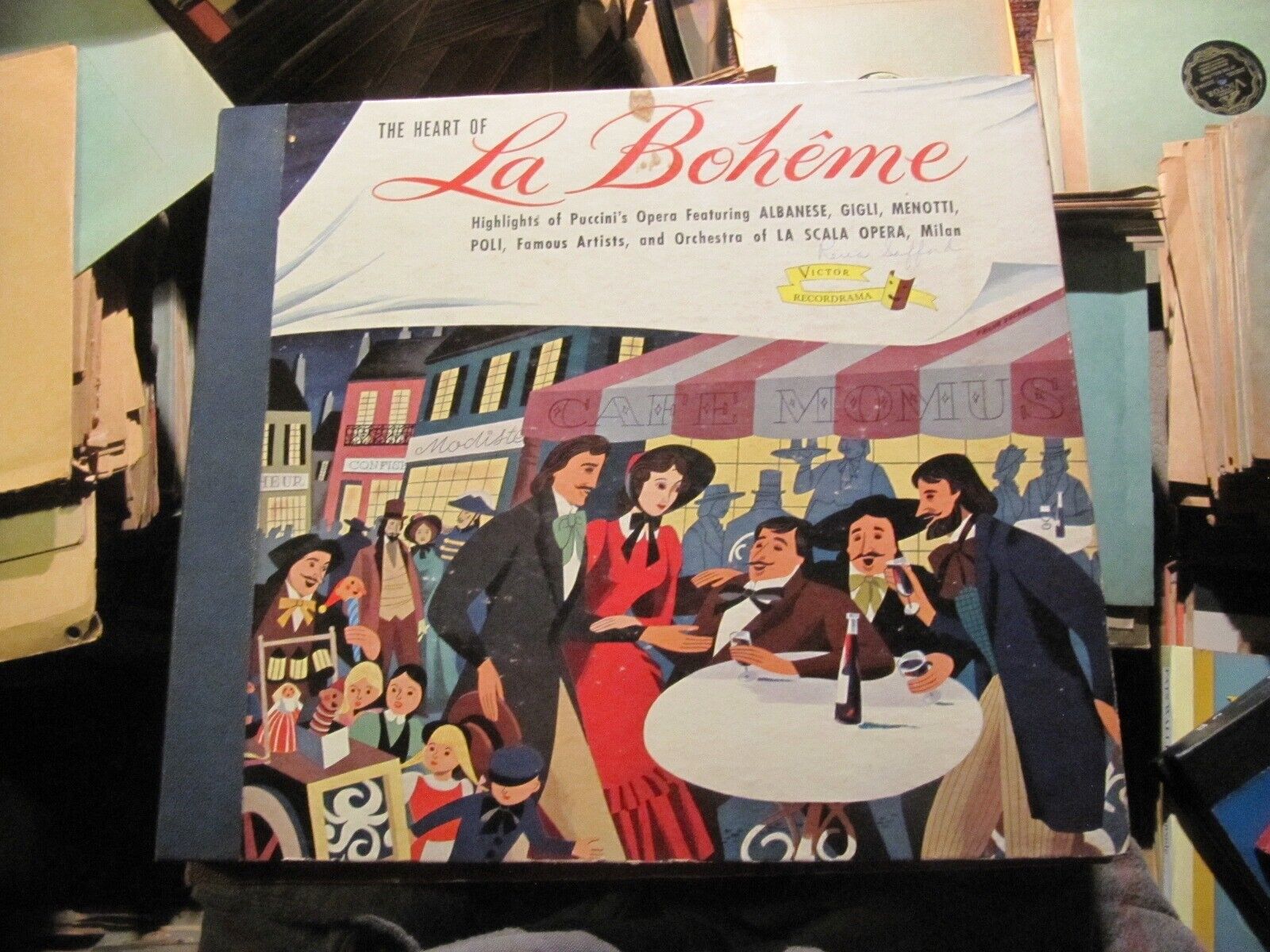
Giacomo Puccini, Orchestra Del Teatro Alla Scala Conducted By Umberto Berrettoni – The Heart Of La Boheme: Highlights Of Puccini's Opera Featuring Albanese, Gigli, Menotti, Poli, Famous Artists, And Orchestra Of La Scala Opera, Milan
Giacomo Puccini - The Heart Of La Boheme: Highlights Of Puccini's Opera Featuring Albanese, Gigli, Menotti, Poli, Famous Artists, And Orchestra Of La Scala Opera, Milan album cover
More images
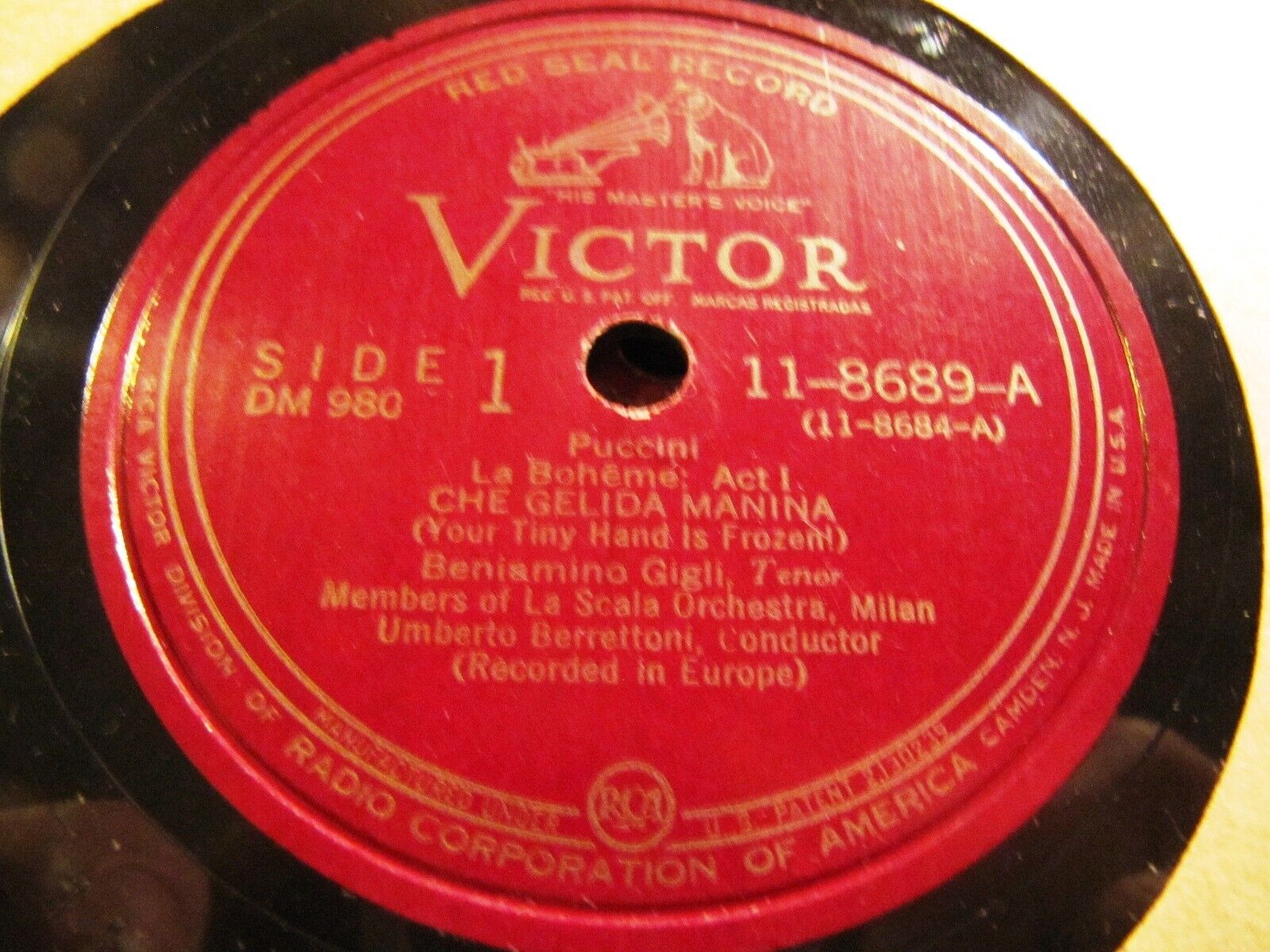
Label: Victor Red Seal – DM 980
Format:
5 x Shellac, 12", 78 RPM, Album
Act 1
A1 Che Gelida Manina (Your Tiny Hand Is Frozen)
B1 Mi Chiamano Mimi (They Call Me Mimi)
C1 Eh ! Rodolfo! - O Soave Fanciulla (Sweetest Maiden)
Act 2
D1 Quando Me'N Vo' (Musetta's Waltz Song - As Thro' The Street I Wander)
Act 3
E1 Addio! Che! Vai! (Farewell! What! Going?)
F1 Dunque E Proprio Finita! (Then You're Going To Leave Me)
Act 4
G1 In Un Coupe? (In A Coupe?)
H1 Sono Andati? Fingevo Di Dormire (Have They Left Us? To Sleep I Only Feigned)
I1 Torno Al Nido La Rondine (Back To Her Nest Comes The Swallow)
J1 Dorme? Risposa (Sleeping? Just Resting)
Artwork – Frank Decker (2)
Baritone Vocals – Afro Poli (tracks: C1, D1, F1, G1, J1), Aristide Baracchi (tracks: C1, D1, I1, J1)
Bass Vocals – Carlo Scattola (tracks: D1), Duilio Baronti (tracks: C1, D1, J1)
Conductor – Umberto Berrettoni
Orchestra – Orchestra Del Teatro Alla Scala
Soprano Vocals – Licia Albanese (tracks: B1, C1, D1, E1, F1, H1, I1, J1), Tatiana Menotti (tracks: D1, F1, J1)
Tenor Vocals – Beniamino Gigli (tracks: A1, B1, C1, D1, E1, F1, G1, H1, I1, J1)
Auto-Coupled
"Recorded in Europe"
Please see top of the page for condition
The vitality of Berrettoni's interpretation (recorded at the Teatro Regio, Turin) is wonderfully impressive. More important is the opportunity to hear a Bohème that - though in some quarters it might now be considered "old fashioned" - is vivid and committed. Do today's productions of what is, in some respects, little more than a sentimental and rather mawkish love story equal the passion - not to mention vocal splendour - of Gigli's Rodolfo and Albanese's Mimi? Is Tatiana Menotti's Musetta a little over the top? The jury may disagree on such matters but, on convincing evidence, this is well worth considering as an impressive performance because of, rather than in spite of, its age. The high jinks of the opening reveal not only great singers, but also believable, full-blooded characters with individual personalities, and by the café scene we are emotionally as well as musically involved. The well-known set pieces between the poet Rodolfo and seamstress Mimi are acknowledged show-stoppers, and who will deny the principals the relish with which they use their vocal mastery to bring to life what might otherwise now be little more than operatic war horses? As brilliantly handled by Berrettoni, it also comes as something of a surprise to discover just how important the crowd scenes in Acts I and II are, in preparing the audience for the final Act in which Mimi "takes an unconscionable time a-dying". Yet it is probably here that the differences between this pre-war Bohème and the general run of more recent performances are most conspicuous. The voices remain in full control, but Gigli's - and to a lesser extent Albanese's - approach occasionally leads to an uncomfortable forcing of voices and tempi that does little to convey the tenderness and pathos of Puccini's closing pages.
It would be a pity of this remarkable Bohème should be regarded as of interest only to dedicated opera buffs. It has much to do with the reasons why Puccini's tear-jerker has proved durable for more than a hundred years.
price rating